Mercedes-EQ commences in-house EV familiarization

Mercedes-Benz USA is in the process of dividing into separate business units depending on the type of vehicles being created, with Mercedes-EQ being the new moniker for the company’s segment that sells and services electric vehicles. In the firm’s North American manufacturing base of Alabama, a new educational program is just being launched that will help everyone in the chain of command, from dealership staff to corporate executives, to familiarize themselves with the new world of marketing EVs. At Mercedes-Benz, the process is called the Mercedes-EQ Experience, and it provides three days of immersive training on just how the new generations of EVs will be engineered, sold and serviced.
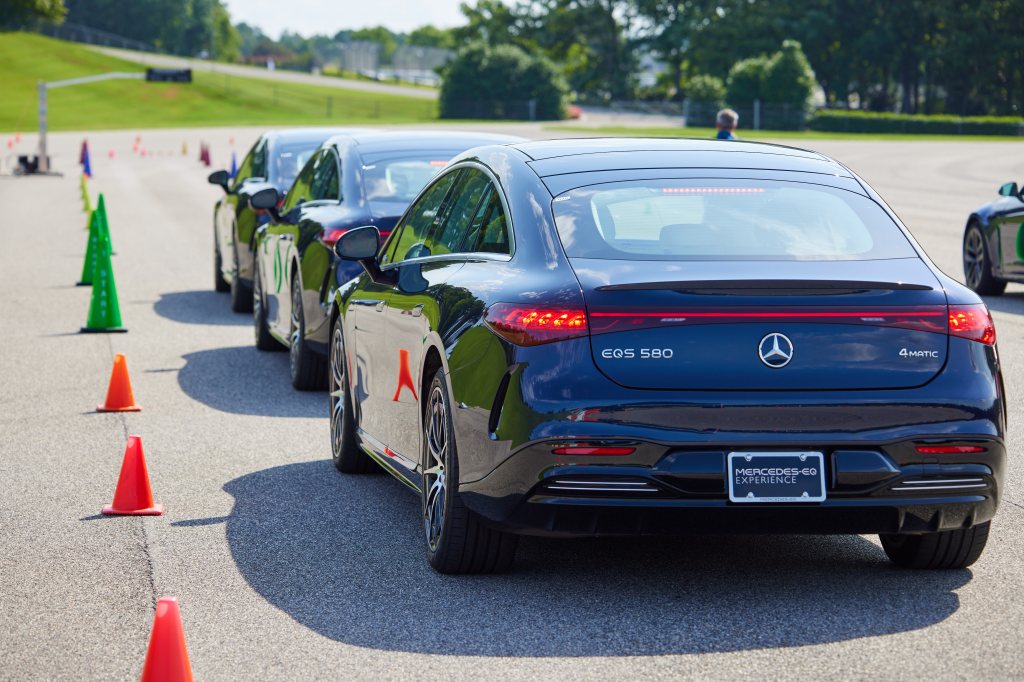
The training days – they’re called, in order, Connect, Charge Up and Electrify – will include both virtual and hands-on training about the EV experience, encompassing, as shown here, real-time education on the linear nature of electric power and the way it transforms vehicle dynamics. Since they’re on the front lines of automotive retailing, the Mercedes-Benz dealer workforce will be set aside for special attention on conveying to buyers why this technological leap is so fundamental to all of us. Team-based competitions will be part of the EV curriculum.
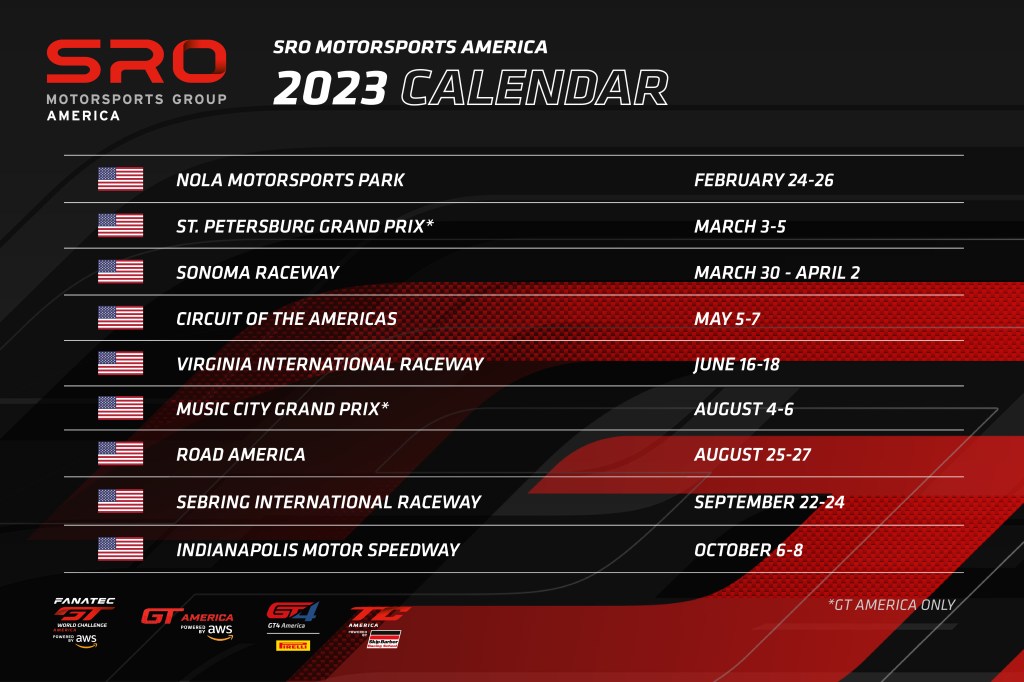
Big schedule, including Indy, for SRO Motorsports America

In the world of international racing on road circuits, SRO Motorsports is a major player, especially near its home base in Europe, where it presents events for GTs and touring cars that culminated in its 24-hour race at the historic Spa-Francorchamps circuit in Belgium. That was where the group announced a very busy 2023 schedule for its arm on these shores, SRO Motorsports America, which will present seven race weekends next year capped by a new, eight-hour endurance event at the Indianapolis Motor Speedway in early October.

As the graphic indicates, SRO Motorsports American presents four separate series stateside for both GT and touring cars. We profiled this organization very recently for PRI Magazine, where the organizers discussed their formula of offering well-regulated classes for production-based race cars and drivers who have expressed the goal of moving up to more advanced classes. The categories allow future pros to work out with everything from basic touring sedans all the way up to the much more demanding, and expensive, GT3-type machinery

Not just for cruising: Pricing, trims revealed for M-B’s AMG-SL

The SL-Class of two-seat roadsters from Mercedes-Benz has swung over the past 70 years or so from the brand’s most exclusive performance roadsters to succeeding generations of open-top cars that succeeded most at letting their monied owners be seen while cruising, generally slowly. At Mercedes-Benz, the pendulum of performance for its open two-seaters – dare we use the Jaguar term? – is about to swing back toward going fast in a very big way, as the firm reveals pricing and equipment levels for the 2022 Mercedes-AMG SL, which is going to be about a lot more than tousling your hair.

The biggest change here, technologically speaking, is that the new performance SL will be the first such roadster from Mercedes-Benz offered with an AMG-massaged 4MATIC all-wheel-drive system. The new AMG-SL also debuts a delightfully interesting multi-link front suspension, with five individual small control arms for improved kinetics, all arranged within the confines of each front wheel’s inner rim, with a similarly organized five-link setup at the rear. Pricing will commence at $137,400 for the AMG SL 55, with the AMG SL 63, the big kahuna here, upping the ante to a base of $178,100. Each model will be offered in Touring and Performance variant, with the level of individual personalization options that you’d expect at this lofty level.

VW EV production ramps up for new ID.4 in Chattanooga

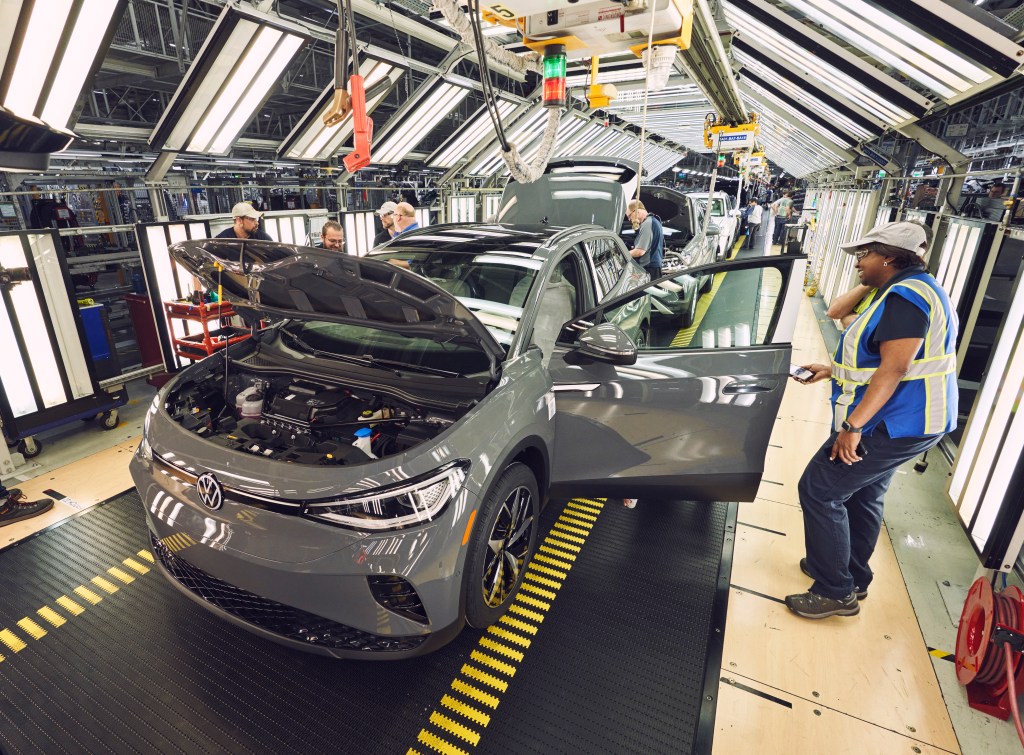
Chattanooga, Tennessee, is the home of one of the United States’ pioneering speed shops as first opened by Honest Charley Card. It’s currently the site of a very welcoming and well-attended concours for vintage automobiles. And between all this, it’s become the home of a cutting-edge assembly plant where Volkswagen builds a variety of vehicles in this country. This week, that number of Chattanooga-born Volkswagens was boosted with a new model, as the first domestic production version of the new all-electric ID.4 exited the line. As Volkswagen of America makes clear, this pioneering ID.4 is going to be joined by a lot of company very soon.

Initially, the ID.4 will be built and sold as a rear-drive vehicle or with all-wheel drive with 82 kWh battery capacity. Volkswagen says the first customer cars will reach showrooms from Chattanooga in October, with production ramping up to 7,000 units monthly in the fourth quarter of 2022. To this end, Volkswagen is in the process of hiring 1,000 new assembly techs to staff the ID.4 line in Chattanooga. Production is expected to escalate still further as 2023 unfolds. Up next for Volkswagen: the 2024 debut of the ID.Buzz, the all-electric reinterpretation of the fabled Samba microbus.

BMW M Motorsport returning to Le Mans with hybrid power

This is big news: BMW hasn’t fielded a car in the premier class at the 24 Hours of Le Mans since 1999, when it captured the overall victory in the French endurance classic. A year after debuting the car and its V-8 hybrid powertrain in the IMSA WeatherTech SportsCar Championship on these shores, the corps from Bavaria has announced it will contest both Le Mans and the FIA World Endurance Championship beginning in 2024. The first prototype chassis with the V-8 hybrid powertrain turned its initial test laps this week at the Dallara test track in Italy.

BMW’s performance partner in the U.S. is Rahal Letterman Lanigan Racing, which took part in the Dallara test and will be doing more work stateside before the engine and chassis concept makes its debut next February during the Rolex 24 at Daytona. For those of us who remember the 3.0 CSL “Batmobiles” that uncorked their thunder at Le Mans and elsewhere during the 1970s, this is a welcome happening indeed.

Maserati unveils its ultimate expression of a supercar

Maserati had already offered an extreme, track day-only supercar to its faithful, the Maserati MC20, and it isn’t stopping there. To satisfy those at the pinnacle of all-out performance, the house of the trident has announced a new, even more exclusive screamer for the monied faithful. The name of the car is Project24, and it will be built in an ultra-limited production run of just 62 units for worldwide sale.

Project24 takes the basics, if that’s the right word, of the MC20 and elevates them from there. The process begins with its Nettuno-named V-6, which gets a pair of new turbochargers that will boost the Project24’s output to 740 horsepower. Added to the mix are a new carbon-ceramic braking system, race-only tires and a full suite of internal safety technology mandated by the FIA, the governing body of international motorsport. To repeat, this is a non-road car only, with a projected fighting weight of less than 1,250 kilograms, which works out to 2,755 pounds by our non-metric measure.

A Cadillac flagship sedan, reimagined with electrons

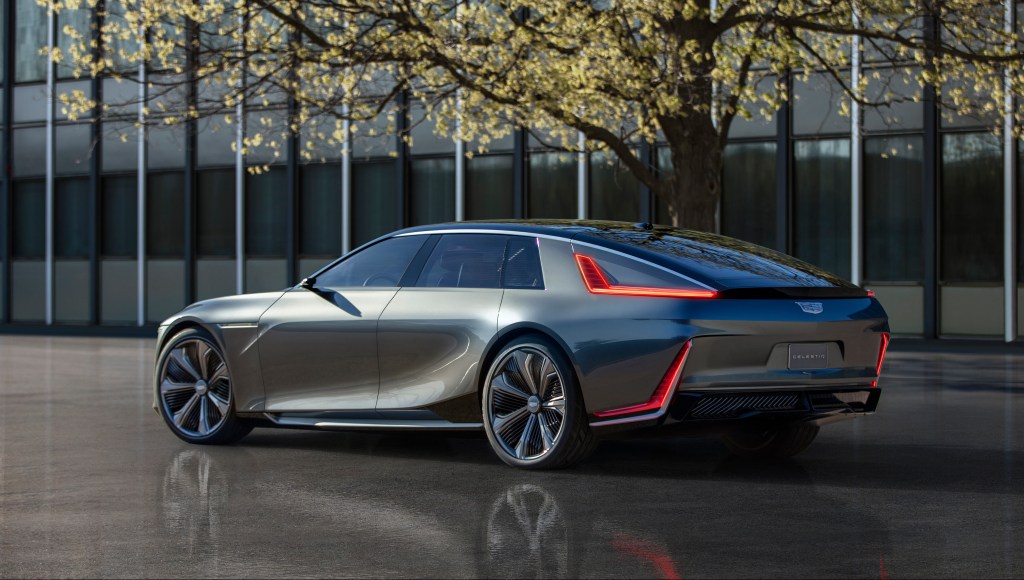
Chronic chip shortages and distribution headaches notwithstanding, the auto industry is moving ahead secure in the knowledge that there’s still going to be a market for new cars in the future, which is right now. A relevant piece of evidence comes from Cadillac, which this week unveiled its newest design study, the CELESTIQ, which will be making appearances at high-end automotive salons and providing a glimpse of what Cadillac will likely produce in some form in coming years as a flagship sedan, with electric power centrally designed into the concept.

With four doors and an obviously broad stance, the CELESTIQ is intended to evoke past Cadillacs such as the V-16 leviathans of the 1930s and the later, handbuilt Eldorado Brougham of 1957 and 1958 with its signature brushed stainless-steel roof treatment. And is it just us, or is there a strong hint of the Porsche Panamera in there someplace? Riding on a modified version of the General Motors Ultium EV platform, the CELESTIQ also reportedly draws inspiration from the architecture of Eero Saarinen, who designed the current GM Global Technical Center campus where a lot of work on this concept is taking place. One such advance is its smart glass roof, which makes use of suspended particle technology to constantly adjust the roof’s tinting level.

Chevrolet’s EV portfolio grows with new electrified Blazer

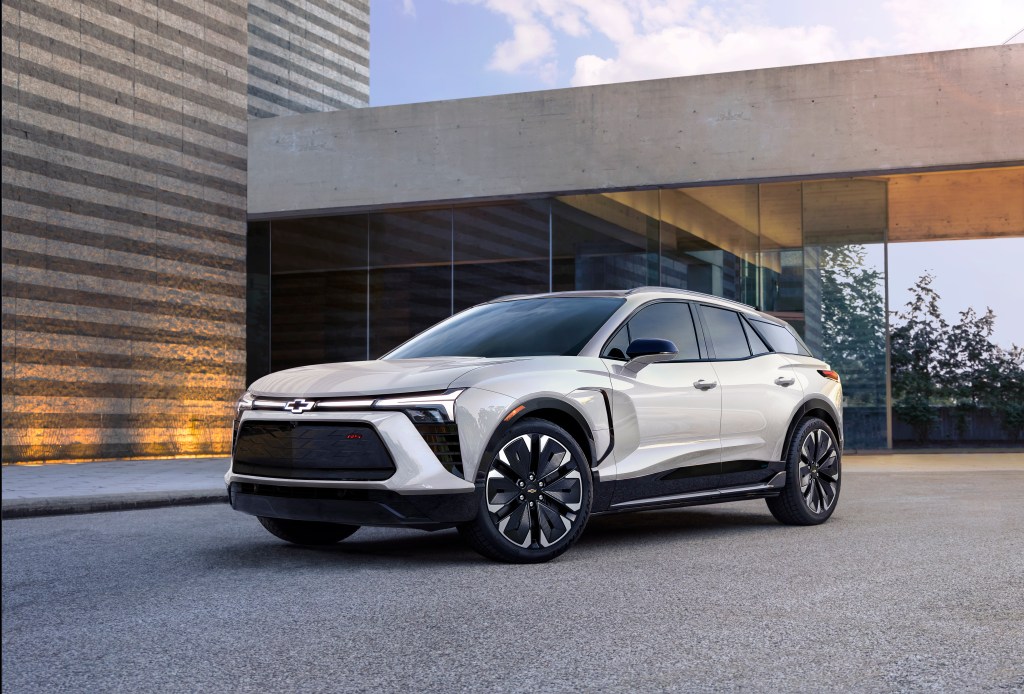
How serious is the bowtie brigade about converting you to an EV customer? Enough so that Chevrolet has rolled out its first all-electric versions – plural – of its midsize Blazer SUV. Riding on General Motors’ Ultium platform, and mixing in styling cues liberally borrowed from the Camaro and Corvette, the electric Blazer will be capable of traveling up to 320 miles on a single charge, depending on trim level, with a fast-charging capability that will allow owners to energize 78 miles’ worth of juice in 10 minutes using a fast-charging station.

With suitably dramatic looks, the Blazer EV will be offered across five trim levels, including Chevrolet’s first all-electric SS performance SUV, along with Chevrolet’s pursuit-rated Police Pursuit Vehicle package for fleet use. Deliveries to all customers will get underway in spring 2023.

Pontiac power at Daytona

We were invited earlier today to stop by the Motorsports Hall of Fame of America, located at Daytona International Speedway, where we’re one of the electors for its inductees. The invitation was to cover a reborn piece of Daytona racing history – a perfect, and we mean perfect, re-creation of the 1963 Pontiac Tempest that inductee Ray Nichels, the Indiana race car builder, put together for fellow inductee Paul Goldsmith to run in what was then known as the Daytona Continental, the predecessor of today’s Rolex 24 at Daytona. Nichels stuffed the little Tempest with a big-bore, 421-cu.in. Pontiac V-8, giving Goldsmith enough power to erase the favored Ferrari GTOs in the 1963. Goldsmith didn’t finish, but the Europeans were so awed by the Pontiac’s output that Mercedes-Benz bought, and later destroyed, the Tempest just to see how it worked.

Here’s the car being pushed into the Hall where it will be on display for the scores of visitors that come to the speedway every day. This re-creation is considered a gilt-edged piece of Pontiac history because of its accuracy, and because it’s one of the lightweight 421 Tempests, most built for drag racing, that are considered the spiritual fathers of the fabled Pontiac GTO, which was introduced the following year after General Motors up-sized the Tempest into an intermediate hardtop and squeezed a slightly smaller 389 beneath the hood.

Credit for all this goes to the guy being interviewed, Michigan collector and historian Roger Rosebush, who built the re-created Tempest, and, as luck would have it, was celebrating his birthday as the Pontiac was wheeled into the Hall. We guarantee he’ll remember this one fondly.

Shelby seizes stratospheric significance in Colorado

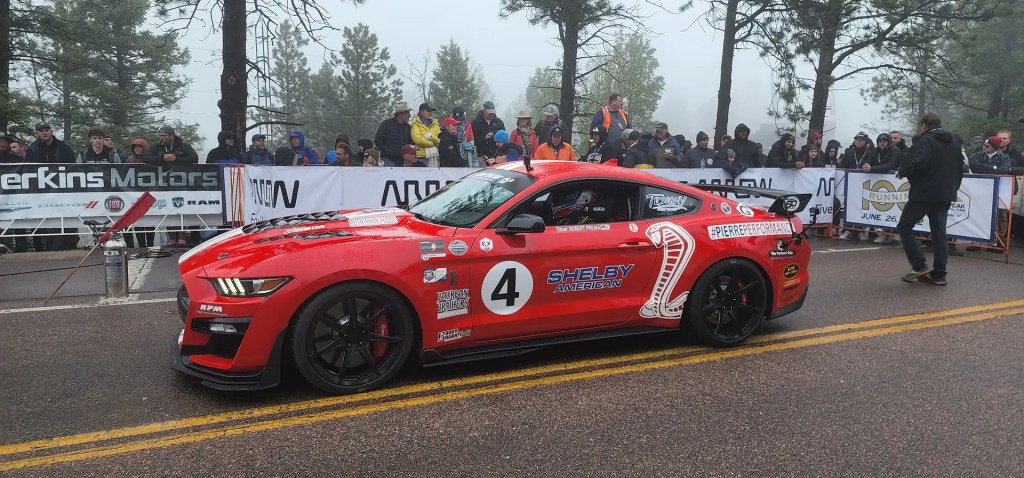
An American motorsport milestone was achieved this month with the 100th running of the Climb to the Clouds, the legendary Pikes Peak Hill Climb in the Rocky Mountains of Colorado. The sinuous two-lane road is paved all the way to the summit now, but Pikes Peak still remains a harsh, but hallowed, evaluation of pure power and adhesion. The centennial running included a standalone milestone this year as a 2022 Shelby GT500SE hardtop, right off the Shelby American assembly line in Las Vegas, was certified as the fastest genuine street-legal production car to assault the mountain in its century of history.

The GT500SE’s pilot was hall of fame hillclimb driver Robert Prilika, who wheeled the Shelby under his Robert Prilika Motosports banner, and sponsored by Pierre Ford of Seattle, one of the nation’s highest-volume Shelby dealerships over the past several years. The GT500SE was unaltered from stock other than to add the requisite safety equipment directed by the Pikes Peak organizers. For the record, the current Pikes Peak course is 12.42 miles with 156 distinct corners, encompassing more than 4,700 feet of elevation change, with the finish line set at 14,115 feet above sea level. The record run took place in dense fog with temperatures in the 40s.