Toyota Crown returns to the U.S. as a premium luxury hybrid

Those who know the history of Japanese cars on these shores will find this to be an intriguing item. Toyota already has one of the broadest U.S. model arrays of any auto manufacturer, and already has a halo brand in Lexus. But its heritage assigns the Toyota Crown the status of a marque legend, being Toyota’s first mass-produced passenger vehicle when it first debuted in its home market as a 1955 model. It’s been decades, literally, since the Crown last appeared on these shores but as Toyota’s premier luxury executive cars, it’s existed through 15 generation elsewhere. And it’s through being a U.S. oddity.
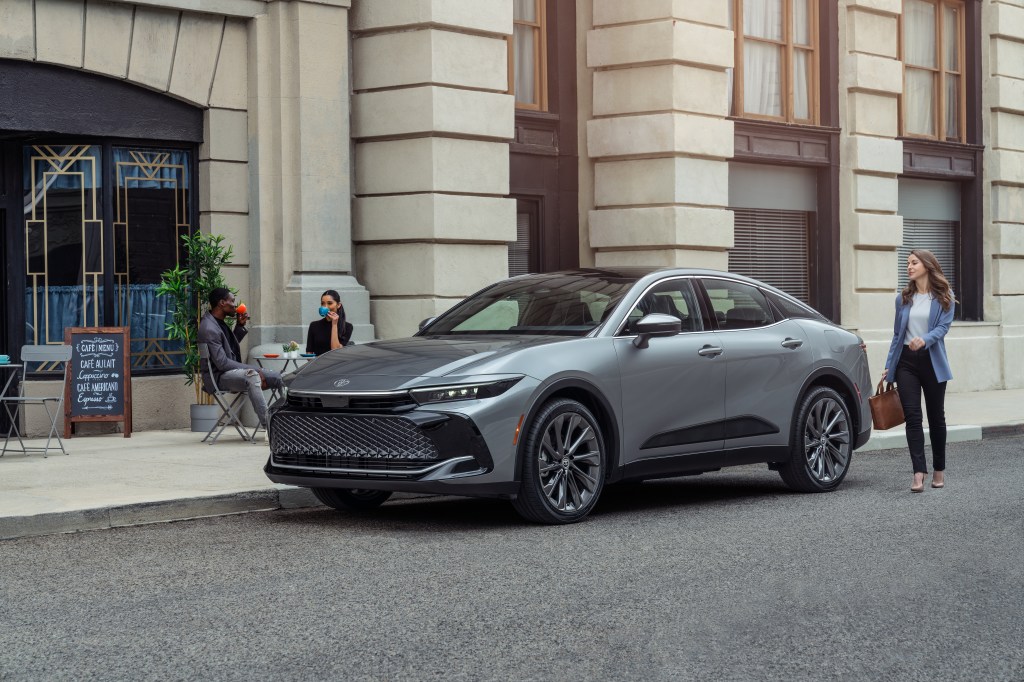
Toyota is reintroducing the Crown to North America as a 2023 model, as a large sedan with a very high luxury content and as you’ll spot, a higher-than-typical ride height for easier occupant access. The new Crown will be sold in three trim levels, XLE, Limited and Platinum, all offered with electronic on-demand all-wheel drive. The familar Toyota hybrid system is standard, but a new HYBRID MAX powertrain will be offered that will pair a 2.4-liter turbocharged ICE with an electronically powered rear axle assembly that will yield an expected 340 horsepower. Just think, a luxury hybrid with rear-drive balance. Built on Toyota’s GA-K platform, the revived Crown will make its return to the marketplace later this year.

GMC reveals Sierra AEV Edition

Boonie busting is popular with those who love their pickups, even the modern interpretation of them, which means a very big-buck vehicle will a lavish interior and scads of standard convenience items. GMC makes just such a full-size pickup in the form of its Sierra 1500 AT4X, which can already be optioned to the very hilt. Undeterred by beckoning brush, or anything else, GMC chose the Overland Expo Pacific Northwest to reveal its latest specialty offering, the 2023 Sierra 1500 AT4X AEV edition, which is aimed squarely at determined off-roaders.

The plan here was to give the premium Jimmy pickup a strong measure of back-country capability while sacrificing none of its copious creature comforts. As you might imagine, some of the upgrades are cosmetic in nature, while others convey clearly that GMC is completely serious about this truck’s ability to play in the dirt. Among the package components are five hardened skidplates stamped from high-tensile boron steel, just the thing to keep the oil pan from being perforated by rocks. Further, and visually primo, is the decision to adopt 18-inch AEV Salta disc wheels with recessed valve stems to guard against flats in the middle of nowhere blamed on rock strikes against the wheel. The whole package goes on sale shortly.

Andy Warhol’s “Cars” exhibit debuts at the Petersen

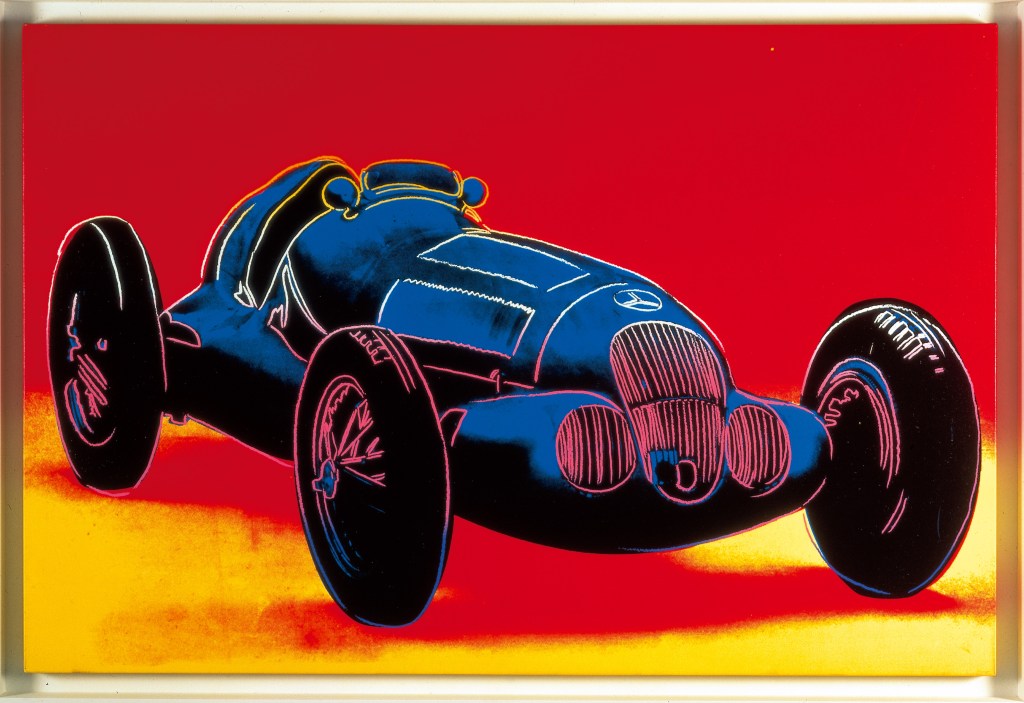
Andy Warhol was a certified genius who defined popular art in wild, broad-brushing of electrifying colors on somewhat plebian topics, most of the time. We’re all familiar with his treatment of Marilyn Monroe’s visage – it sold at auction for 195 million bucks – and a lowly can of Campbell’s tomato soup. Back in the 1980s, Mercedes-Benz commissioned Warhol to help mark its 100th anniversary by creating more than 80 pieces of art on individual models from the past, most of them as historic as Warhol’s body of work. For the first time in some 30 years, they’re coming back stateside.

Warhol’s wild interpretation of a Mercedes-Benz W125 supercharged Grand Prix car from 1937, one of the all-conquering Silver Arrows, is one of the works that will be on display when “Andy Warhol: Cars from the Mercedes-Benz Art Collection” begins July 23 at the Petersen Automotive Museum on Wilshire Boulevard in Los Angeles. Five of the eight Mercedes-Benz vehicles that were stunningly painted as part of Warhol’s final commission will be shown to the public at the Armand Hammer Foundation Gallery on the museum’s first floor. But wait: Also on display will be Warhol’s personal 1974 Rolls-Royce Silver Shadow, which he bought new and kept for the rest of his life despite having never received a driver’s license. Undeterred, the pop legend relaxed in the Roller’s rear seat and let his fellow worthies, including Mick Jagger and Imelda Marcos, be pressed into service as chauffeurs.

Bold BMW heads to museum as part of motorsport milestone

The BMW CCA Foundation and the Ultimate Driving Museum, the latter located at BMW’s huge stateside production facility in Greer, South Carolina, are participating in a museum exhibit known as The Power of M, which commemorates 50 years of BMW motorsport in North America. To that end, The Car of the Month Brought to You by Continental, to use its full name, will spotlight 25 cars and one motorcycle that will form a rotating monthly exhibit at the Greer museum through January 23, all of them storied race cars or their roadgoing counterparts.

The first such car selected is depicted above. It’s 1974 BMW 3.0 CSL No. 2275469, powered by a 3,153cc M30 inline six-cylinder engine with 206 horsepower at 5600 RPM and 215-lbs.ft. of torque at 4,200 RPM. Initially designed by the Alpina tuner house, the 3.0 CSL became the prototype for the infamous “Batmobiles,” so named for their plethora of wings and spoilers, that wowed crowds during IMSA competition in the 1970s. This is one of 167 Alpina-built CSLs that were sold with their wings packed in the trunk. A college kid originally from Luxembourg bought it new and drove it off and on for 40 years before a VIN check unveiled what he really had. It’s now the first car to strut at the M Power exhibition in Greer.

High-tech seating from Bentley

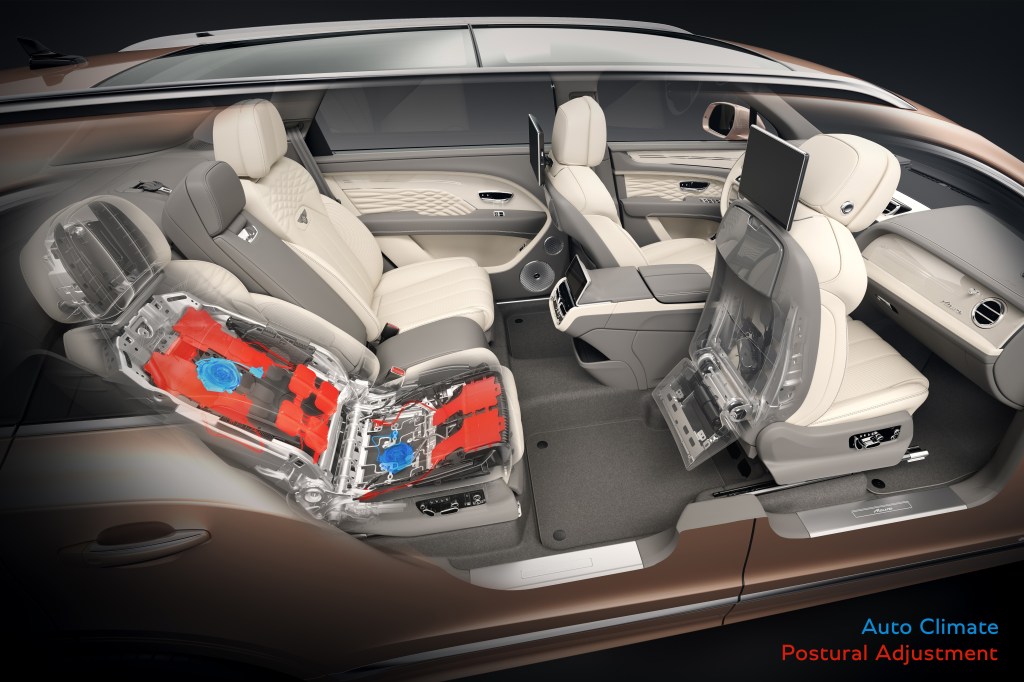
If you know anything about cars, you’re fully aware that cars from Bentley are very expensive, and ladle on the unalloyed luxury as few other cars do. One of the most recent developments at Bentley is the rollout and fitting of its Bentayga EWB, the long-body version of the Bentayga, which constitutes one of Bentley’s five major product lines today. Befitting a high-luxury sedan of its station, the Bentayga EWB places a special measure of focus on seating for its occupants. To that end, the Bentayga EWB offers what it calls the Airline Seat Specification, which surely is one of the most multi-adjustable and tailored-to-occupant seating in automotive history. It’s amazing this much technology can be packed into a car seat.

Bentley likes to point out that the Airline Seat Specification is all about wellness for the Bentayga EWB’s occupants, and we have a hard time arguing the point. The seating features the world industry’s first-ever automatic climate sensing and advanced postural adjustments. The Airline Seat Specification can continuously adjust occupant heat and humidity at the rate of 0.1 degree Celsius every 25 milliseconds. Each seat has seven defined comfort zones, individually adjustable via console-mounted touchscreen. In terms of posture adjustment, the inflatable system can control 177 specific points of the body grouped among six zones. With a combination of 12 electric motors and three pneumatic valves, each rear seat is adjustable 22 different ways.

An “Ace” of a racing photographer achieves Hall of Fame distinction

It’s not uncommon for a son to follow his father into the family business, but what is unusual is when the business is recording the history of automobile racing on film. John Lane Jr., better known as Ace Jr., is the son of a legendary short-track photographer from New Jersey, Ace Lane Sr., who photographed short-track action from its earliest days with Ace Jr. by his side, gradually learning what a camera was and how to work one. The father passed on in 1973, but Ace Jr. has been a fixture on the Northeast racing scene since then, and is being honored by induction into the Northeast Dirt Modified Hall of Fame in Weedsport, New York, the first photographer ever to achieve that distinction. His enshrinement will take place July 20 at the hall, which is located on the grounds of Weedsport Speedway in central New York.

Ace Lane Jr. came to be a lead photographer for Area Auto Racing News, the track photographer for fabled Flemington Fair Speedway, and shot races for a gaggle of publications at tracks throughout the eastern United States. Ace Jr. follows his late father, who won the Leonard J. Sammons Jr. Award for Outstanding Contributions to Auto Racing in 1995, into the hall. Ace Jr. is a living link to the region’s racing past, having witnessed early action at Hinchliffe Stadium, the Polo Grounds and at the Teaneck Armory, in addition to supplying deadline photography to New Jersey newspapers along with the racing publications he served. Fittingly, the Eastern Motorsport Press Association’s highest award for photography is now named in Ace Jr.’s honor after having been originally named for his father. Ace Jr.’s son J.J., who passed away at age 38 in 2020, won the award in 2018, making three generations of acclaimed photographers in the family. Ace Jr. has also been highly active in kart and R/C racing over the years. I am proud to call this guy a longtime friend and colleague, and salute him at his latest honor.

Buy a Jeep, salute the Fourth

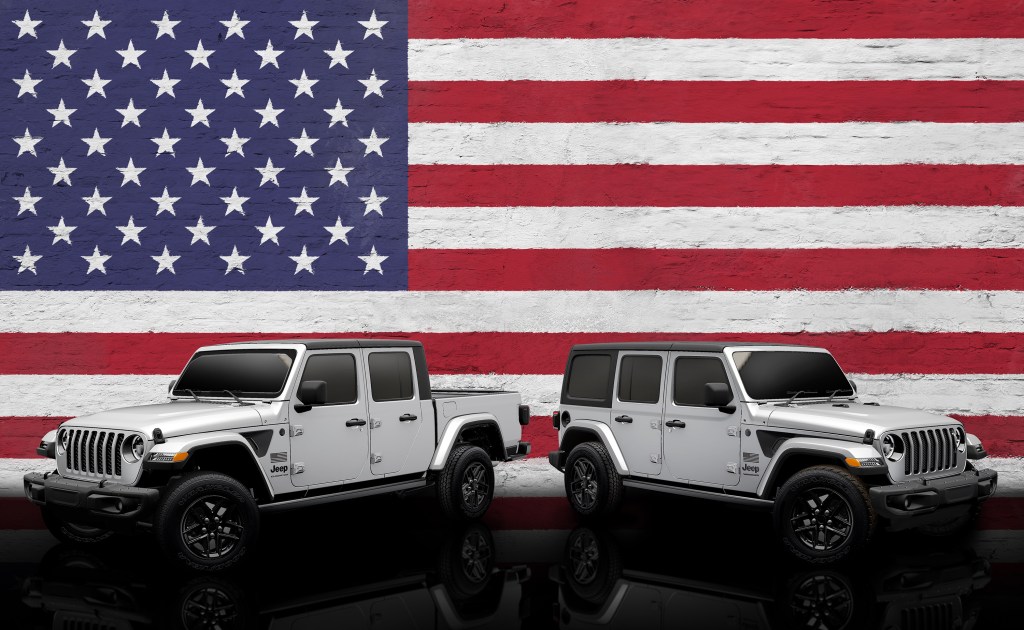
Just in time for the Fourth of July, when recognizing the efforts of America’s men and women in uniform is a very appropriate thing to do, Jeep has unveiled a new Freedom Edition package that’s an optional extra on 2023 models of the Wrangler and Gladiator. What’s that? Check the box, and you get a regimental-uniform paint scheme plus an Oscar Mike badge – for all us civilians out there, that stands for “On Mission” – along with, natch, an American flag decal. The Freedom Edition rigs will also be sold with steel rock rails and a winch-capable front bumper to further toughen things up.

Military-themed interior design cues are also part of the Freedom Edition package. Order a Wrangler or Gladiator so optioned, and Jeep will donate $250 per sale to charities assisting military families, which we like. For off-road capability, all Freedom Edition Jeeps will further receive LED headlamps and fog lamps for added illumination.

Electrify American amasses strong North America investment cash

This is a company you may be getting to know sooner rather than later. Electrify America, the largest network of fast-charging stations for EVs in North America, has received an investment influx of $450 million from Siemens, the European electronics giant, bringing Electrify America up to more than $2.45 billion in total market capitalization. As a result, Siemens will now occupy a seat on Electrify America’s board of directors. Electrify America plans to be operating a network of 1,800 charging sites and 10,000 ultra-fast charging systems by 2026.

In addition to the Siemens move, Volkswagen Group is boosting its capitalization of Electrify American beyond its initial investment of $2 billion. The end goal here is to significantly broaden the open availability of ultra-fast recharging points for the nation’s growing EV fleet, while reducing the driving public’s carbon footprint.

Disabled racing star finds the winner’s podium at the Glen

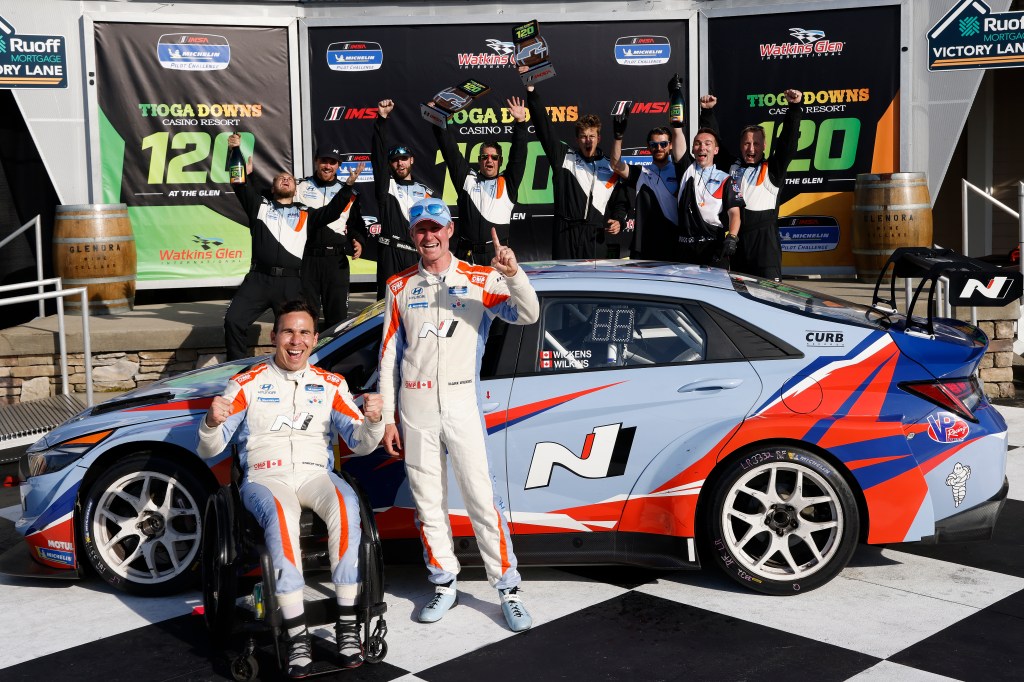
One of the better things about this business is that every so often, you get to report on something that’s really good. Here’s proof: The IMSA WeatherTech SportsCar Challenge made its annual stop at historic Watkins Glen, New York, last weekend and while the six-hour race for prototypes was the main attraction, it was a support division that ended up garnering most of the media attention. That’s because Robert Wickens – he’s the guy in the wheelchair – and Mark Wilkins scored the victory in the Michelin Pilot Challenge round at the Glen, sponsored by the nearby Tioga Downs casino and standardbred track.


Driving for Brian Herta Autosport, Wickens and Wilkins brought their production-based Hyundai Elantra N TCR home first in the two-hour timed race. Why was this victory so special? Because it was Wickens first trip to a podium since 2017, and his first win of any kind since suffering paralyzing spinal cord injuries in a 2018 IndyCar accident at Pocono. Wickens drives the Elantra using hand controls, and raced his way to his first win of 2022 in the Michelin Pilot Challenge that was dominated from the start by race-modified Elantra sedans.

Flopper heaven as told in 192 pages laden with history

Every so often, you run into a book that captures its subject matter with uncommon focus and tribal knowledge. A special measure of enthusiasm is essential when you’re dealing with a subject like the rise of the Funny Car, an upheaval that rocked drag racing to its very roots in the 1960s and still reverberates today, with Funny Car arguably the most consistently popular of the National Hot Rod Association’s professional categories. The story of the Funny Car has been told piecemeal in the past but now, a dedicated volume, just released by CarTech, tells the tale of the Funnies’ crucial first decade with a mixture of detail and delight.

Early Funny Cars 1964-1975 lives up to the promise of its tagline, standing as a technical study on the evolution of drag racing’s most popular class from its earliest days as a thoroughly tricked-up outgrowth of Super Stock. The story is told by drag historian Lou Hart, who lived this entire era from childhood, leaving him uniquely qualified to tell its story in these solidly illustrated pages. What comes across here most forcefully is how much fun, and how wildly individualist, the world of Funny Cars was in the early days – rear-engine cars, wheelstanding Jeeps, topless Chevy IIs, and a very strong helping of floppers that imitated American Motors products, including the old Ramber Rebel. There’s enough knowledge and entertainment contained herein to keep you glued to the pages for hours. A great accomplishment at an entirely reasonable price of $42.95.