A big, beautiful Bentley takes top honors at Pebble Beach

You had the feeling that the outcome was preordained somehow. After all, 2019 marks the 100th anniversary of Bentley, and the grand marque, now owned by BMW, was going all out this year to celebrate its centenary. So you had to think Bentley was going to have a prominent place in the results of this year’s 69th edition of the Pebble Beach Concours d’Elegance, the world’s most prestigious and exclusive judged car show. Of the invited cars to this year’s event, about a quarter were Bentleys, with the competing cars spread out across six classes. You had the feeling that one of them was going to be recognized in the biggest way possible.
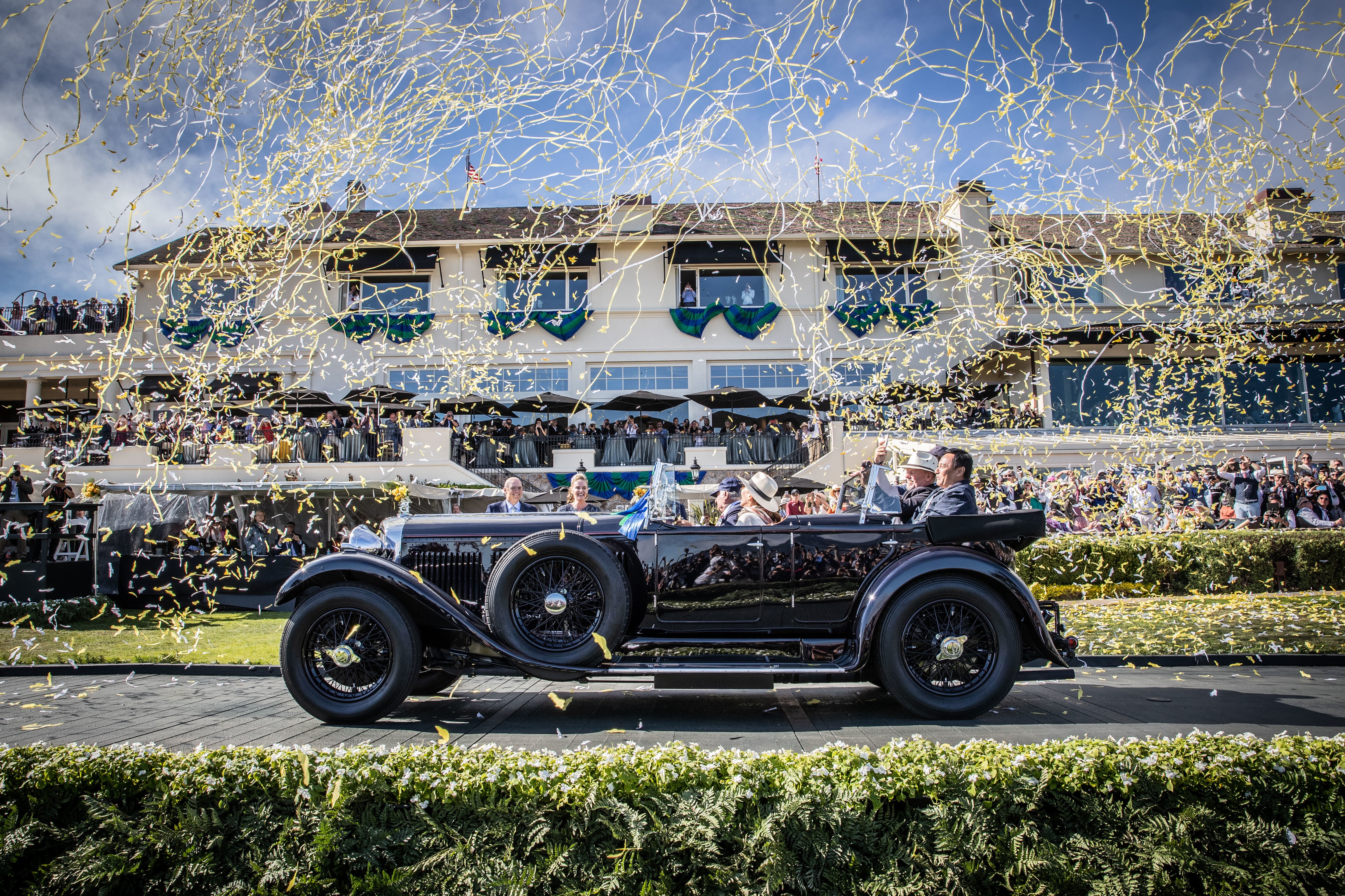
After the show cars were hemmed in by the horde of attendees and it was time for the confetti to fly, the Best in Show winner was a Bentley that aptly hearkened back to the British firm’s most glorious days. The biggest prize went to the 1931 Bentley 8 Liter Gurney Nutting Sports Tourer presented by Sir Michael Kadoorie of Hong Kong. As you can see, it was an absolutely outstanding car from a presentation standpoint. First introduced in 1930, the 8 Liter rode on the largest chassis ever produced at Bentley’s Cricklewood factory in London, with most of the 100 or so examples ever built riding on wheelbases of 144 or 156 inches. W.O. Bentley said that his goal was to produce a silent speedster capable of competing in the marketplace with the best of Rolls-Royce. Bentley specified that the 8 Litre would be powered by a gargantuan straight-six displacing 7,983 cubic centimeters – that’s 487.1 cubic inches – which produced 220hp, and assured that the 8 Litre would achieve 100 MPH regardless of the fitted coachwork. Gurney Nutting was a popular English coachbuilder with both Bentley and Rolls-Royce customers. This car was said to be one of two 8 Liter short-wheelbase chassis fitted with Sport Tourer bodywork by Gurney Nutting; the other car allegedly had its coachwork later transferred to a Rolls-Royce chassis, making the Kadoorie car the last of its kind in the world. It was a bittersweet year for Bentley: Despite building what was arguably the world’s most luxurious sporting car, Bentley went into receivership in 1931, and ended up under Rolls-Royce ownership. The Kimball Studio photo of the Bentley in the victory parade was furnished by the concours, and came to me courtesy of my friend Kurt Ernst at Hemmings Motor News.
The best British sports car that isn’t British has a birthday bash

We’re talking, of course, of the Mazda MX-5, known widely since it first appeared as the Miata. A post like this one can make you really feel your years, I guess, given that this marks 30 years since the first Miata scampered onto our shores. With more than 1 million units sold across four generations, the MX-5 Miata is far and away the biggest-selling two-seat roadster in automotive history. Then and now, its success is based in large part on its mating Japanese reliability with the ethos of the classic British sports car, like those from MG and Triumph: Simple, totally fun and sanely priced.

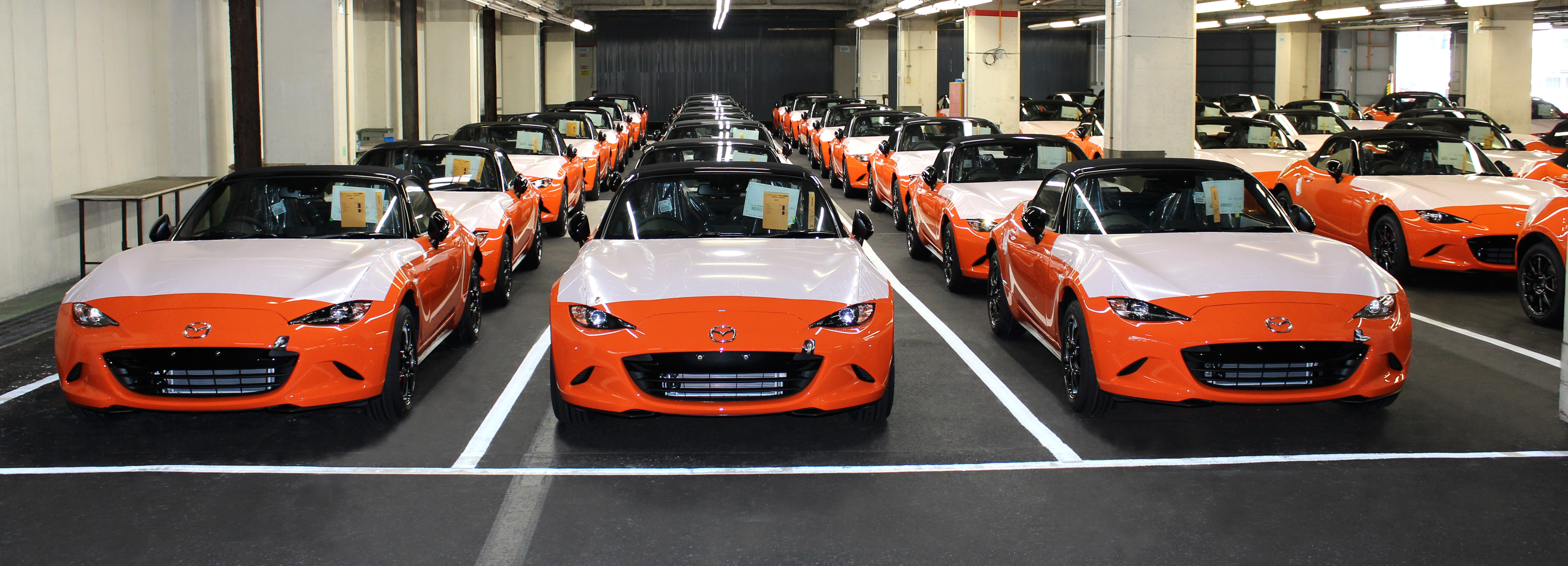
Mazda, obviously, wasn’t going to let the 30th anniversary of its bite-size delight pass unnoticed. This year, its dealers have been offering a commemorative run of MX-5 Miatas, all done in a paint and stripe scheme of Racing Orange, with special badging, plus Brembo brakes and Recaro seats to build its road cred. Just 3,000 copies will be sold worldwide, and much of the U.S. allotment is already spoken for through customer pre-orders. See your local dealer.

USAC honors its legends, including a humble gentleman with a typewriter

The United States Auto Club sanctions a variety of open-wheel classes, including a national tour for non-wing Sprint cars and Midgets. For an exceptionally talented few, success in USAC could punch their ticket to Indianapolis. Every year, USAC honors its best by inducting them into its hall of fame. The class of 2019 brings the number of the enshrined to 80, and its members include a really decent guy who I had the pleasure of working with for years. Dick Jordan was USAC’s director of public relations for more than 50 years. He had an encyclopedic knowledge of open-wheel racing in the heartland, and always was around to provide an even hand of help to young journalists learning their craft, including me. Dick died earlier this year and I’m thrilled to see him so honored.

The other inductees for 2019 are led by Johnny Capels, who won national championships as a crew chief with Joe Leonard, Al Unser Sr., Mario Andretti and Pancho Carter before becoming USAC competition director and chairman of its board. He also owned a USAC Sprint victory as a driver. Bryan Clauson won 112 USAC features in various divisions, parlaying that experience into several starts in the Indianapolis 500. Clauson was on track to run 200 races in a single season when he was killed at the Belleville Midget Nationals in 2016. David Steele was a pavement specialist in Sprint, Midget and Silver Crown cars, where he notched 60 USAC wins, all on blacktop, plus two Silver Crown national titles. He died in 2017 in a Sprint car crash at Desoto Speedway in Florida.

Mecum will present the Bullitt Mustang – yes, the real one – at 2020 Florida auction

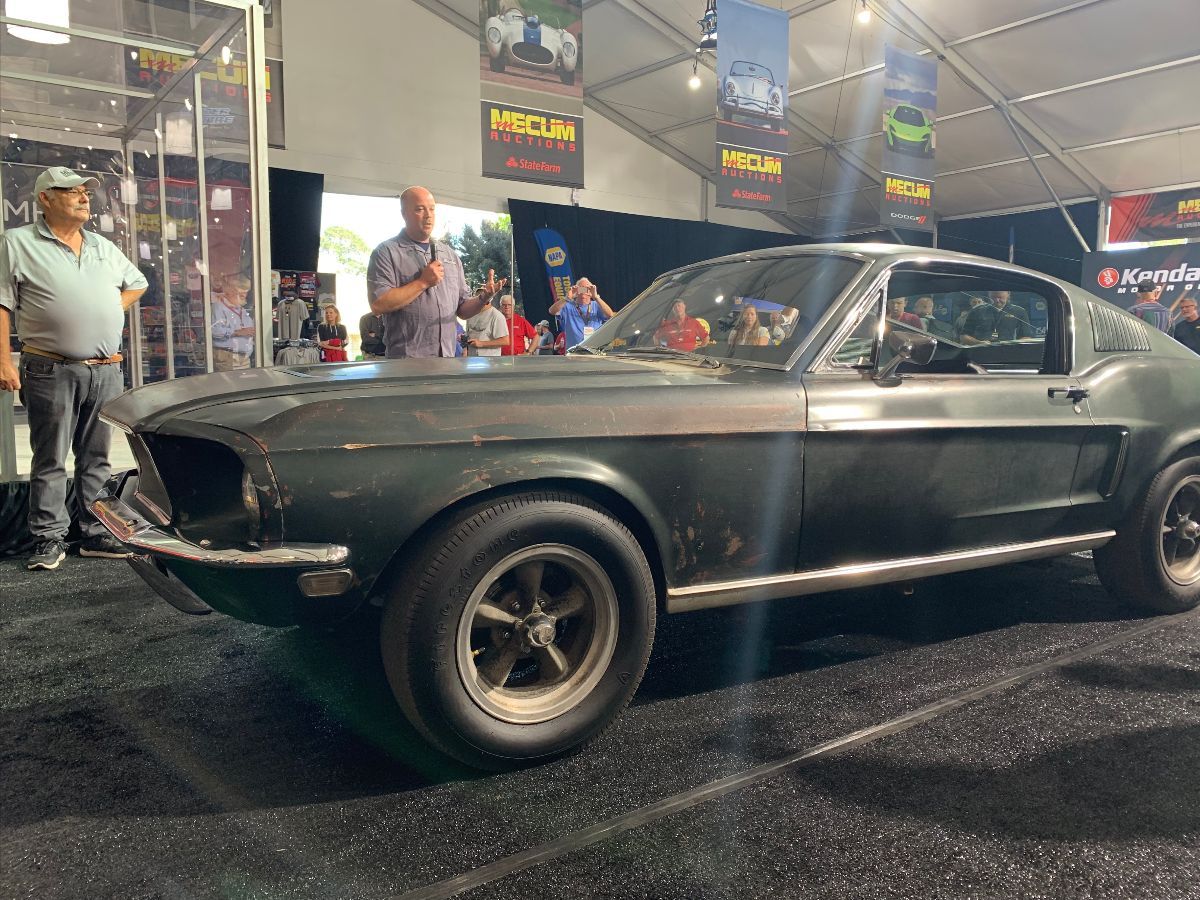
Let’s get the full disclosure out of the way first. I sometimes write capsules on vehicles that Mecum Auctions is presenting for sale, most recently several lots from its just-concluding extravaganza during Monterey Car Week. As I’ve said here before, that whole happening is awash in money. Which explains why Mecum stunned so many by rolling out the remains of the Ford Mustang that Steve McQueen used to rampage through San Francisco in Bullitt. Mecum presented the car at a media event during the Monterey sale and proclaimed that it will sell the fabled car at its auction in Kissimmee, Florida, set for January 2nd through 12th, 2020.

This is staggering news. After years of rumors and blind alleys, the Bullitt Mustang, authenticated by its VIN number, emerged at the North American International Auto Show in Detroit in 2018, to commemorate the 50th anniversary of the movie and its jaw-dropping chase scene, considered the greatest in motion picture history. It’s the only survivor of the two Highland Green 1968 Mustang GTs, with 390-cu.in. power, that were used in the film. Both were modified for stunt workby Max Balchowsky, long a figure in California road racing circles who was famous for his series of Ol’ Yaller racing specials. One was crushed after the filming. The surviving car is being offered by Sean Kiernan, whose father bought it years ago in New Jersey, where it was being used as a daily driver, and left it unrestored. McQueen, who specified how the Mustang was supposed to look for the movie, tried unsuccessfully to buy it back late in his life. This is the most mythical Mustang of all time, hands down, beyond any dispute. So what will it bring on the block? Put it this way: When Bullitt was filmed, McQueen was the highest-paid film star in the world. Any kind of memorabilia associated with him is a guaranteed gilt-edged collectible. In 2012, the Heuer Monaco chronograph that McQueen wore during the filming of Le Mans sold for $650,000, more than double its pre-auction estimate. So do the math.

Peering inside Formula 1, from the years of bravery and brilliance

We need a lot more books like this one. I had occasion to get to know the late photojournalist Pete Biro when he and I collaborated on several stories about racing history for Hemmings Sports & Exotic Car magazine. Pete was conversational, urbane and superbly grounded in his field of study, international motor racing. Pete passed away last year after a half-century of shooting races, both here and abroad. He counted as personal friends some of the greatest drivers and most influential figures the sport has ever known. Now, Motorbooks has combined Pete’s photography and the words of motoring journalist George Levy into a major new volume on Formula 1’s transformative years, entitled F1 Mavericks.

The book, with 240 hardcover pages, parallels the era in Formula 1 that began with the rear-engine revolution led by Britons such as John Cooper and Colin Chapman (even though Chapman had designed the Vanwall, one of the last successful front-engine cars) and ended with the FISA-FOCA split of 1980. In between were years that completely transformed F1 in terms of speed, harrowing danger and onrushing technology. Biro’s photography, both action and portrait, is simply brilliant. Levy gives it enough literary heft to turn it into something truly memorable. Mario Andretti contributed the book’s foreword and the late Niki Lauda authored the afterword. This will easily take its place among the great photo histories of Formula 1. The retail price is $50.00.

Sixty years of the Mini are recognized in Monterey

We probably ought to start out here with a little nomenclature talk. The Austin Mini, designed by the great Sir Alec Issigonis, was first introduced in 1959. BMW spells out its 60th anniversary of the landmark car, being marked this week at Monterey, as 60th anniversary of the MINI. The reason for the difference in capitalization is because BMW’s referred to the brand as MINI since it acquired it in 2000. Whatever, this is an important automotive milestone. Issigonis’ layout became the template for every transverse-powertrain, front-drive economy sedan that followed it.

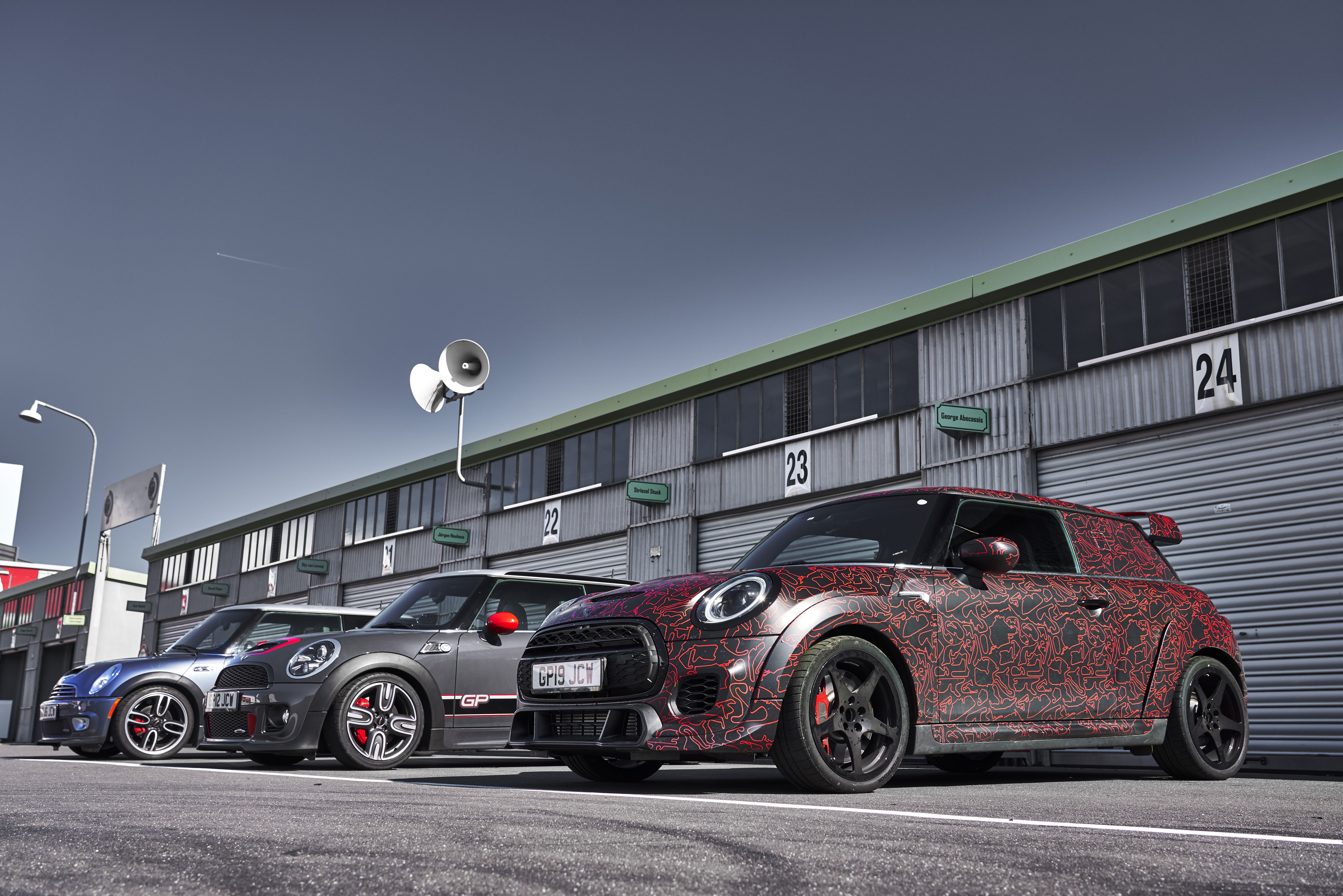
BMW will show two examples of forthcoming MINI offerings at the celebration; these will be the MINI Cooper SE battery electric along with the forthcoming MINI John Cooper Works GP. Also on hand will be a host of historic cars from Mini’s British and German heritages, one being a U.S.-spec 1965 Mini Cooper with full rally equipment, a legendary competition car if there ever was one. The reveal and reunion will be Thursday at 9:45 a.m. PDT at The Lodge at Pebble Beach on 17-Mile Drive.

Welcome to Monterey Week, the greatest (car) show on Earth

Fifty years ago, the world had Woodstock. It was too big, too unruly, and too expensive to ever happen again. The automotive world has its own gathering of the gods, and it too happens in the middle of August. Best of all, it’s kept on running each year, better all the time, and not getting stopped it its tracks. This is the automotive nirvana known as Monterey Week, which is getting cranked up right now. It’s an occasion to view pure beauty, revel in gorgeous scenery, see famous people, and maybe spend lots of money. You can go home with anything from a T-shirt and sunburn to a 100-point classic priced in eight figures. That’s Monterey.

There’s too much going on in Monterey to easily sum it up in a few photos. I’ve included this one from Mecum’s 2018 Monterey auction to give you an indication of what kind of vehicles are for sale on the peninsula, all over the place, with major auctions going on all week. Plus, full disclosure, I wrote some of the entries in Mecum’s catalog for this year’s sale. If you didn’t bring enough of a credit line to buy a car, the chances to see stunning cars are absolutely everywhere. I once saw the Alfa Romeo B.A.T. coupes driving down the street as a group in downtown Monterey. There’s the Concorso Italiano, the Monterey Historics, the Quail, the Pebble Beach Tour d’Elegance, the Concours on the Avenue in nearby Carmel, and the Legends of the Autobahn show, among others. The pinnacle is Sunday, the 69th Pebble Beach Concours d’Elegance, indisputably the world’s most prestigious judged showing of historic cars. It’s unbelievable. I’ve run into Jay Leno, Sir Stirling Moss and Led Zeppelin’s Jimmy Page on the show field. If you like cars, you’ve simply got to experience Monterey Week during your lifetime. It’s expensive, but keep in mind that a lot of the events during the week raise very significant money for local charities. You’ve got to go.

Meet the G.O.A.T.’s Coyote

A lot of people, including me, firmly believe that Anthony Joseph Foyt Jr. is the greatest racing driver who ever lived. He came out of hardscrabble Midget and Sprint car racing to become IndyCar’s all-time race winner, the first driver to capture the Indianapolis 500 four times, a co-winner at the 24 Hours of Le Mans, and a Daytona 500 champion. Along the way, he prevailed in stirring battles and endured harrowing crashes, which on various occasions left him with a badly broken back and legs pulverized into jelly. In his 80s, he’s still running an IndyCar team and when that series stops the weekend of August 15th-17th at Pocono Raceway in Pennsylvania, you’ll have an opportunity to examine another A.J. Foyt distinction: The first Indianapolis race car he ever built himself.

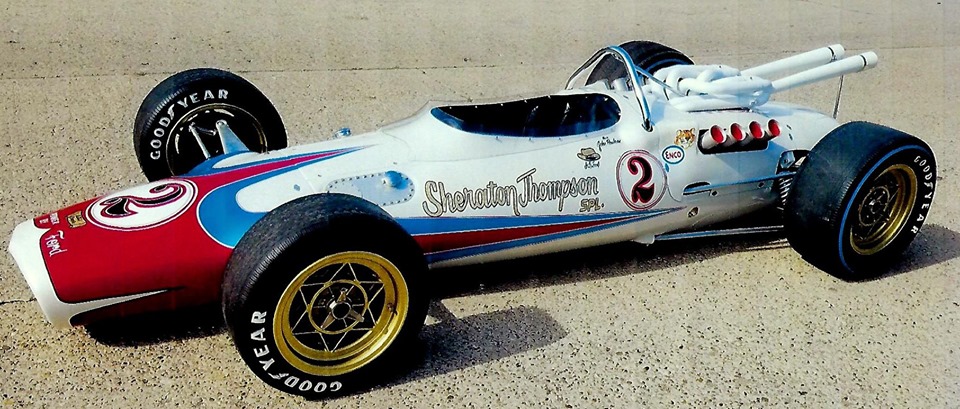
Foyt called the self-built car the Coyote, and admittedly, it’s a close knockoff of the Lotus 38 that spearheaded the rear-engine revolution during the 1960s in American championship racing. Restored by acclaimed IndyCar expert Walter Goodwin and owned by collector John Darlington, this is the first car built by A.J. Foyt Enterprises in Houston. It’s been restored to its original shape, powered by a four-cam Ford V-8 racing engine. After Foyt was done with the car, he sold it, and it was cut down into the first rear-engine Sprint car with an injected small-block Chevrolet for power. Tom Sneva, who went on to win the 1983 Indianapolis 500, raced it on bullrings successfully in the 1970s until the U.S. Auto Club banned his bullet, ruling that a Sprint car should be an upright, front-engine machine. A variety of championship, Sprint and stock cars will be displayed during the Vintage Indy Car Celebration at Pocono. To learn more about the weekend, click here.

100 years of dirt-track history is marked in Middletown, New York

They’ve been racing on dirt for a long time on the 5/8th-mile speedway in Middletown, New York, known formally as Orange County Fair Speedway. It’s been going on for 100 years, to be exact, which means the track now lays claim to being the oldest continuously operating speedway in the United States. OCFS, or Middletown if you prefer, has benefitted from smart management that’s kept the track viable even as suburban development from the New York City metro area has slithered ever closer. Beginning next week, OCFS will mark its 100th birthday with a huge celebration, culminating in a race for the track’s signature division, big-block dirt Modified stock cars, that will pay the winner $100,000, the richest purse in the history of that racing division.

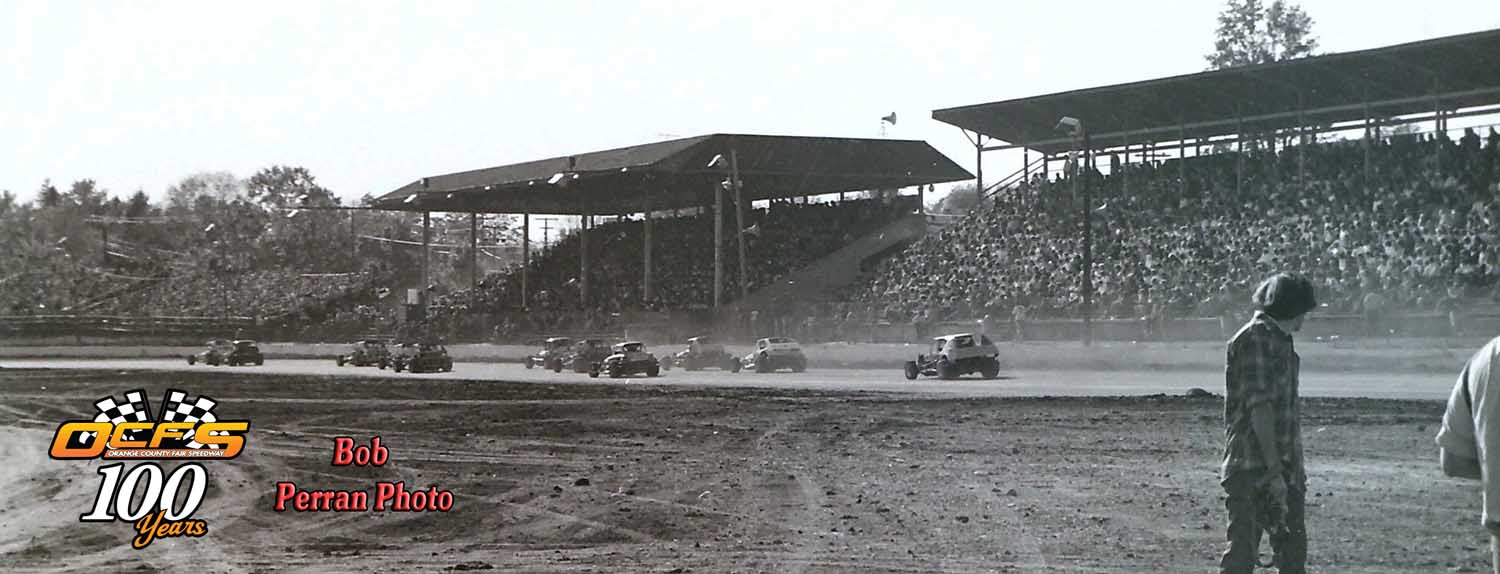
The photo by Bob Perran, taken during a running of the annual Eastern States 200 at OCFS back in the 1970s, tells you everything you need to know about this track. Honking open-wheel stock cars on hard-packed clay, doing battle in front of a full house. The 100th Anniversary weekend gets underway next Wednesday, August 14th, with a concert by country superstar Tim McGraw in front of the covered main grandstand, with a pre-show party at 6 p.m. On Thursday, the big-block Modifieds and dirt Sportsmen will run a full program, with a concert and movie thrown in. Friday brings a pair of features for small-block and big-block Modifieds, along with a concert by Artimus Pyle, the longtime member of Southern rock legends Lynyrd Skynyrd. Saturday’s run-up to the big 160-lap feature starts with a driver’s autograph session at 3 p.m., followed shortly by time trials and racing. OCFS is the home track of the fabled Brett Hearn, who owns more than 900 feature event wins in the Modifieds, some 200 coming at OCFS alone. Will he be able to cash his sport’s biggest paycheck? The speedway is located off Exit 120 on state Route 17, easily accessible via Interstate 84 and the New York State Thruway. The track phone is 1-845-342-2573. Tell the fine folks that we sent you.

Motorsports at Hyundai? Hold on, it’s electric!

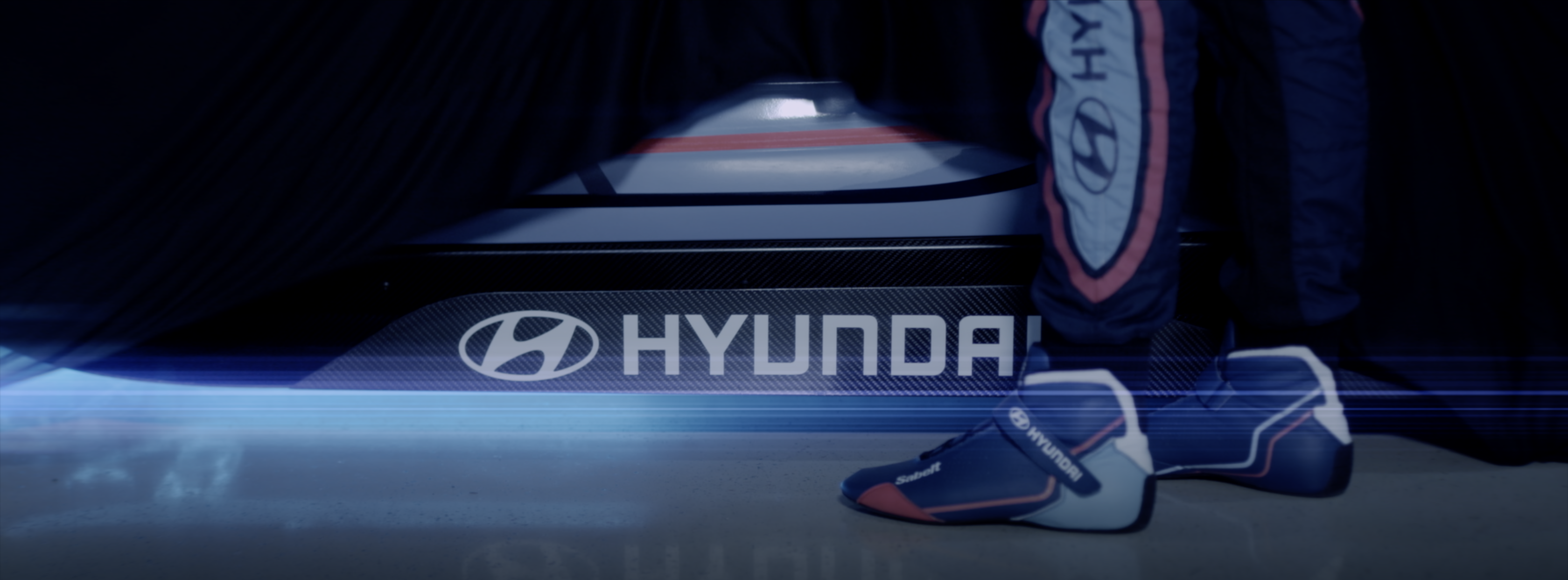
They’re not saying yet what branch of racing it’s going to compete in yet, but this much is clear: Hyundai, one of the world’s leading automakers, is getting ready to unveil a factory-built, factory-backed competition car that’s powered entirely by electricity. Yes, it’s going to happen.

The official rollout of whatever Hyundai’s planning won’t happen until September 10th, which is media day at the International Motor Show in Frankfurt, Germany. But the South Korean auto giant has been releasing teaser photos of late, like the one above, hinting that something seriously big is in the offing. Hyundai hasn’t been a global player on the racing stage for all that long, mind you, having only established its own in-house motorsports division in 2012. But in the time that’s elapsed since then, Hyundai has built a successful Customer Racing division for privateers, developing the i20 R5, i30 N TCR and Veloster N TCR for competition. Plus, Hyundai has notched several overall wins in the World Rally Championship. The new car – for Formula E, perhaps? – will be the first racing car created by Hyundai at its global motorsports headquarters in Alzenau, Germany.