The pioneering Prius turns 20

Probably nobody who didn’t work at Toyota City in Japan realized just how prescient this new, diminutive sedan was when it first appeared in late 2000. Until Toyota introduced the Prius as a 2001 model, most mortals likely viewed electrically powered automobiles either as some kind of fantasy from the pages of Popular Science and such, or else as a smudged reference from some long-ago tome on the auto industry’s early history. Without a lot of hype – because nobody really knew whether buyers would embrace a tiny sedan whose practically invisible gasoline engine was augmented by rechargeable batteries – the Prius entered the North American market almost without a ripple, after having been sold in Japan since 1997. In the ensuing years, Toyota’s gamble has clearly paid off. The auto giant has since sold more than 6 million copies of the Prius worldwide, with some 1.9 million of them finding buyers in the United States. More importantly, the Prius was the launching point for Toyota’s expanded electrification of its U.S. lineup, which has since accounted for 3.6 million overall sales, including EVs bearing the Lexus nameplate. The Prius made electric cars both feasible and acceptable in this hydrocarbon-addicted country.

Of course, this milestone mandates a celebration. Toyota has rolled out the Prius 2020 Edition in a limited edition of 2,020 units, available in either Supersonic Red or Wind Chill Pearl with black accents, with a rear spoiler and XLE trim accoutrements. It’s still a Prius, its 1.8-liter Atkinson-cycle engine (meaning its four piston strokes take place within a single crankshaft revolution) and two electric traction motors assisted by a nickel-metal hydride battery pack. This is a legitimate 50 MPG vehicle, and for all its diminutive size, it’s amazingly roomy, with more than 50 cubic feet of available interior space. Prius sedans are extensively used as taxis in Paris; I rode in one piloted by a memorably engaging driver from Cameroon. Among other advances, the fourth-generation Prius now offers all-wheel drive.
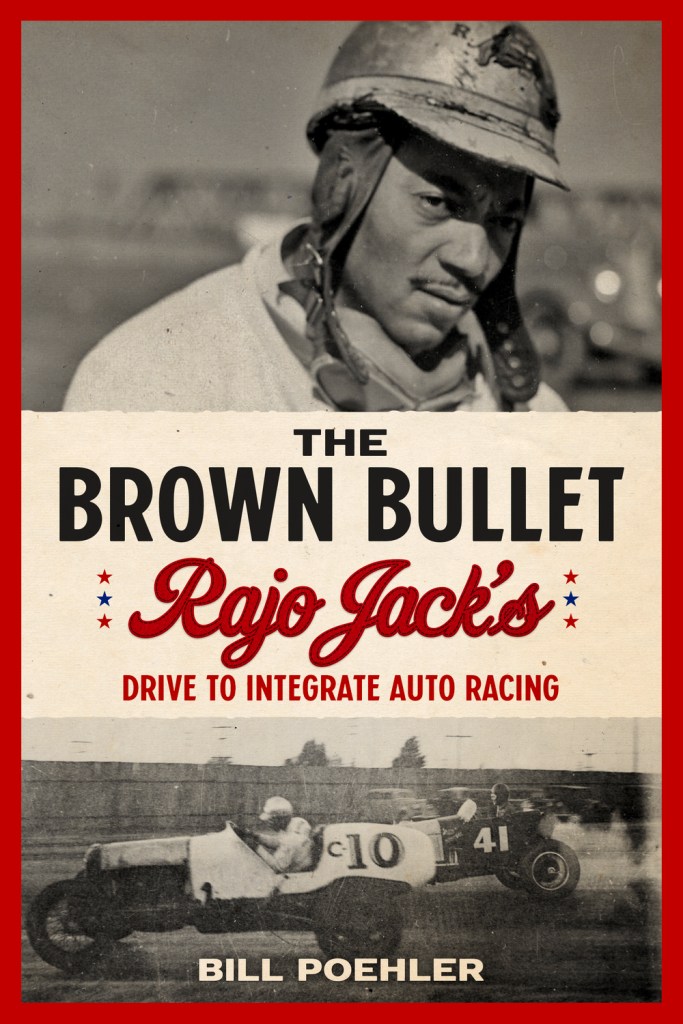
A rodder, racer and racial hero

It’s never been easy to make motorsports your life’s work. It was even harder when you were trying to do it during the Great Depression, and with the built-in disadvantage of not having been born white. That was the dilemma that confronted the man born in eastern Texas as Dewey Gatson in 1905. His family migrated to the West Coast, where Gatson worked as a carnival roustabout before his innate skill with automobile mechanics was discovered. In Los Angeles, Gatson fell in with the first generation of California hot rodders, a loose community that embraced Asians, Latinos and African-Americans like Gatson, who began racing under the pseudonym “Jack DeSoto.” When the early speed manufacturer Joe Jagersberger made Gatson the West Coast distributor of his famed Rajo cylinder head for early Fords, Gatson became forever known as Rajo Jack. He is a seminal, though largely unknown, figure in African-American sports history. Finally, there’s an excellent book that tells Rajo Jack’s full story.

By every objective measure, Rajo Jack had the right stuff to make the big time. This new biography, The Brown Bullet, published by Chicago Review Press, demonstrates painfully that in the 1930s, that wasn’t enough. Authored by Bill Poehler, an award-winning journalist at the Statesman Journal of Salem, Oregon, the 288-page hardcover closely examines the reality that because of his race, Rajo Jack was denied the opportunity to participate at the pinnacle of American racing. During those years, the premier sanctioning body in the United States was the American Automobile Association, which barred African-Americans from participating its its circuit of races, which culminated with the Indianapolis 500. If he’d had the chance to qualify at Indy, there’s a good chance Rajo Jack would have made the show, nearly 60 years before Willy T. Ribbs became the first black driver in the world’s most fabled race in 1991. The tale of Rajo Jack, who was fatally stricken while driving a truck in 1956, has parallels with that of Charlie Wiggins, an Indianapolis mechanic and hardcore racer who organized a circuit for black drivers after he too was denied entry at the Brickyard. Rajo Jack made his name driving on dirt in “outlaw” fairgrounds races, surviving several harrowing crashes. Today, he is enshrined in both the National Sprint Car Hall of Fame in Knoxville, Iowa, and in the West Coast Stock Car Hall of Fame. The book, likely one of the most essential works of racing history to be published this year, retails for $28.99 and is also available in Mobipocket, PDF and EPUB formats.

Audi’s lineup for 2021 includes more tech, power for A4

Yes indeed, life goes on, included inside the salons where very smart, committed people are at work designing new generations of vehicles for us. Audi returned to the real world this week by doing a group announcement of its 2021 model range. Taken as a whole, the changes are largely transitory, given the fact that a lot of what Audi builds was given a major redo for 2020. That’s the case with the Q3, A8 and A4 ranges, the last of which will head into a new model year with additional powertrain output, plus more technology and driver aids to keep folks behind the wheel happy.

Four-cylinder models in the A4 (and A5, also) range will see their standard output rating increase by 13hp in 2021, while a 12-volt mild-hybrid powertrain will also be newly offered in both of those Audi ranges. Quattro all-wheel drive will also become standard for the TFSI-powered A4. Among the interior goodies that are new are the Audi smartphone interface with wireless Apple CarPlay, lane-departure warning, and a new integrated toll module or ITM, all also standard for 2021. The A4’s optional Convenience package now adds a heated steering wheel and parking assist with front and rear sensors. Depending on appointment level, A4 base prices with quattro and the 2.0-liter TFSI engine will range from $39,100 to $49,400.

An artfully executed appreciation of Chevrolet’s immortal Corvair

I don’t know. It just seems that among business leaders today, too many of them are willing to go for a momentary quick buck rather than engage in true, visionary leadership. That certainly wasn’t the case when the great Ed Cole was a top engineer at General Motors before becoming general manager at Chevrolet and later, president of GM. Cole was largely responsible for the OHV Cadillac V-8 of 1949 and the fabled Chevrolet small-block V-8 of 1955, yet is was his leadership with an entire design of car that merits special recognition. Cole green-lighted development of what became the Chevrolet Corvair during the mid-1950s. It still stands today as one of the most innovative mass-produced automobiles in American history. In the 1950s, when domestic cars were highly orthodox in design, Cole approved a car that incorporated a rear-mounted engine, a transaxle, horizontally opposed cylinders, a semi-independent rear suspension that utilized swing axles, and air cooling, all in one swoop. When’s the last time an automaker tried something that radically new? Those who understand the Corvair praise its litany of advances and sheer innovation. The car deserved a serious work of history. With this book, it gets more than that.

Corvair Style is a respectful, affectionate look at these fascinating, sometimes underappreciated cars. The author is Richard Lentinello, executive editor of Hemmings Motor News and editor of Hemmings Classic Car, whose previous volumes have examined the glory of Cadillac and the righteousness of unrestored, original cars of the past. He clearly loves Corvairs. This book, totaling 196 softbound pages, is a gathering of individual looks at Corvairs from each model year – and more importantly, the stories of owners who preserve, drive and venerate them. Okay, I worked for the guy, but it’s essential for me to point out that Richard is an exceptionally gifted photographer of historic cars, and overall, the imagery in this book is outstanding. I got to know John Fitch, the American road racing legend and designer of Lime Rock Park in Connecticut, through my own work at Hemmings. So it was gratifying to see the Fitch Sprint, which me modified from a production Corvair, in these pages along with a Monza coupe personalized by longtime GM styling chief Bill Mitchell. If you’re fascinated by automotive history, you will like this book, which is available for $35 plus shipping from the author’s website.

Through the lens with a hero of drag racing photojournalism

Maybe you don’t know Steve Reyes by name, but if you’ve followed pro-level drag racing to any degree during the past 40 years, you’re certainly familiar with what he can do with a camera. Steve is one of the most accomplished, prolific and honored photographers in the history in the sport. His work has historically been so much in demand that during the 1970s, he held the unofficial title of the nation’s most-published motorsports photographer of any kind. I got the opportunity to know him when we cooperated on photo essays on drag racing from the past, in all kinds of competition categories, in the pages of Hemmings Muscle Machines. I’ve also owned and enjoyed several gatherings of his work in book form. Steve is one of the very best at what he does, and I jumped at the opportunity to feature his work here.

Steve is a native of the Bay Area in California, and saw his first race when his father took to the legendary Fremont Dragstrip in 1963, at the zenith of California’s great wars in Top Fuel. He soon noticed there were no photographers to record the action. While still a youngster, Steve armed himself with a movie camera and started shooting at tracks around his home. He soon embraced still photography instead, first with a 620 Brownie and then a Kodak Instamatic fitted with a motorized film advance that was powered by a metal spring. He got his first serious camera, a 35mm Kawa, in 1965 and followed it up with a Hasselblad. By 1970, he was toting a premium Nikon F with a motor drive. Not long after, Steve moved to the drag nirvana that was Los Angeles and was going on the road. A partial list of the publications that have carried his work included Drag Racing, Drag News, Super Stock & Drag Illustrated, Cars, National Dragster, Popular Hot Rodding, various Argus Publishing titles and even Esquire, the last for shooting Reggie Jackson’s collection of muscle cars. Besides drag racing, he’s photographed IndyCar, along Sprint cars from the California Racing Association and the World of Outlaws. He is enshrined in the International Drag Racing Hall of Fame.

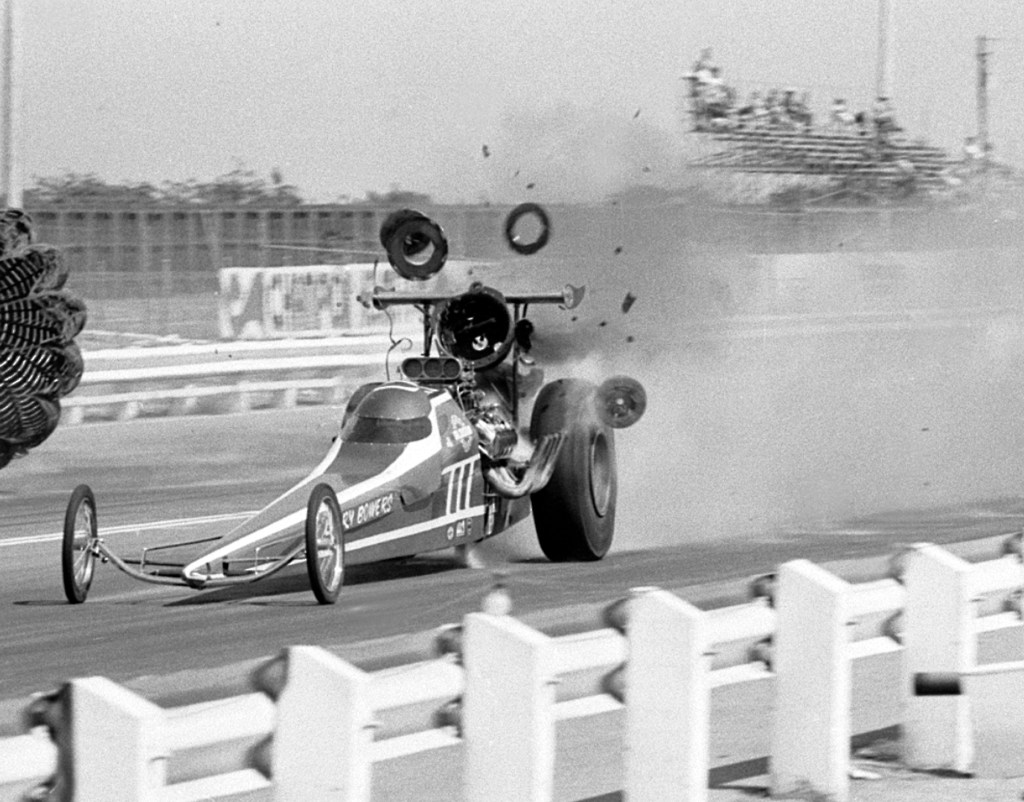
Steve has captured every conceivable type of incident at drag strips, but is arguably best known for his uncanny ability to capture all sorts of, um, unexpected component disassembly such as this, which is Larry Bowers scattering the clutch, flywheel and bellhousing of his Top Fuel car at Orange County International Raceway in the early 1970s.

Drama in drag racing is literally anywhere you look. The Warlock AA/Fuel Altered, guzzling copious quantities of delicious nitromethane, uncorks a tire-smoking wheelstand leaving the line at Fremont in 1967.

When they talk about heated competition in this kind of racing, you’ve got to take it literally. Around 1984, during the U.S. Nationals at Indianapolis, Ron Dudley shed the bodywork of his nitro Funny Car after booming the engine.

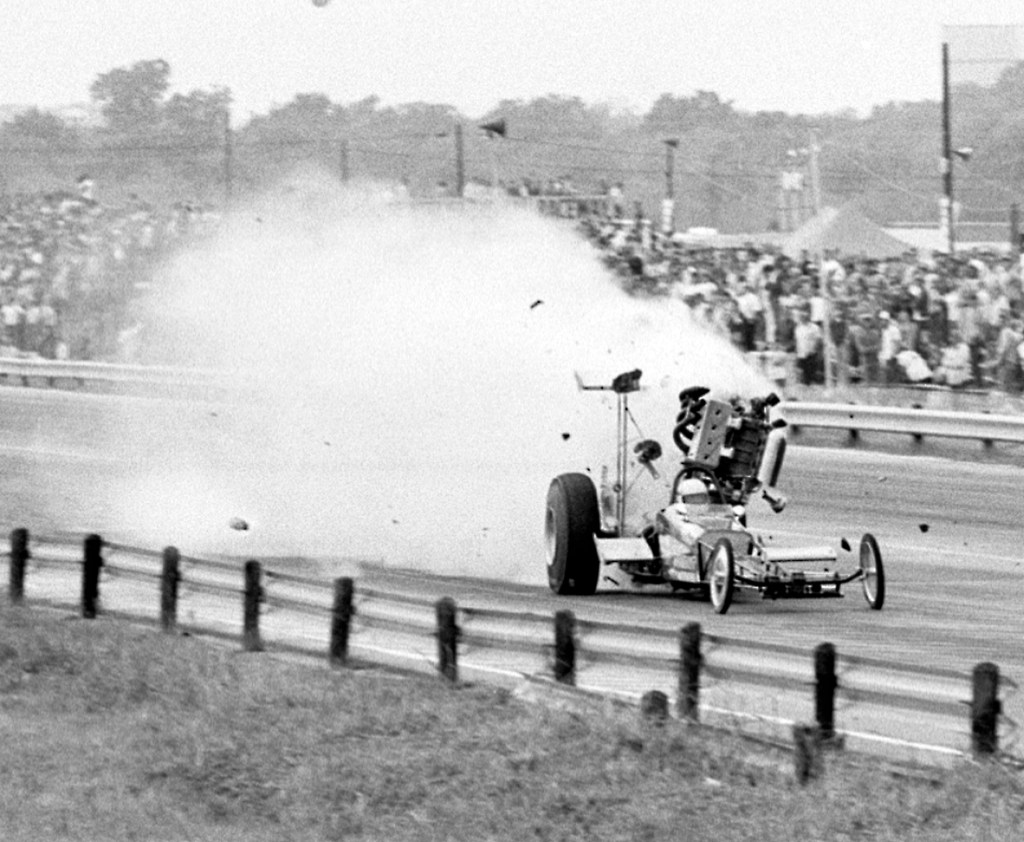
In other forms of motorsports, there’s talk about losing an engine. Then there’s this. At Tulsa, Oklahoma, circa 1972, a big bang has tossed the whole shebang, block and all, completely clear of Bob Dumont’s digger during Top Fuel action. Steve’s compiled this sort of craziness into a series of books that CarTech Books has in its catalog. You’ll never go wrong by acquiring them.

A speed star from, yes indeed, Delaware

If you read these posts regularly, you know about our affection for the Modifieds that race on the dirt tracks of the Northeast. For the uninitiated, a Modified is a stock car with open wheels, the direct descendant of the prewar coupes that shoved the Midgets aside in weekly Northeast auto racing after World War II. A tube-frame car with upright center seating and a replica production body, a Modified can be commonly powered by a Chevrolet big-block displacing 467 cubic inches. The unquestioned home turf for dirt Modifieds is upstate New York, plus Ontario and Quebec in Canada; they’re almost as numerous in New Jersey and Pennsylvania. But other pockets of Modified fandom exist: Vermont, western Ohio, and the Delmarva Peninsula. One of the stars from the last circuit, for many years, was Harold Bunting, a native of Milford in downstate Delaware. On July 23rd, he will become the first racer from Delaware to be enshrined in the Northeast Dirt Modified Museum and Hall of Fame in Weedsport, New York.

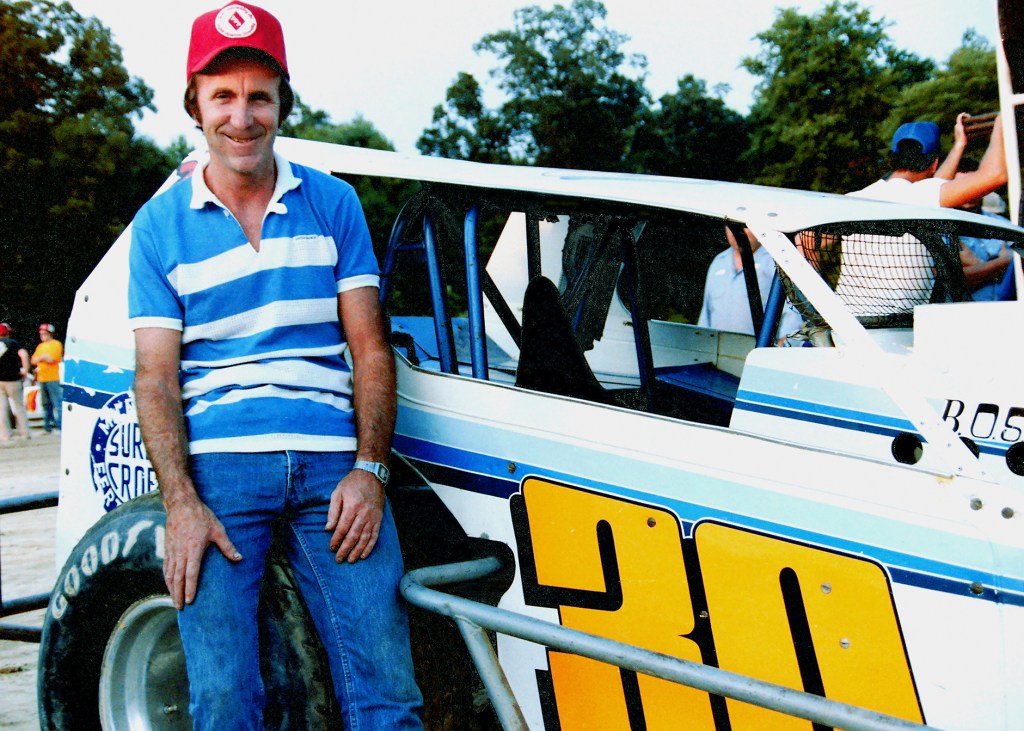
Bunting started out racing karts before getting his first crack at a dirt Modified in 1969. He amassed an amazing 53 feature event wins, using both V-8 and six-cylinder power, in 1973 at all four Delaware dirt tracks: Delaware International Speedway, Georgetown, the now-defunct Little Lincoln Speedway and the Delaware State Fairgrounds in Harrington. This image by photographer Don Allen Jr., supplied by hall of fame selection committee chairwoman and racing journalist Buffy Swanson, depicts Bunting with the ride for which he’s arguably best known, the Blue Hen Racing number 30 fielded by Eugene Mills, himself a hall of fame inductee. They combined to run up 29 feature wins in Delaware and New Jersey from 1981 through 1983. Bunting them teamed up with car own Steve Dale through 1986, when he captured 13 races and season championships at all three active Delaware dirt tracks. At the height of his career, Bunting retired from driving, having amassed 234 career feature wins at speedways in Delaware, New Jersey, Pennsylvania and Virginia.

Very tenatively, racing returns

We don’t ordinarily cover NASCAR very much here because there are any number of other websites that do it extensively. But we’re going to make an exception here for some very significant news. NASCAR has announced that its top series will make its return to live competition beginning on Sunday, May 17th, at Darlington Raceway. One NASCAR Cup Series race will be held that afternoon, with a second Cup race the following Wednesday night, May 20th. Sandwiched between the two will be a NASCAR Xfinity Series on Tuesday, May 19th. This will mark NASCAR’s first attempt at live competition since the COVID-19 pandemic brought its schedule, and the rest of the sports world, shuddering to a halt in March. Either FOX or FS1 will carry the Darlington races live, but there’s a major hitch: No spectators will be present at any event.

This kind of tightly compressed schedule may become the template for NASCAR’s 2020 season. Its leadership team here in Daytona Beach is determined to run NASCAR’s entire 36-race Cup schedule in full, a determination that’s partly driven by TV contracts and sponsorship commitments. The road show next moves to Charlotte Motor Speedway, where the Cup Series will run on Sunday, May 24th, and Wednesday, May 27th, with Xfinity Series and NASCAR Gander RV & Outdoors Truck Series events on May 25th and 26th, respectively. The May 24th NASCAR Cup Series race is the traditional Memorial Day weekend Coca-Cola 600 and will be held at 6 p.m. Again, no spectators will be on hand. All the races will be single-day events with no practice sessions. Qualifying will only be held for the Coca-Cola 600. The announcement didn’t mention it specifically, but it’s reasonable to assume that the May 24th event will stand in as NASCAR’s annual made-for-TV all-star event, the race that was originally known as The Winston. NASCAR will mandate PPE and social distancing for all participants, along with coronavirus testing for all individuals entering or leaving the track. This isn’t the only initial step being undertaken to resume racing in America. The World of Outlaws has announced that its own schedule will resume this month, sans spectators. The WoO Sprint cars will have a one-day show at Knoxville Raceway in Iowa next Friday, May 8th. The WoO Late Models will resume the following Friday, May 15th, down the road at Iowa’s Boone Speedway. Want some? Both full programs will be livestreamed on DIRTVision; visit the website to sign up for action.

Motown’s hot rod landscape

If your monthly diet of reading material doesn’t include The Rodder’s Journal, you really ought to do something about that. We firmly believe that the creators of hot rods and custom cars deserve their place at the table when it comes to seating the truly exceptional people who influenced American car design as the auto industry was still evolving. Rodders and customizers gave birth to the speed equipment industry, which is a billion-dollar business today, and convinced the industry that a market indeed existed for performance or personalized cars that were affordable. Older, landmark rods and customs with documented histories have deservedly earned themselves a place on concours show fields. No publication, anywhere, treats these cars more respectfully, and proclaims their place in automotive history more loudly, than TRJ. If you agree that these cars were works of art, then TRJ stands as an artistic journal. Each quarterly issue runs upward of 160 pages, on very heavy paper, with the finest writing and most evocative photography that rods and customs enjoy anywhere. If you’re serious about automotive history, you need to be reading this magazine. Period.

One of the good things about getting to know TRJ is the opportunity to browse its online store, which offers a whole range of rodding goodies, including a library of specialty publications. This title is the latest. Bob Larivee Sr. was the producer of the longstanding, legendary Detroit hot rod show known as Motorama. His role in putting it on ideally positioned him as a historian of rodding and performance in the world’s automotive capital. This book, Hot Rod Detroit, is the result. In 299 softcover pages, Larivee takes the reader on a rollicking, authoritative ride through the history of high performance in Detroit. Exhaustively detailed, with more photos than we could count, this work is more extensive than we imagined when we placed our order. Local cars are extensively covered, naturally, as is the the history of the show, but we were pleasantly surprised to learn that this book also focuses closely on the great shops, the immortal Detroit Dragway and even local stock car action, whose luminaries included the author for a time. Celebrities that march through the narrative include Adam West, Leonard Nimoy and a very young Bob Seger. Some past books that have dealt with similar stories have been amateurish and incomplete. Not this one. It costs 30 well-spent dollars. Visit the TRJ website or call 800-750-9550.

Love shifting? Try Hyundai

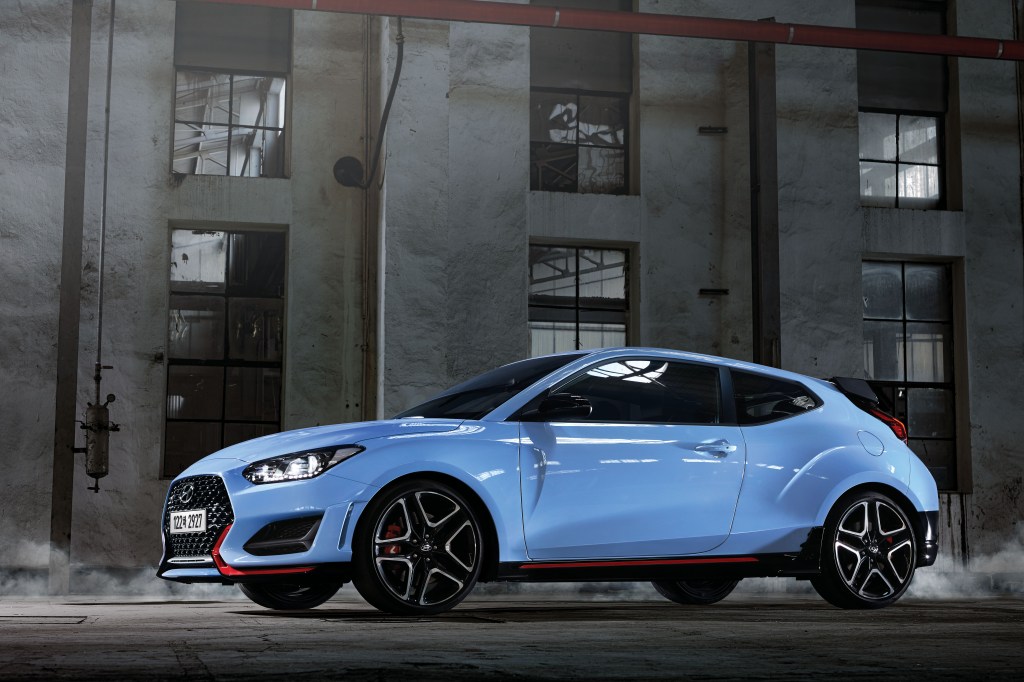
We recently told you, very enthusiastically, about MINI going all in on cars that let their drivers manually change gear. We’re happy to report they’re not alone, as Hyundai picked this week to introduce its enhanced Veloster N, an evolution of the sport coupe that’s developed a strong following among track-day types. The suffix on its name refers to N DCT, the Veloster’s entirely new eight-speed wet dual-clutch transmission, a powertrain advance that combines the sheer joy of rowing your own gears with the hassle-free experience of an automatic.

The N DCT utilizes electronic actuators that operate the transmission’s dual clutches. The clutches are bathed in oil, which improves both lubrication and cooling, the latter being an important consideration in spirited driving. The Veloster N embraces Hyundai’s 1.6-liter turbocharged engine with 201hp. Electronic controls, configured from the car’s infotainment screen, allow for maximum-power upshifts at more than 90 percent throttle, permit turbo overboost and an effective push-to-pass for enhanced shifting performance, and can select the right gear based on dynamic driving conditions. Sport bucket seats are optionally available, and the whole package is happily wrapped in the Veloster’s dramatic lines, which subjectively represent an improvement over the somewhat lumpy Tiburon that preceded it. Veloster N sales will begin in South Korea this month.

COVID-19 claims the towering concours at Pebble Beach

Putting on a truly international automotive salon like the Pebble Beach Concours d’Elegance is an enormous undertaking. The cars, and attendees, come from all over the world, as the fleet of private jets at local airports will attest. Despite the high prices – a general admission ticket runs $400 – so many people cram the 18th green to see the cars that you can’t even spot the turf under your feet. Not only that, but the concours also anchors the mind-boggling galaxy of happenings that’s become known as Car Week on the Monterey Peninsula of California, which includes the Monterey Historics, Quail Lodge, the Concorso Italiano and several major, megabuck car auctions. It’s paradise. Only this year, it’s all going by the boards because of an invisible killer.

I’d like to direct you to some coverage from my friends at Hemmings Motor News that explains everything that’s happened in the past hours. Daniel Strohl’s roundup, let with this Matt Litwin photo of last year’s concours, is led by the decision that the 70th edition of Pebble Beach, set for August 16th, has been canceled. The announcement followed California Gov. Gavin Newsom’s declaration that no timetable exists for restarting normal activities in the state, which were upended by some of the most stringent social-distancing guidelines in the United States. As a result, there was simply no way to pull Pebble Beach together. “Some of our overseas entrants were nearing the point of putting their cars on boats and planes, and their own travel arrangements have long been made,” concours chairwoman Sandra Button said. “The same is true for many of our international cadre of judges.” Immediately thereafter, the Quail and Concorso Italiano announced their own cancellations, as did Gooding and Co., the official auction of the concours, and the tongue-in-cheek Concours d’Lemons. This is only the second time that Pebble Beach has ever been canceled; imclement weather forced organizers to pull the plug in 1960. There is some good news here, however: Entrants invited to present cars this year at Pebble Beach are now automatically entered for next year, which will include the same featured classes: Past Pebble Beach winners, Pininfarina-bodied cars, Talbot-Lago Grand Sports, Miller racing cars, Iso cars, early electrics, the cars of La Carrera Panamericana and the immortal, all-conquering Porsche 917. All tickets purchased in advance will also be good for admission in 2021.