A bigger, electrified rig for clean deliveries in metro areas

We mentioned a while back that Hyundai, known primarily on these shores for affordable cars and SUVs, is planning to expand its rest-of-the-world selection of heavy trucks to include a rig running on electric power only. It’s not the only company looking to offer a more environmentally friendly way of making bulk deliveries in congested cities with issues concerning breathable air. Here’s some evidence that Hyundai’s not alone in viewing clean trucks as a growth market. Volta Trucks is a Swedish startup, which also maintains facilities in the United Kingdom, that’s preparing to launch a big rig running exclusively on electrons.
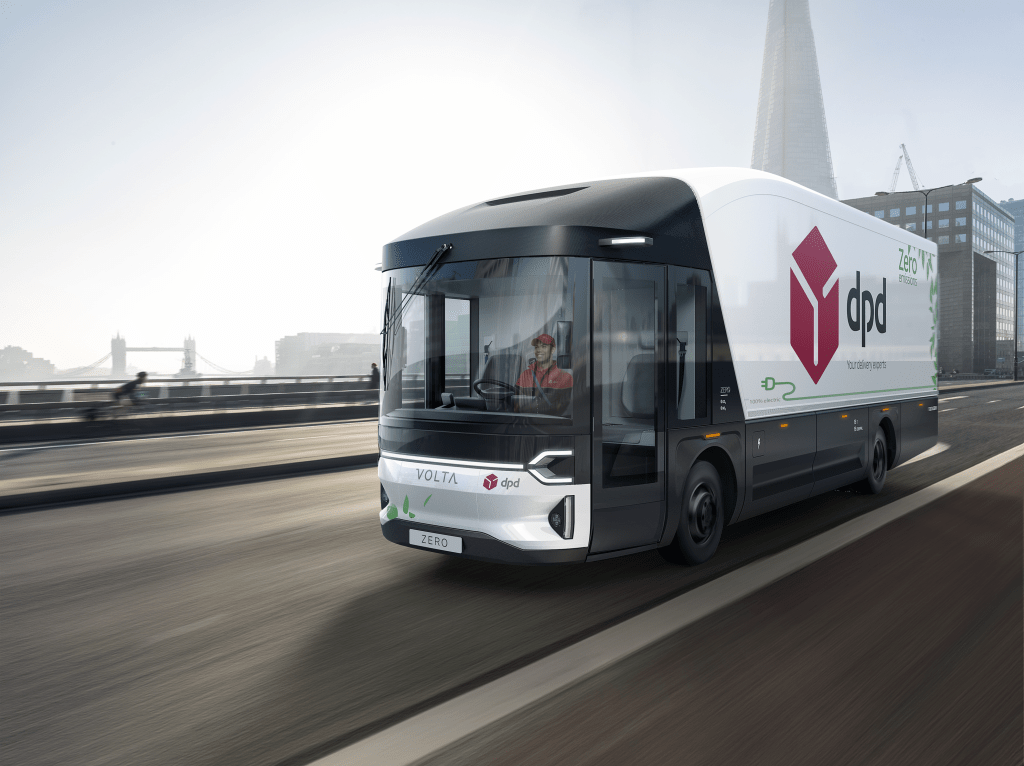
The truck you see above is the Volta Zero, which the manufacturer describes as the first purpose-built all-electric commercial vehicle designed for high-payload freight and parcel delivery in urban environments. Under development since 2017, the Volta Zero will have a capacity of 16 tons, a full-electric range of up to 125 miles per charge, and is said to be able to eliminate and estimated 125,000 tons of carbon dioxide emissions by 2025. An initial prototype is now under construction in anticipation of a formal rollout early next month. The designers say the adoption of electric motors and batteries by the Volta Zero, instead of the normal diesel engine and transmission, has an unanticipated side benefit that relates to traffic safety. Look at the photo. Jettisoning the diesel freed up the room for the driver to be moved to a central seating position in the cab that’s much lower to the ground, and other vehicles, than the lofty perch in other trucks. The enormous expanse of windshield glass allows the driver 220 degrees of visibility, greatly reducing potential blind spots. Among Volta’s technical partners are racing suppliers including Magtec and Prodrive, the latter of which has designed and built sports endurance race cars for Aston Martin and World Rally Championship cars for Subaru. Volta Zero deliveries to evaluation customers are set to commence in early 2021.
Command your worksite with Ford’s redone F-150

Like everyone realizes, the American pickup has in many cases been transformed into a statement on personal mobility more than a working vehicle. We’ve all seen folks idling in traffic, sitting tall in their full-size truck with some kind of designer or signature decor and interior package. Sometimes, you wonder whether the auto industry’s vision of what a truck is supposed to be, and do, has gotten lost as pickups have become high-profile transportation for suburbanites. Every so often, we’re reminded that at least in some cases, auto executives and designers still understand that a pickup remains a crucial part of a working person’s toolkit. We had a conversation last week with Travis Calhoun, a Ford Motor Company senior product planner helping to launch the 14th-generation F-series trucks, a process that’s underway right now. And the Ford people made it clear that if you buy a 2021 F-150, you’ll soon learn that it’s chockablock with innovations that won’t just help you strut and profile, but will also make you more productive at your favorite job site.

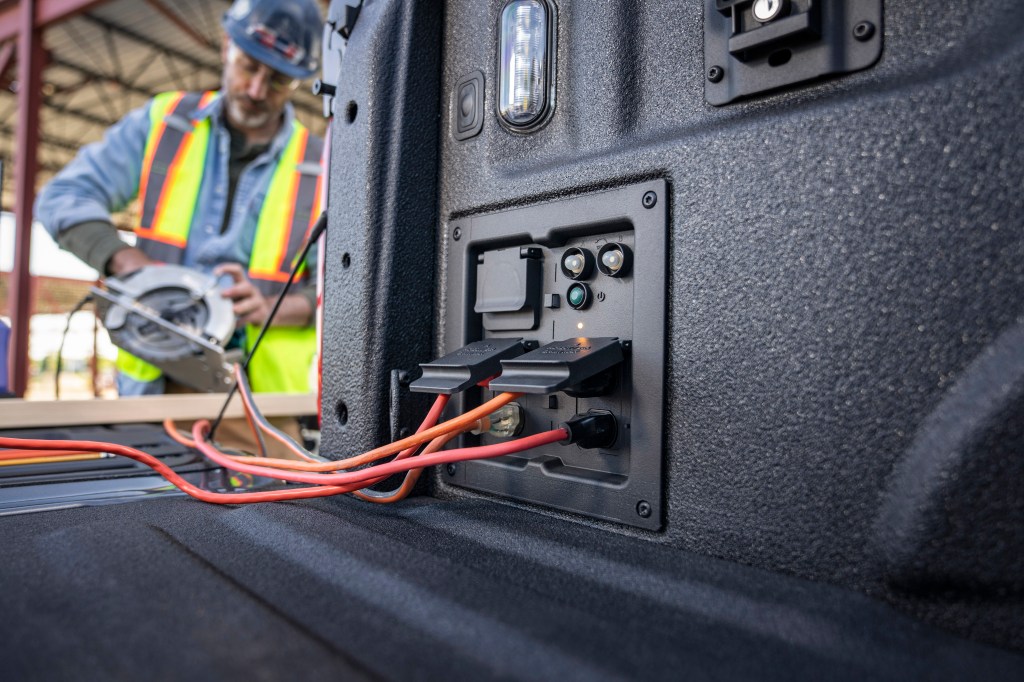
Travis said that during focus groups that were part of the planning process for the new F-series, Ford learned to its surprise that up to 20 percent of current truck owners were routinely carrying portable generators in their pickup cargo beds. That led to the advance you see in the accompanying photo. It’s called Pro Power Onboard, it’s available on the new trucks as an option, and it essentially turns the F-series into a mobile generating station that can produce power for a full range of uses at any job site. Ford calls this exportable power, which means that the new truck can be left idling and generate 2.0-kilowatt electrical output with gasoline power, or up to 7.2 kilowatts for F-series rigs optioned with the 3.5-liter PowerBoost hybrid powertrain. As Travis put it, a 22-gallon tank will allow an F-150 to potentially produce enough electricity to power a full worksite for 24 hours. The system combines in-cab electrical outlets with up to four bed-located 120-volt, 20-amp outlets, plus a 240-volt, 30-amp outlet on the 7.2-kilowatt version. All the new F-series trucks will have SYNC 4 connectivity standard, with over-the-air upgrades and voice recognition, which will allow buyers to turn on the truck’s exterior lights for site illumination using the FordPass app on their smartphones. Depending on how the truck is optioned, labor-savers can also include an optional Interior Work Surface in the cab, clamp pockets for securing projects to the tailgate without damaging it, and Max Recline Seats on premium models that fold flat to nearly 180 degrees, allowing owners to take a break and grab some z’s. This F-series can be made as much of a tool as anything with a Milwaukee, DeWalt or Kobalt label. Individuality and personalization are still important, mind you: Among other things, the 2012 F-series offers buyers their choice of 11 different grille options across the lineup.

“N” is for Hyundai N-joyment

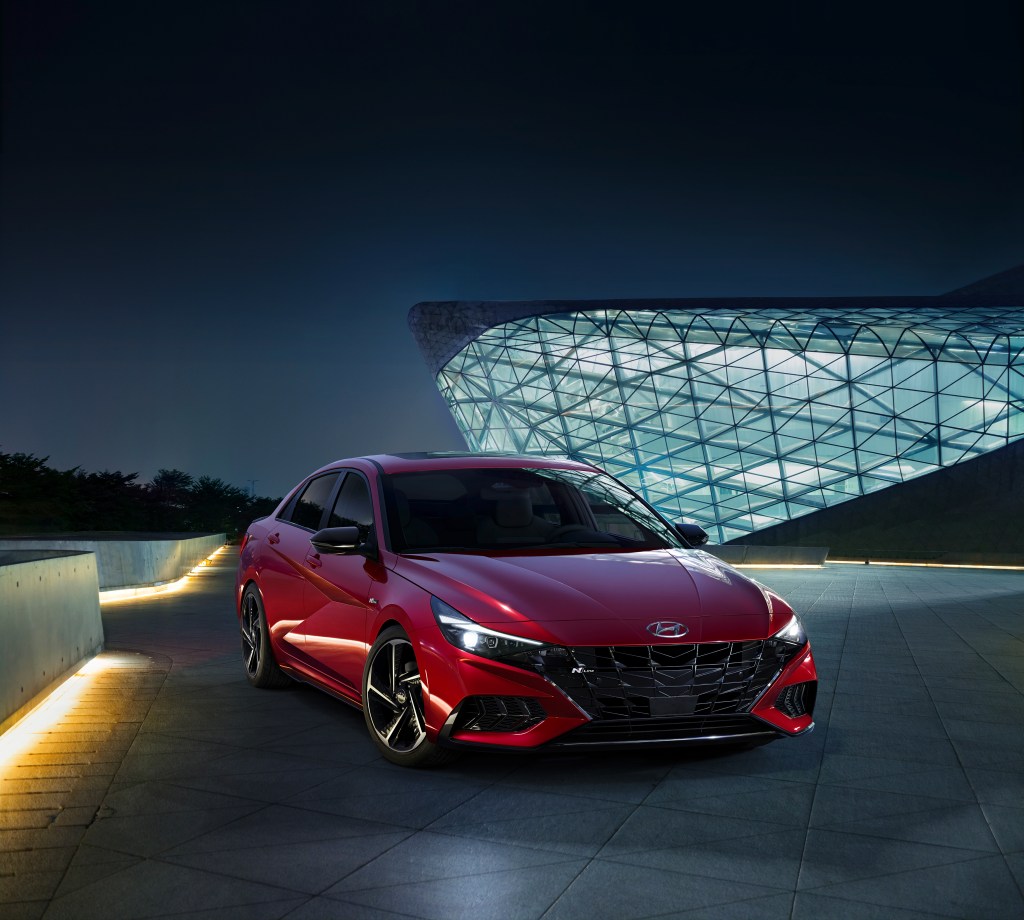
We’ve previously noted the arrival of a new-generation version of Hyundai’s compact sedan, the Elantra, which arrived in the showrooms back in April. Hyundai’s short-term plan is to significantly expand the Elantra’s range, and here’s its first manifestation, a specialty edition aimed squarely at the sweet spot of enthusiastic drivers. The Elantra N Line, just coming on line, gives budget-minded buyers who like to go quickly exactly what they’re seeking. The standard Elantra N Line engine is a 1.6-liter turbocharged GDI inline-four, which produces up to 201 horsepower while mated to either six-speed manual or paddle-shifted seven-speed automatic transaxles. Eighteen-inch wheels, enlarged front brake rotors and multi-link independent rear suspension are all elements of the N Line.

Other specifics include N Line grille badging, a leather-wrapped steering wheel, N sport seats with leather bolsters and alloy foot pedals. A full suite of infotainment and driver aids is also part of the package. A Sonata N Line with a 2.5-liter turbocharged GDI engine will be next, followed by the first-ever Elantra Hybrid, set to appear in global markets late this year.

Bentley luxury. Car optional.

If you’ve been reading this space regularly, you’re aware that Bentley Motors, arguably the second most-prestigious British automotive nameplate – a distinction some might bestow on McLaren – is marking its ongoing 100th birthday bash. If you visit the Bentley website, you’ll learn that the nameplate is about more than cars, and offers a whole range of lifestyle niceties and anniversary collectibles for its dedicated fans. You can find everything (at a price) ranging from fountain pens to napkin rings to a huge, 1/8th-scale replica of a Continental GT whose cost tops nine grand. In the same spirit, Bentley is also in the business of formulating men’s fragrances. Honest.

The announcement out of Crewe last week told the story: Bentley Fragrances – there is such a thing – has an addition to its Bentley For Men range, called Silverlake, which we presume was not inspired by the name of the eponymous residential area in Los Angeles. The perfume is said to be blended from sustained and natural ingredients. From the announcement: “As the heart of the fragrance unfolds, the green, moist-earth accents of violet leaf absolute evoke a majestic forest, touched by the frosty bite of pink pepper essence. The cool sheen of lavender hints at the silver water of a lake, reflecting the clear blue sky. Boosting these bracing accords, a powerful blend of ambery woods carried by a breeze of pure white musk give the scent its crisp, modern, long-lasting trail.” Fittingly, the fragrance forms its scent inside a silver flask, its cap ringed with Bentleyesque knurling. The cost is 69.50 pounds Sterling for 100 milliliters, which translates to $88.77 in American currency, only you can’t buy this bottle of Eau de Doo-Dah Day in the United States, for reasons that aren’t explained. Guess we’ll be sticking with Old Spice a while longer.

Ford racing heritage writ large

Maybe you’re lukewarm at best about the Ford Motor Company and the vehicles it’s built. Perhaps you’re into Chevrolet, Mopar products or even the iconoclastic offerings of American Motors. No matter where you come down in terms of marque loyalty, however, you likely recognize that the Total Performance era of Ford during the 1960s is a tale of motorsports domination unparalleled by any auto manfacturer, import or domestic. Henry Ford II put his money, ego and family name where his not-inconsiderable mouth was and by sheer will, turned Ford into a global racing powerhouse. Indianapolis, Le Mans, NASCAR, drag racing, Formula 1, even the Monte Carlo Rally, Ford swept them all during this heady period, which no serious car enthusiast could ever forget. Just in case, however, Ford is configuring a flagship product to ensure everyone still remembers what it accomplished more than half a century ago.

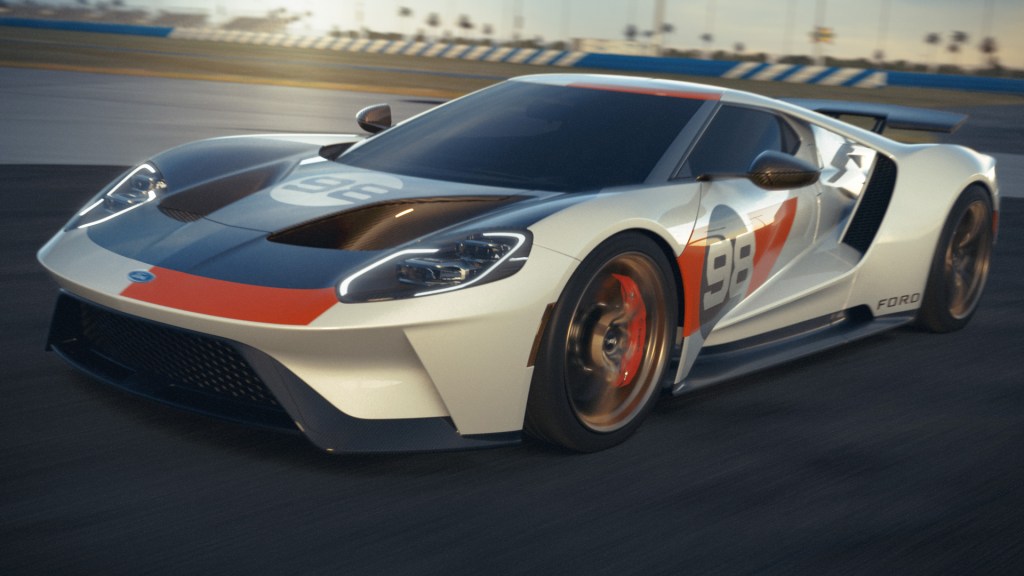
The megabuck, mega-fast Ford GT is now the recipient of a Heritage Edition paint-and-graphics scheme that recalls a milestone of the Total Performance years. In 1966, Dearborn showed up at Daytona in February for its 24-hour sports car race, which was then called the Daytona Continental. When the endless laps of the speedway’s road circuit were in the books, Ford had scored a 1-2-3 finish, crushing the likes of Porsche and the Deuce’s mortal nemesis, Ferrari. It was Ford’s first victory in a 24-hour race, but it wouldn’t be the last: Ford would go on to score similar podium sweeps in 1966 at Sebring, and, of course, Le Mans. The 2020 Ford GT Heritage Edition evokes the winning car at Daytona, which was shared by two great drivers, the irascible Brit, Ken Miles, and the taciturn Texan, Lloyd Ruby, the latter among the best drivers to never win the Indianapolis 500. In addition to the paint and graphics, the Heritage Edition adds gold 20-inch specific wheels and red-lacquered Brembo brake calipers. Deliveries will begin early next year; Ford GT production is scheduled to conclude in 2022.

Connectivity’s clutch at Mazda

If you haven’t noticed it yet, a broad digital capability for their owners is becoming widely accessible even among comparatively affordable vehicles. We point accordingly to Mazda, which announced today that its 2021 CX-3 subcompact SUV will begin hitting the showrooms next month, with a strong degree of digital capability for any vehicle of this size and cost. Opt for the Mazda CX-3 Sport, and you’ll find a lineup of standard features that include Apple CarPlay, Android Auto, Active Driving Display and automatic climate control. Aiding all this are a standard seven-inch color touchscreen with Mazda Connect and Bluetooth capability. A range of active driver-assist features are likewise standard.

The Sport trim level also means Mazda’s four-cylinder Skyactiv-G 2.0 as the standard engine, with standard front drive, up to 148 horsepower, and a standard six-speed automatic transmission. Sixteen-inch aluminum alloy wheels are standard. Depending on trim level, and whether all four wheels are driven or not, MSRPs for the CX-3 will get underway at $20,640.

Cue those warm inner sighs

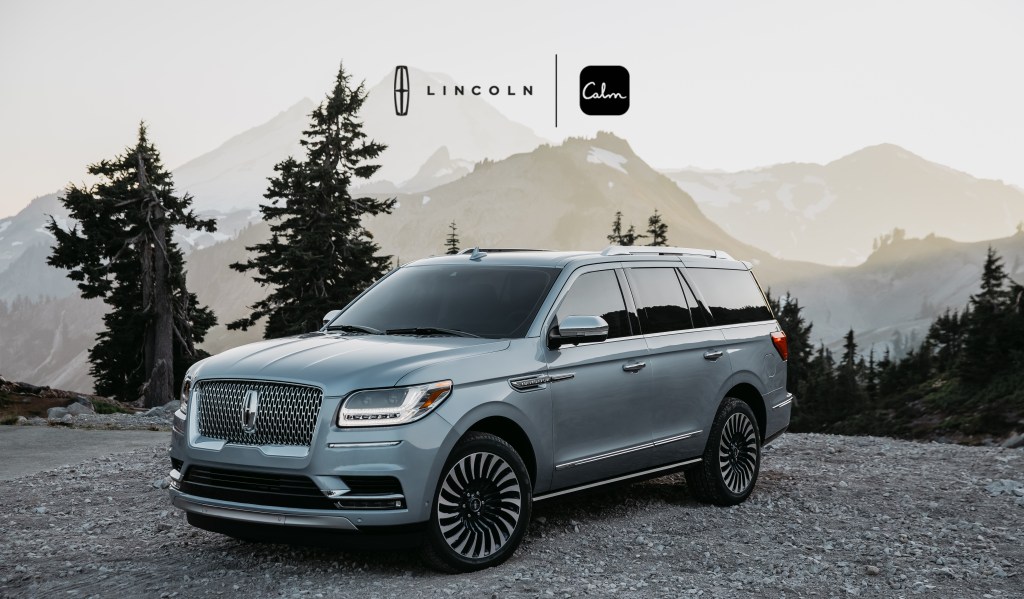
Coronavirus. Economic trauma. Unrest across the social landscape. We’re all dealing with greatly heightened anxiety now, and have been for months on end, with pretty much everybody looking for a way to manage it. Not every therapy out there is either healthy or legal. But at the very least, this global condition of jangled nerves is being recognized in a variety of ways. You may be interested to learn that this Saturday, August 15th, is National Relaxation Day. And rather than risk turning it into a Hallmark holiday like National Secretary’s Day or National Lasagna Day, Lincoln has decided to recognize the occasion by offering buyers of its new vehicles access to Calm, the mobile app that describes itself as the world’s leading digital application to promote mental health. No quips or criticism, please, because this is a serious matter to many people who are only trying their best to navigate an unsettling, uncertain world.

Lincoln first teamed up with the app last year, offering about 1,500 buyers access to Calm through a pilot program in targeted cities. According to Lincoln, 97 percent of the buyers who signed up found the experience beneficial. This time, Lincoln will offer buyers in North America a one-year, complimentary premium membership to Calm, available through the Ford luxury brand’s Lincoln Way app, through which buyers will be able to access and establish a Calm account. It will augment niceties such as Lincoln Embrace, which provides 30-way power front seats with, honest, massage capability. Calm offers users in 190 nations, speaking six languages, access to hundreds of audio files that will allow you to breathe deep and unclench your muscles. We say it beats kicking holes in your drywall when things get tense.

Want this BMW? It’s too late

You know how they say that good things come to those who wait? There’s a limit to how long society, or the auto industry, is willing do dawdle while some of us wait for our ship to tie up at the wharf. Here’s an example of what we mean. Alpina, the famed German tuning house that’s enjoyed a long and beneficial relationship with BMW, was pegged to develop an ultra-exclusive performance version of the X7, BMW’s full-size SUV, the first large SUV from Munich to be thusly massaged for exceptional road capability. Production just got underway at BMW’s stateside assembly facility outside Greer, South Carolina – officially, it’s known as Spartanburg – but it seems that the entire 2020 allotment of the Alpina-tuned XB7 is already sold. If you want one, you’ll have to wait until next year, at the earliest.

If you’re a little nonplussed, allow us to assuage your thoughts. Alpina-tuned BMWs are intended from the outset to be highly exclusive. As an indication, consider that total Alpina production, of all models, is limited to 2,000 units per year worldwide. By way of comparison, BMW proudly declares that its Alpina output is about 25 percent of what Rolls-Royce builds in total during any given year. The corresponding comparative percentage from Ferrari is even smaller. So if you buy an XB7 to take delivery sometime in 2021, you’ll be getting an SUV that’s really special, and not just in terms of its build quantity. Despite accommodating up to seven occupants, the XB7 can see 0-60 times of four seconds flat, a 12.6 second quarter mile, and maximum speed of 180 MPH. The reason why is the XB7’s twin-turbocharged, 4.4-liter V-8, rated at 612 horsepower. With a base MSRP of $141,300, the XB7 still sold out before production even commenced. Next year, set your alarm.

Sweet seats for the 2021 Sienna

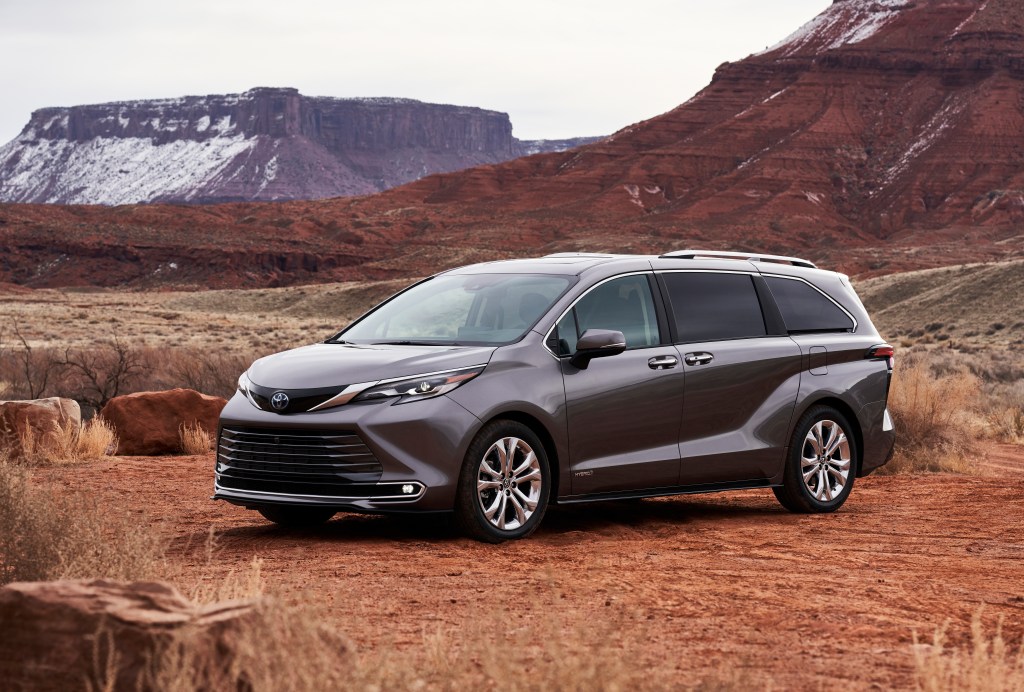
Fiat Chrysler Automobiles is officially killing off the Dodge Caravan, one of the most influential American vehicles of the past three decades. But minivans still have a place in this world, as evidenced by what’s going on over at Toyota, which is preparing to launch the 2021 version of its Sienna family hauler. Among its substantial list of improvements are four-zone climate control, kick-closed switching for its side doors and liftgate, new second-row captain’s chairs and even an onboard vacuum cleaner and refrigerator. What we can effectively gauge from all of this is that the Sienna’s project team has a very well-formed understanding about how families actually use these vehicles, negotiating around them while they’re trying to balance groceries, unruly kids, camping and sporting gear. To that end, the Sienna has picked up an interesting accolade even though it’s not in the showrooms yet.

Altair Engineering of Troy, Michigan, which supplies analytical data and cloud computing to the industry, has presented its Enlighten award to Toyota for its work in making the new Sienna’s third-row seat a lot easier for mere mortals to handle in real-time life. Engineers reduced the earlier seat’s 15-piece metal framework to a single resin casting for its folding back. That means that occupants will now have to expend only 19 pounds of force, instead of the previous 53 pounds, while levering the seat back upright from its folded-down position. The work was done in conjunction with BASF, Toyota’s technical partner on seat design. If you’ve ever struggled with a van or SUV to get the rearmost seat in place while you’re also struggling with packages from Bed Bath & Beyond or Best Buy, you’ll appreciate this as much as we do. The 2021 Sienna will be coming out of Toyota’s assembly plant in Princeton, Indiana.

Cadillac’s all-electric future emerges with a buzz

Officially, it’s a show car, a design study, a toe-dipping into a pond into which Cadillac has never waded. But it’s also a clear projection of the future at America’s most enduring luxury nameplate. Like everyone else, Cadillac is planning on going electric. And while it hasn’t announced formal production plans for its Lyriq concept, it’s a virtual certainty that this all-electric premium SUV is going to make it to Cadillac dealerships is some recognizable form, the speculation placing it in the 2023 model lineup. The Lyriq show car made its formal debut this week, along with some strong cues about what its production equivalent is likely to boast.

We can see immediately that it’s a high-beltline design with angular Cadillac styling themes – those lights! – that’s closer proportionately to a crossover than a genuine SUV. It rides on the forthcoming General Motors modular platform dedicated to EV use, and very interestingly, its traction motor powers the rear wheels, although an all-wheel-drive version is envisioned. A performance Lyriq with AWD is also being specifically eyed for production. Besides that packaging and layout tidbit, we also know that the Lyriq will be powered by GM’s new Ultium battery system, which will form part of the vehicle’s underlying structure, and whose inner chemistry will allow GM to cut the use of rare-earth elements such as cobalt by up to 70 percent. This, combined with the layout, is said to give the RWD Lyriq nearly 50-50 static weight distribution. Among the attributes GM is claiming are a range around 300 miles, very fast charging and Super Cruise3 hands-free driver aids, including voice-command lane changing, available on more than 200,000 miles of roads enabled to use the technology.