50 years later, a new Z-car

You likely saw our review recently about Motorbooks releasing Peter Evanow’s 50-year history of the Nissan Z sports coupe. Nissan, we’re here to say, has gone a long stride farther by publicly declaring its intentions to reinvent this pivotal sporting automobile from Japan. This week, Nissan rolled out its Z Proto design study, one of 10 proposed vehicles that the automaker plans to begin building over the next 20 months. Nissan has a history of doing these sort of multi-vehicle teases in the past; this one took place at the 33rd annual International Z Convention, which is being held this week in Franklin, Tennessee, Nissan’s current U.S. home. To say this is a proud heritage is an understatement: The original 240Z was a sweeping declaration that redefined Japanese cars when it was introduced in 1970. More than 1.35 million Zs have been sold since then, raced everywhere from Daytona to the Safari Rally in Africa, and campaigned by racing luminaries ranging from John Morton and Bob Sharp to Sharp’s longtime racing sidekick, P.L. Newman.
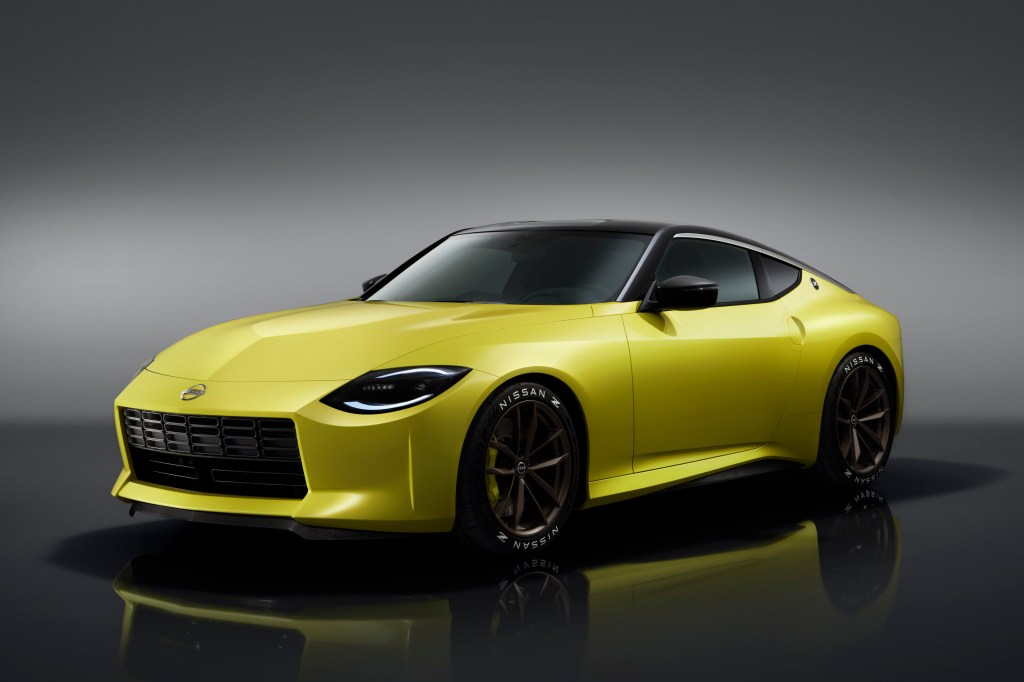
We can make a couple of immediate observations about the Z Proto. First, it will clearly continue the thematic purity of the original Z, a front-engine, rear-drive GT coupe with a longitudinal powertrain layout. Next, we’ll bet that the pearlescent yellow color scheme of the prototype makes it to the showrooms, given that it was an available shade on the first-generation car. The sharp, arrogant lines, especially up front, do more than just hint at what this car is going to deliver when it arrives for real. While full specifications will have to wait, the limited stats Nissan has released so far for the Z Proto indicated that it’s going to be a serious player that will have the Toyota Supra squarely in its crosshairs: Twin-turbo V-6 power, a standard six-speed manual transmission, and 255-/285-series tires on huge, aggressive 19-inch wheels. Given the timeline involved, this ought to be reasonably close to the final product. Among the other forthcoming Nissans being shown at the Z gathering are new generations of the Rogue, Sentra, and the coming all-electric Ariya crossover.
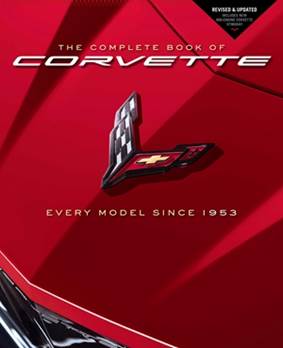
Eight generations of Corvette lore

Did the world really need another book about the Chevrolet Corvette’s history? In a word, yes, because this year has seen the rollout of the American sporting icon’s eighth generation, this time as a true mid-engine car, a concept that’s been the topic of teases and design studies dating back to the 1960s. The coming of the C8 was enormous news, and the car utterly transformed what a Corvette is all about. It was a big happening, which deserved a big book, by a big-name automotive historian, to tell it all properly. This is a case of book whose heft matches up cleanly with the import of its subject matter.

The Complete Book of Corvette, by Mike Mueller, has been in the catalog of Quarto’s imprint, Motorbooks, since 2014. The arrival of the C8, to enormous acclaim, justified a reissuing of this title in an expanded and updated format. It’s very hefty, a large-format hardcover running to 320 pages, with 425 illustrations, whose text undertakes a year-by-year accounting of all Corvette models reaching from 1953 to, literally, the present day. The author is a long-established standby of Quarto’s portfolio of Chevrolet performance titles, including history works on the Chevelle, Camaro and the small-block V-8 engine. As a photo-rich, single-volume history, Mueller’s work on the Corvette squarely hits all the high spots, with strong attention paid to benchmark engineering studies such as the CERV Corvettes, the Mako Shark design studies, the stillborn rotary-engine cars, and the IMSA GTP and Corvette Challenge race cars. The underappreciated, Lotus-massaged Corvette ZR-1 of the 1990s rates its own section of the book. Each model gets its own data panel, engineering cutaways are liberally applied throughout the text, and the Corvette immortals such as Arkus-Duntov, McLellan and Thompson receive their due reverence. An appendix lists every Corvette option by code or RPO number from the very beginning. This is a useful, welcome one-volume history of an American automotive legend. The U.S. price is $55.00.

All dressed in blue at FCA

Lots of people, including yours truly, make a habit of memorizing the shape of illuminated headlamps installed on vehicles associated with patrol duties by law enforcement. It’s always kind of useful to know when it’s potentially one of the folks in blue (or gray, or brown, or green in these parts) is occupying your rear-view mirror. Most recently, you spend a lot of your time looking for the cat’s-eye shape of Ford Explorer headlamps and their surrounding bezels. It can pay, literally, to get acquainted with what more vehicles than the Explorer resemble. To that end, we offer the latest law-enforcement news from Fiat Chrysler Automobiles, which is rolling out the 2021 editions of the Dodge Charger Pursuit and the Dodge Durango Pursuit.

Yep, they’ve got distinctive headlamps that are worth memorizing, too, especially in Daytime Running Light guise. Both of the new Dodge-badged police vehicles exceed their previous performance parameters, even when powered by the standard Pentastar 3.6-liter SOHC V-6, a Chrysler powertrain staple that can trace its roots to 1993. With this engine, mated to standard all-wheel-drive an an eight-speed TorqueFlite automatic transmission, the Charger Pursuit will still reach an electronically governed maximum speed of 140 MPH. The Durago pursuit adds an instrument panel-mounted transmission selector to free up space in the center console for communications gear and such, along with three-zone heating and air conditioning that will be ideal for Durango Pursuits assigned to K-9 duties. Naturally, Hemi power is available on both vehicles for those agencies looking to shorten long-distance highway chases.

Making the Mini into a marque

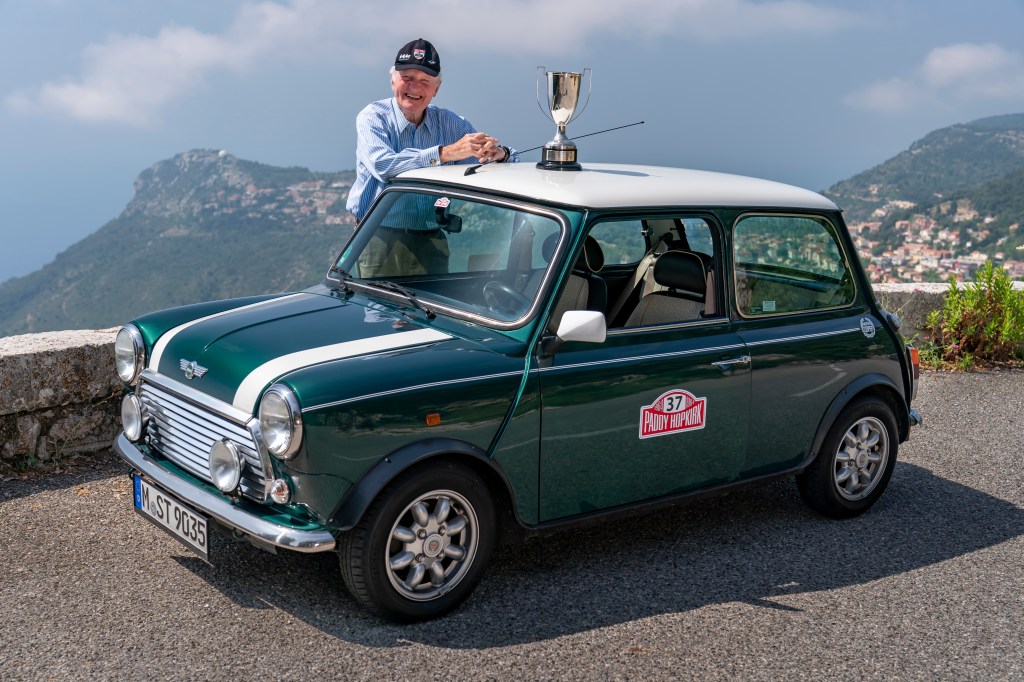
Today, the car’s name is spelled out in upper-case letters, an acknowledgement of its ownership by BMW since 2000. But in the early 1960s, the Mini, lower case, was a product of British Motor Corporation and had yet to prove its mettle on the field of global motorsport, despite hugely innovative advances in layout and packaging via its designer, Sir Alec Issigonis. Even in its high-performance guise as the Mini Cooper, the tiny Austin sedan still had a 1,275cc engine (and again, this was the big-displacement performance model) turned sideways in its front subframe, along with a transaxle powering the front wheels, a simplified hydrostatic suspension, and all four wheels forcibly pushed outward to the corners of the car. It rode on tiny 10-inch wheels. It was roomy, surprisingly agile and undeniably cute, but the Mini hadn’t proven itself in combat yet. Then along came the guy in this photo, Paddy Hopkirk, a native of Northern Ireland and hillclimb specialist who was hired by BMC to take the Mini rallying.

Then as now, Europe’s most prestigious competition for production-based automobiles was the grueling Monte Carlo Rally, contested off and on since 1911. By the time the Mini was introduced, the wintertime event had been recently been commanded by the likes of Hotchkiss, Sunbeam-Talbot and most recently, another front-drive curiosity, the Saab 96. For the 1964 running, BMC fielded a brace of Mini Cooper S sedans with Hopkirk as lead driver. Hopkirk started out from Minsk, the Soviet industrial city, where he snagged a can of Russian caviar to keep him fortified during the run. It quickly settled into a second-by-second struggle between the six-car Mini team and a stable of factory-backed Ford Falcon Sprints with V-8 power, engineered in part by Holman-Moody, which ran Ford’s NASCAR team out of Charlotte. The battle was joined for real at the icy, dead-of-night Col de Turini mountain stage across the French Alps, where the Mini Cooper’s superior control despite limited grip allowed Hopkirk to erase a 14-minute advantage that the lead Falcon held during that one stage. Hopkirk’s drive instantly became the stuff of Monte Carlo legend, and led to an overall win by the tiny, underpowered upstarts from Great Britain. Hopkirk was immediately lionized as a British national hero, earning a handwritten postcard from the Beatles welcoming him as the group’s unofficial fifth member. The Mini, the Beatles and Hopkirk all became British icons during the same unforgettable era, and Mini Coopers would sweep two of the next three Monte Carlo events, the sole departure being the 1966 rally, when the three leading Mini Coopers were disqualified for using non-dipping single-beam headlamps instead of production units, a regulatory bungle that stands alone among Monte Carlo Rally controversies. Now 87, Hopkirk is an elder statesman of both BMW-owned MINI and British motorsport, having eased the way for other Ulstermen in racing including John Watson and Eddie Irvine, both of whom enjoyed significant success in Formula 1.

Even more McLaren exclusivity

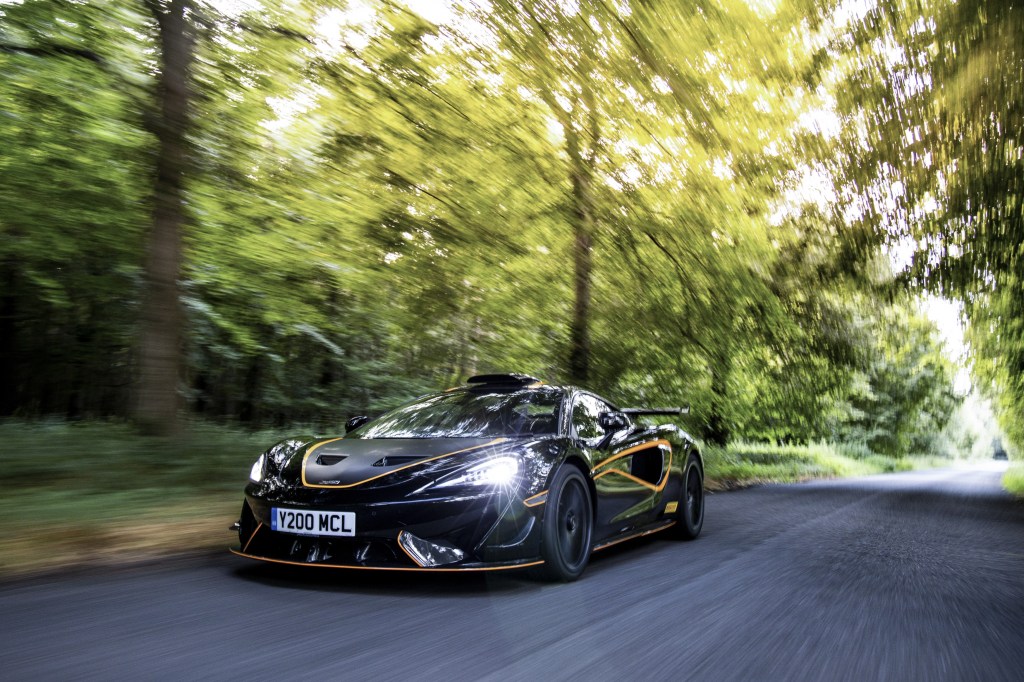
If you’re in a realistic position to acquire a McLaren 620R supercar – which means you’re already capable of throwing down a million bucks and then some – your bona fides as a player in the world of expensive cars are already firmly laid down. Of course, that’s never enough for some of us. That’s why McLaren Automotive, part of a three-element speed conglomerate in Woking, Surrey, in the United Kingdom, is coming up with a special edition of the track-ready rocket specifically for buyers in Europe, Africa and the Middle East. The new MSO R Pack – it stands for McLaren Special Operations – includes a carbon-fiber roof scoop with a gloss finish, titanium exhaust exits, fender louvers and carbon-fiber interior trim fittings.

It’s not all visual, either, as McLaren claims the R Pack’s titanium exhaust will add five decibels to the 620R’s aural output, which ought to be considerable: The 620R’s M838TE twin-turbocharged 3.8-liter V-8, a direct knockoff of McLaren’s race engine, produces 610 horsepower, enough to boot the carbon fiber-chassis supercar from zero to 62.5 MPH – that’s 100 km/hr – in 2.9 seconds, with an advertised maximum velocity of 200 MPH flat.

Back-engineered blower Bentleys coming from Crewe

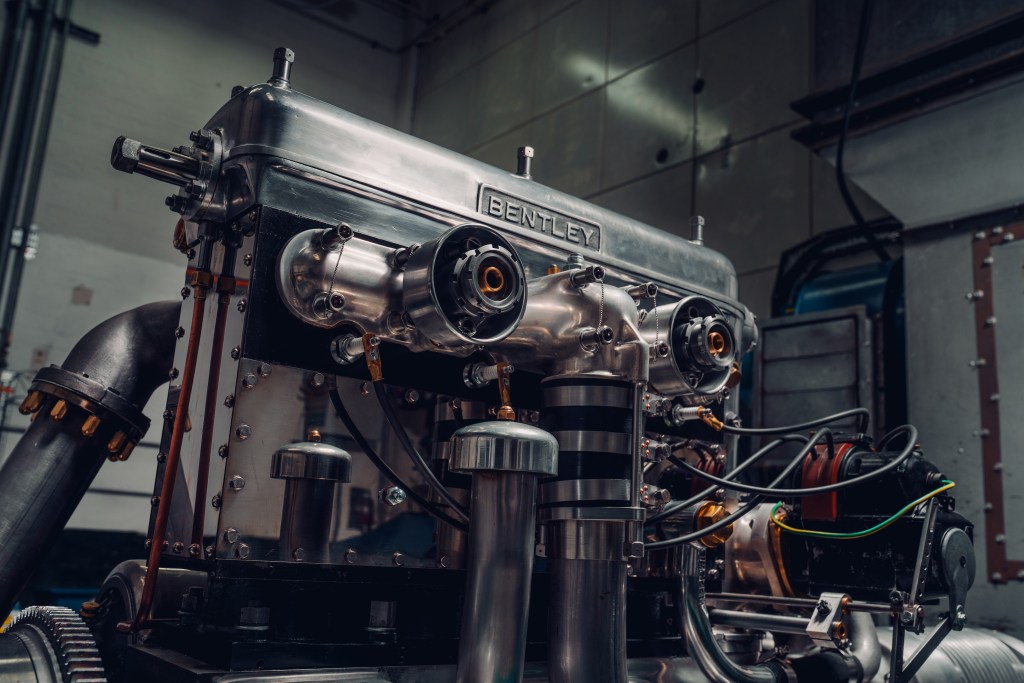
Automotive history is absolutely wonderful, especially this type. At Crewe in the United Kingdom, the hallowed home of Bentley, there’s an effort underway as part of its eternal 100th birthday to recreate one of the marque’s most fabled automobiles. It’s a continuation series of exactly 12 modern copies of the supercharged, 4 1/2-liter “Blower” Bentley automobiles, the huge, ponderous creations that captivated England when they competed in sports car races on the Continent beginning in the late 1920s. The supercharged Bentleys never scored an outright win in the 12 races they contested – it was up to a normally aspirated 4 1/2-liter Bentley to win Le Mans in 1928 – but the Blower Bentleys are consider British motoring icons, and draw enormous prices at auctions.

Those auction prices probably help explain why Bentley is undertaking the re-creation effort, under which a prototype is now under construction and all 12 continuation examples have already been snapped up by wealthy collectors. The re-created supercharged Bentley straight-six is seen here being tested at Crewe on an engine stand that’s been in use since 1938, initially for evaluation Rolls-Royce Merlin aero engines. Each continuation engine will be run on the test stand through a 20-hour cycle, on a power curve ranging up to 3,500 RPM, which was a crankshaft-shearing redline back when the 4 1/2-liter was first developed in the 1920s. It’s a precision-assembled salute to one of the original Bentley Boys of British motorsport, Tim Birkin, the aristocrat who invented the Blower Bentley by having a Villiers pulley-driven supercharger fitted to the big Bentley six, over the strenuous objections of founder W.O. Bentley, who believed the only way to get reliable horsepower out of his engine was to increase their displacement, not pressurize the combustion chambers. W.O.’s solution was to enlarge the big Bentley OHC straight-six to 6.5 liters, and the Speed Six, as it became known, won Le Mans in 1929 and 1930, once teaming Birkin with Bentley’s financial savior, Woolf Barnato, before Bentley pulled out of international racing.

GM, Nikola teaming on e-trucks

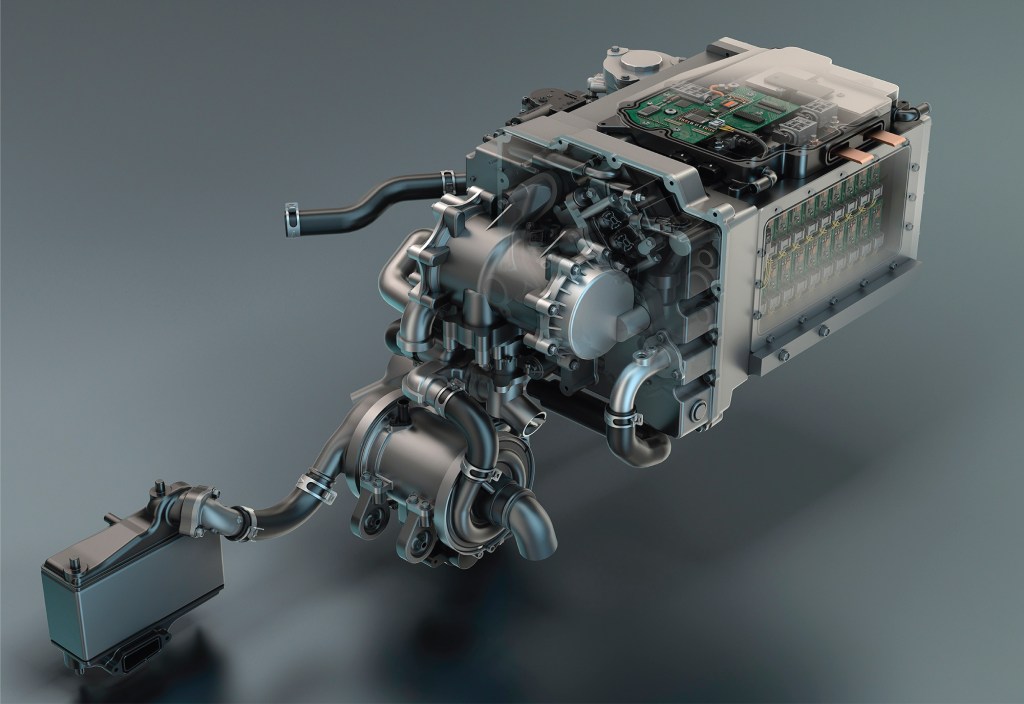
We told you recently about Volta Trucks ramping up its production of all-electric delivery vehicles for making commerce cleaner in the crowded cities of Britain and the Continent. Environmentally friendly trucks are going to be making curbside dropoffs and pickups on our shores, too. General Motors has just announced a new strategic partnership with Nikola Corporation, the Phoenix-based designer of trucks in several categories, to supply the truck-producing startup with both GM’s Ultium battery system and related Hydrotec fuel-cell technology. In return, GM will receive a $2 billion stake in Nikola, with the first fruit of the partnership expected to be the Nikola Badger, a forthcoming fullsize electric pickup for which orders are now being accepted.

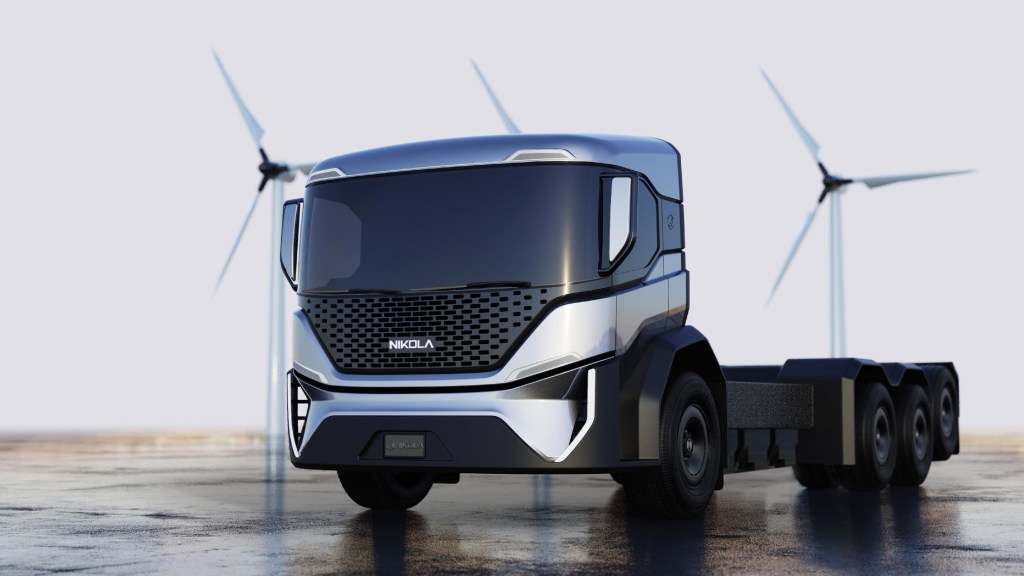
The deal will see GM supplying alternative-fuels technology to Nikoka, whose planned product lineup includes heavy trucks fueled only by electricity. Among the products involved will be the Nikola One, an over-the-road tractor that will produce up to 1,000 horsepower with a 750-mile range, and the vehicle you see below, the Nikola Refuse, an all-electric chassis for solid-waste collection vehicles that can process up to 1,000 cans of household trash per charge. We really, really like the idea of a clean garbage truck. The Badger pickup, set for a late-2022 production startup, will be offered in both EV and fuel-cell versions.

Shock-inducing visuals help define Hyundai’s reimagined Tucson

If the teaser photo doesn’t abruptly arouse your whoopee quotient, then you’re likely more level-headed than the majority of humanity. If you haven’t been actively tracking it, consider the recent cars that have emerged from South Korea, and we’re specifically referring to things like the new-generation Hyundai Elantra and the Kia Stinger. Visually, they grip you by both lapels and shake you violently. These folks are going to ensure that you notice their products whether you’re actively trying to or not. In about a week, Hyundai will undertake the reveal of its Tucson compact SUV, complete with visuals – both inside and out – that will commands anyone’s attention in immediate, stop-all-motion fashion.

The overreaching theme with the redesigned Tucson is known as Sensuous Sportiness, and its stabbing strip of taillamp lighting in the teaser photo explains a lot about what’s going on here. It’s going to be the first SUV in its class to be offered under the same name with two different wheelbases. The taillamps hint at a signature styling theme known as Parametric Dynamics, which is essentially a semi-hidden treatment for the Tucson’s exterior lighting. Its daytime running lamps will show up as geometric elements in the frontal styling, the lamps located behind dramatic slits that present almost like the grille used to on cars of the past. The interior is being described as a dual cockpit, with no conventional instrument cluster, adding to a more open and airy environment. The worldwide Tucson reveal is set for September 15th.

A Volvo retro rocketship

If you’re into Volvos, especially fast ones, you know the Polestar name. It referred to Volvo’s semi-independent performance and tuning partner, akin to AMG at Mercedes-Benz or Alpina at BMW. The operation changed its name to Cyan Racing – recalling Polestar’s trademark blue battle color – when Volvo Cars acquired it and took it fully in-house in 2015. This bunch has done some amazing things with current-model cars from Volvo – I had an V60 Polestar station wagon for a while that earned me a speeding ticket from the Vermont State Police the third day I owned it – and is now beginning to reinterpret historic Volvos as modern performance cars. Here’s what we’re talking about.

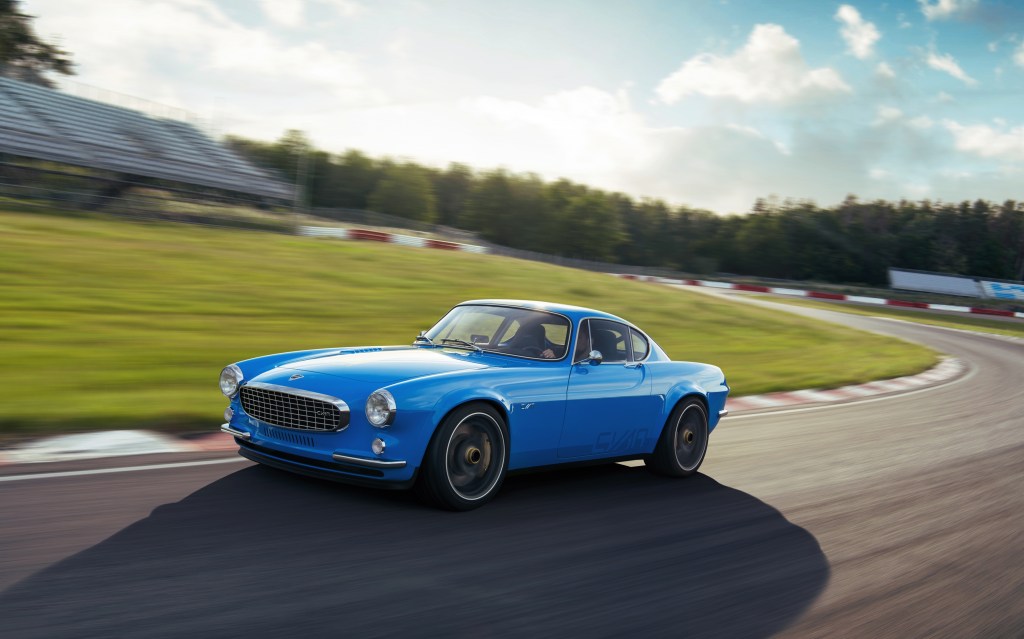
Just let it sink in for a moment. This is a Volvo P1800 coupe, the specialty Volvo first introduced in 1960, and famously driven by Roger Moore in The Saint, which Cyan Racing has imagined as a modern-day high-performance automobile. The rear-drive P1800 Cyan started with a 1964 body that was reinforced with high-tensile steel and carbon fiber for maximized rigidity. The original B18B four-cylinder engine is replaced by the current 2.0-liter turbocharged VEA inline-four that Cyan Racing built up to power Volvo’s S60 TC1 racing car. Linked to a five-speed Hollinger transmission, the engine produces 420 horsepower at 7,700 RPM. Double-wishbone independent suspension, with tubular anti-roll bars, is located at both ends of the car, along with huge four-piston disc brakes. A titanium roll cage ties the whole structure together. It’s a long way from the stock P1800 that the immortal Irv Gordon of Long Island used to roll up more than 3.2 million miles before he passed away. Best of all, you can order this. Reach out via Cyan’s website to find out how, and for how much.

Advanced cabin for VW ID.4

Volkswagen’s groundbreaking all-electric SUV, the ID.4, will be formally introduced later this month but as you might expect, the manufacturer is starting to gradually tell the world what this new vehicle is all about. Built on the Volkswagen MEB platform, the ID.4 promises a copiously roomy cabin, in keeping with its SUV purposing. Flush-mounted door handles (a la Tesla) will allow entry, and the interior will allow more than 30 cubic feet of cargo area, even with the rear seat locked in its up position. But infotainment is a big part of today’s motoring experience, and that is where the ID.4 is expected to shine brightly.

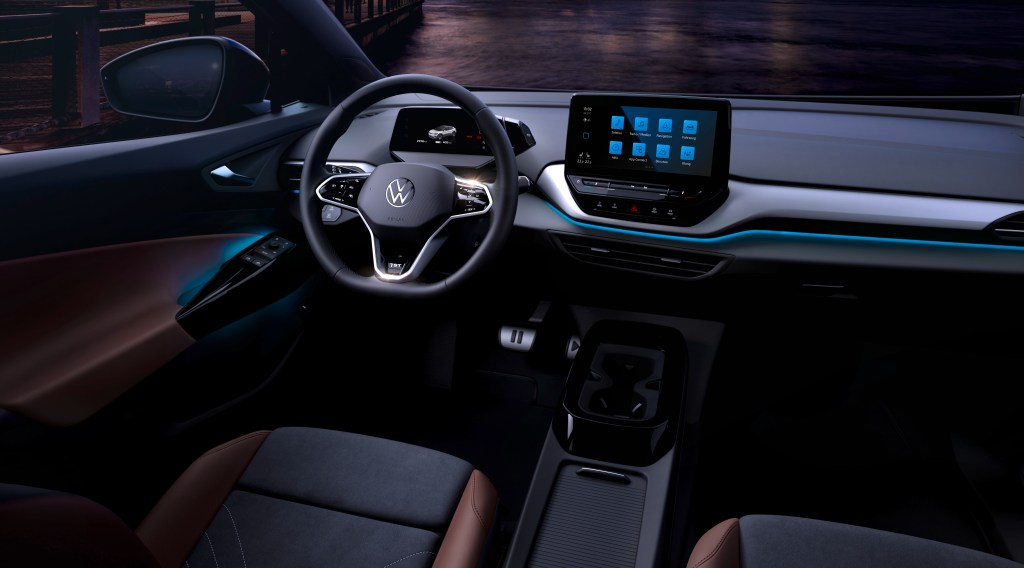
Note the graphic vehicle guide in the display directly ahead of the driver. The floating center display is located and operates independently of the center console, which is a freestanding component. The driver can select ambient instrument lighting from a palette of 30 colors, with adjustable brightness. The ID.4’s signature interior feature will be called ID.Light. It’s a strip located below the base of the windshield that reports vehicle conditions in intuitive colors, informing the driver whether the vehicle’s drive system is active or whether the doors are unlocked. It’s linked to the driver-assist and navigation systems, and can also alert to incoming phone calls. Among other personalization options, the ID.4 will allow drivers to select colors for the interior panels, steering wheel, steering column and the display housing.