The ultimate 911 for the road?

Porsche has been so dominant in world motorsport for so long, in so many categories, using so many cars, that its performance hegemony is a given to many of us. Head to any round of the World Endurance Championship and you’ll see how numerous Porsche is, particularly in the non-prototype GT categories. A big part of the reason why is that when the green is unfurled, Porsche is always ready to play. Its most prominent race offerings recently have been the 911 RSR and the 911 GT3, a car so popular that it’s inspired its own racing series. It’s inspired a truly ultra version of the 911, one that proves that you still can buy a genuine race-bred automobile for the road, with that level of capability, for your very own if you choose your manufacturer appropriately.
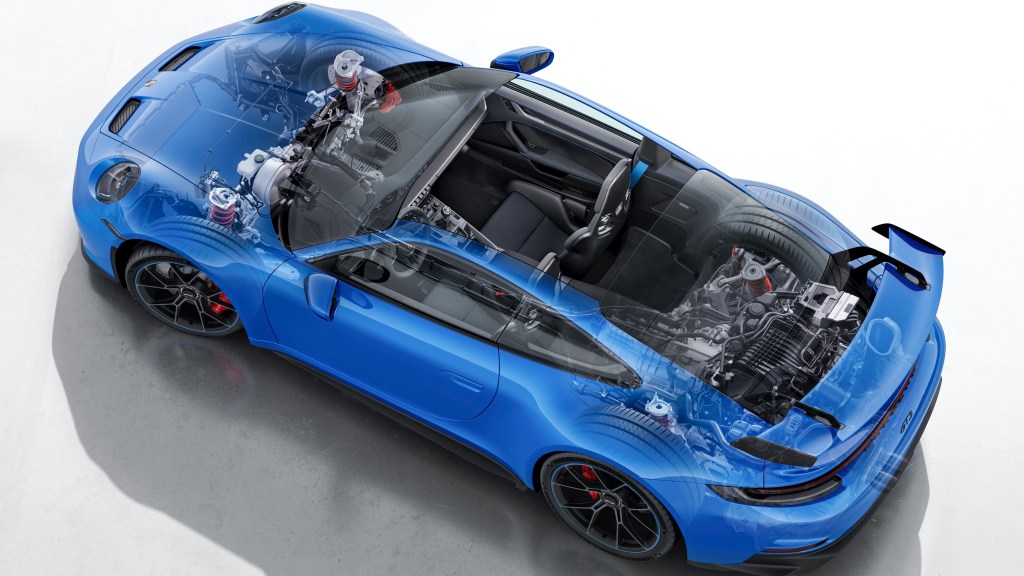
The 2021 911 GT3 is directly derived from Porsche’s production-themed racing cars. Its double-wishbone front suspension is lifted directly from the 911 RSR, and its aerodynamics, including the swan tail, as it’s now called – “ducktail” is relic of the 1970s RS and Carrera – is similarly sourced. The engine is, again, decisively race-bred. It’s a water-cooled 4.0-liter flat six with dry-sump lubrication and 510 horsepower, running off a compression ratio of 13.3:1 that ought to get your track day positively crackling. Porsche refers to this engine as “acoustically impressive.” Sounds good in our book. The standard transaxle is a six-speed manual. Deliveries, for those with the fortitude to accept them, commence in May.
Wine and sports cars? Hey, you got a problem with that?

For the record, it’s not our goal to engage in social commentary, at least of the serious variety. So you can make all the gags you want about people whose motorsport involves both left and right turns preferring fermented grapes to beer. True story: I was under the grandstands at the New York State Fairgrounds in Syracuse one time, looking at the concession offerings for Super DIRT Week. One of the stands offered frozen upstate New York wine – a rose blush, as I recall – molded into a adult popsicle. Perhaps fittingly, given that the race was for Modifieds on a dirt mile, the frozen wine concession wasn’t open. Just saying. Other places, other things: Just now, the Sportscar Vintage Racing Association, an organization that warmly embraces racing cars of the past, has selected Adobe Road wines as the The Official Wine of SVRA, effectively immediately.

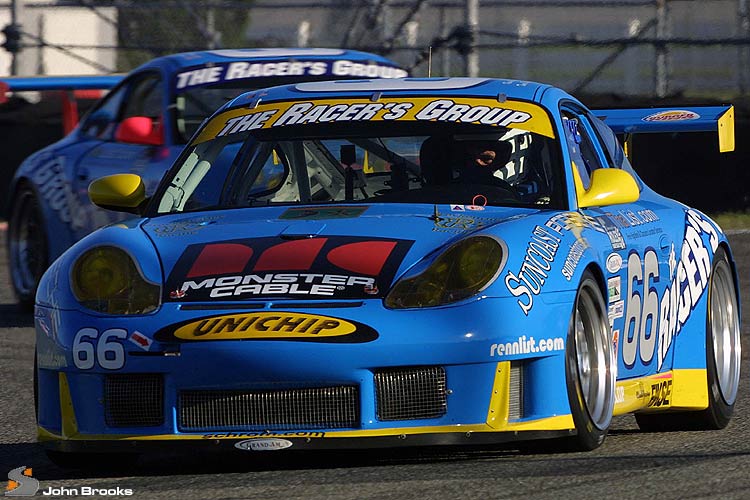
This ain’t no exercise for dilettantes, we’ll have you know. That’s because the owner and founder of Adobe Road Winery in Sonoma County, California, is Kevin Buckler, who happens to be a real race driver, not just a vintner (winemaker? winesmith?). Buckler is also founder of The Racers Group, motivating in a series of trick Porsche 911 GT3 cars, and winning the Rolex 24 up the street at Daytona International Speedway back in 2003. Since its founding, Adobe Road Winery has produced more than 90 handcrafted wines that have been peer-reviewed in influential industry publications such as Robert Parker’s Wine Advocate. Very impressive, especially for those among us who grew up with an affinity for wines that came in screw-cap bottles and are now broadening our horizons.

Suddenly, it’s 1984 once more

Quick, come up with some icons of the 1980s. There’s Don Johnson, Madonna, Hulk Hogan, even Ronald Reagan. In the world of cars, that list from that decade also bristles with the name of Uwe Gemballa. Who, you ask? If you’re posing the question, you clearly were absent from the Porsche enthusiast world during the real All About Me Decade. Gemballa is the brainiac behind a line of epnoymous, wildly customized and painted takeoffs on the Porsche 911 and especially, its awesome turbocharged variant, the 930. If you’re still drawing a blank, think of an outrageously modified powertrain inside a 911 body stretched with straked side intake, gigantic wings, steamroller rubber on BBS wheels, and paint in shades of fuscia pink and the like. That was, and is, a Gemballa, because this faded name of glory is about to make a comeback.

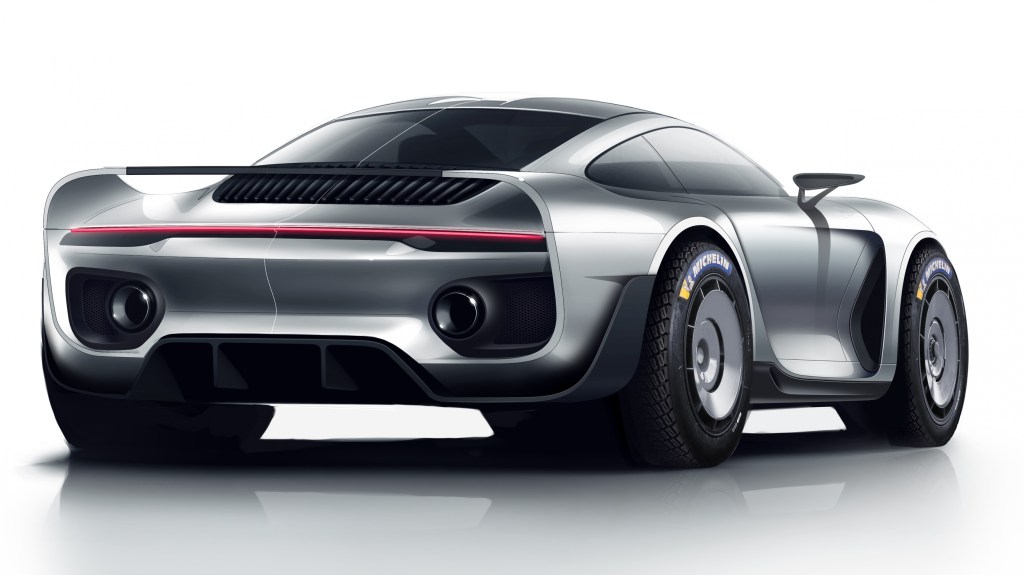
When those Porsches of yore were cobbled together, it was usually the result of a collaboration between Gemballa and RUF Automobile GmbH, the famed Porsche engine specialist and vehicle manufacturer, which functions as kind of an AMG or Alpina for Stuttgart. It’s a fabled pairing in Porscheland, and it’s about to be revived. Marc Philipp Gemballa. the founder’s son, is teaming up with RUF for their latest joint effort, which now has the handle of Project Sandbox. As Marc Gemballa explains, it’s an effort to wildly modify a current 992-series Porsche 911 Turbo S and repurpose it as a supercar with legitimate off-road capability, inspired by the landmark all-wheel-drive Porsche 959 supercar that, in considerably modified form, won the Paris-Dakar Rally back in the 1990s. To keep up with this alliance, whose end result is guaranteed to be anything but visually boring, go here. We do know that RUF will be responsible for the Project Sandbox powertrain, as only it can be, and is already promising 750 horsepower right out of the box.

“A” is for Artura at McLaren

McLaren has been a lot of things in its existence including a dominant force in Can-Am competition, a revolutionary arrival at the Indianapolis 500, a champion in Formula 1 and to help pay the bills, the purveyor of million-dollar megacars. Like many manufacturers, McLaren, a wellspring of leading-edge British technology, is pivoting to embrace the growing market demand for carbon-neutral road vehicles. McLaren’s response is this week’s introduction of the Artura, the first in what McLaren posits will be an expanding High-Performance Hybrid series of supercars. The Artura is indeed a full hybrid, motivated by the combination of an all-new, twin-turbocharged 3.0-liter V-6 with four powertrain modes plus an axial flux electric motor, lithium-ion battery pack and a new eight-speed transmission powering the rear wheels. McLaren assures a 0-60 time of three seconds flat and an electronically limited top end of 205 MPH.

The Artura is the first McLaren road car to incorporate the British firm’s new McLaren Carbon Lightweight Architecture (MCLA) in its underlying design. McLaren operates a composites research center in Sheffield, England, which creates substructures specifically to accommodate the HPH line of powertrains as it develops. For the Artura, the MCLA strategy incorporates a central carbon-fiber safety cell for the occupants, with that monocoque fitted to alloy structures for the chassis/suspension components, with the other subframe dedicated to electrical architecture. The electrical structure incorporates ethernet capability that reduced the necessary amount of electrical cabling by 25 percent, while simultaneously controlling the vehicle’s HVAC system electronically. The narrow 120-degree V-6, with both turbos positioned in its valley for still better packaging, produces 430 horsepower on its own, not factoring in the electrical boost.

Parisian rollout for Volta Zero fully electric truck fleet

Based in Sweden, with major operations getting underway in both France and the United Kingdom, Volta Trucks is an ambitious startup designing fully electric rigs intended for larger-scale delivery use in congested cities. Replacing the conventional diesel engine and transmission allows the chauffeur of the Volta Zero truck, with its 16-ton loaded capacity, to sitting centrally in the cab and much lower than in an oil-consuming rig. Last week, the Volta Zero truck made its debut on the streets of Paris – anyone who’s driven there, such as yours truly, fully understands the hassle that can entail – teamed up with Swoopin, the globally oriented provider of urban-based transportation and logistics services, at a four-week run of customer and supplier events around the City of Light.

Swoopin has added the Volta Zero to its solutions for local deliveries that also include electric vans, cars and e-bikes, supporting the network of last-mile distribution hubs that Swoopin is establishing around Paris. Currently existing law calls for all commercial vehicles powered by internal combustion engines to be prohibited from Paris within two years. The government of France is offering fleet operators incentives of up to 50,000 euros to transition to zero-emissions vehicles for making local deliveries. The Volta Zero/Swoopin evaluation will continue through the end of this month.

From upstate New York to the glitter of global racing

We really don’t want to spoil the story here, so we’ll just say that no matter how inspiring this saga is, it still stands as a cautionary tale for anyone endeavoring to get into motor racing in any significant way. It involves considerable risk and the potential for heartbreak. Most people don’t talk about Monaco and Rochester, New York, in the same breath, but the topic of this intriguing book actually got to live it. Fred Opert almost singlehandedly put Rochester on the map of global motorsport by become a dealer in competition cars and mentoring an impressive array of young drivers who went on to become very well known in the sport. This is that story.

Opert was a kid from Massachusetts who loved fast cars and made his rep in Rochester by importing race cars from Elva, Chevron and Brabham, and actually drove in the first-ever IMSA event, at Pocono in 1969. More than anyone else, Opert gets credit for conceptualizing the concept for renting race cars to drivers who brought money. As this attractively packaged 160-page softcover explains, the idea was good enough to get Opert all the way to Europe as an independent team owner in open-cockpit racing, providing early rides to a host of worthies who got all the way to Formula 1 including Alan Jones, Alain Prost, Tom Pryce and Rolf Stommelen, all of whom drove Opert cars. That list later grew to include America’s own Bobby Rahal, F1 world champion Keke Rosberg and eventually, Rosberg’s son Nico, before Opert passed on in 2016. Want to make it in racing? The Fred Opert Story, priced at $23.52 from Veloce Publishing in the United Kingdom, will tell you what’s really involved.

A magazine that people who love cars can call their own

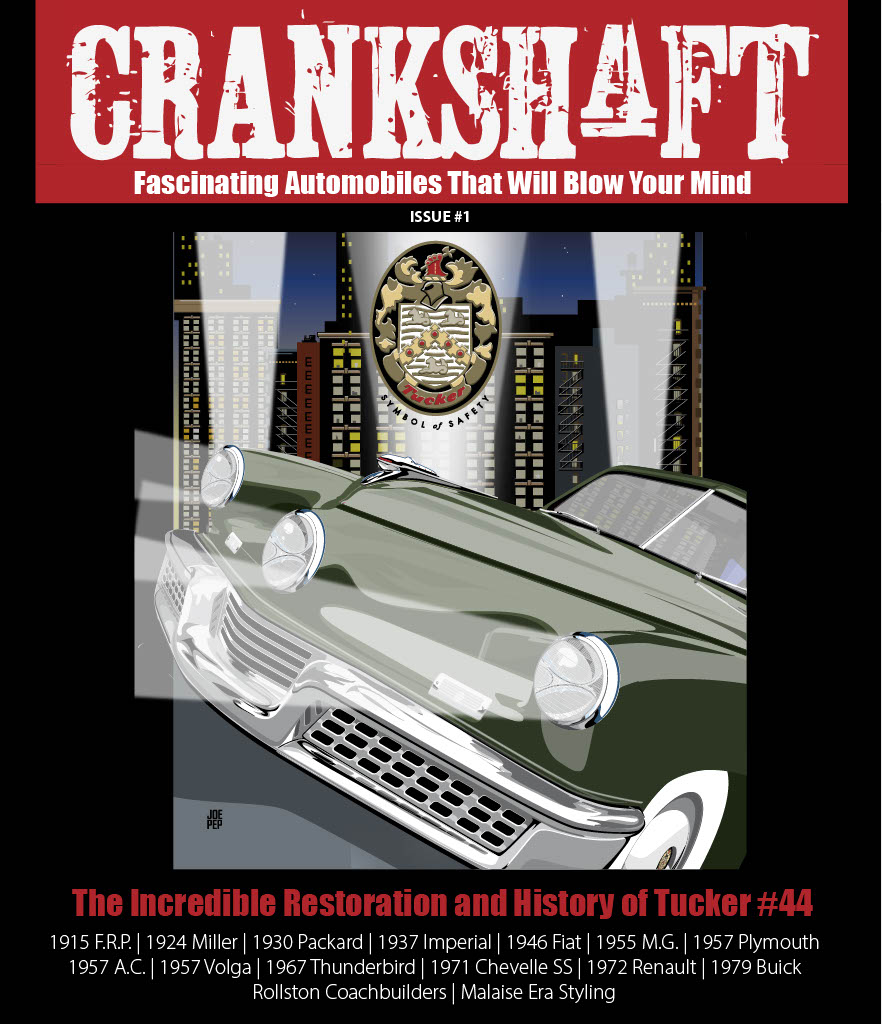
After a lot of work and planning, and a lot of belief that we could really pull this off, we have just launched a magazine about cars, and their history, that we really think you’re going to find inspiring. Crankshaft is a new, premium-quality, perfect-bound quarterly magazine that’s really going to be more like a reference book on the history of cars and motorsport. It’s got a stellar cast of authors and photographers that bring a wealth of institutional knowledge about the subject matter to its lavishly produced pages. And it’s a journey into motoring’s glorious past that you can join, right now, without being concerned about disappointment.

This is an actual capture of the first issue’s cover. Glancing at the story lineup can provide you with an indication of just how broad and eclectic the selection of automobiles within Crankshaft’s pages will be in each edition of the magazine. Besides myself, the list of contributors to Crankshaft include its founder and editor, Richard Lentinello, plus other luminaries such as David LaChance, Walter Gosden and Milton Stern. We’re not grabbing the low-hanging fruit here. Every story in every issue of Crankshaft will be the sort of authoritative, meticulously researched, exhaustively written history that people who really like cars – and more importantly, understand them – will be able to fully appreciate. My own contributions to the inaugural issue include the story of Tucker 48 number 1044, the only such car ever restored with the direct participation of Preston Tucker’s descendants; plus an appreciation of Harry Armenius Miller’s brilliant designs for 1920s racing cars, and the story of the lethal Langhorne Speedway as told in part by Mario Andretti, one of the few surviving racers who actually drove there. We are very proud of this title. You can purchase the inaugural issue for $12.95, or sign up for a year at $56.95, by directing your browser to the publisher’s website. You won’t regret doing so.

Apprentices learn the vagaries of building a motoring legend

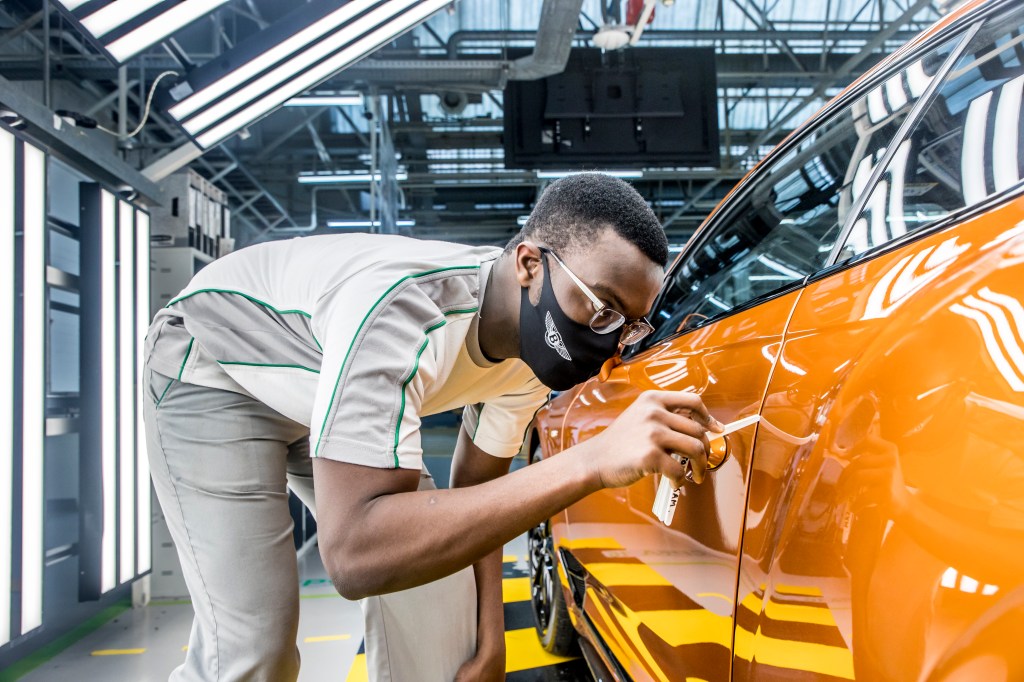
The skill set required to build a Bentley today still has parallels to the talent needed when the British icon first rolled into the world just over a century ago. A Bentley today is still about making no compromises when it comes to practically anything: New cars from Crewe still have significant inputs of hand labor, whether it involves plugging the electronics into place or hand-stitching the piping on the leather interior’s hides. This kind of unique talent has to renewed on a generational basis. That’s what Bentley’s doing right now.

Dovetailing with the outset of National Apprenticeship Week in the United Kingdom, Bentley has announced the biggest impending annual intake of workplace trainees in its history. Despite the realities of COVID-19, Bentley still plans to hire 112 young employees during 2021, representing new entries in an increasingly diverse workforce. Very differently from when W.O. Bentley was first starting out, about a third of the trainees will go directly into digital operations and technology. Others will be spread across disciplines ranging from engineering and project management to marketing and human resources. Part of Bentley’s second-century strategy, called Beyond 100, calls for end-to-end carbon neutrality by 2030.

Audi e-tron GT copiously delivers power, dramatic lines

Audi’s pivot to electron power is about to accelerate. Its portfolio of EVs has just grown by two models with the introduction of the e-tron GT and RS e-tron GT, the latest steps toward Audi’s stated goal of making EVs 30 percent of its overall automotive output by 2025, in keeping with the Paris Climate Agreement and its own objective of total carbon neutrality by 2050. This much is clear: Getting a clean tailpipe from Audi will never be inexpensive, but it will scarcely be boring, either. The huge-diameter wheels and theatrically pronounced wheel arches give the e-tron a nearly 1930s countenance. If it wasn’t called an Audi, the interlocking rings might have easily made it an Auto Union. Or a Horch, or a Wanderer.

We wonder if this will become a green trend: Nappa leather is available for the e-tron, but the standard interior is animal-friendly by being leather-free, making extensive use of recycled materials plus Dinamica and Alcantara coverings. But this is a redefinition of the luxury performance sedan that reflects current realities: Electric motors powering all four wheels, four-wheel steering, three-chamber air suspension, and with the RS, a two-speed automatic transmission. Depending on model, horsepower ranges from the e-tron GT’s total of 522 to the RS e-tron GT, which has a rating of up to 637 horsepower, with launch control and overboost. If you’ve ever wondered what push-to-pass feels like in IndyCar, this car may help you understand. Prices will range from $99,900 to $139,900. Up next is a Q4 e-tron, due next year.

Two chapters close at Lotus

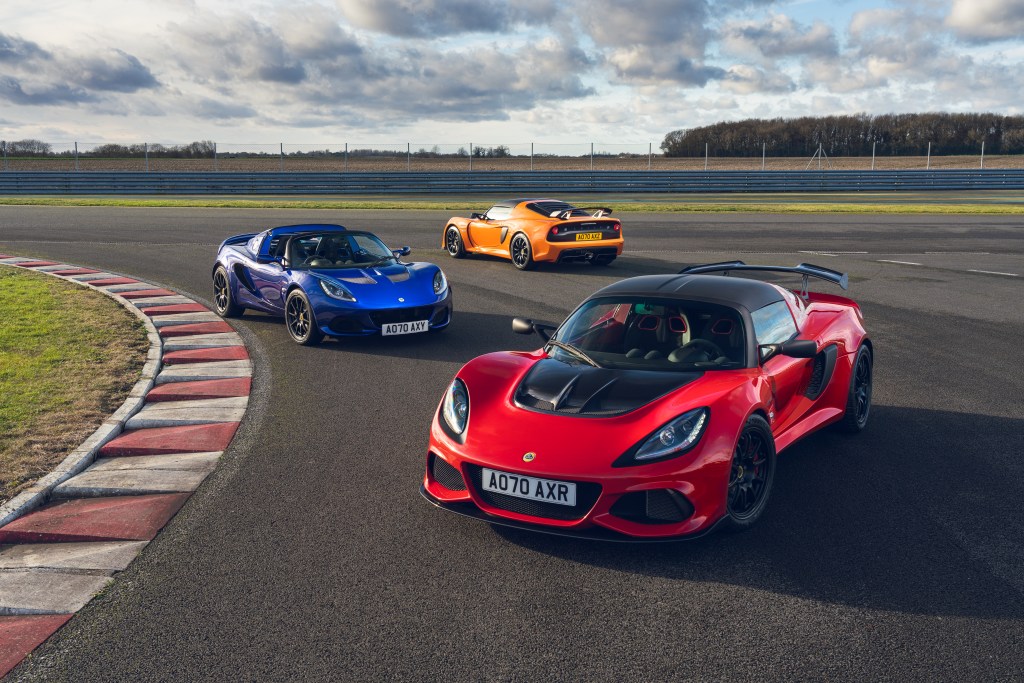
Group Lotus, now under joint Chinese and Malaysian ownership, is a grand name in automotive history whose influence far outweighs the limited quantities of its production cars. It’s said that the founder, Colin Chapman, built road cars merely for the revenue they generated, which could be earmarked toward his more favored pursuits, like winning in Formula 1 and the Indianapolis 500. Things are different now without a pure revolutionary in charge of the company. Product cycles and emerging market forces matter now. Lotus is preparing to join the EV world with its forthcoming Evija hypercar. Some things had to change. At Lotus, that means two-thirds of the current product lineup.

Lotus Cars, the auto-manufacturing arm of Group Lotus, has announced that production of the Lotus Elise and Exige, sports cars built in exceeding small numbers for a dedicated clientele, will cease after the models have enjoyed marketplace runs of 25 and 21 years, respectively, which gives you some idea of how the normal gravitational forces of the business haven’t always applied here. Name another car, particularly a specialty car, that’s managed to stay relevant for a quarter-century. Nothing this big can go unrecognized, and so Lotus has announced a range of five new Final Edition variants for both the Elise and Exige. Every one of the Final Edition cars will have the models’ highest level of interior appointments ever, a new palette of colors, higher power output across the board, and something the Lotus founder would have enthusiastically endorsed – lighter weight than the current production versions of both cars.