Mecum schedule grows with Chattanooga Festival sale

I need to make it clear here that I have a relationship with Mecum Auctions, a good one, which at various times has involved me writing about some of their auction offerings, or getting background information on notable cars from Dana Mecum and his staff. Most recently, Dana, in his role as an authority on Miller race cars, provided a game-winning assist on a story for the inaugural issue of Crankshaft on a Miller 122 from the 1920s. So around here, we pay attention to what these guys do. The latest entry on that front comes as Mecum disclosed plans to add a new sale of collector vehicles and memorabilia at the second edition of the Chattanooga Motorcar Festival, set for October 15th through 17th after the 2020 edition was kayoed by the coronavirus. While details of the sale have yet to be worked out, Mecum notes accurately that the host city is within a day’s drive of half the U.S. population. The current framework looks to 600 vehicles being sold over two days.

The other big news on the Chattanooga Motorcar Festival involves the guy on the left of the photo above. It’s Corky Coker, whose real first name is Joseph, and who has been one of the old-car hobby’s most influential figures over the past 50 years. Corky, whose father founded Coker Tires in Chattanooga, has been named grand marshal for the 2021 festival, succeeding the guy on the right, the racing legend from Lancashire, Brian Redman, who did the same duties at the inaugural event. Corky sold the tire company in 2018, but has been active in the administration of The Great Race, the annual rally for historic vehicles. He also operates Honest Charley Speed Shop, also based in Chattanooga, which was one of the first major American retailers of performance gear back in the 1940s.
The long-distance ID.4 boogie

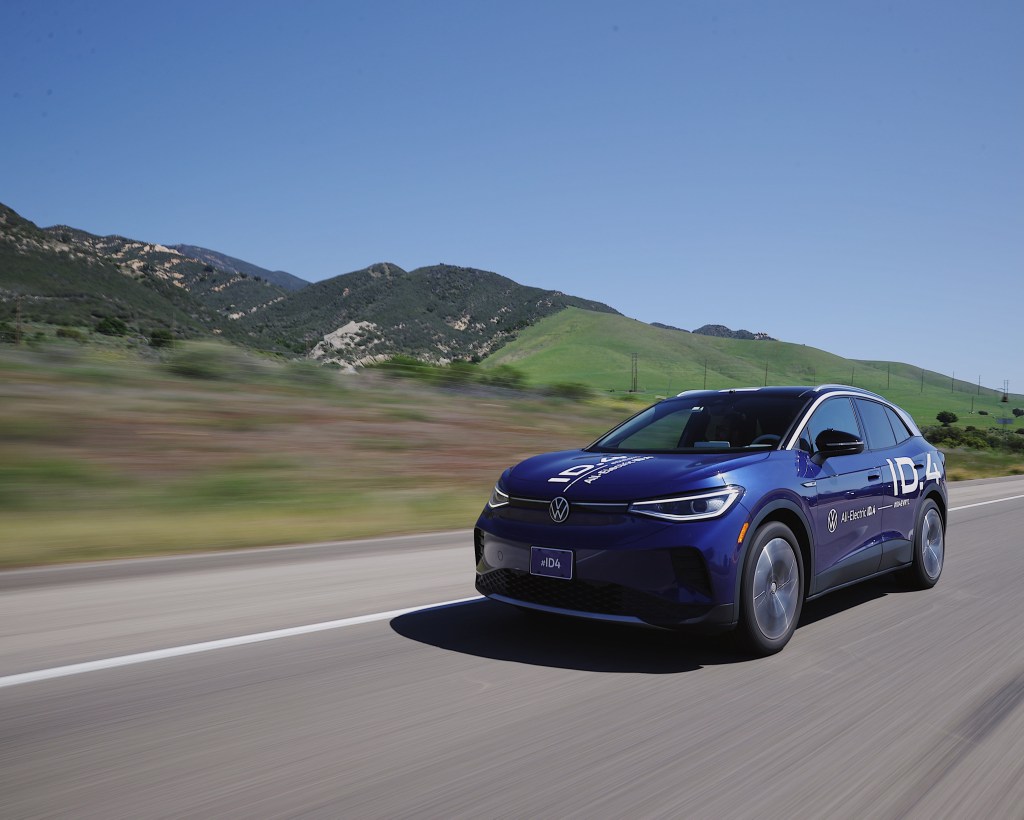
Automotive history will tell you that the biggest factor in the death of the electric car 100 years ago was that using it for anything but around-town driving wasn’t feasible. For one thing, there were no provisions for replenishing its supply of electricity and for another, improved roads didn’t very far beyond America’s cities. To varying levels, that’s been part of the rap on EVs ever since, that they couldn’t function as realistic options for long-distance transportation. The auto industry has invested heavily in technology to correct that impression after all this time. Creating the need for electric power through marketing will be another part of that campaign. Here’s an example, from Volkswagen, which went on a coast-to-coast demonstration drive – another thing that automakers did 100 years ago – to demonstrate that electric cars are indeed workable.

The all-electric ID.4 EV began deliveries to dealers last month and reservations are still being accepted. Taking a mostly southerly route, Volkswagen engineers took 18 days to wheel an ID.4 from New York City to Sacramento, California, by way of Chicago and Orlando. The trip encompassed a total of 6,700 miles and also included stops in Philadelphia, Washington, D.C.; Cleveland, Nashville, Atlanta, Savannah, New Orleans, Dallas, Austin, Marfa, Texas; El Paso, Tucson, Phoenix, Joshua Tree National Park, Los Angeles, San Jose and San Francisco. The ID.4 was refueled, if you will, at 32 charging stations operated by Electrify America, plus a few overnight hotel recharges. Electrify America now operates more than 560 charging stations and more than 2,400 DC fast chargers, including dedicated cross-country routes from Washington, D.C. to LA and Jacksonville to San Diego. Those numbers are forecast to climb to 800 and 3,500, respectively, by December.

A young scholar in a hurry

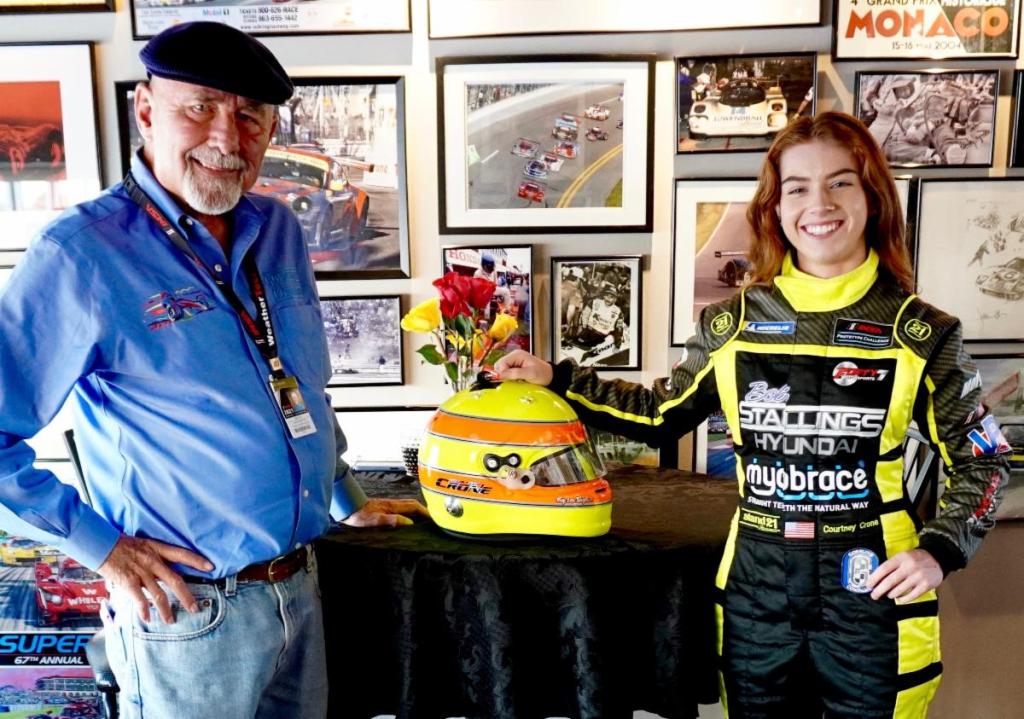
If you read this space regularly, you’ll recall being introduced to a young race driver named Hallie Deegan, who’s now moving into NASCAR’s Camping World Truck Series. More than just about any sport you can name, automobile racing stands as a leveler of gender inequality. It’s not just guys who know how to set up a car and drive fast. Yet another case study exists in the personage of Courtney Crone, 20, who’s just won the Gorsline Scholarship Award, presented by the Gorsline Company of Rochester, New York, which markets special high-risk insurance products for the motorsport industry. She was in line for a Team USA Scholarship to race Formula Ford in the United Kingdom, and additionally received a Women’s Motorsports Foundation Project Podium scholarship. A native of Corona, California, she also won the VMB Driver Development Scholarship shoot-out in 2017 and 2018 and drove Steve Brisentine’s Formula Speed 2.0 in the Formula Car Challenge Series for two seasons.

The image by Kathy Rose shows Crone being recognized by company chief Jim Gorsline at Sebring last month. Incredibly, 2021 marks her 17th year in motorsport, where she now drives an LMP3 fielded by Forty7 Motorsport in the IMSA Prototype Challenge after stints in both dirt and pavement Midgets. This is the first year since 2016 that Gorsline has presented the scholarship, whose prior winners include both Danica Patrick and Katherine Legge. Crone says one potential goal is a ride in IndyCar, which would be very wise to find her a competitive ride and sponsorship after losing Kyle Larson and apparently, Santino Ferrucci to NASCAR.

A big crop of drag acclaim

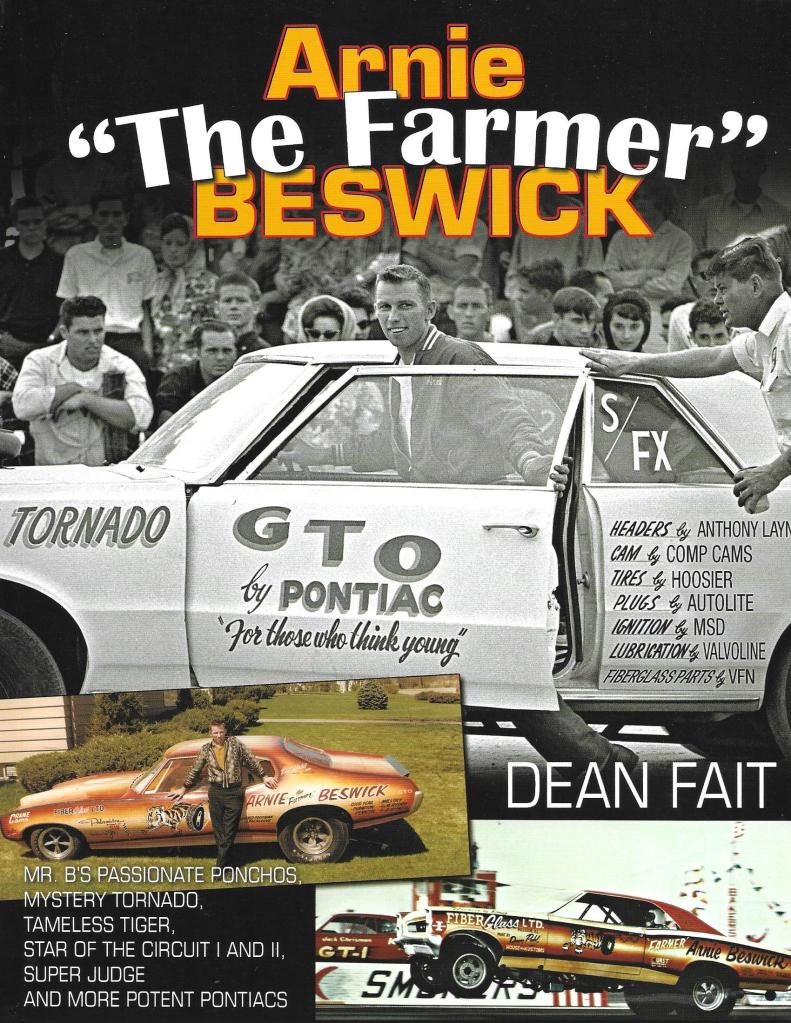
Right behind me, up on the wall, is a signed piece of artwork from the drag illustrator James Ibusuki that shows a couple of early Midwest A/FX cars, circa about 1965, with steel bodies and blown nitro-burning engines, doing a wheels-up launch at the old U.S. 30 Dragway outside Hobart, Indiana. One of the drivers depicted in the painting autographed it for me when I was covering the Pontiac Nationals in Norwalk, Ohio. Arnie “The Farmer” Beswick, so nicknamed because that’s exactly what he is, was on hand running right on seven seconds flat at 200 and change in a nitrous-assisted Pro Modified modeled in fiberglass on a 1964 Pontiac GTO and worth about 1,500 horsepower, at least. The Farmer, as much a Pontiac legend as Jim Wangers and John Z. DeLorean in many people’s books, was running it out the back door, ever pass, the crowd yelling, all while just shy of becoming an octogenarian. Arnie Beswick is a bolted-down legend of full-body drag racing in the Midwest, running everything from pure stockers to a nitro Funny Car, nearly all of them Pontiacs, while also tilling the soil of Illinois full time. Arnie stopped driving a while back, but he’s still a certified hero, getting his due for years of making race fans very happy. A new appreciation of his quarter-mile legend as he turns 90 is part of it.

Arnie “The Farmer” Beswick is the work of Dean Tait, a lifelong Pontiac head, videographer and historian from the Quad Cities, where the Farmer did a lot of plowing in every sense. It’s solidly a work of affection much more than a technical history or recounting of drag statistics. The book runs to 186 softcover pages and is richly illustrated, not just from the Beswick family archives but also from big-time straight-line shooters like my pals Steve Reyes and Ted Pappacena. Another contributor is Poncho Perfection editor Don Keefe. Both Ibusuki and another terrific motorsport artist, Joel Naprstek, contribute their work. CarTech sells this very pleasant retrospective for $36.95.

The life of a powertrain genius

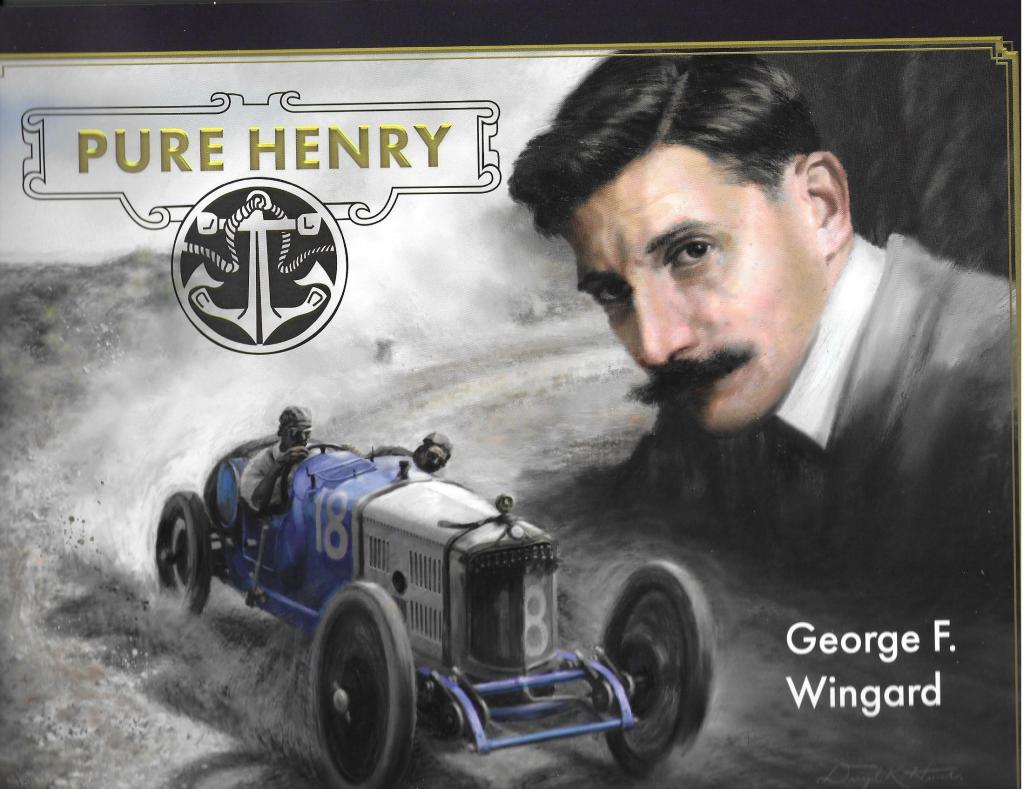
This is a hugely valuable work of biography and technological history, and it’s being produced in very limited numbers to assist cancer research. The instructions for obtaining a copy of Pure Henry are more complicated than normal, so pay attention, because we assure you that you’ll want to own it if you’re in any way interested in motorsport history. It’s the life story of Ernest Henry, the Paris-born engineer who did his most significant work in the early 20th century, and who is widely regarded as the first such person to combine multiple overhead camshafts with combustion chambers incorporating four valves per cylinder. It’s impossible today to overstate just how crucial an advance Henry’s discovery constituted, but suffice to say that both Harry Armenius Miller and Ettore Bugatti were clearly, and admittedly, inspired by his work.

Henry, who died in 1950, did his most significant early design work for Peugeot – winning the 1913 Indianapolis 500 for Peugeot with Jules Goux driving – but also enjoyed productive tenures at both Ballot and Sunbeam-Talbot-Darracq. We learned of this beautifully produced and researched book on Henry’s life and work via a Facebook group on automotive history. Pure Henry is the work of racing historian, doctoral-level anthropologist and former Oregon lawmaker George F. Wingard, a noted researcher on the technical history of very early racing. This large-format, 100-page hardcover is the first authoritative English-language biography of Henry that we know of, composed of highly informed text, photos and engineering drawings. Appendices include one on Henry’s innovative configuration for connecting rods with high-pressure oiling. This book is excellent. You should buy one of its limited numbered editions. Here’s how: Write a check for $60.00 to Prostate Cancer Research at Knight Center Institute, P.O. Box 29017, Portland OR 97296. Then send a photocopy of the check, or a receipt from the Knight Center Institute, to the author at 2323 Fairmount Boulevard, Eugene OR 97403. Our copy took less than a week to arrive. We assure you, this book will not disappoint in any way.

Another new Outback, and …

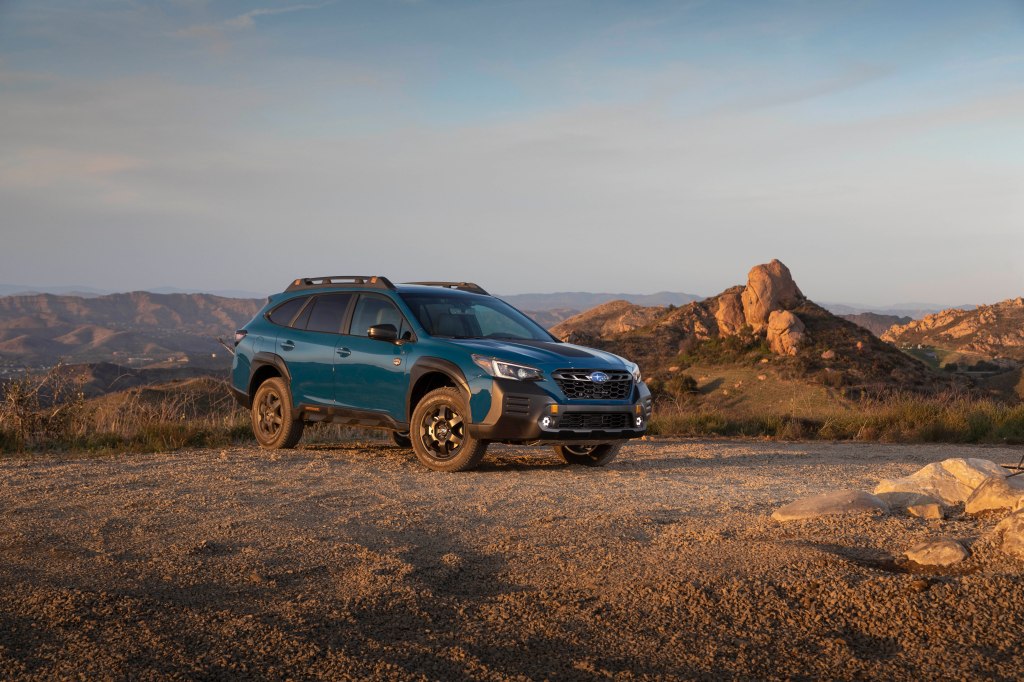
News from Subaru that popped into place over the past week covered items of interest on both the domestic and international scenes. Let’s deal with what’s happening here first, because it’s the more immediate story. Subaru has increased its U.S.-market lineup of Outback wagons by one with the announcement of the forthcoming Outback Wilderness, which it bills as the most boonie-friendly Outback yet. The biggest news with the Wilderness is its standard power, which extends the 2.4-liter turbocharged flat-four normally restricted to the Legacy into the Outback line. The engine is rated at 260 horsepower and is mated to the Lineartronic CVT with an eight-speed manual mode, plus a Wilderness-revised X-MODE drive that shifts automatically from crawler mode and a revised rear 4.41:1 final-drive ratio. Pricing and availability for this 2022 model will be announced later.

We’ve also learned this, and it’s worthy of your attention: Subaru announced that operations at its Yajima assembly plant, in the Gunma Prefecture of Japan, will come to a halt at the end of this week through at least May 10, due to an ongoing global crunch in semiconductor supplies. General Motors announced last month that semiconductor shortages would force production slowdowns at several production facilities across North America. Motor vehicles, as we know, have been about a lot more than bolts and stampings for a long time now, and here’s your proof. The semiconductor shortage is a consequence of the global tech boom that was driven by long isolations during the COVID-19 pandemic. The Biden administration issued an order for producers to boost semiconductor output, but supply has yet to catch up with overheated demand.

Modified legend Jack Johnson, the king of Fonda, 1945-2021

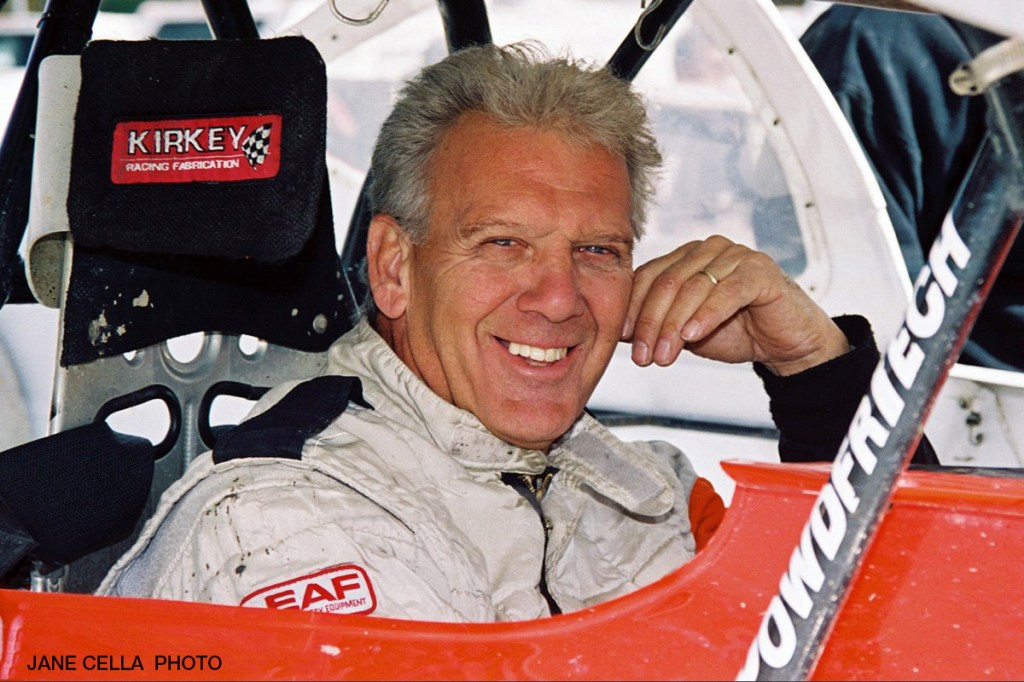
A second-generation racer from upstate New York, where the open-wheel Modified rules supreme, Jack Johnson was the undisputed all-time great at one of Modified racing’s holiest shrines, Fonda Speedway, located west of Albany along the Mohawk River. For all his accomplishments elsewhere, including two wins at Syracuse and more than 420 other wins at 35 tracks in 10 states and two Canadian provinces, it was at the historic Fonda half-mile where Johnson attained his greatest fame, winning 149 Modified features between 1971 and 2009, along with 11 track titles. A Schenectady native who called Duanesburg, New York, as his home, Johnson passed away at age 76 following a struggle with ALS that had gripped him after he sustained a vicious, career-ending 2009 wreck at Fonda. His win total at Fonda elevated him past some of the track’s other stars to achieve New York racing glory, names that include Pete Corey, Dave Lape, Lou Lazzaro and Bill Wimble.

Jumpin’ Jack, as he came to be known, posed this way a lot during his career; a happy, plainspoken winner, just another guy from upstate, albeit a brilliant talent. Johnson excelled at big tracks, not just Syracuse, scoring three major wins on the Nazareth National mile during the 1980s. He was also very good at long-distance races on fast tracks, epitomized by his winning the first Flemington 200 at the four-corner New Jersey fairgrounds oval in 1972, despite having never seen the place before. He is enshrined, deservedly, in the Northeast Dirt Modified Hall of Fame, the Eastern Motorsports Press Association Hall of Fame, and by the New York State Stock Car Association, whose hall is located at the Saratoga Automobile Museum. His son, Ronnie, made New York history in 2011 by winning the Modified title at Fonda, his first.

Love railroading? Say it loud!

This site is all about transportation, having featured entries on trucks, taxis, buses and fire apparatus from time to time. Let us make very clear that at JDOW, we also venerate railroading. As a mode of transportation, and a force of economic development, it transformed the American society and landscape like no other innovation since Daimler, Benz, Ford and Olds got busy. Trains are powerful, shake the ground when they roll past, are a hugely efficient (and environmentally sound) means of moving goods and are just plain cool. If it runs on rails, we’re down with it. So is our good friend Robert Kelly, who lives in Monmouth County, New Jersey, and has done a lot to get eyeballs on this site. Today, we’re putting eyeballs on his. Read on.

In addition to good food and great music, New Jersey has a rich railroading heritage, led by the Central Railroad Company of New Jersey, which eventually became a component of the ill-starred Penn Central and later, Conrail. Robert designs and produces T-shirts that celebrate CNJ’s heritage in the Garden State, especially as its concerns his native Jersey City. At his website, Trains to Go, you can peruse quality Gildan shirts with durably printed graphics on New Jersey rail heritage. Mine recalls the Mermaid, the CNJ passenger train that ran from Bayonne to Point Pleasant through 1974. Just the ticket for railfanning at the old Florida East Coast freight station along its hotshot intermodal line through Port Orange.

Mercedes-Benz redefines executive luxury with EQS

Everybody knows by now, or ought to know, how Mercedes-Benz defines luxury with its premium sedans. They’re full size, enough so to accommodate a full cabin of VIPs going places with dispatch. They’re compulsively engineered with eyes focused closely on performance and occupant safety. They go really quick in a thoroughly unflappable manner. And they aren’t cheap by any means. Bringing these parameters into a single package seamlessly, with dignity, is what Mercedes-Benz produces, especially in the form of its S-Class executive sedans. The world may be changing, but the advanced exclusivity of a Mercedes-Benz automobile does not. We are going to see that statement of terms publicly reinforced this autumn, when Mercedes-Benz begins building its new EQS series of all-electric luxury sedans.

The EQS will be the first Mercedes-Benz vehicle built using its new modular architecture for EVs, and will be produced at the Sindelfingen assembly plant alongside the existing S-Class sedans by Mercedes-Benz and Maybach. The manufacturer is promising that when the EQS arrives, its bodywork will have a drag coefficient of just 0.20, the lowest of any production automobile, will make extensive use of artificial intelligence including the world of haptic perception, and as the photo indicates, be wired to the max. The EQS will be able to “reason” responses to inputs, some of them projected via the MBUX digital Hyperscreens that form part of the interior presentation.

A pickup from – yes – Hyundai

So you thought it was a really big deal back when Jeep introduced the Gladiator, huh? We can assert with reasonable confidence that this rollout will be a bigger splash, because Hyundai is about to introduce a pickup. A car kind of morphed into a truck as per Honda Ridgeline practice, to be sure, but the new Santa Cruz from Hyundai is clearly, undeniably a truck. Hyundai doesn’t call it that, preferring to label this assured segment-smasher as a Sport Adventure Vehicle, but hey, that looks like a cargo bed out back to us.

Just like a car, the Santa Cruz utilizes unibody construction and while mechanical and dimensional particulars have yet to be disclosed – that’s coming at the official Hyundai reveal, which is set for April 15th – the teaser images released today clearly show it to have a smallish bed, just the ticket for a weekend getaway, position aft of its four-door passenger cabin. It will join the Ridgeline as one of the few U.S.-sold pickups that don’t use traditional cab-and-bed-on-frame construction. Another such rig, the Ford Maverick – not a rebodied Falcon this time, but instead a small pickup slotted below the Ranger – will be joining the unibody-trucklet class in the near future. The Santa Cruz will be built at Hyundai’s U.S. assembly plant in Montgomery, Alabama, which already produces the Santa Fe SUV, suggesting that the Santa Cruz will be sharing some of its mechanical components.