Solterra going live at Subaru

Love the utility and durability of Subaru products? Wish that some of them had a level of EV capability? Wait no more, because Subaru of America has officially opened up the reservation process for locking in the purchase of a 2023 Subaru Solterra, jointly engineered by Subaru and Toyota and scheduled to be built in the United States. The reservation process allows buyers to select their Subaru dealer, pick trim and color, and pay a refundable reservation fee of $250. Final orders will be agreed upon with the customer’s Subaru retailer between April and May, subject to the Solterra’s final pricing, which has yet to be announced.

Besides opening up the Solterra reservation process, Subaru has also announced a partnership with EVgo, which operates the largest network of fast-charging EV “refueling” points in the United States. It will provide up to 800 public fast charging locations and more than 1,200 L2 charging stalls spanning 68 metropolitan areas and 35 states, all powered by 100 percent renewable energy. The Solterra will be the first all-electric vehicle in Subaru history, with an estimated range of 220 miles per charge and – naturally – all-wheel drive.
A saloon brawl at Laguna Seca

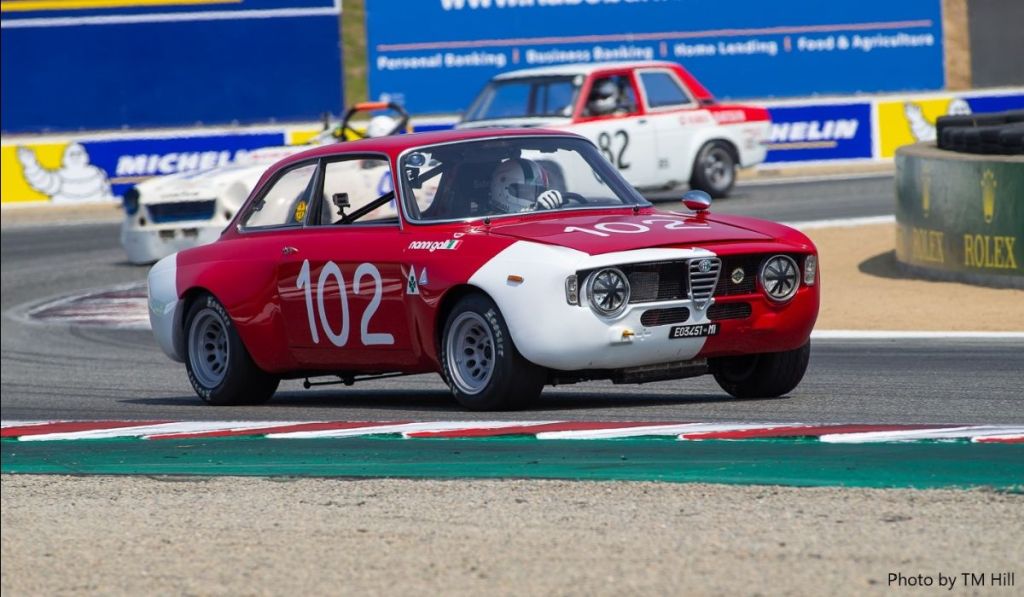
Maybe you’re one of those people who likes to watch videos of motorsport history. And maybe that fascination leads you to dial up YouTube videos of 1960s action in Great Britain, where little sedans, or saloons, as they’re known locally, did battle on rainy road circuits with guys like Jim Clark and Innes Ireland running up front as Lotus Cortinas, Ford Anglias and Hillman Imps slewed over, around and into one another. Production cars, primal racing. Saloon racing is a firm stable of overseas competition, and it’s going to add a metal-wrinkling jolt to one of American vintage racing’s most prestigious happenings.

The 2022 running of the Rolex Monterey Motorsports Reunion, being held August 17th through 20th at WeatherTech Raceway Laguna Seca in California, is already one of America’s most famous and spectacular gatherings of vintage racing machinery being driven in heat. The race meet’s advisory council, led by collector and historian Bruce Canepa, has been mulling a realignment of classes for the 2022 event, and here’s the first such proposed change: A grouping of saloons, or touring cars, into a standalone competition class that will combine cars ranging from A (Alfa Romeo GTA, as above) to W (Wolseley Hornet) for a track full of throttle-on, sideways competition. If it’s anything like the Brits put on, the reunion class ought to be wild. Monterey is an unforgettable vintage happening that everybody ought to hit at least once. I’m glad I have.

The lady is indeed a champ

As much as we love Shirley Muldowney, Janet Guthrie and Danica Patrick, it’s hard to imagine that any of them would have had an easier route if another Shirley hadn’t bulldozed her way into the nearly all-male world of professional motorsport during the 1960s. When Shirley Shahan first slid behind the wheel of her husband’s stocker, women in drag racing tended to wear skimpy outfits, plant kisses and fork over trophies, but little else. As this book by the hugely respected American Motors Corporation historian Patrick Foster makes clear, Shirley Shahan changed all that forever. She silenced critics by winning Stock Eliminator at the very first running of the legendary March Meet in Bakersfield, California, and then backed it up by winning the same category at the 1966 NHRA Winternationals.

Shirley Shahan: The Drag-On Lady is a hugely affectionate 176-page softcover journey through the lady’s progression to legitimate drag-strip stardom, as much a Sixties stocker star as Dick Landy and Hayden Proffitt, to name two, and fueled by factory alliances with Chrysler at the height of its factory-lightweight greatness and later, the aforementioned AMC. It’s a rounded, layered tale, crafted with the subject’s full cooperation. Diversity in global motorsport is very much a timely topic right now, and this book does yeoman work in explaining how the concept really got started. Good job. It’s published by CarTech, and to find it, we seriously recommend that you check out the author’s website, Olde Milford Press, which offers an impressive selection of historical books on the great American independent auto manufacturers that included AMC, with volumes on cars as diverse as the Dual Ghia and King Midget available on the site.

Juice your Bimmer nationally

The buzz begins next month when BMW rolls out its all-electric lineup for 2022, which will consist of new models including the BMW iX xDrive50, BMW i4 eDrive40 and BMW i4 M50, which will be Bayerische Motoren Werke firmly in the constellation of EV providers. To that end, BMW of North America has announced a partnership with Electrify America, which will provide 2022 BMW EV buyers with two years’ worth of complimentary electric-charging services nationwide, starting on the BMW’s date of purchase.

As a result, buyers of BMW EVs will gain immediate access to Electrify America’s existing network of more than 3,000 charging stations located across the United States. Their proximity to one another has led BMW to assure buyers that even its largest EVs will be able to mount cross-country drives with access to the recharging network. Electrify America already manages the country’s largest base of DC fast-charging stations, representing $2 billion in capital investment, and intends to operate 1,800 stations with 10,000 individual fast chargers across the U.S. and Canada by 2026.

RM Sotheby sells Fangio’s Benz

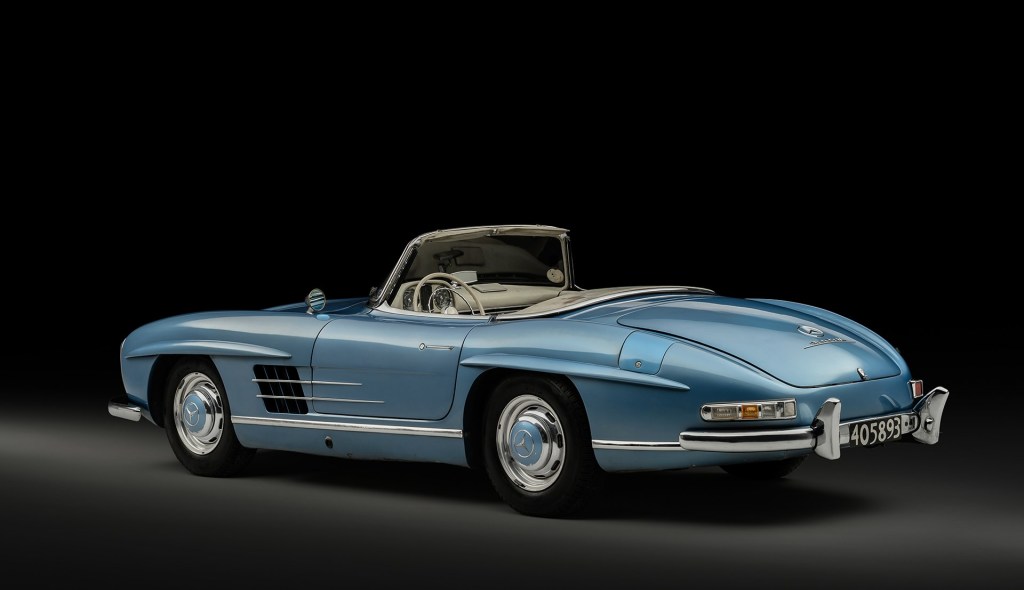
It’s commonplace for major auction houses to list a pre-sale estimate when they offer an atypically significant vehicle for sale, which usually means that the estimated selling price is in the milliions, and frequently gets exceeded when the hammer actually drops. This sale is different in a couple of ways: First of all, it’s not an auction in the usual public-bidding sense of that term, but rather a sealed-bid selling process that adds both anonymity and uncertainty to the drama. And when you consider the car being sold, the process makes sense. RM Sotheby’s is listing the 1958 Mercedes-Benz 300SL roadster that the manufacturer presented to Juan Manuel Fangio, the five-time Formula 1 world champion considered by many to be the greatest racing driver who ever lived, as a gift recognizing his retirement from competitive motorsport that year.

It was a fitting gift, given that Fangio won two of his five F1 titles consecutively while driving for Mercedes-Benz, and later became the marque’s lead business representative in his native Argentina. The 300SL later occupied a place of distinction in the Maestro’s personal museum in Buenos Aires, and is presented in as-used, untouched, unrestored condition, a totally complete but emphatically well-driven car. Its color scheme reflects the pattern of Argentina’s flag, right down to the cream leather interior, spiderwebbed by wear creasing and cracking to the hides. The sealed-bid process runs from February 28th through March 4th. For the record, RM Sotheby’s is offering pre-auction estimates privately to those deemed worthy to inquire. We’ll say this: The 300SL is essentially the open-top variant of the fabled Gullwing, and restored examples routinely command seven-figure auction prices. How much do you think an unrestored example, owned and driven by one of the greatest drivers in racing history, ought to command?

A concours for rolling rejects

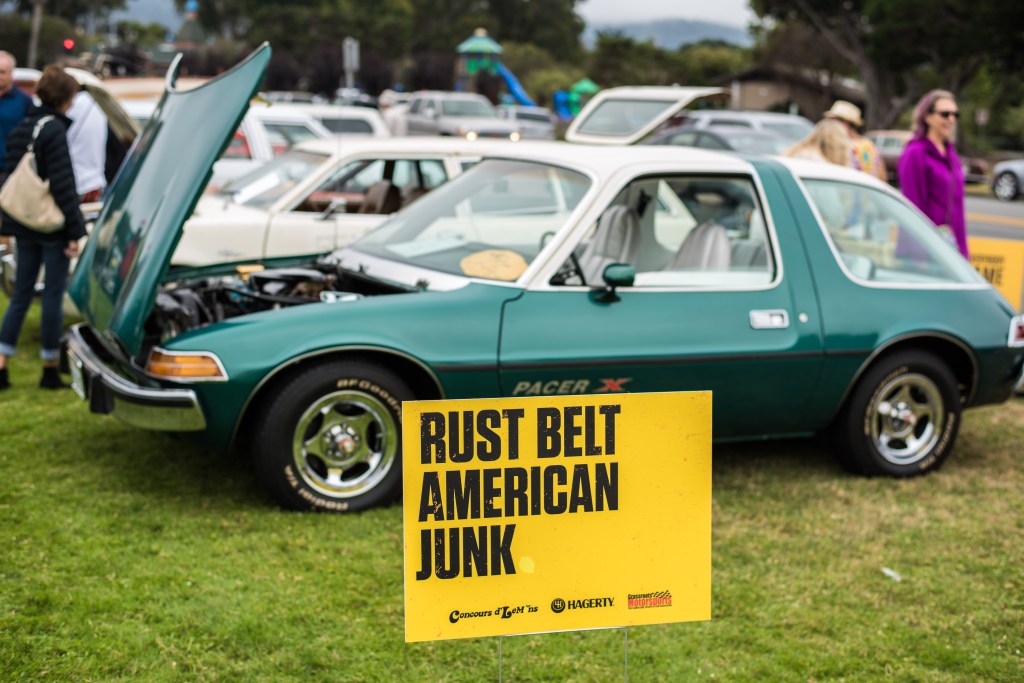
Every so often, you’ll see in various outlets somebody’s claim that premium showings of historic automobiles tend to be excessively snooty, condescending and otherwise insufferably elitist. To those naysayers, the organizers of the concours classic now known simply as The Amelia have a simple response: This year’s running of the premier show, now owned and managed by the Hagerty conglomerate, will now present via licensing a new event, the Concours d’Lemons, a semi-serious gathering of automotive oddities, castoffs and forgotten flops that will, indeed, occupy part of the show field at the Ritz-Carlton in Nassau County, Florida. It’s a spinoff of the longstanding 24 Hours of Lemons, wherein amateur teams do endurance battle in, well, junkers.

Seriously, this is all good clean fun involving unloved cars of the past that rarely get a star turn of any sort. And to be clear, these aren’t used car lot refugees that you’d find with sale stickers along U.S. 9 in New Jersey someplace. Loot at the image. That’s a loaded AMC Pacer X from around 1975, and any show field that makes space for a car like this, or what seems to be the Ford Pinto station wagon lined up next to it, is okay by us. The Amelia will present it as part of the all-new Cars & Community presented by Griot’s Garage event, held on Saturday, March 5th, 2022 from 8:30 a.m. to 1:30 p.m. at the Ritz Carlton? Got something worthy of some Lemons-ade? The Lemons Nation has entry information waiting for you.

How SEMA makes parts legal

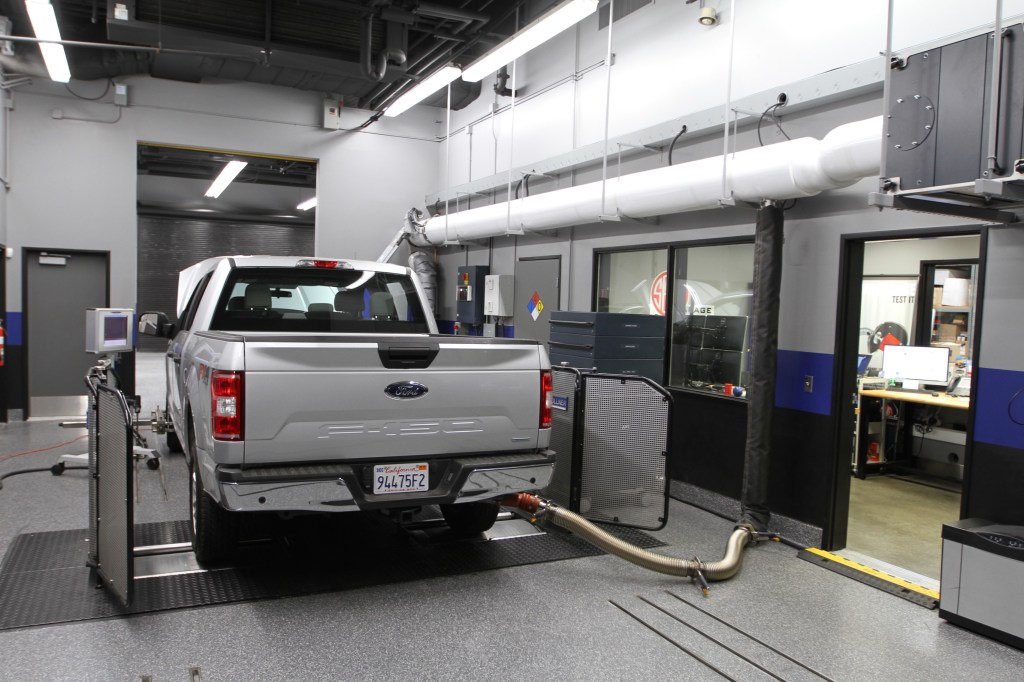
Before we start, some full disclosure is needed: I’m a regular editorial contributor to Performance Racing Industry magazine, with PRI representing the hardcore race-parts element of SEMA, which represents the sprawling automotive aftermarket in North America. Given that clean tailpipes are a huge priority for all vehicles now, modified and otherwise, it’s crucial that the Specialty Equipment Market Association’s member firms have a way to prove that their components, which make up part of the estimated $47 billion-plus U.S. automotive aftermarket, are indeed legal for use on road-driven cars. SEMA’s got a program that’s been very effective in that regard.

The program is called SEMA Certified-Emissions (SC-E), and it provides manufacturers with the ability to verify that a product meets the federal Environmental Protection Agency’s “reasonable basis” criteria and is therefore legal for sale in 49 states under the EPA’s established Tampering Policy as it applies to emissions compliance. That 49-state approval is needed before manufacturers can apply for, and receive, a California Air Resources Board (CARB) Executive Order (EO), which is still a requirement for selling products in all 50 states. With state-of-the-art CARB-recognized testing equipment, plus dedicated test staff, the SEMA Garage – that’s the umbrella term for the test program – has helped secure more than 500 CARB EOs, which represents more than half of all the performance parts-related EOs issued by CARB. Ensuring environmental compliance is a top priority at both SEMA and PRI.

A racer’s triumphal comeback

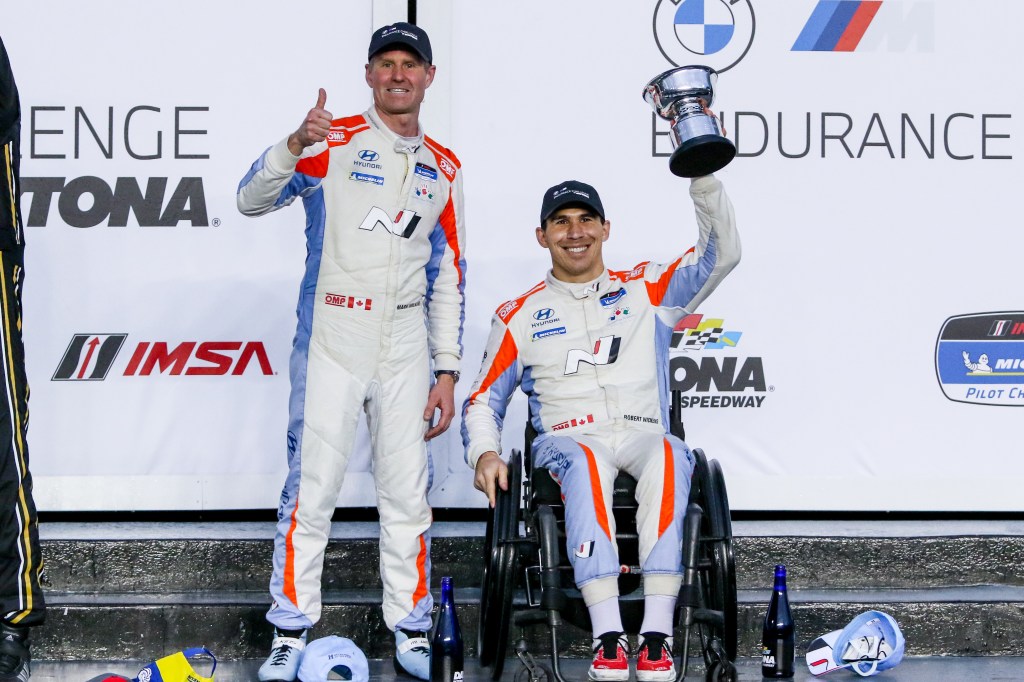
One of the nicest things when it comes to writing about cars and motorsport is the opportunity to leave the less-nice elements of the larger world behind when you’re selecting your subject matter. Examples of how enjoyable that can be don’t get much better than this one. If you follow the NTT INDYCAR series, you likely know about the affable Canadian hot shoe Robert Wickens and what happened to him. It happened at the Pocono round in 2018, when contact forced his Dallara into the catchfencing above the racing surface, disintegrating the car and leaving Wickens, who suffered leg and spinal fractures, as a paraplegic.

With a major assist from Hyundai and its factory racing partner, Bryan Herta Autosport, Wickens needed 989 days to get himself from the intensive-care unit to the seat of a racing car, albeit one fitted with hand controls. Personal trainer Jim Leo, who’d been with Wickens since he was a Formula Atlantic stud, continued his physical and motivational help as Wickens stayed focused on the impossible, a return to professional-level motorsport. It happened last week, when Wickens and co-driver Mark Wilkins came home in third place at Daytona International Speedway in the four-hour BMW M Endurance Challenge, a preliminary event to last weekend’s Rolex 24 for sports cars. Driving a Herta-prepped Hyundai Elantra N TCR, the event marked Wickens’ first podium finish since his INDYCAR top three at Mid-Ohio in 2018, just before the Pocono accident. Does this guy look proud of his accomplishment, or what? We’re grinning nearly as widely just from typing this.

Range Rover reveals, um, range

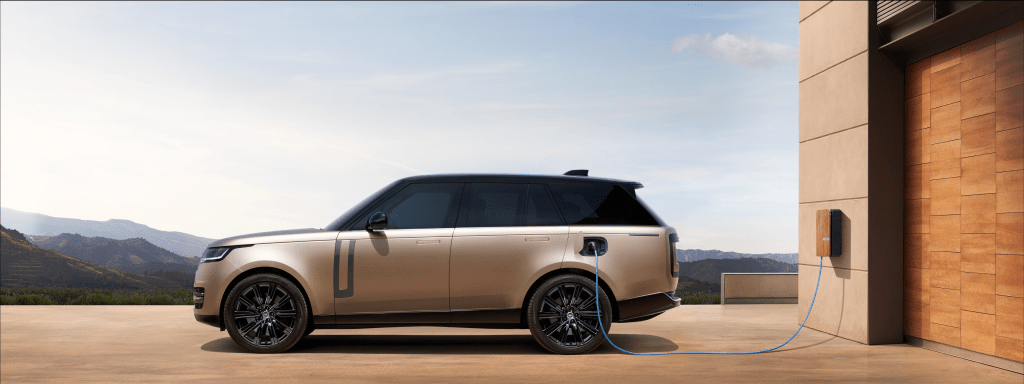
Wordplay is wherever you create it, and Range Rover, the bespoke producer of luxury SUVs from the United Kingdom, is creating a new legacy for itself that involves non-hydrocarbon propulsion. The New Range Rover, as it’s being called, will take the historic firm into the world of fully electric power when it debuts next year as a 2024 model. In the interim, Range Rover is taking the same intermediate step as other automakers en route to full EVs, the development and sale of a plug-in hybrid.

The resulting vehicle, shown in recharging action above, is officially called the 2023 Range Rover P440e Extended-Range Plug-in Hybrid, to use its proper name. The New Range Rover is one of the industry’s few PHEVs with a DC rapid-charging capability of 50kW/hr. That allows the P440e to go from stone dead to 80 percent charged in less than an hour, with an accompanying full-electric range of 48 miles. A mild-hybrid V-6 is under the hood, with traditionalists able to opt for a twin-turbocharged V-8. Orders for the hybrid are being accepted now, with a suggested MSRP in the U.S. of $104,900.

A racing Mustang for the world

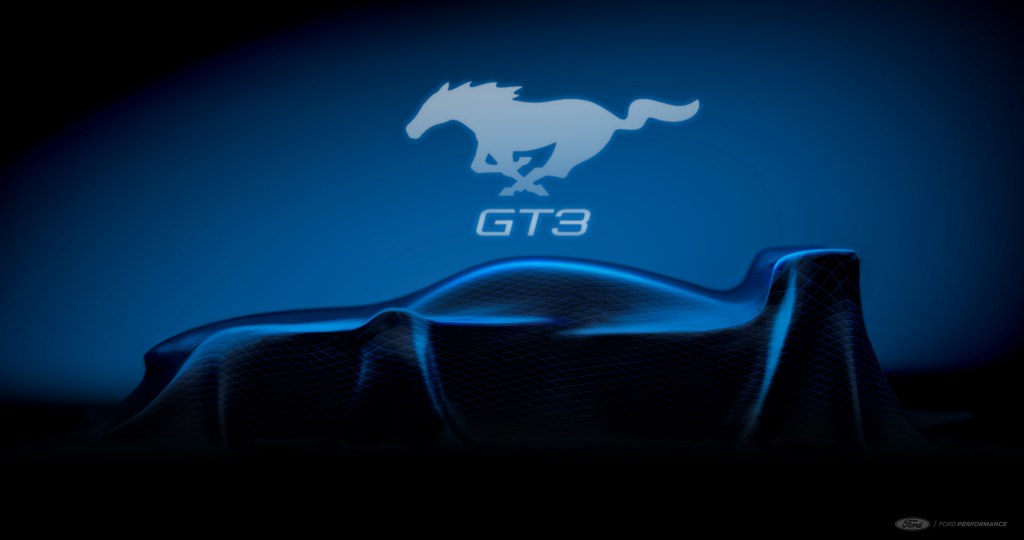
Fittingly, on the weekend of the Rolex 24 at Daytona, Ford announced a major incursion in the world of global motorsport that will take the Mustang beyond its customary strongholds in NASCAR and on the drag strip. Ford chose the IMSA endurance season opener to reveal its plans to build a Mustang that will embrace the best in left-right racing, an all-new Mustang GT3 race cars that will not only compete for Ford factory teams, but will also be offered to customer teams. The car’s scheduled rollout will be during the 2024 Rolex 24 at Daytona, led by a two-car factory team running in the IMSA GTD Pro category.

The factory team will be managed by Ford’s longtime racing collaborator Multimatic Motorsports, based in Toronto, one of the world’s leading technical players in circuit racing. The Mustang GT3 race car’s powered will come from a 5.0-liter Coyote-based V-8 jointly developed by Ford Performance and its frequent collaborator, M-Sport of Cumbria in the United Kingdom, which teamed with Ford to build the engines for the Ford Puma Hybrid Rally that swept three of the top five spots in last week’s Monte Carlo Rally, including the overall win. While Ford chose only to release the teaser photo of the Mustang GT3 at Daytona, it did reveal that besides using race-prepped Coyote power, the race car will have a rear-mounted transaxle, use specific short-long-arm front suspension, and have the proper array of aero add-ons that typify entries in GT categories.