Ladies to build a trick Bronco

Women have long been crucial decision-makers when it comes to which vehicles their families will ultimately buy. Their presence in the automotive world has swelled to include women as key executives in both the global auto industry and its sprawling, multibillion-dollar aftermarket. The Specialty Equipment Market Association, the enormous trade group that represents the accessory and component fields, and for which I’m a frequent author, has recognized this by creating its SEMA Businesswomen’s Network. That group of executives became famous a decade ago by conducting an all-female buildup of an accessorized Ford Mustang that joined the galaxy of show cars displayed every November at the massive SEMA trade show in Las Vegas. The ladies from SBN are ready and primed for a sequel.

2022 Bronco Wildtrak With Optional HOSS 3.0 With Fox Internal Bypass Dampers Package. Preproduction model shown with available equipment. 2022 Bronco Wildtrak is exclusively available for current unscheduled order holders. However, supplies are limited and there are no guarantees. Order bank is projected to open Summer 2022. Professional driver on a closed course. Always consult the Owner’s Manual before off-road driving, know your terrain and trail difficulty, and use appropriate safety gear. Ford is committed to the preservation of the environment and treading lightly.

The SBN team now intends to do another all-female build for SEMA, this time taking on a four-door Ford Bronco Wildtrak to be supplied by Bronco Brand, Ford’s in-house brand of outdoor-oriented Built Wild and 4X4-only vehicles. The SBN build’s intent is twofold: highlighting successful women in the auto industry, while encouraging more females to join the automotive world. The buildup is expected to commence this summer, with all aspects of the Bronco Wildtrak to see attention. If you work in the industry, or just love cars, SEMA has a link where you can apply to become part of the SBN build team.
IndyCar debuts new engines

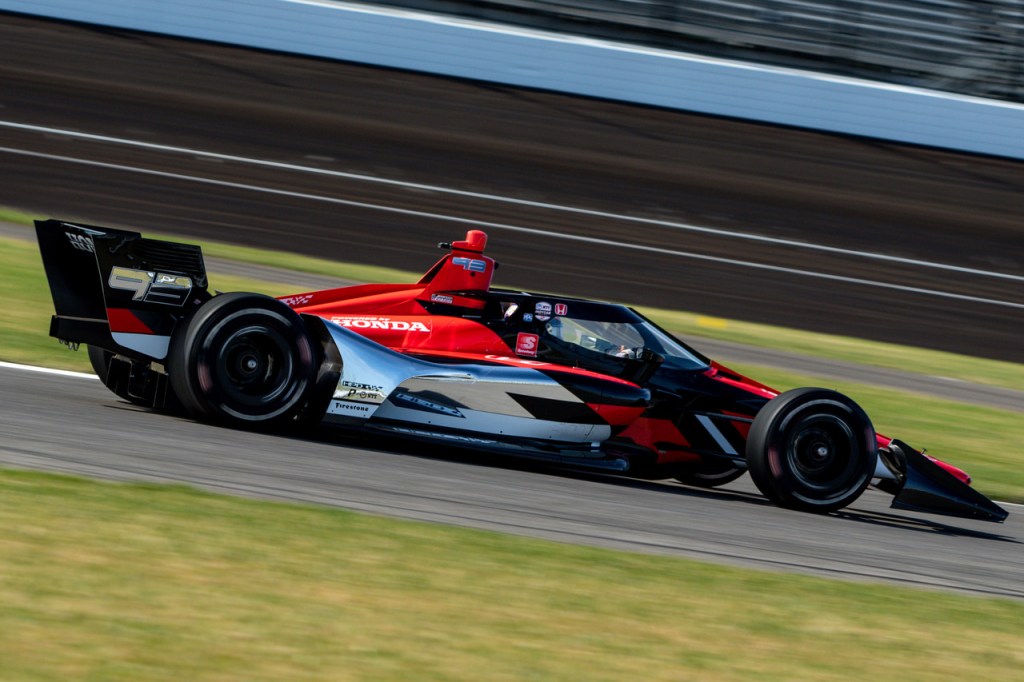
In its latest technical evolution, the NTT IndyCar Series rolled out the first examples of what will eventually be a fully new, EV-capable powertrain combination for the 2024 season. The basic formula will continue – a twin-turbocharged V-6 – only displacement is being increased from the current 2.2 liters to 2.4 for the new formula. Honda and Chevrolet, IndyCar’s two current powertrain suppliers, both turned out this week on the road course at the Indianapolis Motor Speedway. Honda’s test bed, shown here, was fielded by Chip Ganassi Racing and driven by multi-time series champion Scott Dixon. Representing Chevrolet was Team Penske, with Josef Newgarden in the seat.

Fueled by an E85 blend, the new 2.4 turbo engines are expected to produce 900 horsepower in race trim, and be fully adaptable to a hybrid-assist system with Formula 1-style energy-recovery technology. Neither of the Dallara chassis that carried the new engines in the IMS test were so equipped; the hybrid drive remains under active development for an expected 2024 competition rollout, with supply-chain issues slowing that process so far.

The new, global buzz at Lotus

First off, the newest model from one of the most quintessentially British marques in automotive history, Lotus, isn’t even being built in England. Which is understandable, once you consider how long Lotus has been an Asian-owned halo brand. It also helps to justify the new Lotus motto, “Born British, Raised Globally.” The words certainly apply to the newest, and all-electric, offering, the Eletre, for which we don’t have a pronunciation guide. The Eletre is, indisputably, all new and a fully all-electric vehicle that Lotus is terming as its first Hyper-SUV, which just may serve to define a new market segment here.

Extensively fabricated from carbon fiber and aluminum, with an interior crafted from sustainable materials, the Eletre is clearly aimed at serious drivers. Power outputs from the new, dedicated electric platform will start at 600 horsepower, with 350kW charging capability that can add 248 miles of range in 20 minutes, and a claimed 0-62 MPH time of under three seconds. Lotus also says the Eletre will feature the most advanced active-aerodynamics package of any SUV, EV or otherwise. One of four new Lotus “lifestyle” EVs planned for the next four years, pricing should be available closer to the start of production at an all-new plant in China later this year.

Hurricane season at Stellantis

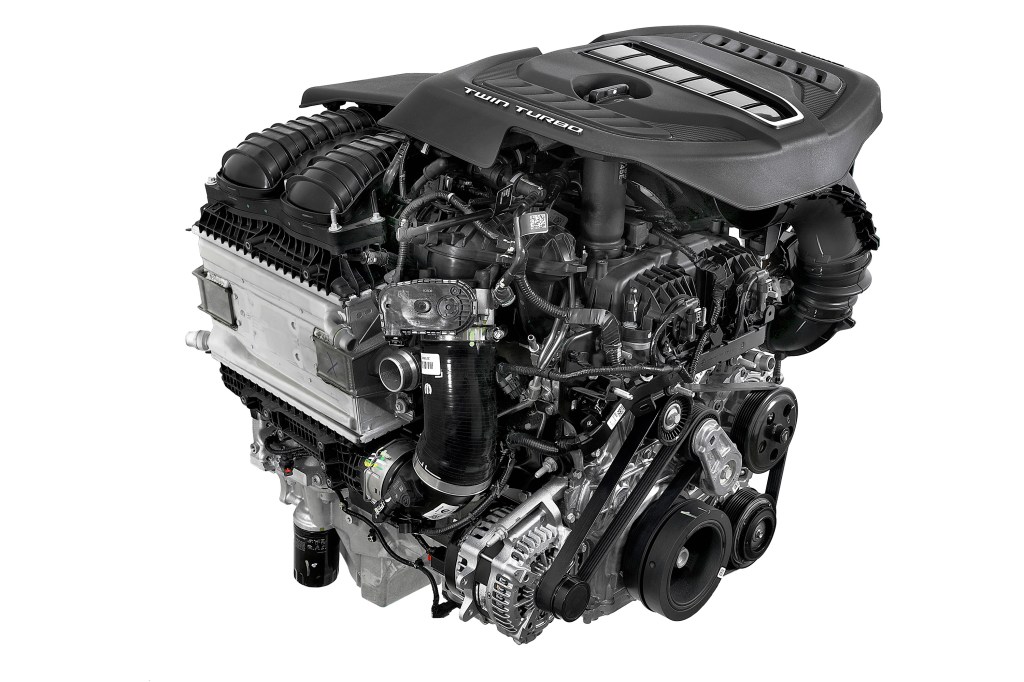
No matter how much coverage the ongoing transition to electric vehicles receives, it’s still a fact that with more than 100 million of them out there in this country alone, the internal combustion engine is unlikely to vanish completely anytime soon. It’s a matter or personal preference or application-specific propriety. Stellantis, which now incorporates the erstwhile Fiat Chrysler Automobiles, has underscored this reality within the past week by announcing plans to build a new ICE family that’s not only twin-turbocharged but also, is a yummy straight-six, a layout known for good torque characteristics and a great exhaust note.

The new engine is called the Hurricane, which we happily note was a name once applied to a powerplant from Jeep, firmly in the Stellantis brand portfolio. Displacing 3.0 liters, which works out to 183 cubic inches, the Hurricane will come in two varieties: Standard output and high output, the latter with a claimed capability of 500 horsepower when both turbos are fully spooled up. From the outset, the Hurricane has been designed for adaptability to hybrid EV powertrains, with reduced tailpipe emissions and better fuel economy than the bigger-displacement engines it’s intended to replace. No specific applications have been announced yet, but Stellantis did disclose that the Hurricane is designed to be a proper fit in its new generation of EV-capable STLA platforms, which have been shown in earlier introductions underpinning future versions of pickups, SUVs and vans. So if this all sounds something akin to what Ford did by putting EcoBoost power in the F-150, your aim is likely true.

Flying to a four-wheeled future

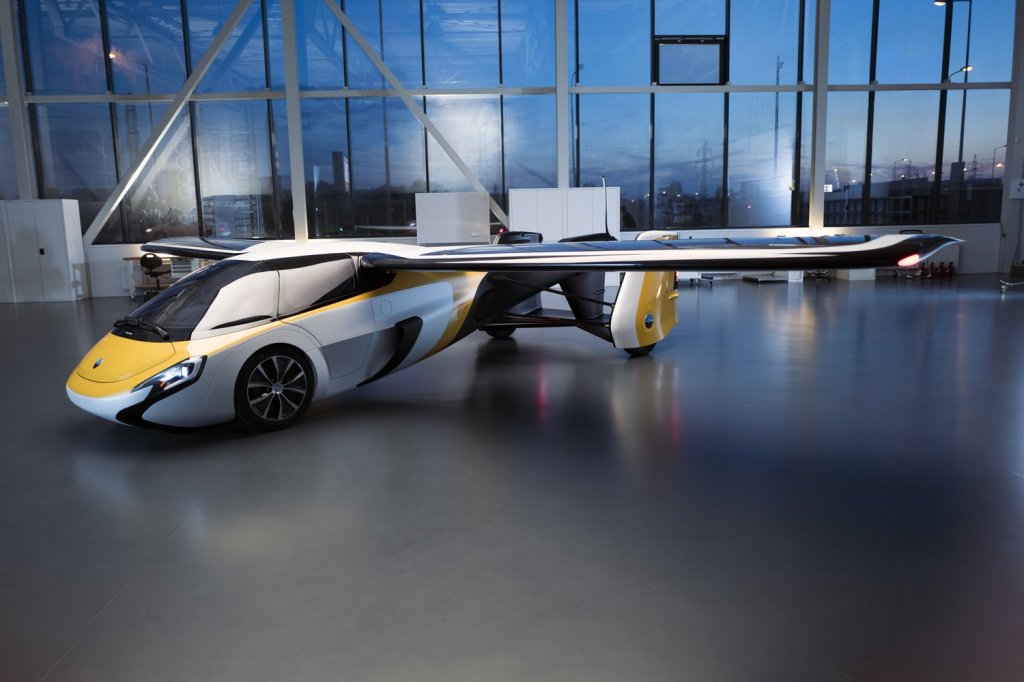
It’s been a fixture of handyman- and science-type magazines almost since the days of the Wright brothers: A smudgy drawing of a car that can unfold wings and take to the air, right from your driveway. As most of us know, it’s a concept that hasn’t proven practical to this point, although bright-eyed inventors keep trying. One of the latest attempts to blend two dissimilar transportation modes is going on a short-term display at the Petersen Automotive Museum on Wilshire Boulevard in Los Angeles, running – flying? – through April 1st.

The AeroMobil, to use its proper name with an upper-case M, is the world’s first commercially marketed flying automobile, with a 30-foot wingspan, a claimed in-flight range of 460 miles and a powertrain consisting of a turbocharged gasoline engine and adaptive transmission. Unlike most such previous creations, the AeroMobil will incorporate a ballistic recovery parachute that the developers say will let the craft drift to earth in case of a power loss or other emergency. Buyers and investors are being sought now. An RSVP will be required to view the flying car at the museum.

MINI takes the Arctic Circle

Everybody’s likely sick of winter, except for Vermonters who live to hug their skis and snowshoes. It’s one of the Earth’s locales where winter tends to really hang on, welcome or not. Another such place is known as Lapland, the probable inspiration for the Depression outlaw “Lapland Willie” Weaver’s alias, but which in this case is a region of Sweden located, you guessed it, in the harsh piny stretches north of the Arctic Circle. That’s where MINI is evaluating the fifth-generation of this transformative, British-designed automobile.

Offered with both internal combustion and electric power, and now including a new three-door body style that will augment the larger Countryman, the new-edition MINI was wrung out on pristine snow at the winter testing center of its corporate owner, BMW Group, located way up north in Arjeplog, Sweden. The three-door is the lead vehicle of the new MINI generation, which will also include the Countryman’s eventual replacement. The icy environment allows BMW engineers a better opportunity to fine-tune the EV’s motors and battery pack for optimum in conditions that are, shall we say, marginal. We still prefer the Sunshine State.

Lore of legends at Laguna Seca

One of the most beautiful, and relentlessly challenging, natural-terrain road circuits in the world is about to join yours truly in clocking 65 years. Set amid the powder-dry hills of the Monterey Pensinsula, WeatherTech Raceway Laguna Seca, as it’s known today, has hosted everything from IndyCar to the Can-Am and Trans-Am series to one of the world’s most celebrated gatherings of vintage racing vehicles during Monterey Car Week each August. Driving a new Volkswagen Jetta GLI on its twisting and diving blacktop, I learned personally that you, too, can see Elvis by reefing your ride hard and fast into the top of the Corkscrew. Only the best get to cross its finish line first, or second. Read on.

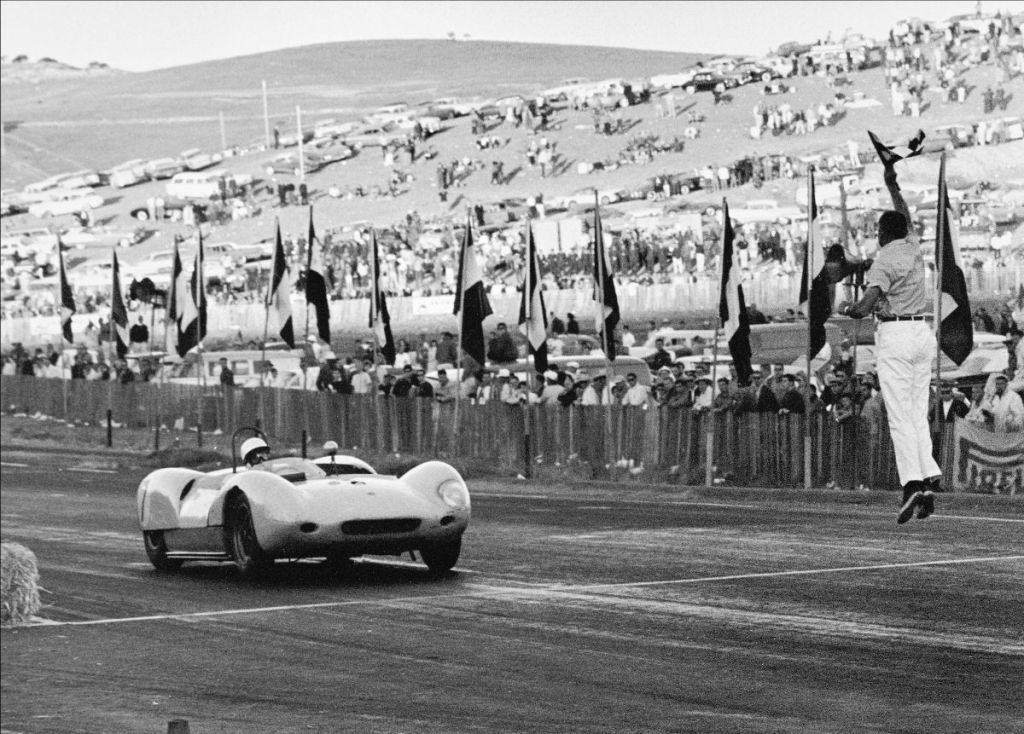
In gathering up its greatest racing moments, WeatherTech has dug deep to recall a truly stellar outing. Laguna Seca was three years old when it hosted the Pacific Grand Prix in 1960. In those years, that meant people from every global racing discipline were liable to show up and grab for a quick paycheck in a highly pleasing environment. One such luminary was Sir Stirling Moss, a driver I got to know, and interview several times, late in his illustrious life. The race organizers divided the race into a pair of 200-mile heats, divided by a break for necessary repairs. A year before his nearly fatal crash at Goodwood, Moss grabbed the overall win as you see above, in a Lotus 19 with Coventry Climax power. The bigger news, arguably, was who finished second overall: Carroll Shelby, in one of his final starts as a driver, wheeling a Maserati Birdcage. Post-race, Shelby griped that he would have beaten Moss if he hadn’t had to stop and force down nitroglycerine pills to quiet the chest pains that soon ended his driving career and eventually resulted in a heart transplant.

A garage tailored just for EVs

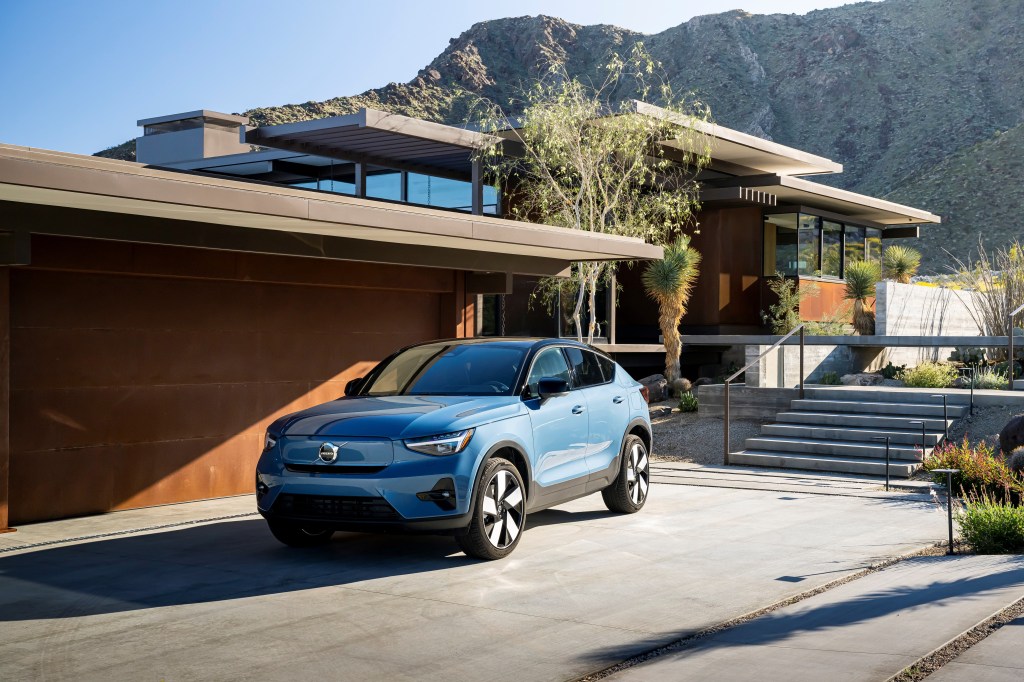
If you spend an inordinate amount of time watching HGTV or the Magnolia Network, and you’re in the market for a socially and environmentally responsible vehicle, pull up a seat, because this posting is right in your wheelhouse. Volvo Car USA, which is making a major push into EVs, in part through its Polestar sub-brand, has teamed with Canada-based Garage Living and the technology-enabled realty broker Compass to brainstorm and build a prototype Recharge Garage for electrically powered vehicles in Palm Springs, California, at a single-family residence already listed for sale by Compass.

Appropriately, the vehicle selected to augment this eco-remodeling is a Volvo C40 Recharge crossover. The garage rehab was intended to transform the structure into one where an EV turnaround can be quickly accomplished, with Garage Living installing three Volvo-branded Level 2 home chargers, meaning three vehicles can be simultaneously recharged. In light of current – no pun intended – workplace realities, Garage Living also planned in a built-in desk and foldaway meeting table, along with an entertainment center combining smart TV technology with high-end Bowers & Wilkins audio, plus storage for lifestyle equipment. Add a micro fridge, microwave and cot and from our viewpoint, you’re golden. Expect more transformative treatments of the traditional home garage going forward.

Sebring history for Aston Martin

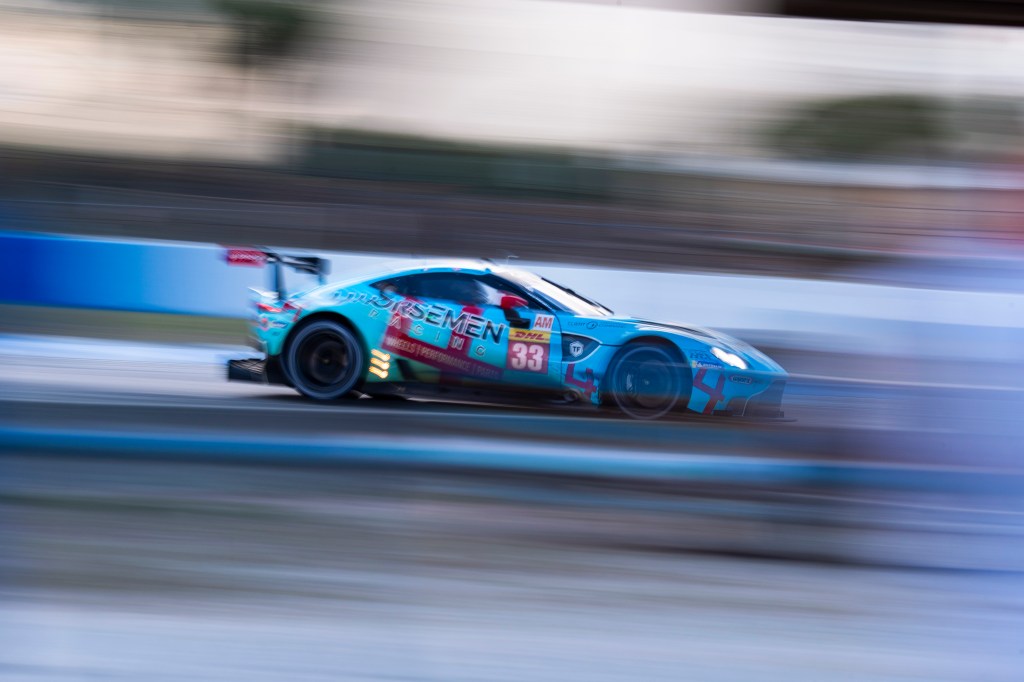
Earl Bamber regained the lead twice in the final 75 minutes to hand Chip Ganassi Racing and Cadillac the overall win in yesterday’s 12 Hours of Sebring, which marked the 70th running of the first great American endurance race. Extending the event’s historical significance, Sebring saw Aston Martin score its first class victory in the mid-Florida classic, half of a one-two class finish in the opening round of the 2022 FIA World Endurance Championship.


The Drew Gibson image captures the speed of the winning car in the GTE-Am category, the Canada-based NorthWest AMR Aston Martin Vantage GTE driven by team owner and 2017 world champion Paul Dalla Lana, Nicki Thiim of Denmark and David Pittard of the United Kingdom. Coming home second in class was another Vantage GTE entered by TF Sport, and shared by American Ben Keating, Marco Sorensen of Denmark and Florian Latorre of France. The win marked the 50th triumph for Aston Martin in the WEC category, as the series moves on to the fabled Spa-Francorchamps circuit in Belgium in May.

Vic Elford, 1935-2022

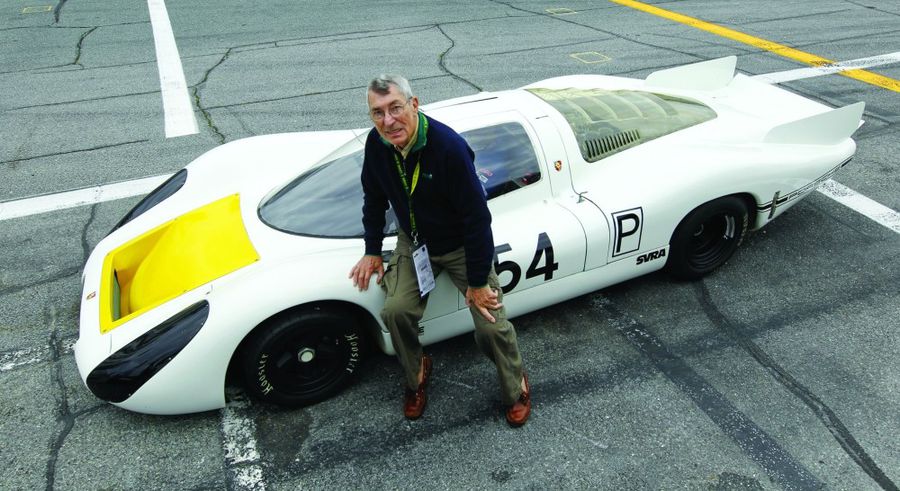
One of the most rewarding parts of this business is the opportunities it presents to interview, and sometimes know, the individuals who really made history in the dual worlds of automobiles and motorsport. Quick Vic, who died last weekend at his adopted Florida home at age 86, was one of the most rewarding interviews, plural, I experienced as an editor at Hemmings Motor News. In the professional sense, Elford was an immortal: Out of England, Elford began rallying in small-bore cars before graduating to a Mini Cooper, a series of Ford Cortinas and ultimately, a works Porsche 911S that changed Elford into a motorsport deity.

In the space of a week in 1968, Elford wheeled the 911S to the model’s first major international title by winning the Monte Carlo Rally, and then backed it up by sharing the winning Porsche 907 prototype, seen in this Elford collection photo shared by Hemmings, at the 24 Hours of Daytona when he was still a relatively new circuit racer. That win was the first in a stellar career in the World Sportscar Championship for Elford, who tamed the early Porsche 917 by taking one to the first 150 MPH lap average at Le Mans in 1970, and took one on its only competitive laps ever turned at the Targa Florio in Sicily. Before retiring from the cockpit and become a Porsche elder statesman, Elford performed prominently in Formula 1 – he also scored his first F1 points in 1968 – the Can-Am and Trans-Am series, and even in NASCAR, his record including four starts in the Daytona 500. He owned two class wins at Le Mans and a best overall finish of sixth. Quick Vic was acidly witty, urbane and always willing to talk to admirers. Rest in peace, racer.