Porsche, Penske partner for 2023 assault on LMPh crowns

Porsche plans a return to its long-unassailable place atop the international sports car wars by doing extensive testing on the just-unveiled Porsche 963 hypercar, which will join the wars in the LMPh class beginning with a full-time 2023 campaign in both the World Endurance Championship and stateside, in the IMSA WeatherTech Sports Car Championship. In both cases, Porsche is partnering with Team Penske for its factory assault, and if you’re old enough to remember the original Can-Am series from back in the 1970s, you’re fully aware of how Penske and Porsche have flattened the competition when they’ve teamed up in the past. Think D-O-M-I-N-A-T-I-O-N.

Clad in the official Porsche works livery of red, black and white – think of the Porsche Salzburg 917s back in the glory years around 1970 – the 963 and its hybrid powertrain have already completed some 4,900 test miles already this year. The development work has been headquartered at Team Penske’s sprawling U.S. base in Mooresville, North Carolina, and for the WEC entries, at a satellite Team Penske facility in Mannheim, Germany, which used to a Porsche Centre operated by Penske Automotive Group, the transportation giant’s global auto-retailing arm. A quartet of 963s are planned for the 2023 effort, two each for WEC and IMSA. Porsche Penske Motorsport, as it’s officially called, will give the 963 its first non-competitive track shakedown at the final 2022 WEC round in November, which takes place in Bahrain.

Hyundai, Michelin teaming up to create advanced EV tires

There’s an old saying that kind of goes like this: Any vehicle is only as good on the road as the four tiny contact patches were its tires meet the ground. That’s the spot where everything about vehicle dynamics and tire engineering coalesces all at once. The technology that’s driven tire development over the past century looks to be advanced considerably as new, premium EVs, with unique needs for minimized rolling resistance and other tire characteristics, come into the market in greater numbers. One of those vehicles is the electric Hyundia IONIQ 5, which has prompted Hyundai to enter a three-year joint effort with Michelin to develop a new generation of efficient tires for EVs.

Executives from both transportation giants have signed a pact that will lead to creation of a specific new Michelin tire for the IONIQ 5, with real-time monitoring capability and the extensive use of environmentally friendly manufacturing materials. Advancing tire technology is critical to meet the durability requirements of tires, as well as driving performance and electric efficiency under high load as the driving range of EVs continues to increase in the coming years.

Big power, all-wheel steering for Bentley Continental GT Mulliner

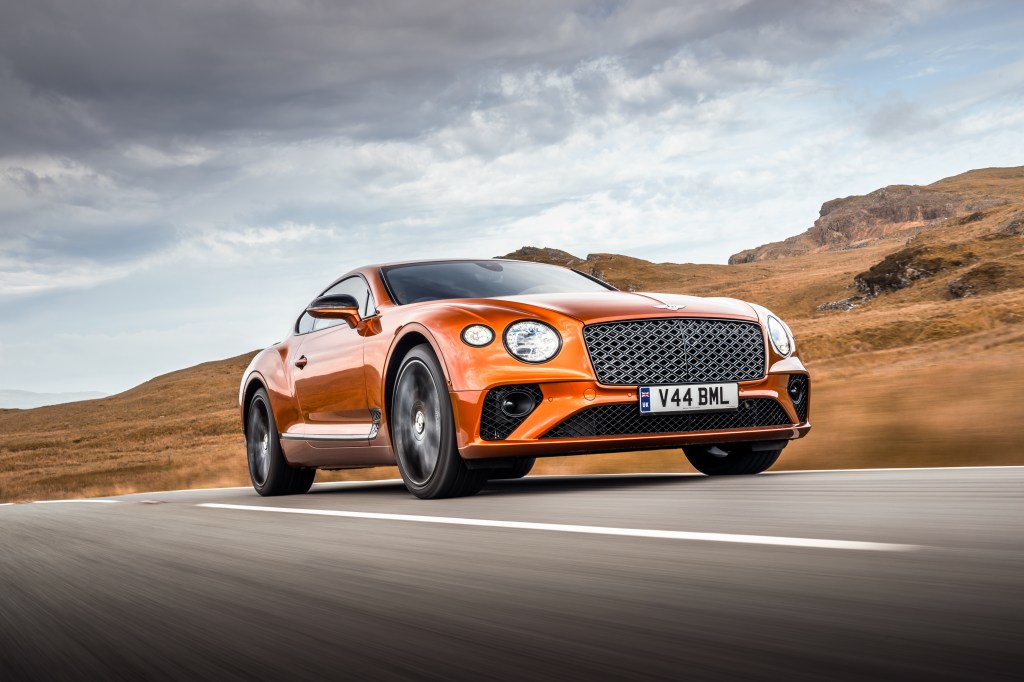
If you’re shopping for exclusivity, Bentley ought to be on anybody’s primo list. That’s especially true now that Bentley is completing its post-centennial realignment of its model range, which will be topped by the quickest such car yet to come out of Crewe. The Bentley Continental GT Mulliner incorporates the power and handling attributes of the previous GT Speed. Bentley is saying flatly that this new GT mega-car is the swiftest-accelerating, most dynamic and most luxurious offering in the Continental range to date.

The Continental GT Mulliner sits atop the S, Azure and Speed ranges at Bentley. With a handcrafted-in-Crewe 6.0-liter TFSI W-12 engine – that’s three banks of four cylinders apiece – the Continental GT Mulliner is reported to deliver a blast to 60 MPH in just 3.5 seconds, amazing given the bulk of the car. Top speed is rated at 208 MPH. Standard technology incorporates active torque vectoring and all-wheel steering. Personalization is everything inside, with buyers offered a choice of up to eight three-tone interior leather treatments with a selection palette of 88 different wood veneers. That’s luxury.

Ford’s rich history, expressed through its photo archive

The Ford Motor Company marked 119 years of building vehicles this week, and decided to celebrate the occasion with all of us. To mark the anniversary, Dearborn is making more than 5,000 historic images of vehicles from Ford, Lincoln and Mercury available for the public to view, in many cases for the first time ever. The Ford Heritage Vault gathers historic images spanning the century from Ford’s founding in 1903 to the company’s memorable 2003 centennial.

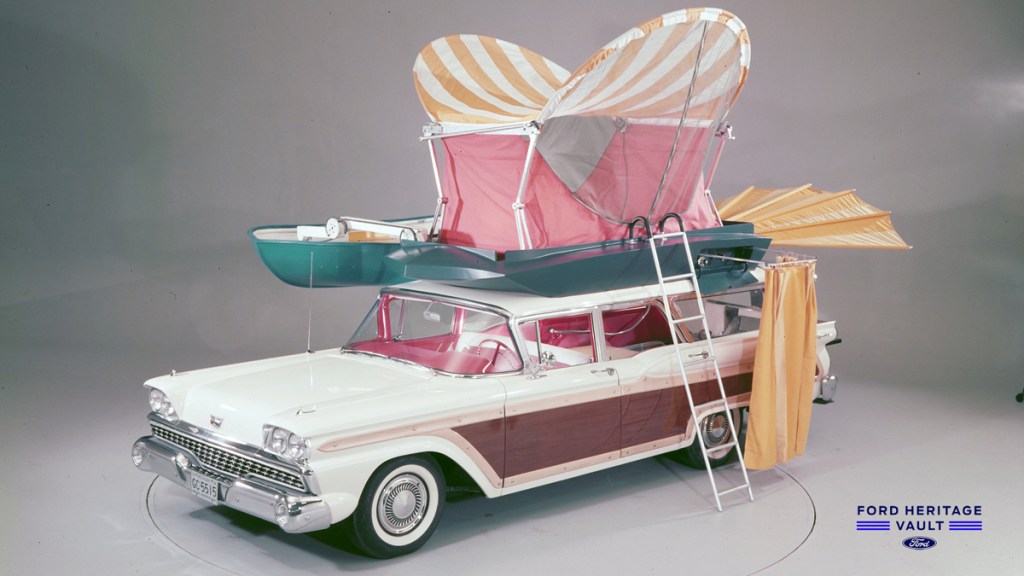
Anybody remember this accessory package, which Ford evaluated as an option for the 1959 Ford Country Squire station wagon? The collection of curated photographs and company brochures that can be accessed through the vault include a lot of tasty memory-teasers such as this one. The vault’s curation process has encompassed two years; Ford plans to continue growing the archive going forward. The project was a joint effort between Ford’s corporate staff and graduate students at Wayne State University outside Detroit. It incorporates assistive tools to help the visually impaired access the collections.

Factory lightweight Comet A/FX is a Mecum star at Tulsa

Mecum Auctions came off its recent sale in Tulsa in fine, flush fashion, hammering a total of 643 historic vehicles in its just-concluded sale that took place in the SageNet Center at Expo Square, with total sales coming in at $17 million. If you follow the company, you already know that Mecum’s reputation for expertise is based in large part on its ability to sell muscle cars. To that end, the biggest money at Tulsa was captured by a 1965 Shelby Cobra CSX4000 Series Roadster that found a new home at $409,750. What caught our eye was the second-place seller, which underscores the variety you can find at these happenings.

Mecum’s second-ranking seller was a delicious piece of history, which came out of the Tommy Cronk Collection of vintage American performance cars that was consigned at Tulsa. This 1965 Mercury Comet A/FX, from the lightweight stocker exhibition class in drag racing that eventually morphed into today’s Funny Cars, is one of eight built to Lincoln-Mercury specifications in the Long Beach, California, shop of famed Bill Stroppe, who once built racing Lincolns for the Carrera Panamericana. Powered by a NASCAR-style 427-cu.in. side-oiler V-8, the flaming Comet rang the bell at Tulsa for $313,500, an impressive number for a car that’s not feasibly streetable.

New Integra heads to the clouds

You’ve likely seen it teased in a few TV spots because the car’s about to hit the showrooms, but the rollout for the new-generation 2023 Acura Integra has more lofty aspirations, pun fully intended. That’s because the juiced-up subcompact is making its motorsport debut at just about the same time during the The Broadmoor Pikes Peak International Hill Climb in Colorado. It’s hugely historic, and not just for Acura, because this year’s event marks the 100th running of “The Climb to the Clouds” along the now-paved road snaking up the side of what many still respectfully call Unser Mountain, in honor of the clan’s long domination of the climb.

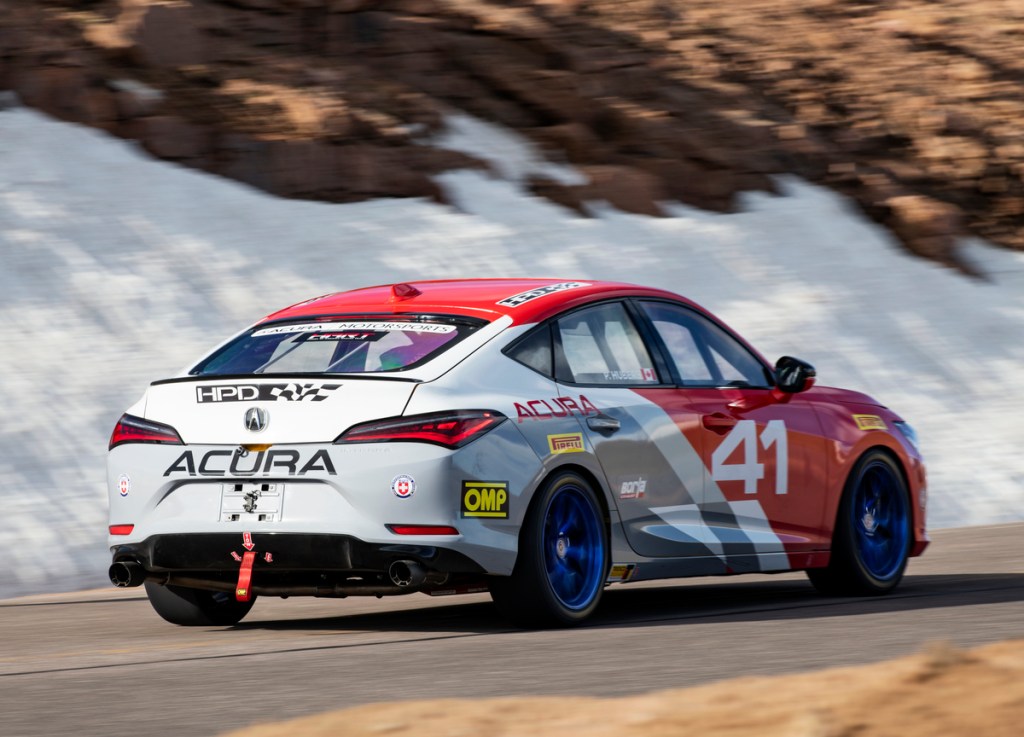
Massaged by Honda Performance Development, a pair of Integra TLX Type S sport sedans will join Acura’s planned five-vehicle assault on Pikes Peak. If the livery looks familiar, that’s because it’s a salute to the colors of the first Acura factory race car, which was a first-generation Integra. On the hill, both Integras will makes use of factory-spec turbocharged 1.5-liter engines and six-speed manual transmissions. Acura engineers will be behind the wheel of both cars, one of which will serve as the Pikes Peak pace car.

Dr. Fred Simeone, 1936-2022

If you get the opportunity to write about cars of the past, you’re guaranteed to meet some fascinating people, and you’ll end up admiring some of them. That’s why the pain is especially acute when you lose one of them. As I mentioned upon hearing the news of his passing last Saturday – fittingly, while his beloved 24 Hours of Le Mans was still in progress – the world of vintage racing cars never had a better friend than Dr. Frederick Simeone of Philadelphia, who has died at age 86. Fred wasn’t a vintage racer, but instead dedicated his off-hours from practicing pediatric medicine to collecting irreplaceable examples of historic racing cars that he maintained in a public Philadelphia museum, most of them in the same, untouched condition as when they were first pulled off the racing circuit.

I took this portrait of the good doctor, with a coupe of his collectibles, when I profiled both Fred and the Simeone Foundation Automotive Museum for Hemmings Sports & Exotic Car in 2013. Fred was a second-generation physician who grew up at K&A, in one of Philly’s roughest neighborhoods, before heading off to medical school. Fred’s father was a hardcore car enthusiasts, passing his interest on down to his son. Fred became one of the world’s foremost surgeons specializing in neonatal and pediatric neurosurgery, having served on the faculty at Harvard Medical School before returning to Philadelphia, where he eventually served as chairman of neurosurgery at Pennsylvania Hospital for more than 25 years. Fred assembled his museum piecemeal, tracking down rare race cars individually, and was an early champion of the now widely accepted construct of keeping old cars in original condition. His museum was judged the best in the world by the Classic Car Trust in 2019, and the collection’s Cobra Daytona Coupe was the first car of any kind placed on the National Historic Vehicle Register in 2014. Atop all this, Fred was still a doctor first: The text on spinal maladies that he co-authored is still considered standard in medical study. We’ve lost one of the really good ones here.

Auto aftermarket reaches $50B

As a matter of economic formality, the North American automotive aftermarket really dates to the hot rod and custom car boom that followed World War II, and during which Robert E. Petersen and Wally Parks tried to organize it into a budding national industry. Their idea resulted in the formation of SEMA, which today stands for Speciality Equipment Market Association, and represents companies selling everything from paint to plug-in performance extras to the North American automotive aftermarket. In the interests of full disclosure, I’m a regular contributor to PRI Magazine, SEMA’s adjunct publication, which focuses on the hardcore racing component element of this market. Annually, SEMA publishes a state-of-the-marketplace that’s must reading for industry decision-makers.

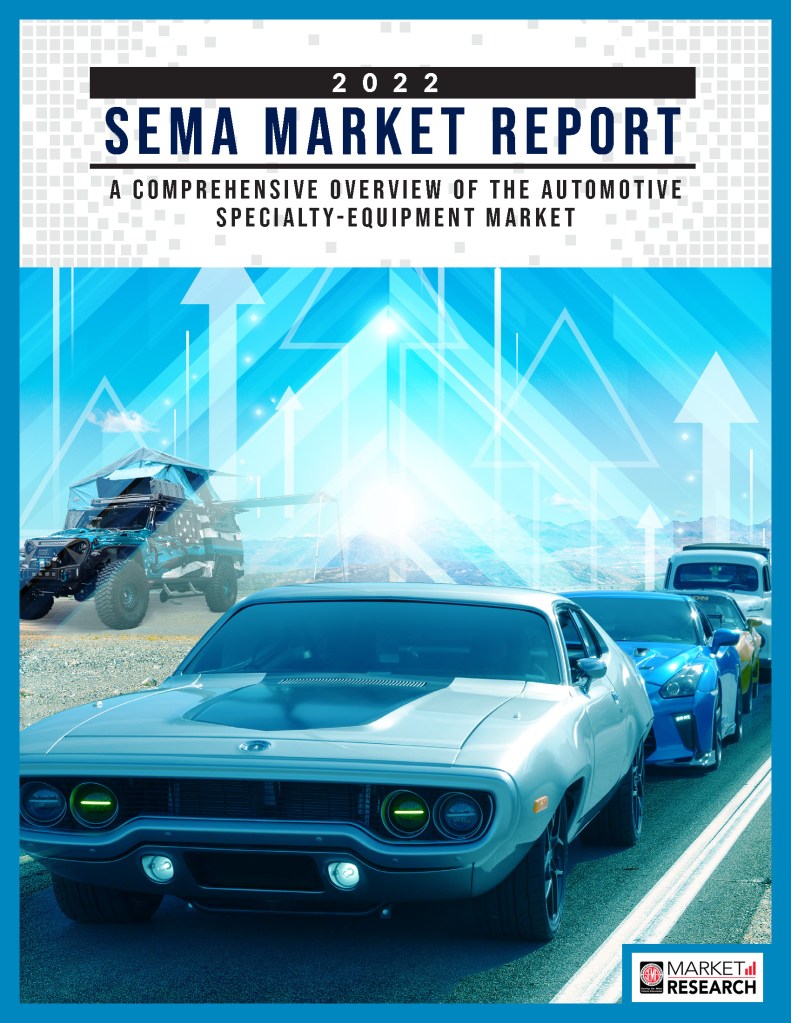
As the cover of the 2022 SEMA Market Report makes clear, this industry involves vehicles of every stripe, many of which were being built of modified while everybody was shut in due to the global pandemic in 2021. It appears undeniable that COVID helped to move the needle: According to SEMA’s research, something it does on an ongoing basis, the market’s total value in 2021 cleared $50 billion in annual revenue for the first time since SEMA started putting on hot rod shows in Los Angeles back in the late 1940s. That’s a staggering number, and it’s pretty cool to be able to report on this economically critical and vibrant business. The actual record, by the way, is $50.9 billion.

Cadillac slates LMP Hypercar

Toyota Gazoo Racing may have grabbed five fingers’ worth of outright wins at the 24 Hours of Le Mans with its GR010 Hypercar this morning, but fans of U.S.-badged cars at the summit of global sports car competition can now take heart. Days before La Ronde Infernale took the French tricolor to start its annual grind, Cadillac disclosed its intentions to return to Le Mans next year with its own brace of Hypercars, based on Dallara chassis.

A joint project between Cadillac Design, Cadillac Racing and Dallara, the latter of which builds today’s IndyCar chassis, Cadillac’s Project GTP Hypercar will mark the third generation of international prototype sports cars raced by Cadillac in global competition, including at Le Mans. When the hypercar arrives at the Sarthe next June, it will mark the first full Cadillac assault on Le Mans in 20 years, a tradition that reaches back to when the American sporting impresario Briggs Swift Cunningham brought a team of Cadillacs to the race in 1950. As you can tell by the impression, the GTP Hypercar already has a menu of current Cadillac styling themes baked into its lines. The hypercar will be ready to contest the 2023 IMSA and WEC championships, starting with next year’s Rolex 24 at Daytona.

Bringing an MPG award home

When I was first started reading car magazines, never dreaming that one day I’d eventually write and take photos for a bunch of them, one of my role models was Dean Batchelor, who I started reading when he was a lead editor at Road & Track. Dean went from being a California hot rodder – nearly killed while trying to set a Bonneville streamliner record – to being an erudite man of words at a variety of West Coast magazine titles and an early founder of today’s Pebble Beach Concours d’Elegance, arguably the world’s most prestigious car show. Today, the Motor Press Guild, based in Los Angeles, the nation’s largest group of automotive media professionals, names its highest award for excellence in automotive journalism in Batchelor’s honor.

The MPG annually names finalists in multiple categories from which the winner of Dean Batchelor Award is chosen. Last week, the awards were presented in Malibu, and we were honored by being one of those finalists, in the form of the story of the restoration of Tucker 48 number 1044, the only pre-production Tucker prototype renewed with the direct participation of Preston Tucker’s descendants, which appeared in the inaugural issue of Crankshaft magazine. I’m pleased to report that the Batchelor award went to my colleague at Speed Sport magazine, John Oreovicz, for his book “Indy Split,” a definitive and sad history of the war of attrition between CART and the IRL that undermined the sport so deeply. I’ve been at this a long time, and to have your body of work associated with Dean Batchelor’s in any way is indeed both humbling and gratifying.