No gas cars will be sold after 2035 as California market goes all-EV

Even though last week’s announcement was less than surprising, it’s still seismic in its impact. California Gov. Gavin Newsom announced that beginning in 2035, all new cars and light trucks sold in the Golden State will be EV-only. California, standing alone, already constitutes one of the world’s largest single markets for new vehicles, it’s still historic, and one of the world’s first efforts to impose an emissions-related outright prohibition on vehicles powered by internal combustion engines. The ruling covers new vehicles only, with used gasoline-fueled vehicles being unaffected by the present ban.
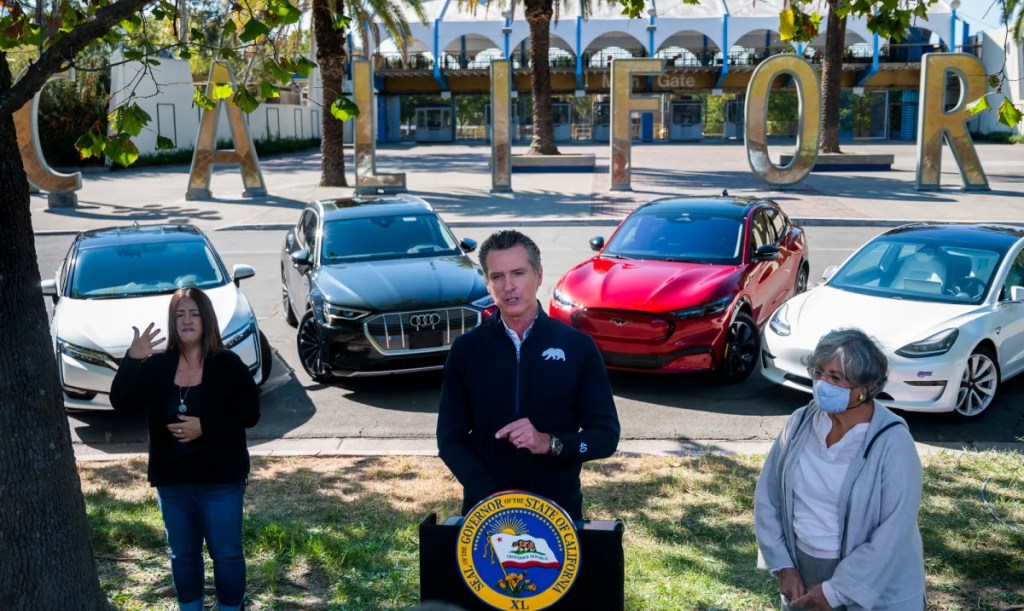
The ruling by the California Air Resources Board will also set interim targets for phasing out gasoline-fueled vehicles. Beginning in 2026, 35 percent of all passenger cars, SUVs and light trucks sold in California will be required to be zero-emission vehicles. That quota is due to increase each year, reaching 51 percent by 2028, 60 percent by 2030 and 100 percent by 2035. The quotas would also clear the way for 20 percent of legal vehicles allowed for sale to be plug-in hybrids. A spokesman for the CARB called the steps the most important actions the environmental body has taken in the past 30 years. If past practice is any indication, California’s moves could foretell a blueprint for a national bid to eventually switch to new EVs.

Hispano-Suiza, honest, is back and selling in the United States

Dial the calendar back nearly a century and you’ll learn that the exotic Spanish creations of Hispano-Suiza were at the best on the world’s road circuits, and coddling very rich passengers, in the pre-1930. Like several other glorious nameplates, Hispano-Suiza is undergoing a revival, now owned by the Peralada Group, which makes most of its income now by presenting high-luxury dining and entertainment events. The revived Hisso is part of a company now headed by a descendant of its founder, and made its U.S. debut at The Amelia as the Hispano-Suiza Carmen, a 100-percent electric hypercar.

Making the scene at Monterey was this newest offering, the Hispano-Suiza Carmen Boulogne, of which just 24 examples will be produced, this first Boulogne strikingly finished in a shade of Ocean Song Rose. The firm’s management has called the United States a “strategic market” in the brand’s revival, and plans five more exclusive showings before potential buyers as the year continues.

Broad Arrow Auctions has a cool rollout at the Jet Center

Hagerty’s footprint in the collector-car world resembles Paul Bunyan’s more every day, with its recent acquisition of the Broad Arrow Auctions group. Full disclosure, I have been working with Broad Arrow on prepping some of the catalog listings for their auction events, specifically the group’s impressive debut with a live auction at the Monterey Jet Center last week as part of Hagerty’s renamed Motorlux event at that venue, which drew several thousand notables to enjoy the cars, aircraft and Monterey gourmet cuisine that was offered. But at its core, this was a high-end auto auction, and Broad Arrow performed proudly during its star turn.

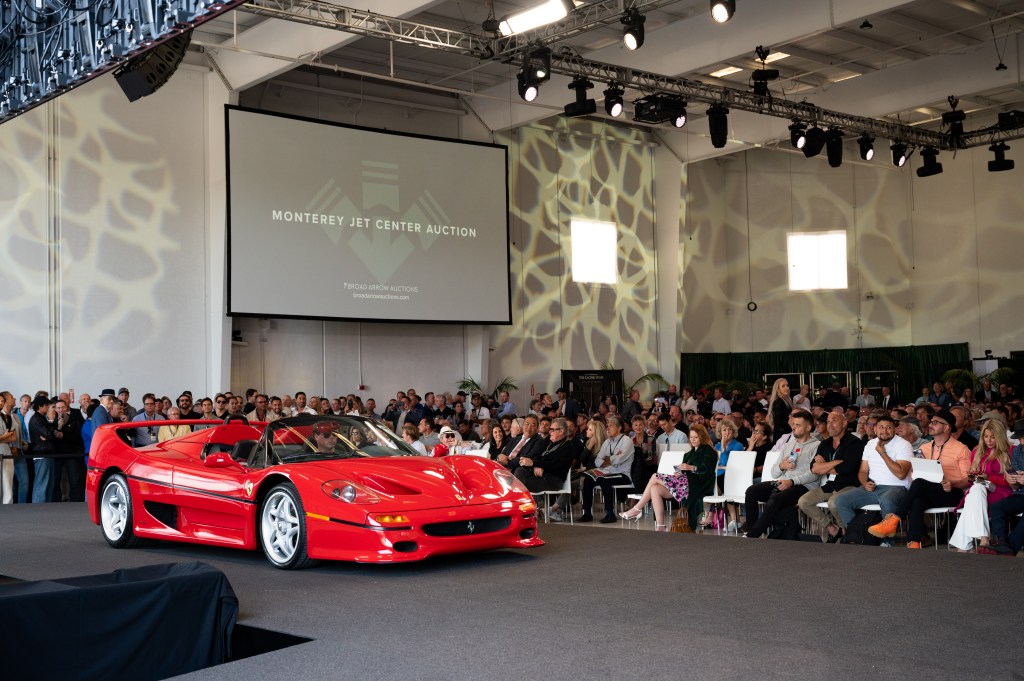
As the photo shows, Broad Arrow presented an intimate setting for its sale, which included this 1995 Ferrari F50, which hammered at a world record price of $5.175 million. Just edging it out for top sale of the event was another Ferrari, a gorgeous 250 GT SWB Berlinetta “Tour de France” from 1957, which rolled out of the hangar for an even $5.5 million. The lot we were watching was the one spotlighted in this space, the 1964 Aston Martin DB5 from the estate of Sir Sean Connery, which brought $2,425,000 and included a personal drive with Sir Jackie Stewart. All together, the Monterey sale rang up $55.3 million in sales, with a 88 percent sell-through rate of the 93 lots offered. Broad Arrow now moves toward its sale liquidated the famed upstate New York collection of Jim Taylor before taking on another live sale this November in West Palm Beach. Broad Arrow has also been named as the official auction house at The Amelia, another Hagerty holding, beginning next year.

50 first victories by NASCAR legends, viewed in depth

Full disclosure: I know both authors of this work of history and I’m familiar with the vast sweep of their output and knowledge. Al Pearce and Mike Hembree represent nearly 100 years of combined experience in covering American motorsport and its history, one of our favorite topics. So it was rewarding to see these gentlemen combine their nearly endless knowledge to tell the stories of 50 breakthrough wins by the elite of NASCAR, going back to when Bill France Sr. first attempted to organize stock car racing into something coherent. 50 First Victories, a 236-page review, appropriately begins in the right place: With the story of Jim Roper, who hauled all the way from Kansas to win NASCAR’s first Strictly Stock race at the old Charlotte Fairgrounds, which came after the supposed winner was tossed for bootlegger-style weight jacking, which was then prohibited.

As the cover makes clear, the book is an episodic march through the generational greats that have made up the Cup series’ history, with deep dives into some of the luminaries whose names are still spoken with quiet respect. Our personal favorite will always be the tale of Tiny Lund, who won the 1963 Daytona 500 in storybook fashion after the Wood Brothers’ regular driver, Marvin Panch, was critically burned in a sports car preliminary and personally asked the Woods to put rideless Lund in the seat. Second fave for us is Harry Gant, an utter terror in Sportsman type racing who snapped an out-of-sight Cup losing streak in 1982, fittingly at Martinsville, thus becoming NASCAR’s “Mr. October.” This is a hugely entertaining and easily digestible book at 236 pages from Octane Press.

Dodge envisions an EV Charger

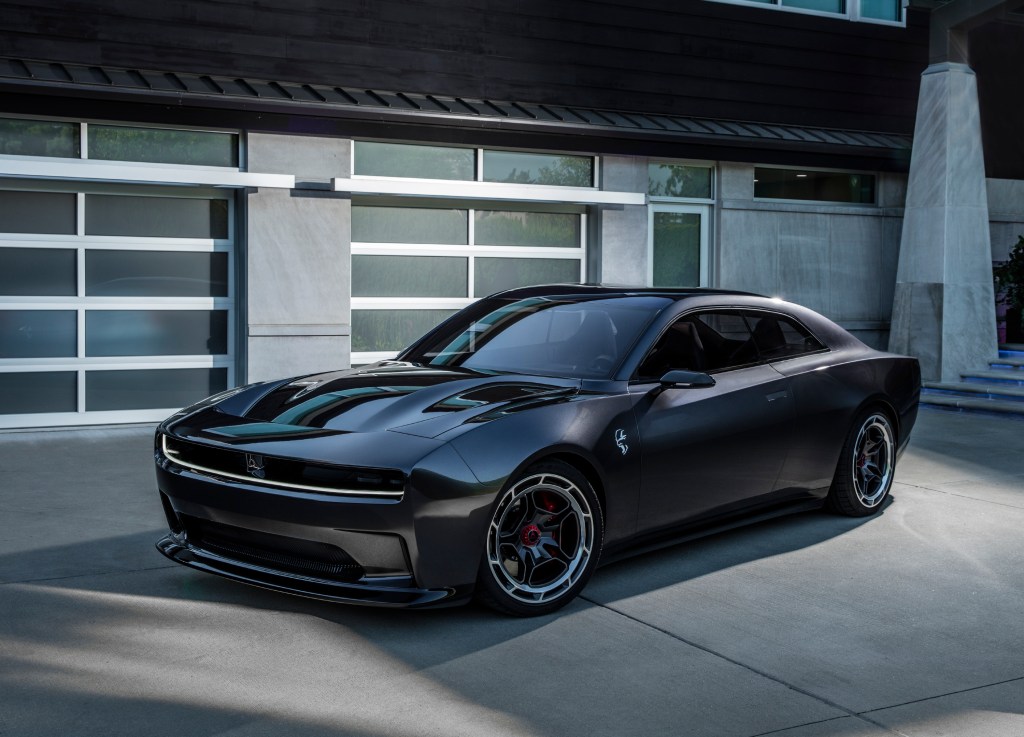
We reported in this spot a while back that the Chrysler – Stellantis, if you prefer – rear-drive platform that now underpins its ICE-powered muscle cars is long the tooth and facing the chop in the near future. This news seriously rattled one of my pals who’s a would-be Hemi Challenger buyer, and is concerned about whether traditional American high performance can co-exist with today’s carbon reduction. As this image, released last week, makes clear, Dodge is in no way prepared to abandon the performance market when the current platform is finally retired.

What you’re looking at is what Dodge is calling the future of American electrified performance as represented by this design study, the Dodge Charger Daytona SRT concept. You can see that the Charger is still a four-door (yes!) looks thoroughly nasty, and given past Stellantis practice, can be reasonably expected to make it to the showrooms largely intact. And if you’re worried that American muscle is doomed to sound like a dentist’s drill gone bonkers, you can take heart in this: The Daytona SRT concept includes what Stellantis is calling Fratzonic Chambered Exhaust, which, even through the car is all-electric will mimic the sound of today’s 707-horsepower SRT Hellcat for occupants and onlookers. Stop snickering, because we bet that buyers are going to love it.

A pair of vintage rallies spell fun for autumn in the Catskills

One of the flat-out nicest places you can be as the leaves begin to turn in earnest is the magnificent Hudson Valley of New York and the adjacent Catskill Mountains. The up-and-down, winding roads present a delight for any driver, especially one that’s driving a veteran car. To that end, Historic Automobile Endurance Runs, LLC is offering a pair of autumn rallies for vintage cars in this beautiful locale, located about 100 miles north of New York City. Both rallies are organized by enthusiast and historian Robert Selkowitz of Shokan, New York, a longtime pal of this space. The events are designed to be attainable, enjoyable and most importantly, affordable.

Set for Saturday, September 24th, the Sixth Annual Catskill Conquest Rally is held in commemoration of the Automobile Endurance Run of October 1903 that saw 34 cars take part in an 800-mile run linking New York City and Pittsburgh. The second event is the Fourth Annual Catskill Covered Bridge Rally, set for Saturday, October 15. Both rallies’ starting point will be at the Maurice D. Hinchey Catskills Visitor Center, 5069 State Route 28, Mount Tremper, New York, 18 miles west of Kingston, New York, accessible via the New York State Thruway. Entry fees are set at $100 for the Catskill Conquest rally and at $50 for the Covered Bridge event. A reasonable price, to be sure, for that much fun.

The legacy of Newman-Haas is heading to the auction block

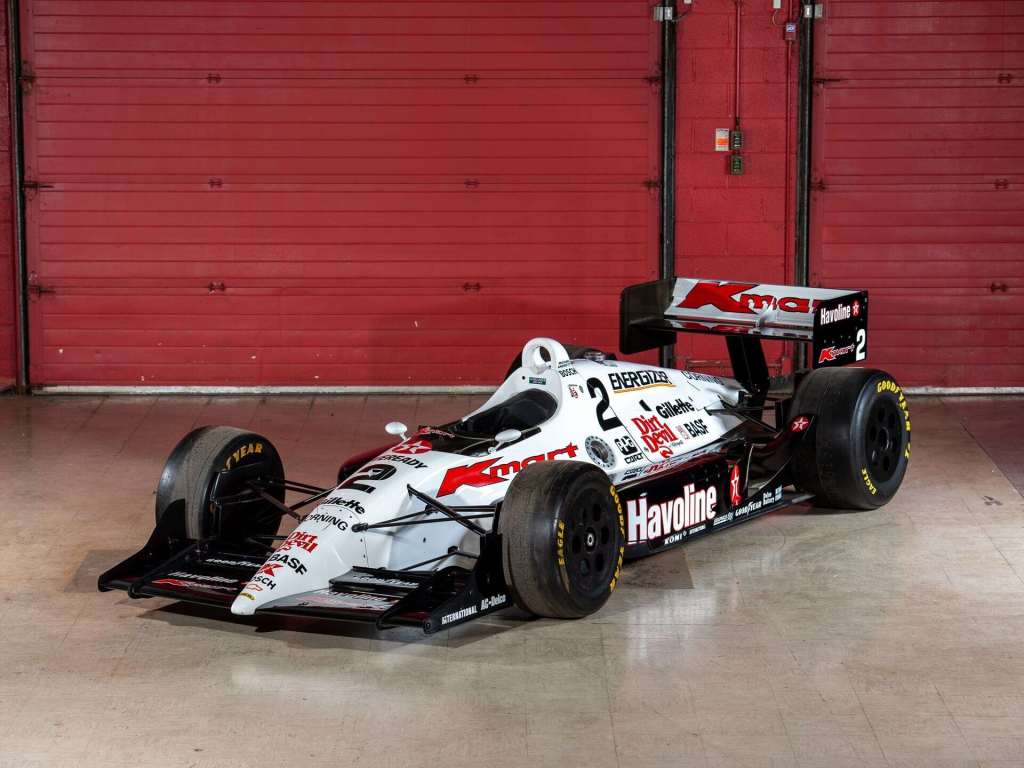
Thirty years ago, and continuing forward for many seasons, Newman-Haas Racing was second only to Team Penske as a power in the INDYCAR world. At various times, its drivers ranged from Mario Andretti to Nigel Mansell to Sebastian Bourdais. Sadly, both of the team’s main principals, Paul Newman and longtime Lola importer Carl Haas, have been passed on for some years. In an amazing public offering, the auction house RM Sotheby’s is planning to present a huge sale of Newman-Haas memorabilia, a notion that goes along way, given that the items being offered for sale will include no less than 40 cars that raced at the Indianapolis 500, in the CART series and in the then-Indy Racing League.

Besides Lola chassis, the race cars represent the products of fabricators ranging from Swift to Dallara. One of our favorites is the Lola-Chevrolet seen above from 1991, when the Andrettis, father and son, were Newman-Haas teammates and when Michael Andretti engaged Rick Mears in one of the most thrilling late-race duels in Indianapolis 500 history. This once-in-a-lifetime sale of gilt-edged racing goodies is set for October 29.

A race mechanic’s winning journey

Before we tell you what this book is about, let us explain why it’s important. Books on auto racing tend to focus on drivers because they’re the stars of the show. You have to look long, and hard, to find a story that tells how the spectacle of motorsport actually takes place, which is due to the labors of a lot of people who don’t necessarily wear helmets. This wonderful volume is exactly that kind of book. If you don’t know who Roger Bailey is, he’s a longtime mechanic and team manager in top-level auto racing who, along with the late Pat Patrick, founded an organization called the American Racing Series for would-be Indy drivers looking for reasonably affordable seat time. In 1991, the ARS was reborn as today’s Indy Lights series, the top tier of the Road to Indy program that Bailey ran until his retirement in 2012. The Indy Lights program is one of racing’s premier training grounds; its champions that have gone on to INDYCAR stardom include Tony Kanaan, Josef Newgarden and Pato O’Ward.

Boost! Roger Bailey’s Extraordinary Motor Racing Career is the brainchild of acclaimed motorsport journalist Gordon Kirby and bears the imprint of Racemaker Press in Boston, which stands nearly alone on these shores when it comes to publishing meticulously researched works on racing history like this one. Boost – it’s both the title and Bailey’s nickname – takes you through his early days in England where he labored on tube-chassis formula cars before he made his way to America, first gaining acclaim as the boss of Roger Penske’s team effort in the wild Can-Am series. This book, which runs to 210 beautifully produced pages, is also the definitive Indy Lights history, augmented with a full rundown of champions and race winners. At $60.00, it’s a delight for serious fans of American open-wheel racing.

A better vintage Mustang idea

Sure, it’s immediately recognizable. What first-generation Mustang isn’t? Only this one is linked to Ford mostly through inspiration. Very little that you see on this 1964 1/2 Ford Mustang convertible arrives by way of Dearborn. Instead, this show-quality Mustang, known as “CAGED,” is a ground-up effort undertaken by Ringbrothers of Spring Green, Wisconsin, which produces billet specialty components for vintage Mustangs but has obviously gone considerably further by creating CAGED from scratch.

Astonishingly, virtually every component on CAGED – except the basic body – is a custom piece crafted by Ringbrothers, the only actual Mustang components supplied by Ford being the center caps of the billet wheels. Metalwork included converting the Roadster Shop frame underneath the car into an actual unitized body structure, which was widened and lengthened by 1 inch over stock dimensions, with the grille sunk 2 inches deeper in the bodywork. Power comes from a 5.0-liter Ford Performance Coyote engine linked to Ford’s 10-speed automatic transmission. Everything rides on a chassis with a tuning job based around the use of Penske Racing Shocks.

Mecum hammers world’s most expensive “Bandit” Trans Am

Mecum auctions has been hammering some big bucks this year, leading with the highest-dollar car auction ever held down the road in Kissimmee, Florida, this past January, and seguing on to Mecum’s most recent big sale in Pennsylvania’s capital city, Harrisburg. What started out as a fairly modest sale has gone all-the-way bonkers, with Mecum ringing up a record $40 million in business in Harrisburg, blowing away the previous event record of $31 million by more than 30 percent, a genuine eye-opener. And while it wasn’t the top sale at Harrisburg – that distinction went to a 2021 Mercedes-Benz AMG GT Black Series that rang the bell at $473,000 – we were more impressed at one of the other Top 10 sales.

The third-highest sale at Harrisburg, after the AMG GT and a very sharp 1985 Lamborghini Countach LP5000S, was what you see here. It was a fully loaded 1977 Pontiac Trans Am with snowflake wheels and the prized “Bandit” color scheme, which had just 14 actual miles showing on its odometer. This amazingly original, untouched Trans Am ended up selling for an outstanding $440,000, just behind the Countach and ahead of a brace of collectible Corvettes. Given its no-miles status, it’s hard to make this a hard-and-fast barometer for future F-body sales, but golly, what a number.