Journalism is my life. I've been at it since the 1970s, starting in news and developing specialties in covering automobiles and motorsport. I hold more than 50 journalism awards for work in both newspapers and magazines. I have developed a global audience during my career.
If you’ve been following the advanced product design of cars from Europe and Britain over the past oh, 30 years or so, you are undoubtedly familiar with the work of Ian Callum. He announced this week that he’s stepping aside after two decades as the head of Jaguar Design, where he will continue to offer his esteemed services as a consultant. Since joining Jaguar in 1999, Callum has creatively supervised the birth of the F-type sports roadster, Jaguar’s lineup of saloon cars, and the British legend’s first production SUV.
Before arriving at Coventry, Callum spent 12 years as a lead designer at Ford, where his brainchildren included the awe-inspiring RS200 rally car. My good friend Marty Schorr notes on his Car Guy Chronicles website that Callum’s adventures at Ford led him to design posts at TVR and later, Aston Martin, for which he penned the DB7, Vanquish and DB9. Callum can also claim credit for the lovely Volvo C70 of 1996. Callum will be succeeded as creative design director at Jaguar by Julian Thomson.
Mecum Auctions is an industry leader when it comes to selling collectible automobiles, automobilia and other neat car-oriented stuff. Full disclosure: I do some writing work for Mecum every so often. It was good to learn that the world’s largest automotive auctioneer is returning to the Pacific Northwest on June 21st and 22nd, when Mecum hosts a 500-vehicle sale at the Portland, Oregon, Expo Center. This is one of salmon country’s biggest car-related happenings.
Mecum’s photo of the main stage at Portland last year gives you some idea of the scope of this event. Among the lots already consigned are one of the likely star cars, a 1969 Ford Mustang Boss 429 fastback, one of 857 produced that year for Ford by specialty builder Kar Kraft of Brighton, Michigan. Each was powered by the semi-hemi 429 cubic inch V-8 that Ford originally homologated for use in NASCAR’s Grand National series against the Dodge and Plymouth race Hemi. This example is off a two-year restoration that saaw the Boss 429 refinished in the same shade of Candy Apple Red that the factory applied. Speaking of Ford muscle, another lot for sale at Portland will be a 1965 Sunbeam Tiger roadster powered by Ford’s 260 cubic inch V-8 and finished in black, a seldom-selected color. These British-American hybrids have accelerated in value over recent years as the remaining examples of Carroll Shelby’s Cobras, an AC Ace sports roadster transplanted with Ford power, have seen their prices scream out of sight. Want more info on what’s for sale and how to buy it? Visit the Mecum website.
Well, that didn’t last long. It was only Monday when news reports emerged that Fiat Chrysler Automobiles and Groupe Renault disclosed they were heavily in discussion about a possible merger, which due to Renault’s existing alliances, would have also involved Nissan and Mitsubishi. Whatever synergies were noted, it nonetheless took just days for it all to unravel, as FCA and Renault both announced that any deal was off. The merger would have been a blockbuster and would have created the world’s third-largest automaker but in the end, the parties simply could not come to terms.
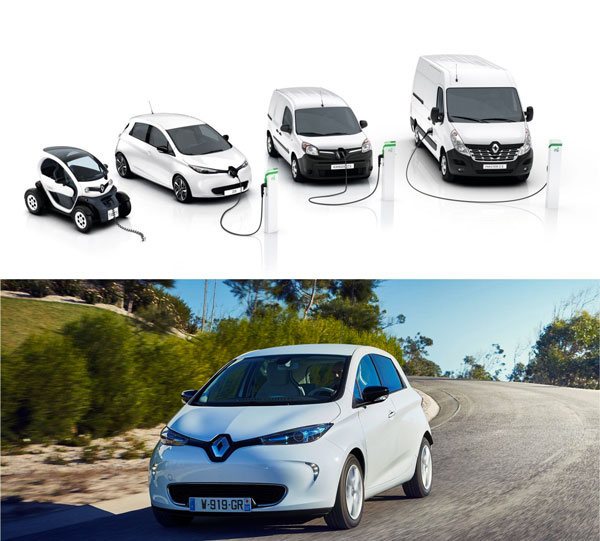
It all reminded me of the ill-starred 1960s merger between the New York Central an Pennsylvania railroads, which created an entity that was so big it couldn’t succeed and soon collapsed into a record-setting bankruptcy. Renault’s association with Nissan was already having problems following last year’s arrest of chairman Carlos Ghosn on charges of financial crimes. Automakers throughout the world, even the biggest, are examining heretofore unimaginable partnerships as the global industry careens toward the widespread adoption of electric and autonomous vehicles. Somewhere in the middle of all this, there’s going to be an enormous shakeout when it comes to the number and variety of suppliers and workers that will be needed in the future. On paper, the FCA-Renault deal looked like a winner for both companies, a merger that would have put brands ranging from Ferrari to Jeep under the same ownership. It also would have given Renault access to the U.S. market and the SUVs it will need to survive there, plus allow FCA to tap into Renault’s extensive lineup of electric vehicles including the ZOE subcompact. Had it happened, the merger would have inexorably meant job cuts, including at Renault. That appears to have been the deal’s major initial stumbling block, given the fact that Groupe Renault’s largest shareholder is the French government, with 15 percent of the company’s stock. This lashup didn’t work, but expect more of these deals to be proposed or consummated. In its reporting on the FCA-Renault collapse, The New York Times underscored how profoundly the car business is likely to change: The ride-sharing network Uber has a higher market valuation than FCA and Renault combined, despite losing a billion dollars over the past year.
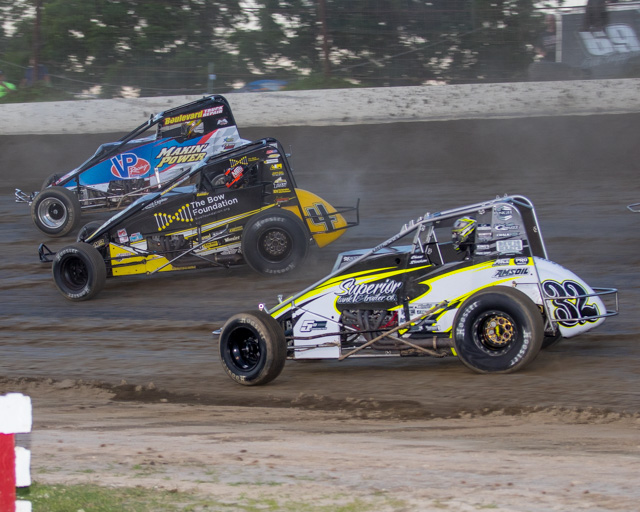
They breathe fire through methanol-fueled aluminum engines displacing 410 cubic inches. They like to go high, low, three-abreast and especially, as hard sideways as the drivers can crank them. This is primal auto racing, Sprint cars without wings, and when the United States Auto Club runs them, it’s a stellar show. Usually, it involves driving out to Ohio or Indiana to see them. Except for a brief period next month.
This photo by Steve Koletar, taken at Grandview Speedway in Pennsylvania, typifies the sort of action that the USAC Sprints will be packing when they haul in for the Eastern Storm tour, which gets underway on Tuesday, June 11th, with the Jesse Hockett Classic at Grandview, a wild third-mile dirt bowl located about halfway between Allentown and Reading, Pennsylvania. The Eastern Storm stops are part of the Thunder on the Hill series of midweek events presented by tour promoter Bob Miller. Other events in the tour are the following night, Wednesday, June 12th, at Bridgeport Speedway in southern New Jersey; Thursday, June 13th, at BAPS Motor Speedway in York Haven, Pennsylvania; Saturday, June 15th, at Port Royal Speedway in the Juniata Mountains of central Pennsylvania; and Sunday, June 16th, at Weedsport Speedway in central New York, west of Syracuse along the New York State Thruway. Success in USAC Sprints used to be a guaranteed ticket to the Indianapolis 500; witness the late champion Bryan Clauson who had multiple starts in the great race. The lineup of drivers coming East includes Chris Windom, who ran this year’s Freedom 100 for Indy Lights; past USAC Sprint champion Robert Ballou, Brady Bacon, Justin Grant and Tyler “Sunshine” Courtney.
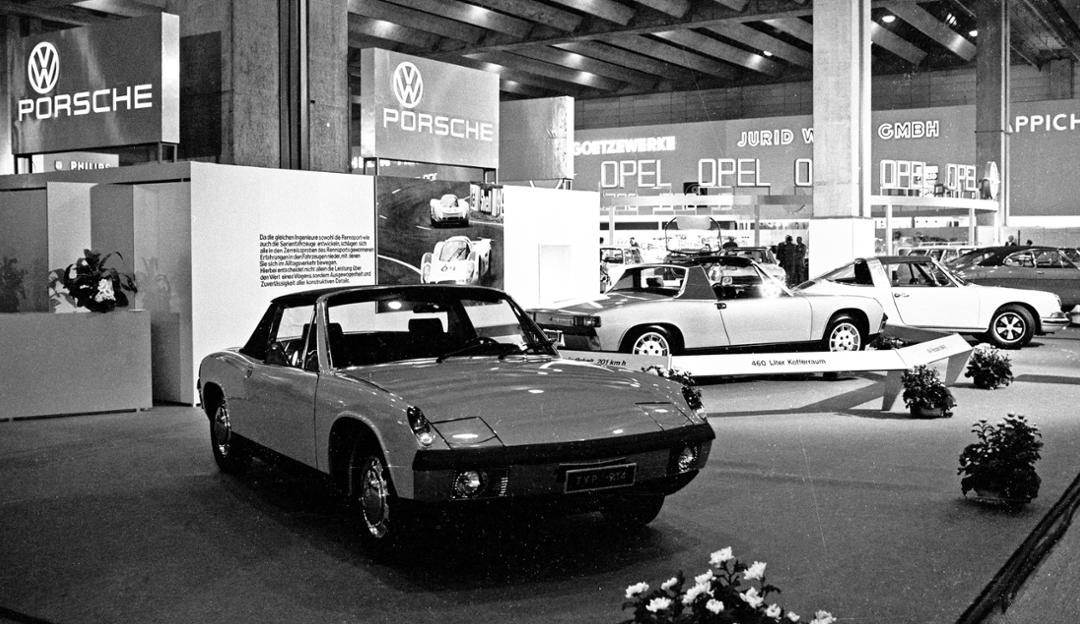
It was the late 1960s, and everybody knew what a Porsche was. The beloved 356 series, with Volkswagen origins, had given way to the 911 and its variants, based directly on the sensational 901 show car of 1964. Then in late 1969, in time for the 1970 model year, Porsche unveiled something as un-911 as could possibly be imagined: A flat, angular Targa-top roadster with its twin seats nearly in the precise middle of the car, the engine and gearbox behind them. Porsche called it the 914. Some derided its undisguised Volkswagen heritage (specifically the powertrain) and variously likened its looks to a briefcase, a toaster or a Panasonic portable cassette recorder.
Porsche, however, saw things very differently. The partnership with Volkswagen, which was trying to shed the long-in-the-tooth Karmann Ghia, unquestionably helped both teams. In the 914, Porsche had its first truly international car. More noteworthy, though, was the 914’s status as the world’s first true mid-engine car to see volume production, another benefit of the Wolfsburg alliance. In its original form, the 914 did make use of the Volkswagen flat-four, but did it in packaging and a layout that gave the car almost preternatural handling and directness by contemporary standards. It also replaced the 911-based Porsche 912 in the model lineup. And that was the base model. When Porsche swapped it its own flat-six from the 911T to create the 914/6 under then-project manager Ferdinand Piech, it put an even 100hp into the flat-handling creation. The 2.0-liter, six-cylinder 914 only lasted two years, but became an instant classic among club and amateur races, especially in the SCCA’s Production classes. The 914 soldiered on until 1975, sold in respectable numbers, and still does decently well at collector auctions nowadays.
We’ll say this much, BMW is no slacker when it comes to making a splash at the Concorso d’Eleganza Villa d’Este. First, the German giant announced its plans to display a re-creation of the BMW Garmisch concept car that mysteriously disappeared following its debut at the 1970 Geneva Motor Show. For this year’s just-concluded Concorso at Lake Como, BMW also weighed in with this Motorrad motorcycle study, a conveyance that takes BMW’s traditional boxer twin and inserts it into a new, long-slung cruiser frame that can out-tough the most grizzled Harley-powered hardtail street bike.
We say “hardtail” only in the sense that the Motorrad Concept R18, as it’s called, boasts a deep-down saddle and bobtail rear fender. And check out the polygonal take on those exhaust exits, which curve perfectly to the shape of the rear tire and wheel. Unlike custom strippers of the 1950s, which the R18 evokes, a cantilever spring strut resides beneath the saddle to provide a measure of riding comfort. The bike’s basic lines come from a Japanese design house; the concept was crafted by Revival Cycles of Austin, Texas, a locale where cruiser and chopper motorcycles are well appreciated. No production plans have been announced, but can’t you just picture Billy Gibbons thump-thumping around on this bad boy?
Greenwich, Connecticut, started out as a port located on an inlet that empties into the Long Island Sound. It’s a place of money and distinction. It’s certainly an apropos locale for eyeing conveyances that grace the land and water. That’s the story behind the Greenwich Concours d’Elegance, which marks its 24th anniversary as a happening for cars and boats this coming Saturday and Sunday.
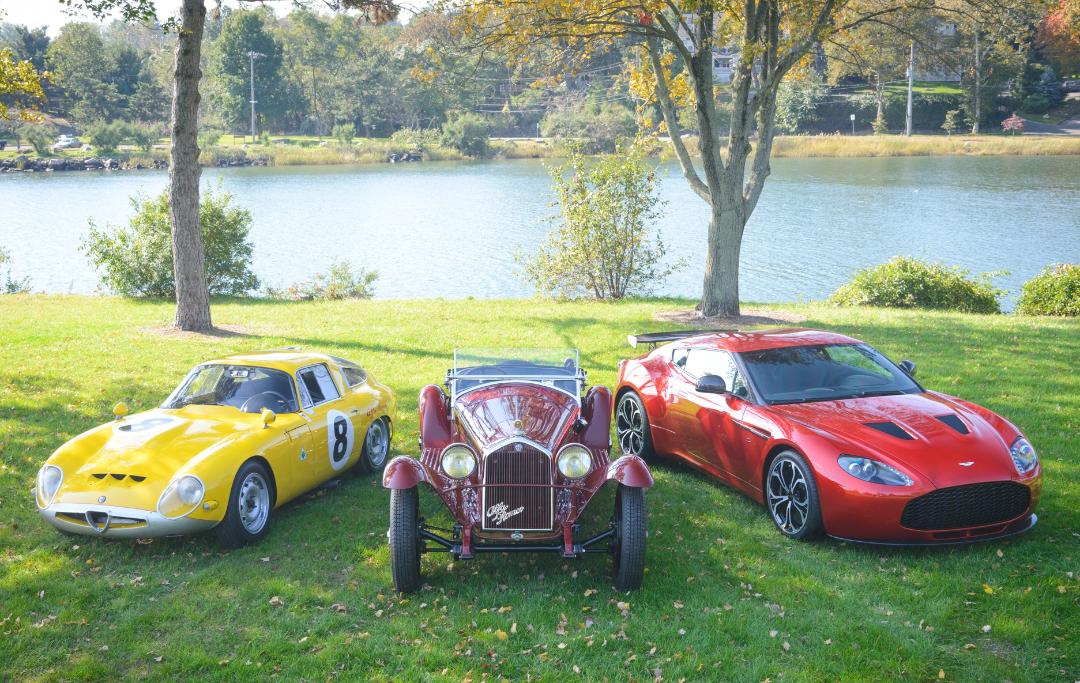
The featured mark at the concours isn’t really a marque per se, but instead, it’s the Italian coachbuilder Zagato, whose gorgeous handiwork is typified by the Zagato-bodied Alfa Romeo GTZ competition coupe on the left of the image. Distinguished attendees at the concours will include Andrea Zagato, grandson of Zagato founder Ugo, and his wife Marella Rivolta Zagato, a member of the Rivolta family, founder of Italian car maker Iso. Also on hand doing book signings will be the British racing legend and TV motorsports commentator David Hobbs, esteemed photographer Michael Furman and author John Nikas. Chasing Classic Cars host Wayne Carini and author-historian Ken Gross will both be making presentations. Bonhams will be conducting an auction of collector cars, and there will be displays of august cars and, naturally, yachts. Hey, this is Greenwich. For more information, click above on the link to the concours website.
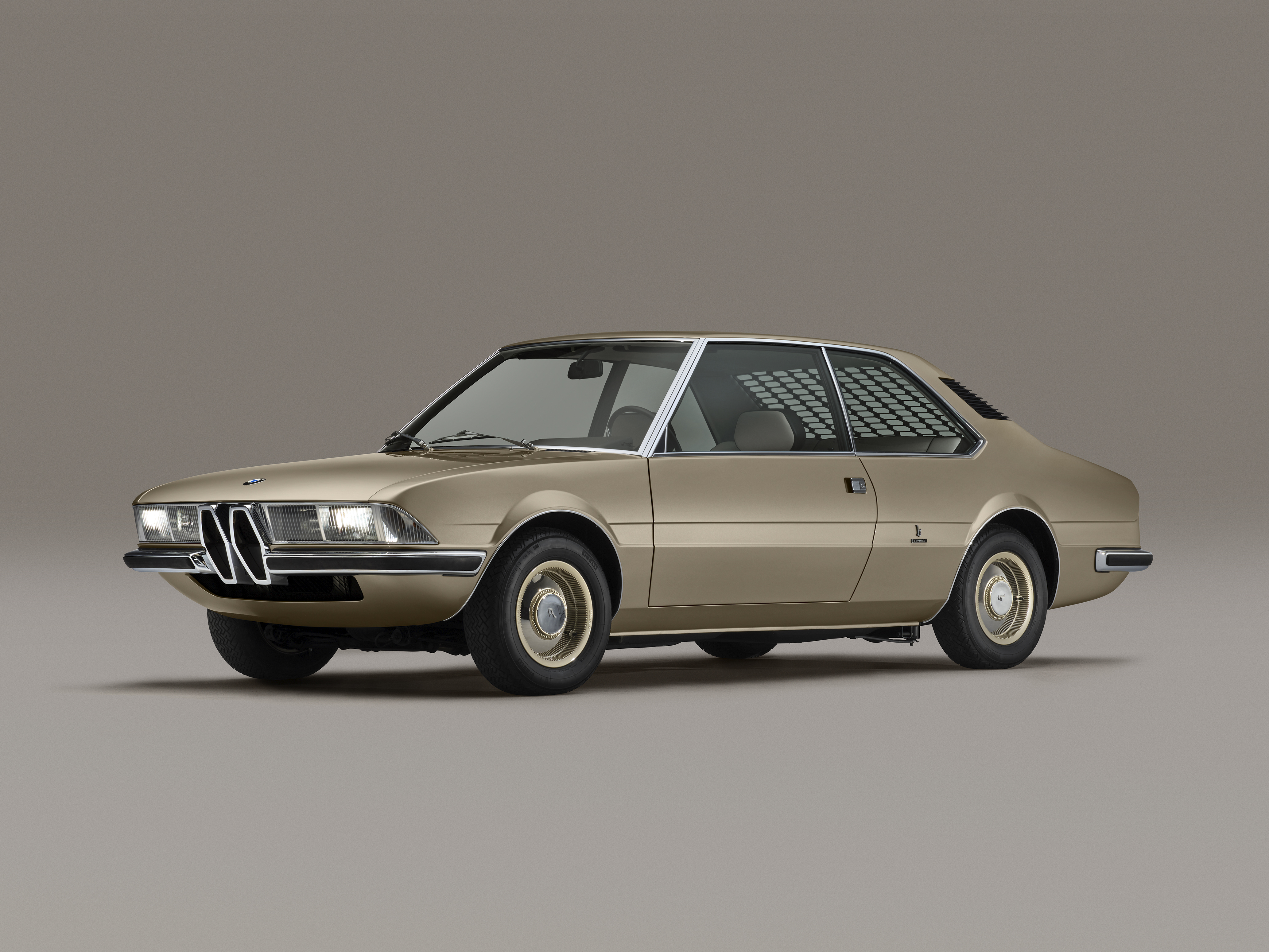
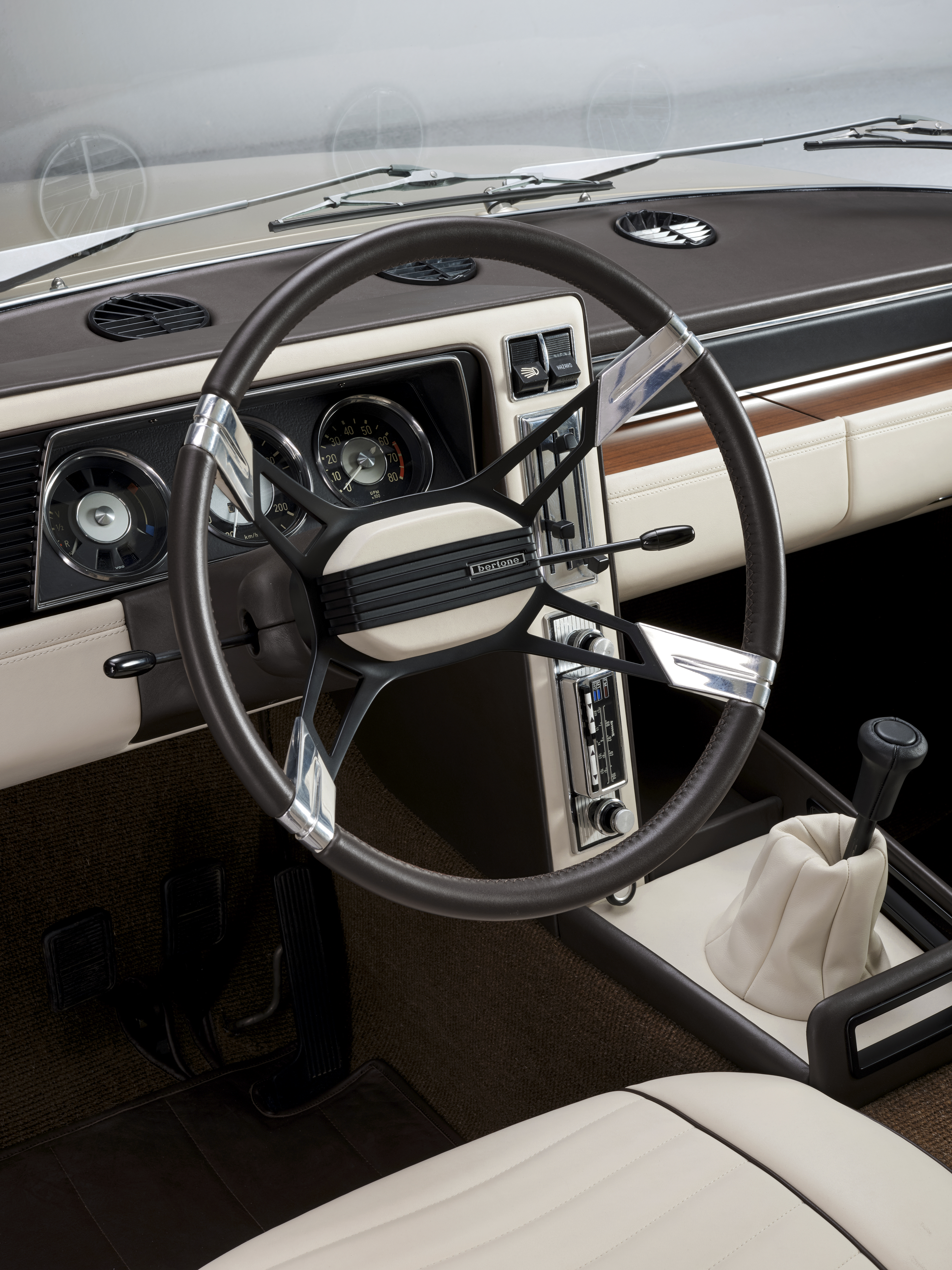
Way back, BMW commissioned an Italian coachbuilder to do a substantial redesign of its existing mechanical pieces inside a sheetmetal cloaking that was substantially different. BMW contracted with the famed Italian design studio Bertone to come up with a fresh, radical look. The end result was a study called the BMW Garmisch, named for a ski resort in Bavaria, which made its debut at the 1970 Geneva Motor Show. It was a hit.
And then, as rapidly as it appeared on the scene, the car vanished. To this day, nobody is capable of explaining just what happened to the Garmisch.
Many of the people who saw this automobile in Geneva never forgot it, especially the leadership of BMW. To celebrate the 50th year since the brilliant designer Marcello Gandini first penned its shape, BMW has undertaken a precise re-creation of the Garmisch, which made its public debut at this year’s prestigious,just-concluded Concorso d’Eleganza Villa d’Este. This was an absolute cutting-edge exercise in 1969 for Gandini, then the head of advanced design for Bertone, who’s since gone on to be recognized as one of Europe’s most prolific and influential creators of automotive image. Among other projects, Gandini is probably best known for developing the shockingly wild Miura and Countach supercars for Lamborghini.
“Marcello Gandini to me is one of the grandmasters of car design and his cars always have been an important source of inspiration for my work”, says Adrian van Hooydonk, Senior Vice President of BMW Group Design, who has been intrigued by the BMW Garmisch since he first discovered a faded period picture of the car some years ago. “Building the BMW Garmisch for a second time gave us the opportunity to pay tribute to Mr. Gandini, recall one of his lesser-known cars and highlight Bertone’s stylistic influence on the evolution of BMW design. For me, that alone was reason enough to do this project – filling in the gaps and completing BMW’s history.”
The Garmisch abounds with signature styling cues, however modified, that bespeak then-common themes at both BMW and Bertone. Look at the rounded, flared wheel arches and the double-kidney grille that Turin-based Bertone turned almost trapezoidal. The forward-sloped nose and angular C-pillars are immediately recognizable. The eggcrate rear-window shade recalls Bertone studies such as the Alfa Romeo Carabo and the Lancia Stratos Zero, both of which Gandini also crafted. Conceptually, the Garmisch has a lot in common with the Volvo 780 Bertone Coupe, which actually saw production during the 1980s.
Collaborations between BMW and Italian stylists go back to very early in the marque’s history. Even as stellar a collectible as the BMW 328 Mille Miglia of the late 1930s was styled in Italy by Carrozzeria Touring. The Garmisch re-creation makes extensive use of modern 3D modeling techniques, and Gandini himself proudly assisted in the project.
This is the weekend all true racing enthusiasts live and die for. With the Indianapolis 500, the Monaco Grand Prix and the NASCAR Coke 600 at Charlotte, tomorrow delivers the season’s greatest sampling of marquee events in a single day. Questions abound, all to be resolved on Sunday. Here’s where you go to catch every minute of the action, all of it live.
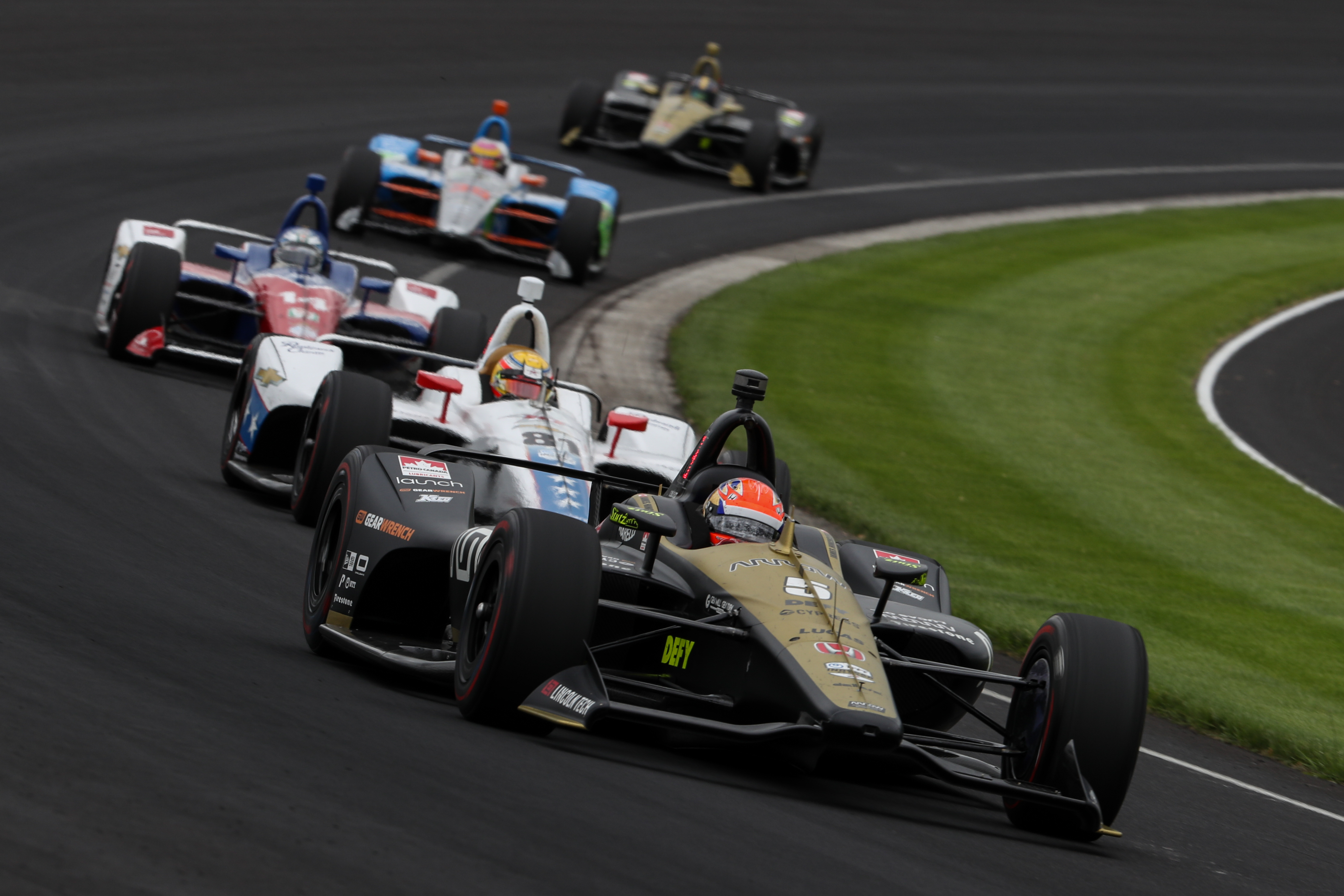
We’ll start with Indianapolis, appropriate given this Joe Skibinski photo from IMS. The 103rd running of the world’s greatest race is facing the threat of rain, as it has all week. The latest from the National Weather Service shows a chance of showers and thunderstorms early tomorrow, and that more thunderstorms, some potentially severe, are possible after 3 p.m. The overall probability of precipitation during the day is 60 percent, meaning the 500 could end up being a sprint race to reach the halfway-plus-one-lap distance that makes the race official, rather than face a sodden postponement to Monday. With one 500 win under his belt, the Brazilian Tony Kanaan posted the fastest lap during Carb Day practice yesterday, driving for the immortal A.J. Foyt. Can one of the Indy-only teams somehow pull out a win over the multi-car juggernauts? Might Helio Castroneves finally achieve his fourth victory for Team Penske? Live race coverage, on NBC for the first time, begins at 12 noon.
Monaco is arguably the world’s most spectacularly picturesque racing circuit, the street course through Monte Carlo tracing its roots to well before World War II. The narrowness of the place makes passing increasingly difficult for modern Formula 1 cars, but hey, this is Monaco. To absolutely no one’s surprise, Lewis Hamilton is on pole, portending the chance of yet another 1-2 Mercedes sweep in this season of unfettered dominance. Will an also-ran somehow manage to slip by? Live coverage begins at 8:30 a.m. EDT on ESPN; the grand prix will be rerun beginning at 3:30 p.m. on ABC, the erstwhile home of the Indy 500. As to Charlotte, it’s a night race that’s expected to run under largely favorable skies, albeit with temperatures in the 90s. One unanswered question is whether Jimmie Johnson, who all but owned this place, can recover his winning ways sans longtime crew chief Chad Knaus, who’s now paired with Coke 600 pole-winner William Byron for Hendrick Motorsports. The live race telecast on FOX begins at 6 p.m. Sit back,, watch and take in a historic day.
If you’re even remotely familiar with auto racing from the 1960s, then you know the work of Dave Friedman. He has been actively photographing all genres of the sport since 1946, shortly after serving in the U.S. Navy during World War II. Dave was active during the rollicking early years of California sports car racing, an era of steamy competition that spawned stars such as Dan Gurney, Phil Hill and Dave MacDonald. He stayed at it professionally, built his portfolio, and in the early 1960s, was hired by Carroll Shelby to be the official in-house photographer at Shelby American.
Combining racing and the Sixties ought to have been compelling enough for anyone. Friedman, however, was different. He is a child of Hollywood. His father could trace his own history in the film industry back to 1924, when he was named as a senior production manager at Metro-Goldwyn-Mayer. This wasn’t long after the studios moved en masse to Southern California from their roots around New York City. Dave’s mother was an actress in silent films. But it took a change in the automotive world to turn Friedman’s orbit back toward Hollywood.
“Basically, I just picked it up,” Friedman recalls today. “I was probably in the fourth or fifth grade when I got my first camera, a Brownie Hawkeye. I still have it today. “When Shelby American was closing out (from its original headquarters in Venice, California) in late 1964 and was overrun with Mustangs, I could see the writing on the wall and didn’t want to have to drive out to the (Los Angeles) airport, where Shelby was moving. So I got a job at Columbia as an assistant cameraman, and started to split my time with Shelby. Later, I went to 20th Century Fox, and the time I spent at Fox was the best education I ever had. They were the masters.”
By 1969, Friedman had built up enough union seniority that he was able to switch from using motion picture to still cameras. Virtually all studios want to have a still photographer on site while their movies are being filmed, or as Friedman describes it, “you’re there to capture the making of the film, both in front of and behind the camera.”
His career allowed Friedman to become personally close to a generation’s worth of film luminaries. He’s worked with Steve McQueen, Bruce Lee, Sylvester Stallone, Robert Redford an Arnold Schwarzenegger. He describes the still photographer on the movie set as “a department of one.” Actors are used to performing in front of the camera, but to keep from distracting them in the middle of a scene, Friedman enclosed his Nikon cameras in Jacobsen Sound Blimps, a housing that allowed the camera’s shutter to be completely silenced when it was released, not disturbing the actors. Today, he is the only still photographer recognized by the Academy of Motion Picture Arts and Sciences.
Friedman also has another passion, using his skills to capture the effortless grace of classical ballet. He is the author of more than 30 books, most on motorsports, many of which are out of print and highly valued by collectors. His archive of more than 100,000 racing images is now curated by The Henry Ford in Dearborn, Michigan. And he’s still working with Hollywood, this time on a film project, entitled Silent Life, a story based on the life and death of the early silent screen sheik, Rudolph Valentino. As someone who’s been in such close proximity to celebrity, Friedman is sanguine. “It never affected me,” he said. “My father was good friends with many people in the movie industry; they came to our house. He told me they were the same as us, put their pants on one leg at a time, so that was how he treated them.”





 Jim Donnelly On Wheels