When any old SUV won’t do, there’s the new Navigator

It’s big. And it’s brassy. And it’s brimming with more driver and occupant coddling than you can shake a barbecued turkey drumstick at. And, of course, it’s got three rows of seats. For those who insist upon the ultimate luxury experience in a domestic SUV, there’s the Lincoln Navigator, whose fully redone 2020 version arrives in dealerships this summer.
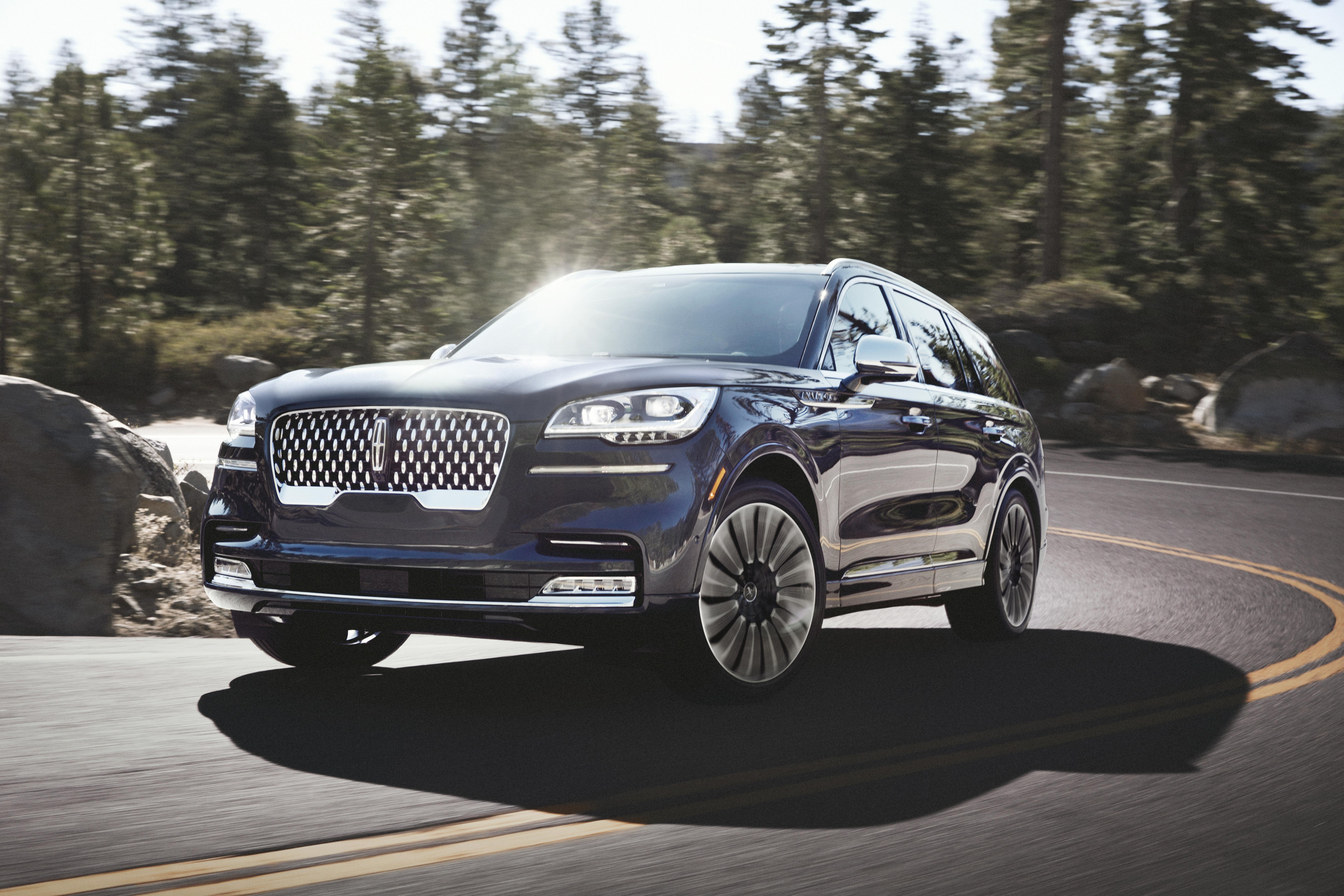
Ladled-on luxury is the norm for this vehicle segment, naturally, and part of that is ensuring that what originated as truck-based wagons now deliver car-like comfort when negotiating the road. Lincoln is going to rely on technology to accomplish that for the new-generation Navigator (I almost mistakenly typed “Gladiator”). The 2020 model will feature a forward-facing video camera that “reads” the road surface ahead before the Navigator actually reaches it, a system that Lincoln calls Road Preview. The camera looks 50 feet ahead of the vehicle and can detect road imperfections ranging from 2 to 8 inches in height. A dozen sensors then compensate for what the camera sees, almost instantly, immediately re-tuning the shocks and air springs to compensate for the irregularity. The camera reads the road 500 times per second and the adaptive suspension can adjust 100 times per second to keep up. The 2019 Navigator uses a turbocharged 3.5-liter V-6 that produces 450hp. When ordered with its Grand Touring package, the 2020 model combines a 3.0-liter twin-turbo V-6 with a hybrid driveline. No pricing was announced, but as a point of reference, the 2019 Navigator starts out at $73,205.
You couldn’t manually shift a hybrid car, until now – sort of

I don’t currently own one, but I’ve got to admit that hybrid powertrains and the dizzying advances in electrical propulsion fascinate the living daylights out of me. Spending a lot of time riding around Paris last year in Toyota Prius taxis helped to make me a convert. But something always seemed to be missing from the driving experience. You’d let the driveline power up, snick it into Drive, press down on the pedal and off you’d go. The fun of things like gear-changing was antiseptically absent, at least until now. The Hyundai Motor Group says it’s fixed that tactile shortcoming.

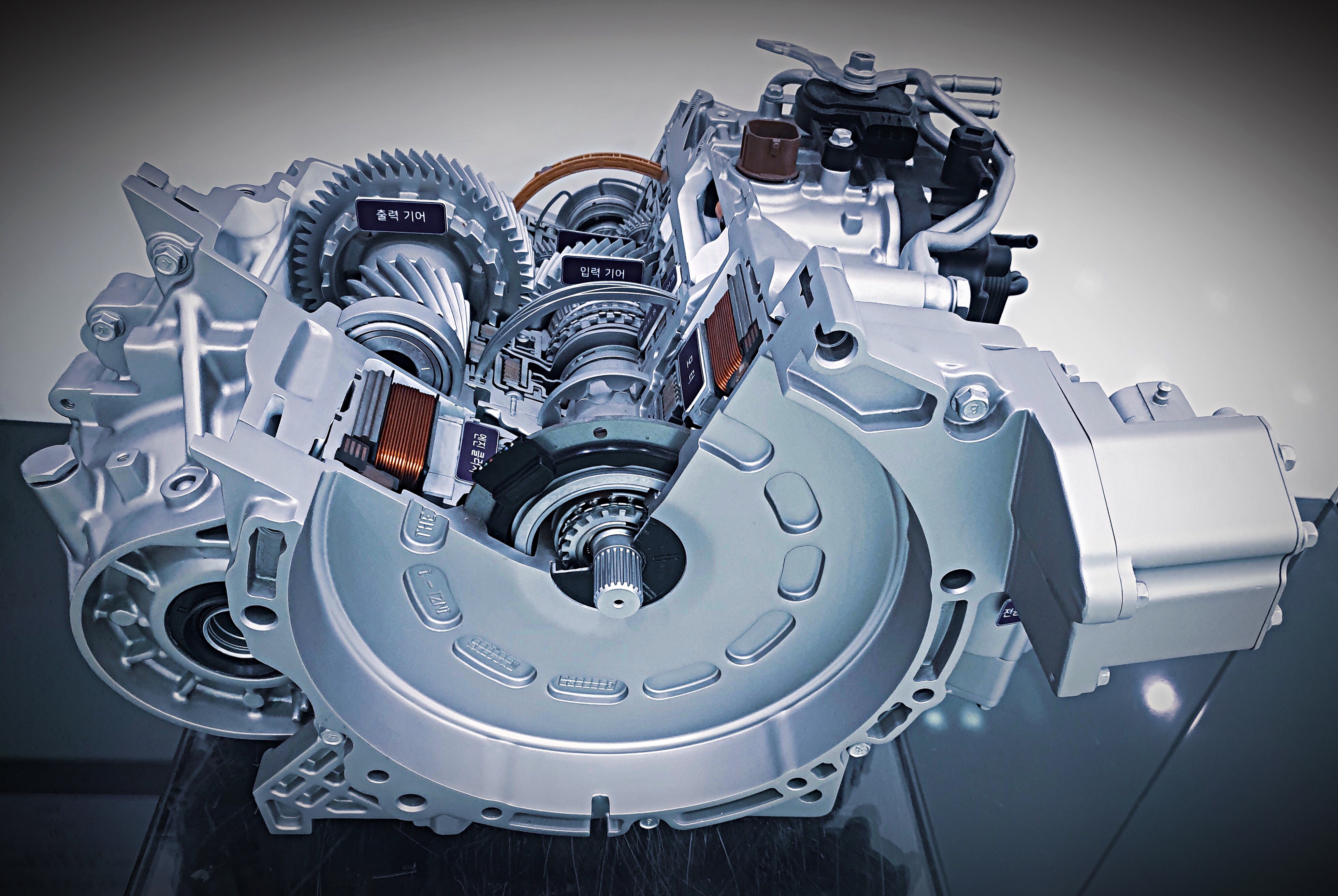
What the cutaway view shows is a Hyundai transmission fitted with the South Korean automaker’s newly introduced Active Shift Control technology. Generally speaking, hybrid drivetrains don’t utilize torque converters like conventional automatic transmissions do, since the drivetrain would lose power each time the transmission changed gears. What Hyundai’s done is develop a new Hybrid Control Unit, which brings the engine RPMs and transmission speeds into much closer sync, allowing gear changes to occur 30 percent more quickly. Increasing the pace of the shift times allows for reduced power loss every time the transmission changes gears. The ASC software allows the Hybrid Control Unit to monitor and more precisely match the engine and transmission’s rotational speeds 500 times per second, to ensure that no energy is wasted. No, it won’t replace the joys of an H-pattern and clutch pedal, but this is better and more consistent performance than hybrid drivelines have ever allowed it in the past, so kudos to Hyundai.

Reliving the history of Chevrolet during the magical 1950s

The new mid-engine Corvette’s introduction makes an interlude that studies Chevrolet’s glorious past particularly relevant. CarTech Inc. has a new title in its portfolio of automotive reading that’s entitled Chevrolet of the 1950s, with the subtitle “A Decade of Technical Innovation.” That’s an apt description both of the book and the reality of working at Chevrolet during that incredible decade.

The book is authored by noted Chevrolet and General Motors Motorama historian David W. Temple, and encompasses 192 paper-bound pages. Among its highlights are a look at cars that made it to production from the touring Motorama shows, starting with the original Corvette of 1953. Under the leadership of the great Ed Cole, Chevrolet was immersed in advanced engineering throughout the Fifties; the extraordinary evolution of the small-block V-8 engine and its raft of innovations warrants its own chapter here. Temple’s book is highly informative, and packaged in a size that’s a snap for the casual or time-pressed reader to negotiate. It’s priced at $36.95. CarTech publishes a lot of good titles like this; check the link to their website.

It’s finally happened: The Corvette’s engine’s amidships

At least conceptually, Chevrolet has been contemplating the creation of a mid-engine Corvette since 1960, when Zora Arkus-Duntov first broached it via the CERV I engineering concept car. We’ve been through other Corvette studies like the Astrovette and Aerovette, but despite its refinement into a legitimate world-class sporting piece, Corvette orthodoxy always had the engine positioned ahead of the driver. No more. With what has to rank among the most ballyhooed rollouts in automotive history, the eighth-generation Corvette has been revealed to the public, and it’s indeed now a mid-engine GT car that belongs on any enthusiast’s shopping list.

We’ll say this much: The new Corvette Stingray puts exotic or hypercar driving capabilities into the hands of thousands who can’t afford a Ferrari or Lamborghini. Yes, it’s the only naturally aspirated car in its market group. But what a piece. The new Stingray weighs an entirely reasonable 3,366 pounds, but it packs a base 495 SAE-certified horsepower from its 6.2-liter LT2 V-8 with direct fuel injection, 11.5:1 compression and variable valve timing. The entire engine is cosmetically dressed and polished, since it will be visible through the Corvette’s huge clear backlight. This is a pushrod-actuated OHV engine we’re talking here, folks. It has dry-sump lubrication, the first for any Corvette, with three oil-scavenge pumps. With the optional Z51 performance package, which includes a specific final-drive ratio, the Stingray makes 0-60 in less than three seconds, the quickest Corvette ever. There’s SLA independent suspension and huge Brembo-stopped brake discs at each corner. All this in a car that starts at around $60,000 or so.

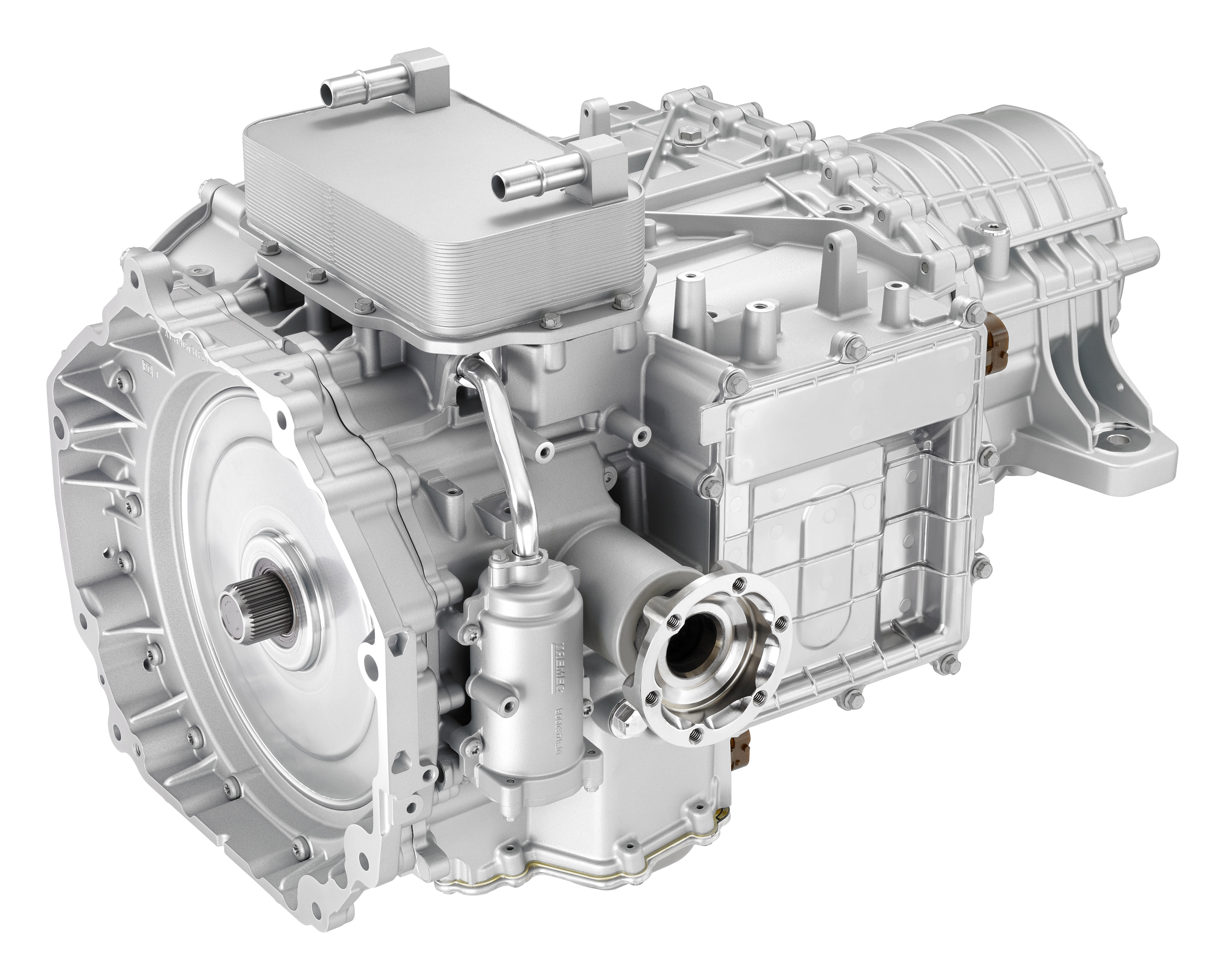
From the standpoint of packaging, of making the mid-engine layout possible, the new Corvette Stingray’s transaxle assembly deserves special notice. Designed by Tremec, it’s a first for General Motors, an eight-speed dual-clutch gearbox with the model designation M1L. It slots in behind the engine, fitting snugly into the new Stingray’s lightweight, stiff center tunnel that gives the car its high level of torsional rigidity. The transmission can be manually shifted using paddles. Look at how short the gearbox’s overall length is. Its middle five ratios are matched to the engine’s power curve for optimal performance and seamless shifting at a whole range of speeds. As it stands, the shifting performance is mode-programmable to match driver preferences. Technology abounds, ranging from a standard heated steering wheel to a camera-equipped data record for really fast driving, ideally on a track. There are scant limits to the performance possibilities of this Corvette, including in motorsport; witness Ford’s experiences with its reborn GT. I’ve got to flatly believe that after a few miles in this transformed Corvette, you’ll agree that all the decades of speculation and wishing will have been worth it.

Output isn’t just measured in horsepower anymore

Lotus Group, which started out when the late Colin Chapman started out building crude contraptions for trials and hillclimbs, eventually grew into one of the world’s premier producers of ultra-light, delightfully driveable cars for both the road and the race track. It’s now a holding of Geely, the mega-volume Chinese automaker. In London, Lotus just showed a pre-production model of its all-electric Type 130 Evija hypercar, which Lotus is flatly claiming will be the most powerful production vehicle in automotive history.

Full disclosure: I’m not sure if I’m doing the math right when it comes to calculating the apparently incredible capabilities of the Evija (it’s pronounced eh-VEE-yah), which will be released as a 2020 model. The Evija gets its power from a 2,000kW battery array, which feeds current to four tiny electric motors, with torque vectoring, that are located inboard of each wheel. Here’s where it gets sticky: I found an online converter, into which I plugged the Evija’s factory-claimed output of 2,000 PS – it’s a German acronym for pferdestarke, a Siemens measurement of electrical power – and the total calculated horsepower was 1,971.8. Even if I got the arithmetic awry, this will undeniably be an incredibly fast and quick car, with Lotus promising zero to 186 MPH (300 KMH) in three seconds flat, along with a top speed somewhere on the far side of 200 MPH, 250 miles on an electrical charge, and a recharge time of just 18 minutes. Just 130 examples of the Evija will be produced, each with a retail price of 1.7 million pounds Sterling. Put down a deposit of 250,000 pounds Sterling and you’re guaranteed a spot in the queue.

Ford, Volkswagen affirm a new, “electrifying” partnership

The speculation turned out to be dead-on accurate. The Ford Motor Company and Volkswagen are planning their entree into the world of self-driving vehicles in a very big way. They’ve pledged to commit a staggering combined $7 billion in Argo AI, a Pittsburgh-based startup with more than 500 employees that develops self-driving platform architecture for motor vehicles.

This photo by Ford shows Volkswagen CEO Dr. Herbert Diess (left) and Ford president Jim Hackett discussing the new deal at its rollout. The agreement calls for Ford to use Volkswagen’s existing architecture for electric vehicles and Wolfsburg’s Modular Electric Toolkit to design and build at least one fully electric vehicle for the European market by 2023. That will an initial step toward Ford using the agreement to develop its own electric vehicles for North American buyers as time unfolds. While the new alliance does not involve cross-ownership by either Ford or Volkswagen, at least part of the objective is to develop new commercial vans – think the Ford Transit – and light trucks for a variety of global markets. Combined, the automakers will become majority shareholders of Argo AI, and Ford expects the pact to let it build at least 600,000 electric vehicles using Volkswagen electric technology – including, Ford conceded, the possibility of an electric Explorer and Mustang for export sales.

The centenary of women and cars marked in Saratoga

Amazing and repellent as it may sound, there are still societies on this planet that place severe restrictions on the ability of women to participate in them, including limits on their right to drive a motor vehicle. Happily, the United States is well ahead of those places when it comes to the emancipation of women. Next year, 2020, will mark 100 years since American women were granted the right to vote. To commemorate that pivotal event, the Saratoga Automobile Museum in eastern upstate New York is recognizing the exploits of six pioneering women automobilists, as they used to be called, who were among the very first to drive a car in this country.

This view shows the exhibition in the museum, itself a historic structure that once was a plant that bottled Saratoga Springs’ famed curative waters. The women being honored include the thespians Izetta Jewel Kenney Brown Miller and Hazel May Jewel Kenney Godwin Horne, an early female physician who drove to house calls, Dr. Elizabeth Van Rensselaer Gillette; the early racing driver and Good Roads Movement activist Joan Newton Cuneo; the transcontinental motoring pioneer Alice Taylor Huyler Ramsey; Blanche Stuart Scott, who drove a Willys-Overland across the country in 1910 and may have been this country’s first female aviator; and Sarah Breedlove McWilliams Davis Walker, better known as Madam C.J. Walker, an early African American hair-care entrepreneur whose fleet of cars included an Indianapolis-built Waverly electric. The museum is off U.S. 9 in Saratoga Spa State Park, about three hours north of New York City.

Aston Martin shows off Valkyrie supercar at Silverstone

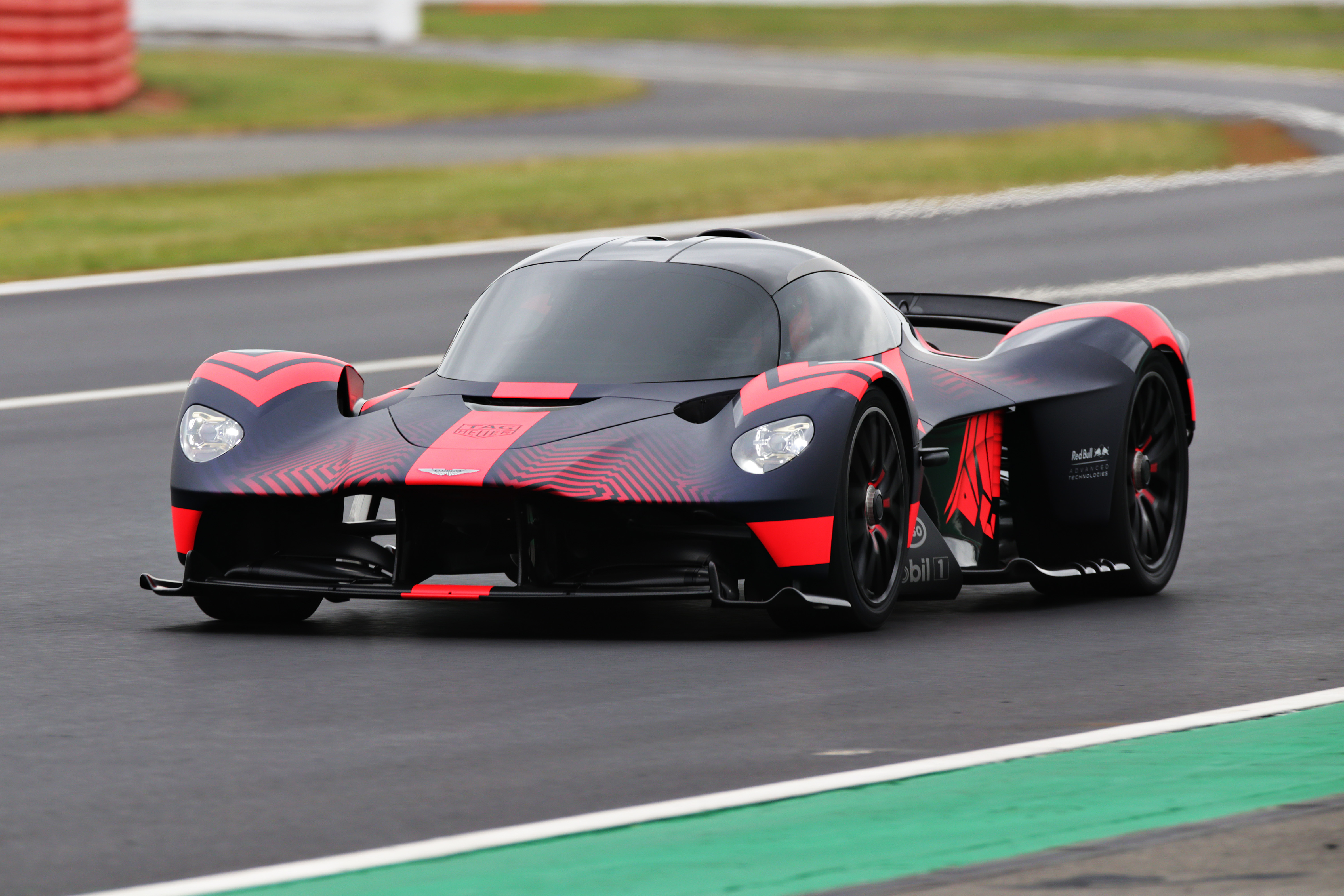
The big news, of course, was Lewis Hamilton winning his sixth British Grand Prix at Silverstone this weekend. But a lot of notice also went to Aston Martin, which sponsors Team Red Bull in Formula 1. The firm chose its home Grand Prix to display the first production examples of its Valkyrie megacar, which goes on sale, so to speak, in the fourth quarter of this year.

The Valkyrie took some hot laps during final practice for the British Grand Prix. Designed in large part by the F1 and Indy car genius Adrian Newey, the Valkyrie wasn’t intended to smash the Silverstone lap record on its maiden voyage, but with an incredible 1,160 promised usable horsepower on tap, perhaps it should have. The car is plainly, slickly gorgeous. Price? Don’t bother asking, because the entire production run of 150 units has already been sold out by Aston Martin.

BMW planning for multiple reveals at Monterey Week

If you’ve never had the pleasure of attending it, the week-long celebration of automobiles on the Monterey Peninsula in California ought to be really high on your to-do list. Between the Quail Lodge show, the Concorso Italiano, the fabled Pebble Beach Concours d’Elegance, hordes of vintage racing cars at the Monterey Historics and a gaggle of high-end auctions, Monterey Week is an experience not to be missed by any car enthusiast. Expect to enjoy fabulous scenery, dine delectably, spend plenty of money (general admission for the Pebble Beach concours alone is $375) and gaze in wonder at the most perfectly restored historic automobiles on the planet.

Amidst all this grandeur, car manufacturers love to grab a bit of the spotlight to unveil new production or concept cars at Monterey. BMW is no different. In fact, the Bavarian legend has already blocked out part of the afternoon at Pebble Beach on the Thursday before the concours to roll out several new production models from BMW and its MINI property, along with a pair of yet-unrevealed concept vehicles. Thanks to BMW, we know that one of the concepts will be a reinterpretation of the 1970 BMW Garmisch, a wild design study created by Marcello Gandini, which vanished mysteriously after it was displayed for the first and only time at that year’s Geneva Motor Show. The other concept will be the BMW Vision M NEXT, a proposed hybrid sports car with a base 600hp. The bottom line here is that if you like cars, you’ve got to save up and plan for an August week in Monterey. It’s that good.

Generations later, the Volkswagen Beetle is no more

Nothing like it in the automotive world has occurred since May 1927, when Henry Ford and his son Edsel drove the final production Model T off the River Rouge assembly line, ending production after more than 15 million were sold. That was an astonishing total, but it would eventually be eclipsed by the Volkswagen Type 1, the iconic Beetle, whose production came to an end last week in Puebla, Mexico, after more than 21.5 million copies were sold worldwide in three different model generations.

It was a new-generation, front-engine, front-drive New Beetle that became the very last of the cars to be produced, ending a nearly uninterrupted lifespan that dated back to 1938, when Dr. Ing. Ferdinand Porsche created the first production People’s Car at the behest of the Third Reich, with its new national network of autobahns. The Volkswagen headquarters and main plant at Wolfsburg, Germany, was battered by heavy Allied bombing during World War II, and Wolfsburg came under the postwar control of Great Britain, which expressed scant interest in resurrecting the rear-engine, air-cooled oddity for its own rebuilding automotive market. A British Army major named Ivan Hirst ended up in control of the Volkswagen works, which resumed civilian car production first for Germany, then for greater Europe and ultimately to the United States, with all three regions starved for new cars after the war. Type 1 production continued unabated through 1974, when the front-engine, front-drive, water-cooled Golf subcompact – known on these shores as the Rabbit – became Volkswagen’s sales volume leader. The Beetle was then largely relegated to Third World markets, especially Brazil and Mexico, as Porsche’s design aged. Then in 1998, Volkswagen introduced the retro New Beetle, riding on the same PQ34 front-drive platform as the fourth-generation Golf. More than 500,000 of these cars were built, mostly at Puebla, across two generations. The New Beetle line will be retooled to produce a new Volkswagen compact SUV slotted below the Tiguan. We should note that despite beating the Model T, the Beetle no longer is the world’s highest-volume car. That distinction belongs to the Toyota Corolla, first introduced in 1966, now at 44 million units globally and counting.