Journalism is my life. I've been at it since the 1970s, starting in news and developing specialties in covering automobiles and motorsport. I hold more than 50 journalism awards for work in both newspapers and magazines. I have developed a global audience during my career.
Automotive marketing tie-ins can sometimes seem too forced or obscure to really grab the attention of the jaded masses, but there was no way we were letting this idea pass unmentioned. Toyota was piecing together an advertising campaign to mark the launch of its 2020 Highlander SUV when its agency, Burrell Communications Group, crafted a spot called “Home Team” that recognizes this year’s 100th anniversary of Negro League baseball. The spot was taped in part at the Negro Leagues Baseball Museum in Kansas City, Missouri, and features Jim Robinson, who played for the Kansas City Monarchs from 1956 through 1958, serving a stint as team captain. In the commercial, Robinson plays the Highlander-driving family’s patriarch.
The Monarchs own a hallowed place in baseball lore as the Negro Leagues’ longest-running franchise, with the team’s roots reaching all the way back to 1920, and the Monarchs continuing play as late as 1965. The Monarchs owned a portable lighting system that it took along on road trips, allowing night games to be played on remote field, a full five years before Major League Baseball lit up its first ballpark at night. The Monarchs sent 13 players to the Baseball Hall of Fame in Cooperstown, New York, more than any other Negro Leagues team, including the immortals Jackie Robinson and Satchel Paige.
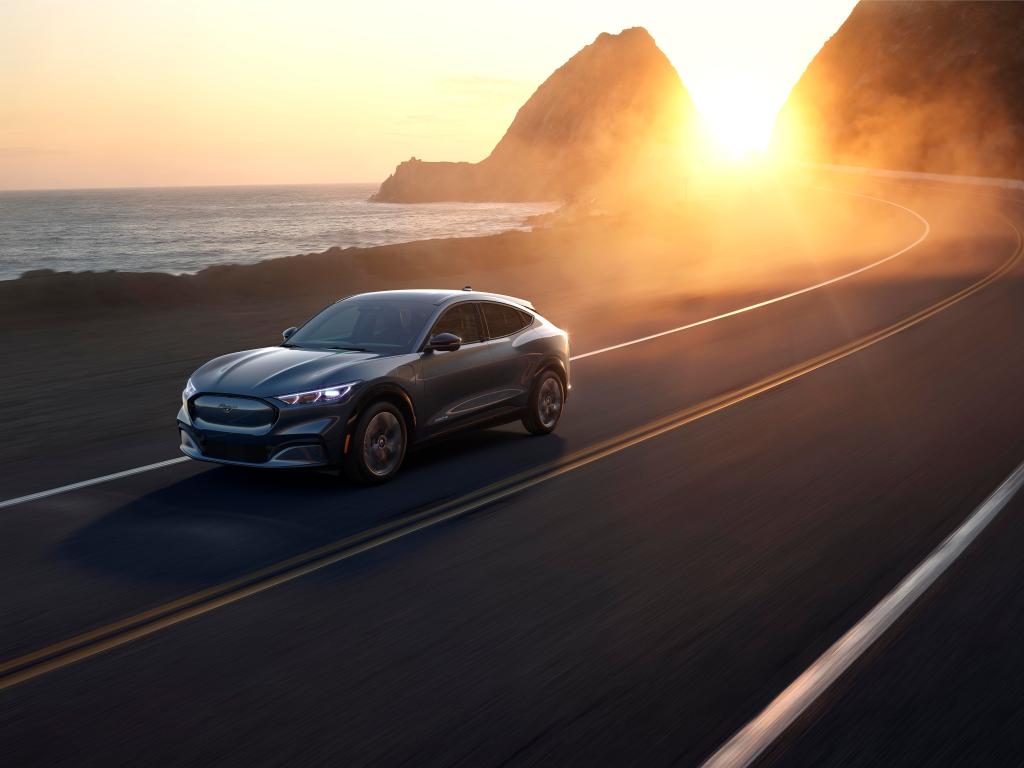
When you’re creating a totally new kind of Ford, it helps if the guys and girls who’ll be tasked with keeping it running have a hand in how everything turns out. In this case, the vehicle is Ford’s forthcoming, gigantically hyped all-electric Mustang Mach-E, and the people are the line technicians at the nation’s Ford dealerships who will be tasked with keeping the Mach-E percolating. To that end, Ford and Robert Bosch GmbH have co-created a new virtual reality training tool to learn troubleshooting and service procedures in time for the new crossover to go on sale later this year.
The VR initiative will allow Ford mechanics to learn service procedures and steps for a Mustang Mach-E without having access to an actual vehicle. The technology borrows from simulation and gaming, an uses Oculus Quest VR headsets designed and created by Facebook. Bosch, the German automotive technology giant, began research last year into the use of VR in automotive service training; the Ford Motor Company is the first automaker to use the system in training dealer service techs. The system will allow technicians to perform diagnostic and service tasks using the Oculus Quest headset, including removal, installation and repair of the Mach-E’s main battery pack. Bosch is also developing VR “modules” that will allow technicians to enter virtual rooms, each of which houses a specific area of the vehicle’s mechanics and/or software. Interested? Want to get in the game? You can still go online and reserve your own Mach-E online by clicking here.
One motorsports event that I’d really, really like to see is the Bathurst 1000, a wild melee on one of the world’s great racing circuits that heavily incorporates public roads, like Le Mans. Hands down, it’s the most prestigious homegrown competition of any kind in Australia, which on its home continent is simply called “the great race.” It’s mainly contested by touring-type cars, including Australia’s famous V8 Supercar class, a wild category of production-based racing saloons that I hope NASCAR examined closely when crafting the specs for its next-generation car that’s coming next year. The Bathurst 1000 has been held since 1960 on the historic, 3.86-mile Mount Panorama Circuit, which is open to a variety of cars on non-race weekends, including those who are exclusively competing against the clock. One such adventure took place on the same weekend as last year’s Bathurst 1000, and involves a screamer you can buy now, named for one of Australia’s greatest racing heroes of all time.
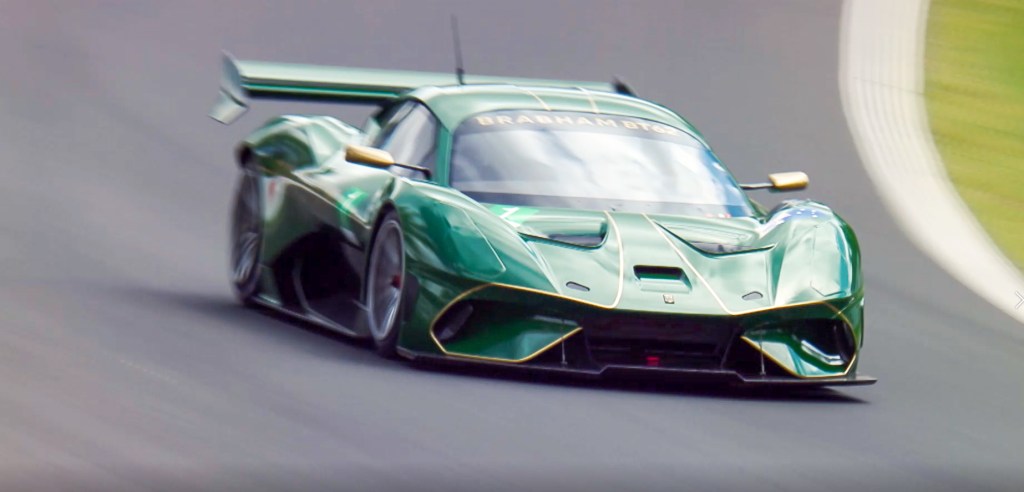
Track cars don’t get much more focused, or linked to fame, as the BT62 hypercar from Brabham Automotive. We need to make clear right here that there’s no way the BT62 can be made legal for road use, at least in the United States, although the company does offer a road-conversion option kit that allows it to comply with vehicle laws in the United Kingdom, at least. During a monitored test at last year’s Bathurst weekend, a BT62 shattered the absolute track record by nailing a lap at 1.58.679, bettering the Australian V8 Supercar mark at Mount Panorama by nearly four full seconds. The BT62 is based around a Brabham-branded 5.4-liter quad-cam V-8 borrowed from an unidentified manufacturer, rated at 700 naturally aspirated horsepower, and linked to a six-speed Holinger sequential-shift transaxle. How strong is this car? Onboard telemetry showed that the BT62 pulled 2.98 lateral gs in the corners during its record run, along with an eyeball-dislodging 3.51g when its carbon-to-carbon brakes were fully applied. Brabham Automotive, founded in 2018, is based in Winchester, Hampshire, England. Its founder is Formula 1 veteran and 2009 Le Mans co-winner David Brabham, the youngest son of the late Sir Jack Brabham, a three-time F1 world champion and the only driver to win an F1 race in a car of his own design and construction. Sir Jack, who passed away in 2014, is the most iconic individual in the history of Australian motorsports.
“Hypercar.” It’s not a reference to a futuristic flying mega-vehicle like Gerry and Sylvia Anderson once visualized with marionettes in producing Supercar for kids’ TV in the late 1950s, but instead it’s a new addition to the automotive lexicon. It refers to an insanely overpowered and suicidal-fast coupe or GT, most of the time with hybrid ICE/electric power hitting the ground. Up until now, this ozone-level market has been the exclusive stomping grounds of Europeans, who traditionally have always had a leg up when it comes to really extreme automobiles. But right now, a California-base concern is right on the cusp of launching into this exclusive orbit in a very big way.
Prepare yourselves for the imminent arrival of the Czinger 21C, which will be unveiled to the world early next month at the Geneva International Motor Show 2020. What is it? It’s the latest in the emerging world of ultra-expensive, ultra-performance cars aimed at drivers with at least some access to such things as track days. Pronounced “zinger,” and named for the firm’s founder, Kevin Czinger, the 21C is being fully designed and assembled in Los Angeles, a process that the manufacturer claims is making extensive use of proprietary technology. Not many details of what that entails have been disclosed to the public as yet, but Czinger is making some lofty promises about its hypercar’s capabilities. Among them are the equivalent of 1,250hp from its hybrid powertrain, and a claimed 0-100 KM/H (that’s 62 MPH) time of just 1.9 seconds. The C21 is unique from a layout standpoint, making use of an in-line seating arrangement, with the passenger (singular) positioned behind the driver. That allows for a narrower cross-section, which leaves the C21 resembling famed Le Mans race cars such as the Peugeot 908 HDi FAP or even the original Lola T70 from some angles. Price? As the narrator intoned about Charles Foster Kane’s estate, Xanadu, in Citizen Kane, no man can say.
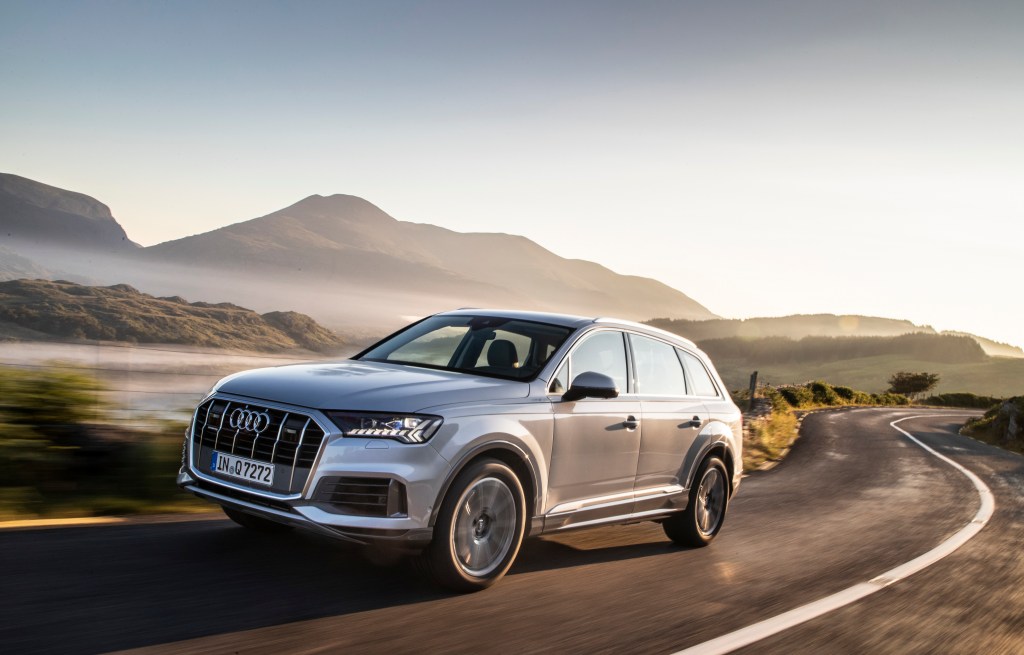
Face it: For all their overwhelming popularity, and for all the current uncertainty over just where federal fuel-economy standards are going to end up, automakers still have to labor away, en masse, on some way to make these inherently inefficient vehicles more environmentally conscious. If the idea of a small-displacement, high-output engine in one of these things sounds a little off kilter, get used to it. Last year, we spent some seat time in the Midwest aboard a Chevrolet Equinox LT with a 2.0-liter Ecotech inline-four that acquitted itself quite well, accelerating eagerly toward an 85 MPH cruise. That displacement has been dropped to 1.5 liters for 2020. So what Audi’s doing with the Q7 45 isn’t so unorthodox by current practices.
The standard powertrain for the 2020 Q7 45, the more basic of the two Q7 models, is reminiscent of that Equinox’s. It’s based around Audi’s 2.0-liter TFSI inline-four, mated to a standard eight-speed Tiptronic automatic transmission and, of course, Audi’s quattro all-wheel-drive system. For its smallish displacement, the TFSI engine’s output numbers are impressively robust; 248hp and 273-lbs.ft. of torque. The Q7 55 applies TFSI technology to its 3.0-liter V-6 with twin-scroll turbocharging. Prices get out of the gate at $54,800.
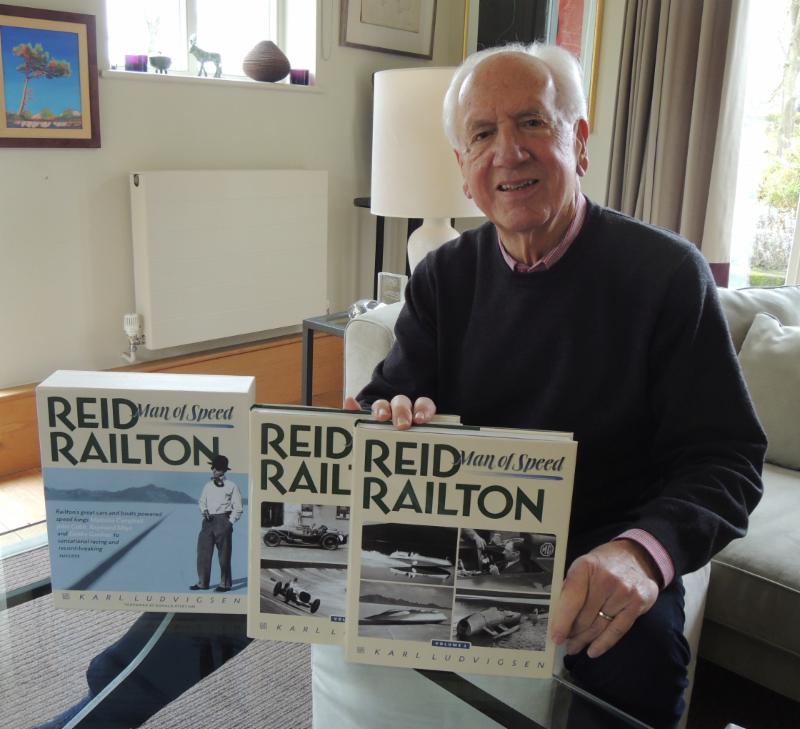
If you know the world of cars, and automotive history, and appreciate a really inspired read, you probably already know about Karl Ludvigsen. And if you don’t, you really ought to change that fact. Karl, put simply, is at the zenith of the pantheon when it comes to the history of cars. A Michigan native who studied at MIT, he was a prolific magazine writer and editor before he got a position in the public relations department at Ford of Britain. Over his lifetime, Karl has collected and collated historic photos and technical data on cars, both production and racing, and on the companies that produced them. Karl is semiretired now, and most of his vast archives of the Revs Institute, the acclaimed collection in Naples, Florida. But Karl’s still writing books, really exclusive titles for true enthusiasts. One of his most recent titles received a major honor, as did Karl.
His two-volume set Reid Railton: Man of Speed, introduced to the public last year by Evro Publishing, was presented the Thomas McKean Memorial Cup by the Antique Automobile Club of America during its annual winter meeting in Philadelphia last weekend. The books tell the tale of the British sportsman, engineer, car builder (big Railton saloons were powered by brawny U.S.-built Hudson straight-sixes during the 1930s) and world Land Speed Record assailant. The set is, by far, the most exhaustive study ever written on this influential figure in U.K. motoring history. The McKean Cup is the sixth major award that the Railton biography has garnered since its publication, which may well be a record for a book of this type. In his 65-year career, Karl has written more than 60 books. I’ve gotten to know him in my career and can tell you he’s a wonderful guy who’s reached the pinnacle in his field of study. His latest four-volume edition of Porsche: Excellence was Expected is simply the most authoritative marque history ever published. Karl’s latest book, Fast Friends, about the lifetime of acquaintances he made in the auto industry, is out now and available through Delius Klasing.
Nobody can say with ironclad certainty just what the future of personal transportation is going to feel like. It’s a safe bet to assume that the internal combustion engine fueled by gasoline, which has been around since Gottlieb Daimler and Karl Benz first got a carriage to chug along by using one, is going to be elbowed aside at some future point. Exactly whose elbow does the hardest shoving is something that remains to be seen. Obviously, electricity is going to be a major role in this. But other alternatives exist. The technology of fuel cells powered by hydrogen is one of them. And in both South Korea and the United States, Hyundai has made significant investment in moving fuel cells beyond the realm of feasibility studies.
To that end, Hyundai has entered into a partnership with the U.S. Department of Energy, a teaming-up that the automaker disclosed today is in for a significant expansion. The DOE has an existing research program in place to assess the viability of hydrogen as a fuel for motor vehicles. As part of that study, Hyundai delivered a NEXO hydrogen-fueled electric SUV to the DOE last year, which is now undergoing evaluation. Today, Hyundai said another five NEXO SUVs will be delivered to the DOE, and that Hyundai will build a small-scale hydrogen refueling station in the Washington, D.C., metro area, a site that could predict what a future hydrogen-oriented “gas” station might be like. Hyundai is deeply serious about the prospects for hydrogen and cars: Its declared goal is to build 700,000 vehicles powered by fuel cells annually by 2030.
You likely know the Nissan Frontier. Midsize pickup, four cylinders, percolates on the periphery of that crowded market. The Frontier reached a noteworthy milestone of sorts recently when Nissan announced that Brian Murphy, a deliveryman from the Chicago area, had succeeded in rolling up a million miles on his 2007 Frontier King Cab after personally setting out to do exactly that. A million miles in a little more than a decade is pretty impressive, but it turns out that Nissan had more than that accomplishment to announce.
As they say, wait, there’s more. Whatever anonymity the Frontier may have endured will be erased, now that Nissan has announced it will receive a totally new 3.8-liter V-6, with direct fuel injection, as standard equipment for the 2020 model year. The beefed-up driveline, which also includes a new standard nine-speed automatic transmission, will boosted the Frontier’s standard output by 49hp, immediately giving it class-leading horsepower. The new V-6 is produced at Nissan’s North America engine plant in Decherd, Tennessee. Expect more big news from Nissan before much more time elapses: 2020 is the final year for the current generation of the Frontier pickup.
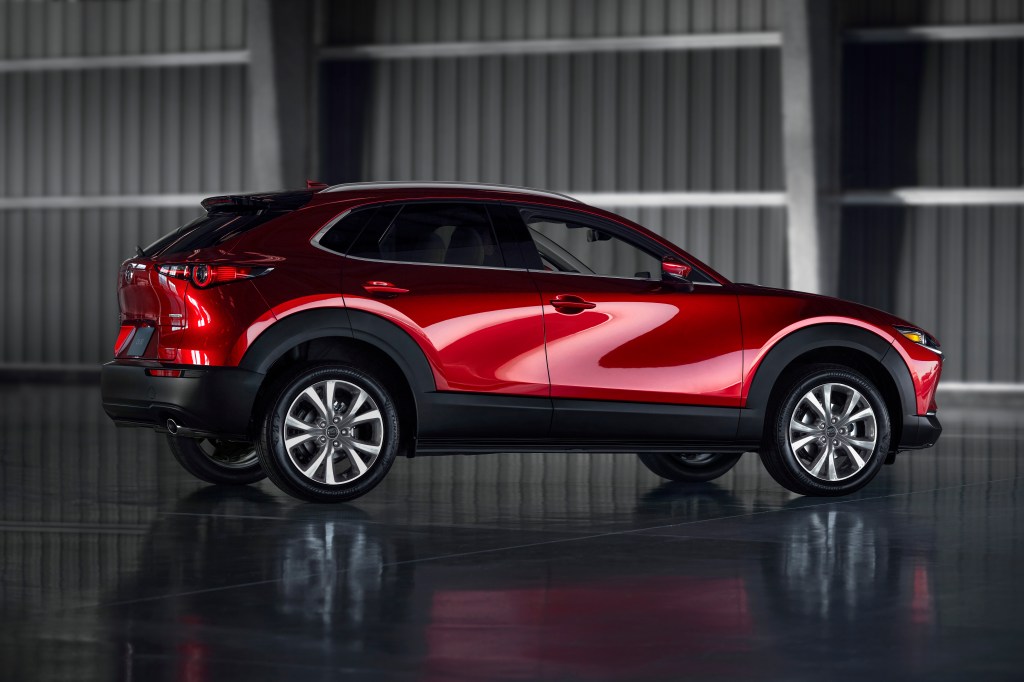
We’d be remiss, even though the news is a few days old, if we didn’t recognize Mazda on its 100th year of existence. Based in Hiroshima, Japan, Mazda was founded in 1920 as Toyo Cork Kogyo Corporation, specializing in the production of both cork and machine tools. By 1931, it was turning out tiny, three-wheeled pickup trucks and other small vehicles for its home market. Mazda’s great breakthrough as an auto manufacturer came in 1961, when it licensed the rights to build engineer Felix Wankel’s rotary-cycle engine from NSU of West Germany, and then installed the engine in its groundbreaking Cosmo sport coupe. The rotary engine gave Mazda its entree into the U.S. market in 1970s, and despite some rotary issues including reliability and emissions output, Mazda was here to stay. The rotary remained part of Mazda’s powertrain lineup until relatively recently.
Mazda now clicks along offering vehicles ranging from subcompacts to midsize SUVs, plus, naturally, the MX-5 Miata. In terms of power, Mazda’s now focusing on its SKYACTIV-G engine technology, a more orthodox 2.5-liter turbocharged inline-four than the rotary represented. Mazda’s operations in North America are based in Irvine, California.
For a long time, the official New Year for me came the last weekend every February. That was when Lincoln Speedway in Abbottstown, Pennsylvania, annually held its season-opening race for 410 Sprint cars. It could be brutal. Bright sunlight, whipping winds, temperatures in the upper 30s and a parking lot, which is to say a farm field, that was still blanketed with about six inches of the previous week’s snowfall. At least once, I had to get towed out of the parking lot. So imagine how cool it is, no pun intended, to be able to watch an absolute battery of short-tracking in February when it’s solidly in the 70s. This is Speedweeks, the winter motorsports festival that can trace its roots to when Big Bill France first promoted the Daytona beach races during the 1930s. It’s centered on Daytona International Speedway, as everyone knows, but lots of people probably don’t realize that a galaxy of short-track action takes place across Florida’s midriff every night, straight through the Daytona 500. This is not a complete list of what’s going on – for that, you’re best bet is to hook up with Area Auto Racing News out of Trenton, New Jersey, which carries an exhaustive Speedweeks schedule in its pages – but I’ll give you some highlights.
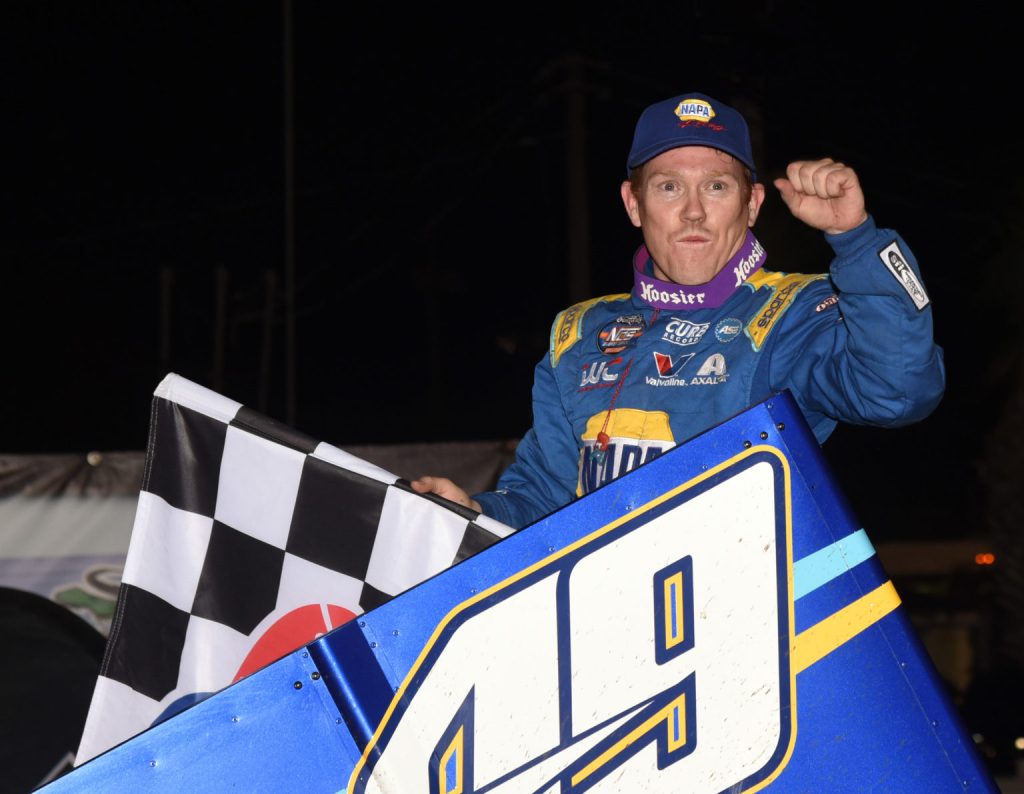
First up is Volusia Speedway Park on State Route 40 in Barberville, due west of Ormond Beach, where the 49th DIRTcar Nationals is now underway. The DIRT Motorsports photo by my buddy Paul Arch shows last night’s action at Volusia, where 2018 Knoxville Nationals champion Brad Sweet dusted the best from Tony Stewart’s All-Star Circuit of Champions for 410 Sprints. Sweet will be back tomorrow night when the World of Outlaws traveling national Sprint tour checks into Volusia for a three-night stand. Next up are DIRTcar Late Models Monday and Tuesday. The Tuesday show will be paired with my must-see division, the DIRT big-block Modifieds that war weekly on Northeast dirt tracks from Ohio to Quebec. The Modifieds will be paired with the World of Outlaws Late Model national series from next Tuesday through Saturday, February 15th.
Asphalt racing is also prime in Florida during Speedweeks, and not just at Daytona. New Smyrna Speedway is about 10 miles southwest of Daytona Beach at State Route 44 and Tomoka Farms Road. It’s scary fast, a high-banked paved half mile, and hosts its World Series of Asphalt Stock Car Racing beginning tomorrow night and running right through Saturday, February 15th. The schedule varies every night but revolves around Tour-type open-wheel Modifieds, Super Late Models and Pro Late Models. The ARCA East Series is paired with the Tour Modifieds this coming Saturday, and the Tour Modifieds honor their greatest-ever star with the Richie Evans 100 on Valentine’s Day, Friday, February 14th.
Bubba Raceway Park is a 3/8th-mile dirt oval located on N.W. Gainesville Road in Ocala, about 70 miles west of Daytona Beach. It’s named for the track’s owner, the radio personality known as Bubba the Love Sponge, whose then-wife infamously made a certain videotape with Hulk Hogan. The track’s Winter Dirt Games are headlined by the USAC National Midget series tomorrow night and Saturday, and the USAC National Sprint car tour from Wednesday, February 12th through Saturday, February 15th.
The Daytona 500 is February 16th, but I’m thinking seriously about heading over to the Tampa area on Thursday, February 20th for the Dave Steele World Non-Wing Championship for asphalt Sprint cars – a niche breed that has a stronghold in Florida – at Showtime Speedway on 126th Avenue in Clearwater. Dave Steele was a Hall of Fame specialist in blacktop open-wheel racing who owned two USAC Silver Crown championships when he was fatally injured in 2017 at Bradenton, Florida. The track is a 1/4-mile paved oval and the program will pit Sprint cars in a 125-lapper, plus TQ Midgets.
The starter’s got the green in his hand. Let’s go racing!




 Jim Donnelly On Wheels