Working hard, Nissan style

Cargo vans, the kind of vehicle your plumber or remodeling contractor might use, used to be the exclusive province of the Big Three, but that’s changed sharply. The cargo or passenger van is no longer a noisy welded body plopped atop frame rails that could support a Norfolk Southern freight. Vans today are global-design vehicles, with several manufacturers offering compact vans that were designed outside the United States. One of them is the Nissan NV200, built on the B platform that it shares with Renault, which has underpinned the Nissan Cube on our shores and the Renault Clio across the Atlantic. Called the Vanette in Japan, our version is built in Jiutepec, Morelos, Mexico.

The NV200 enters 2021 newly outfitted as the only compact van in the North American market to offer Apple CarPlay and Android Auto as standard equipment, along with a 7.0-inch central touchscreen display that’s the largest in this vehicle class. The standard engine is Nissan’s 2.0-liter, 16-valve DOHC inline-four, which will produce 131 horsepower. It’s linked to a standard Xtronic automatic transmission. Starting MSRP is $23,530.
Tesla listed on S&P 500

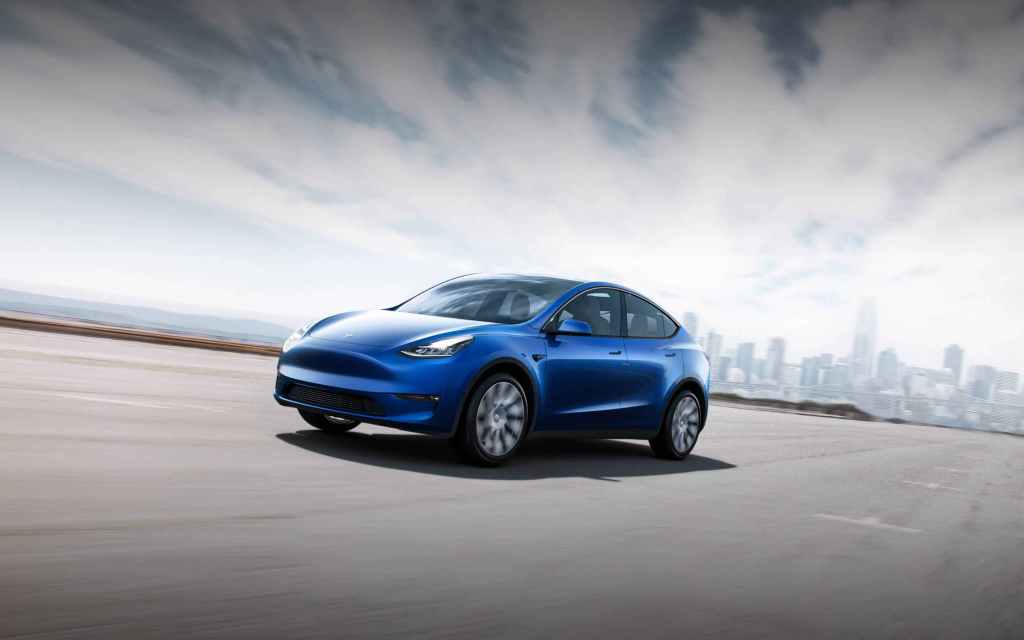
The history of the automobile has been writ largely in the vapors of hydrocarbons, burned and otherwise, so not everybody is fully comfortable with industry’s gradual pivot toward more environmentally sustainable propulsion. That’s understandable. But if you need more convincing that electric vehicles are here, and will indisputably become more commonplace, you need only consider the case of Tesla, one of the world’s most intriguing automakers. While everybody was occupied with other things, Tesla delivered nearly 140,000 new vehicles globally in the third quarter of 2020, and its stock valuation has rocketed up by an astonishing 700 percent in this calendar year alone.

Last week, Tesla achieved a new level of prestige in the business world when its stock joined the S&P 500, the index of stocks from 500 large companies that are traded on U.S. equity markets. The companies listed on the S&P 500 are selected on the basis of capitalization, which is where Tesla’s current stock price comes in: Tesla’s market capitalization was more than $600 billion when it joined the S&P 500, making it the largest company in history added to the index. Nothing on Wall Street is ever guaranteed, but Tesla’s stock closed yesterday at 645.98, up a little less than 1 percent. That means a share of Tesla stock is now worth nearly $646. Think about it.

Hey Toyota, build this car

Maybe you had your automotive coming-out on either side of 1980, when the automakers were just figuring out ways around the new federal rollover-protection standards that enabled things like the Colonnade styling era at General Motors and the temporary demise of the conventional convertible. People who bought Corvettes, Trans Ams, Camaros, Nissan Z-cars, and even the Mustang II Cobra could be had with removable glass roof panels. If you can remember back that far, you likely also recall that dealers loved them, because buyers grabbed them the minute they were rolled off the truck. That means the concept was fundamentally sound. It still is. Toyota is demonstrating that right now.

Originally created for display at the pandemic-cancelled SEMA show, Toyota commissioned this prototype for a 2021 GR Supra Sport Top. It’s not a pony car, the Supra having two seats, but it stands as a suggestion that the Seventies thing just might work again after a hiatus of some 40 years. The Sport Top’s body structure is extensively reinforced to compensate for the removal of the roof. The removable roof panels are formed from composites that fit nicely into the Supra trunk. We intentionally left the original Supra, with its delicious M-family straight-six, off that disco decade list, because we wanted to emphasize that previous generations of the Supra have offered removable roof panels, too. This car needs to reach the showrooms. Toyota can, and should, make that happen.

DIRTcar Nationals turns 50

Let’s face it, what everybody really wants for Christmas is a pair of shots from Pfizer or Moderna. Here’s why: For a lot of people, Daytona Speedweeks is about what happens on short tracks around central Florida more than anything that occurs at the big track on International Speedway Boulevard. For those folks, the real zenith is the DIRTcar Nationals on the gorgeously prepared half-mile dirt surface of Volusia Speedway Park in Barberville, a speedway that boasts the best sight lines of any short track in recent memory, thanks to the ex-Daytona backstretch stands that ring the track. The Nationals hit the half-century mark in February, scheduling an extravaganza in the dense Florida woods that runs from February 2nd through 7th.

As this Trent Gower photo from the World Racing Group makes clear, Volusia in February is always all about the best on dirt. The week of action brings in the World of Outlaws Sprint cars, World of Outlaws Late Models and Super DIRTcar Series big-block Modifieds, along with support divisions. Between the absolutely perfect visibility from the seats and the groomed, nearly dust-free racing surface, the Nationals are paradise, and are gradually morphing into a major national gathering of top-level dirt racing that can rival the Knoxville Nationals, the Kings Royal at Eldora Speedway or the Williams Grove National Open. If you’re into dirt-track combat and it’s February, you’re flat-out here. It’s that simple. Make your plans, and follow this link to learn about the whole program and get your tickets.

E-Yuletide cheer from Dearborn

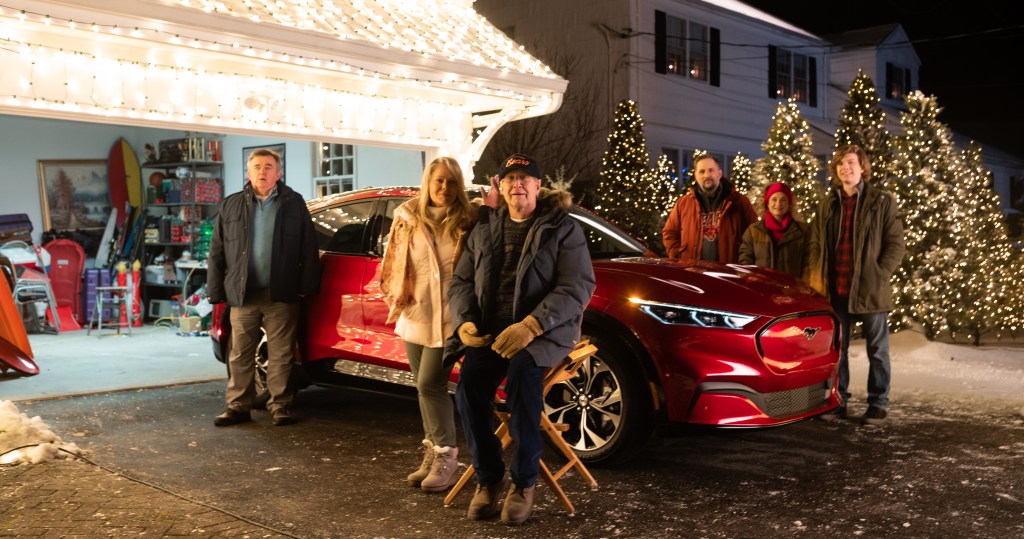
Maybe you’re one of the people who thinks that Chevy Chase is past being ready for prime time and don’t really care that Beverly D’Angelo was once the main squeeze of Al Pacino. If you agree that the development of a new generation of personal conveyance is more noteworthy, hooray. But the Ford Motor Company still wants to ensure that you don’t forget the rollout of its all-electric Mustang Mach-E even though most of us are likely more concerned with grabbing enough eggnog, making sure everything’s wrapped and avoiding a dangerous infection. But it’s still Christmas, which means that Saturday Night Live will have a holiday special Tuesday night on NBC, and that means the aforementioned personalities will be reprising their starring roles as Clark and Ellen Griswold in National Lampoon’s Christmas Vacation for a sketch on the program that not coincidentally also stars the new E-Ford.

So the emergence of this EV is arguably more noteworthy than a brief takeoff from a 1989 comedy film. I only saw the original, so I don’t know if the Mach-E is supposed to be a stand-in for the Wagon Queen Family Truckster or not. You can catch the product-placement slot by tuning in the SNL special. And if you’re interested in re-creating the scene with your own EV, go here to place an order that Ford says it can fill by New Year’s.

Keep time with racing’s past

You know what happens on Friday. And you may not be ready yet, like who knows how many of us. So you may find yourself in the position of having to provide someone with a belated Christmas gift. Wrapping up one like this can make that whole process easy to navigate. My pal Mark Dill, who strongly embraces the early history of American motorsport through his website, is also affiliated as a public relations specialist with the Sportscar Vintage Racing Association, a group where race cars of the past are both venerated and vigorously exercised. If you’re stuck for a late gift idea, the SVRA can help. It’s just announced that Omologato, which specialized in automotive-themed wristwatches (and wall clocks; hint, hint) has signed on as its official timepiece.

The wrist chronograph you see is one of 250 limited-edition watches that Omologato will produce for SVRA, to be sold on a first-come, first-served basis. Omologato thereby joins a growing, impressive list of SVRA corporate partners, the others being Jaguar, Land Rover, NetJets, Sunoco, Avis, Mazda Motorsports, Big Machine Vodka, TireRack.com, RACELOGIC, Cook Wealth Management, Hawk Performance, F.A.S.T. Cooling, and Marathon Coach. Tbe watchmaker’s website is right here, so you can peruse everything they produce for keeping time.

Entertainment, EV style

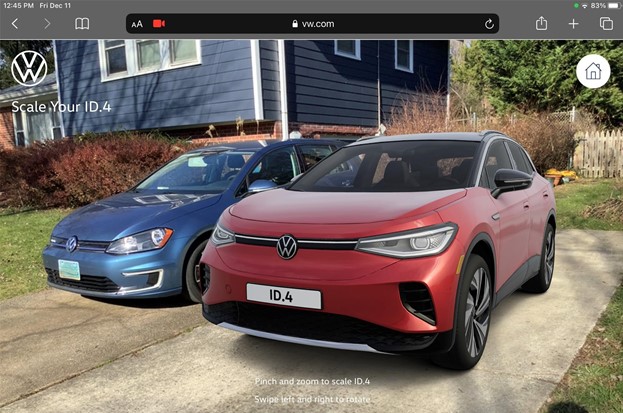
With limited socializing feasible, in-home diversion of any kind is welcome, all the better when you can explore transportation topics in the process. You don’t even need to be in your La-Z-Boy to take part. Volkswagen has created a way to have a salon- or showroom-type experience with a new car, almost a pressed-against-the-glass episode, using your smartphone. This is significant development, especially when you consider that the New York Automobile Show has already been pushed back for 2021 to August from its normal springtime date. So a close examination of a car that literally drops into your lap is nothing small.

The photo, depicting the yet-to-be-introduced ID.4 electric vehicle, is the artificial-reality “showroom” that Volkswagen has created to promote its rollout, which had an online debut last week. By going here and downloading a Volkswagen smartphone app, you can do a 360-degree walkaround of the ID.4, zoom in, and even customize its appearance with your choice of factory colors and wheel selections. All you’ve got to do is scan in the QR code you’ll spot on the Veedub page. We like this.

Diesel straight-six for Tahoe

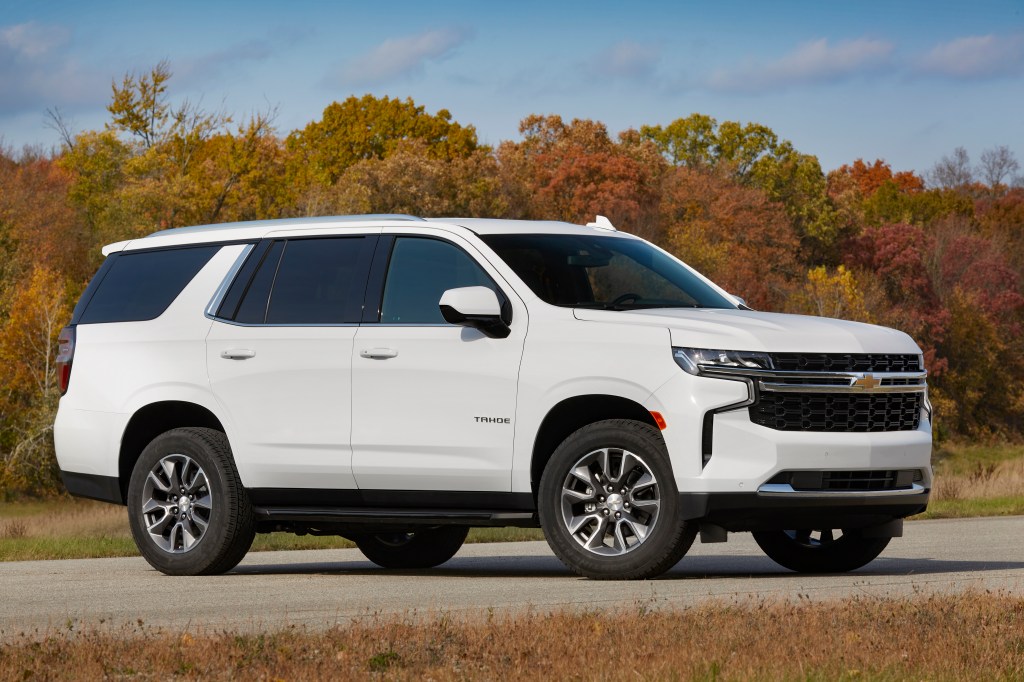
The Chevrolet Tahoe is a traditionalist SUV founded with design principles that date back long before “SUV” entered the automotive lexicon. At its essence, it’s a wagon based on a full-size, full-frame pickup, and it’s also a truncated version of the Chevrolet Suburban, which in its present mega-luxury guise, isn’t often pondered in the same notion as “efficiency.” Chevrolet is trying very hard to change that perception, starting with an entirely new chassis for 2021 that now incorporates independent rear suspension. It also explains Chevrolet’s decision to offer a new diesel engine for the Tahoe (as well as the Suburban, and its siblings, the Cadillac Escalade and GMC Yukon XL). The new Duramax turbocharged diesel is a straight-six, the first such diesel layout for General Motors full-size SUVs, and the first diesel offered in any GM full-size SUV since 1999.

A clean-sheet design from the engineers at Duramax – which started out as a collaboration between GM and Isuzu – the new inline turbodiesel displaces 3.0 liters, which translates to 183 cubic inches. In terms of architecture, the engine has an aluminum-alloy block and twincam cylinder head, the sort of tech you’d expected to find in a first-generation BMW 5-series. Introduced with the 2020 Silverado pickup, its other technologies include variable intake runners and a variable-displacement oil pump, plus rail direct injection and oil-jet piston cooling. All are aimed at making this very sizable vehicle considerably more efficient. With an EPA-certified highway rating of 33 MPG, the Tahoe still produces 277 horsepower and 460-lbs.ft. of torque, with most of the grunt coming in between 1,500 and 3,000 RPM. The new GM 10-speed automatic transmission is standard, and the gross towing capacity here is 9,100 pounds.

Nissan Murano adds safety

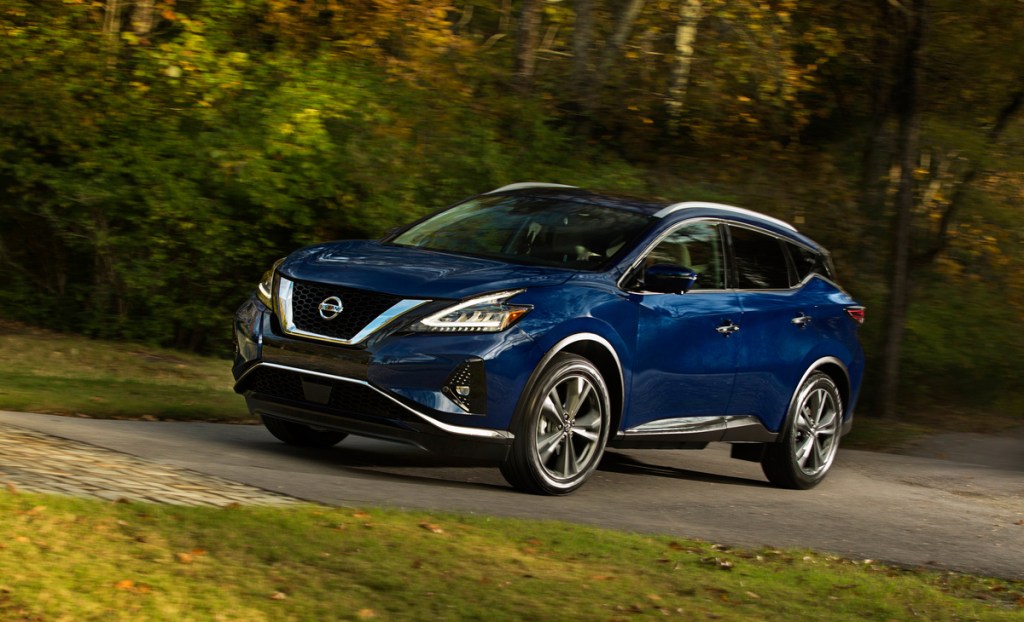
An unsung success story in motoring is surely the Nissan Murano, which has been with us since way back in 2003, when the notion of a midsize crossover was just becoming viable. It’s been through three generations so far, previously rode on Nissan’s FF-L platform that it shared with the third-generation Altima sedan, but since 2015, has been built on the D platform that Nissan shares with Renault, now also shared by the Altima and Nissan Maxima, plus the Renault Laguna sedan. Rather than being built for the U.S. market in Smyrna, Tennessee; the Murano has its own dedicated Nissan assembly plant in Canton, Mississippi. Part of Nissan’s new-product parade that continues to roll, the Murano is freshened for 2021 with a comprehensive lineup of eight freestanding models, offering both front- and all-wheel drive.

The revised Murano makes use of Nissan Safety Shield 360, a suite of occupant-protection systems that comes standard, regardless of model. New for 2021 is standard Rear Automatic Braking, plus side-impact airbags, knee bags, lane departure and an around-the-vehicle monitor capability. Standard power comes from Nissan’s 3.5-liter DOHC V-6 with 24 valves and 260 horsepower. Pricing begins at $32,510 for the Murano S with front drive and ranges up to $45.610 for the Murano Platinum AWD.

Clean U.S. trucks roll with Toyota’s emerging fuel-cell systems

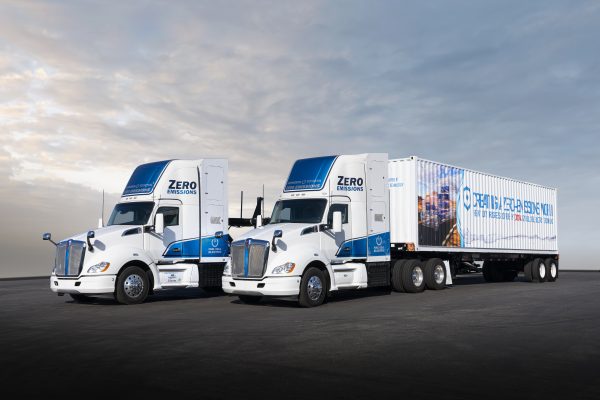
We’ll say this, commercial trucking in the United States is about to enter a phase of dizzying change, starting with the need to address driver turnover in the industry while simultaneously contemplating a move to self-driving vehicles. Globally, the manufacturers of heavy trucks have been scrambling for years to reduce their vehicles’ not-insubstantial carbon footprints. Clearly, the widespread adoption of hydrogen fuel cells is going to be a major part of the solution. Hyundai is already rolling out the first of its new heavy trucks powered by fuel cells for fleets in Europe. Last week, the same initiative came to the United States, as the first two heavy haulers equipped with hydrogen fuel cells, this time from Toyota, were readied for their first fleet use.

These are Class 8 diesel trucks, produced under auspices of the Zero and Near Zero Emissions Freight Forwarding (ZANZEFF) project sponsored by the state of California, the largest vehicle market in North America. The trucks are Kenworth T680 tractors, developed under a $41 million proof-of-concept grant issued by the California Air Resources Board, with the Port of Los Angeles as the main applicant. The first two trucks will go to Toyota Logistics Services and to Southern Counties Express, which handles forwarding and warehousing in the Southern California regents. The initial pair of rigs will be joined by eight more in 2021, several earmarked for UPS. The first two will be used largely in container-transfer operations – each tractor is pulling exactly that – at the sprawling ports of Los Angeles and Long Beach in California.