Ford to earmark $29 billion for coming EV development

Like any other publicly held business, automakers routinely report their quarterly financial performance to shareholders, regulators and the media. Normally, these reports are barely noticed by people who don’t have some kind of direct financial stake in the company’s operations. The earnings report disclosed by Ford last week goes a little deeper. Dearborn just had an enormously important reveal in the form of its Mustang Mach-E, joined by the newest-generation F-150 and the E-Transit electric van. Ford posted $36.0 billion in revenue during the fourth quarter of 2020. What’s arguably more important is that at the end of quarter, Ford had cash reserves of almost $31 billion and total liquidity of some $47 billion, both representing improvements over the previous quarter’s totals.
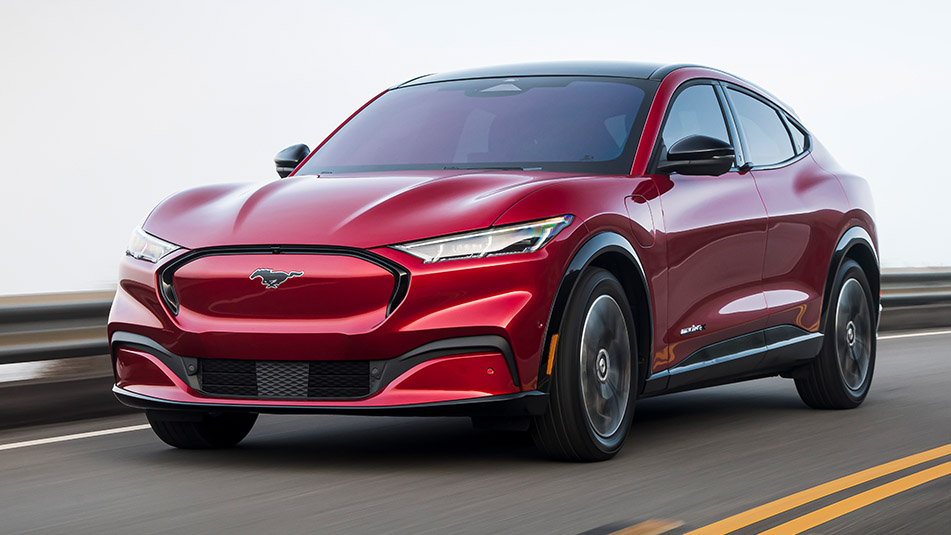
All those ready greenbacks are a godsend to any automotive executive who’s endeavoring to do some long-term product planning. In the quarterly report, Ford declared plans to set aside $29 billion for the development of future EVs and autonomous-driving technologies. Ford’s global EBIT – that’s earnings before interest and taxes, a key barometer of real-world business performance – leaped to $1.7 billion, a vast increase from the previous quarter’s total of $485 million. One Dearborn goal is increasing that EBIT ratio for North American operations to 10 percent, which provides a very attractive cushion of capital for creating future vehicles.

A British success story that ought to make any Yank smile

If you start out working in the world of newspapers, you’ll eventually come to grips with the fact that you spend an inordinate amount of time chronicling the consequences of actions by people who are stupid, ignorant or heavily intoxicated. Some of us find solace in the sporting pages, whose stories tend to focus on human achievement instead of failure. For the same reasons, some of us turn to the financial section to reinforce our faith in humanity’s essential goodness. That kind of story is both evergreen and geographically universal. The guy who’s the topic of this automotive biography happens to be from England, but the success that Tom Hartley has reached is transcendent of nationality, as told by the life histories of Americans like Rick Hendrick and Roger Penske.

If you haven’t figured it out yet, this is one man’s tale of making it in a challenging, unforgiving business. Hartley is an entrepreneur of great accomplishment in England, a car dealer who, in a very real sense, markets human fulfillment, as the Mercedes-Benz SLR McLaren and Ferrari 812 Superfast in his current inventory make plain. Hartley has become something of a household name in the U.K. for trading in mega-exotics like these over the past 45 years, having sold his first car in Glasgow at age 12 and then surviving a medical crisis that nearly blinded him while he was still a teen. Veloce Publishing has given Hartley a platform to tell his life story; the result is an inspiring story that comprises 249 hardcover pages. Yes, it’s a vanity work to a degree, but it’s always also a message of unwavering persistence and the rewards it can bring. We could all use a lesson such as this. Based on the exchange rate, it’s about $27.00 in hardcover or $21.00 in paperback directly from the publisher.

Frontier, Pathfinder continue Nissan’s big rollout blitz

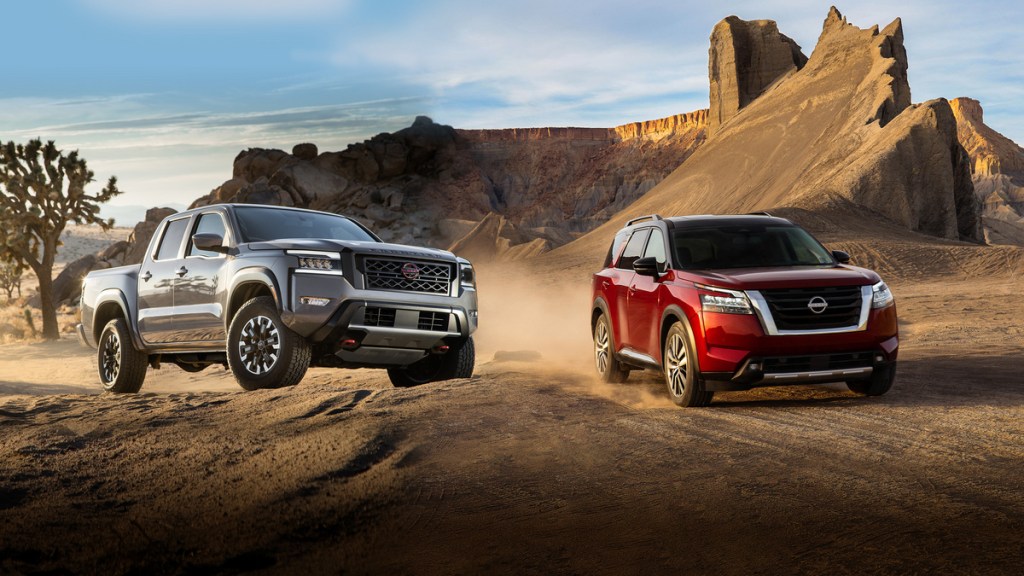
Inside the corporate suites in Nashville, they call the program Nissan NEXT. It’s an ambitious plan that saw the automaker roll out 10 new models for the U.S. market in a span of just 20 months. Especially when you consider the pandemic-partnered global economic mess, that’s a very robust arrangement of reveals, even when you factor in the industry’s shorter product lifecycles than were common in the relatively recent past. Nissan’s latest debuts are a pair of workaday vehicles that represent a lot of buttered bread in the company’s business plan. The Frontier midsize pickup and Pathfinder midsize SUV are a couple of iconic Nissan nameplates, and they’re new from the wheels up for 2022.

Let’s start with the Frontier. Its hugely aggressive frontal sheetmetal cloaks mechanicals that demonstrate this truck can back up its abundant attitude. The powertrain is described as best in class, the standard 3.8-liter V-6 with direct injection rated at 310 horsepower. Both the standard and optional information touchscreens are also described as being the largest in this vehicle class. The Pathfinder is fully new inside and out. The standard 3.5-liter direct-injection V-6 produces 284 horsepower and is paired with a new nine-speed automatic transmission. Intelligent 4WD with seven driving modes is on the option list. The all-new passenger cabin has seating for up to eight and a new captain’s chairs option. Nissan NEXT isn’t done yet, either: Up next, to complete the new-model blitz, are the coming all-electric Ariya crossover and the production version of Nissan’s Z Proto sports car.

Plug-in offerings accelerate global sales figures at Volvo

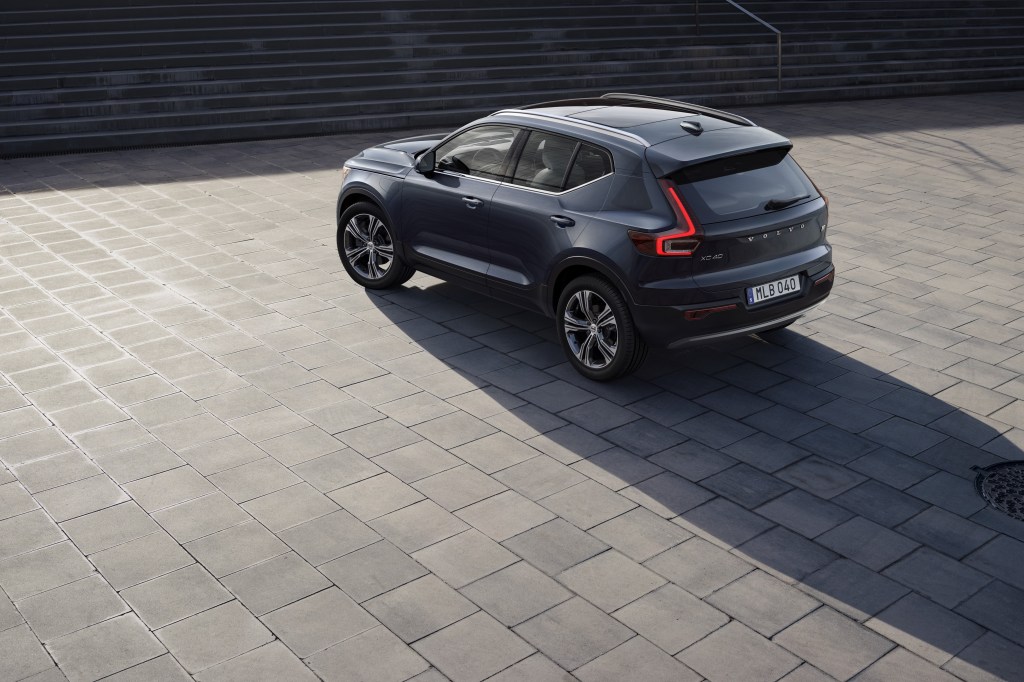
Volvo, under ownership by Geely, was one of the first automakers to announce its intentions to go fully carbon-neutral in the near term. That’s been particularly timely in China, where Geely is based. Volvo intends to be out of hydrocarbon fuels completely by 2040, and to that end, has extended the availability of both full-electric and plug-in hybrid vehicles in its product lineup under the model name Recharge, led by the all-electric XC40 Recharge crossover. Recharge models now account for 23 percent of Volvo’s global sales.

The broadening extent of Recharge offerings led Volvo to the best January sales performance in its history, with worldwide sales of 59,588 cars climbing 30.2 percent over 2020’s January total, led by marked sales strength in China. Volvo deliveries in that market leaped by more than 91 percent over last year’s January total, led by Recharge models, more than erasing the 2020 sales collapse that occurred after the coronavirus was first identified in Wuhan. Corresponding Volvo sales increases for the same period totaled 32 percent in the United States and 9 percent in Europe, with Recharge models accounting for 41 percent of sales in that market. SUVs, led by the XC40, now constitute some 71 percent of Volvo global sales.

200 MPH for CT5-V Blackwing

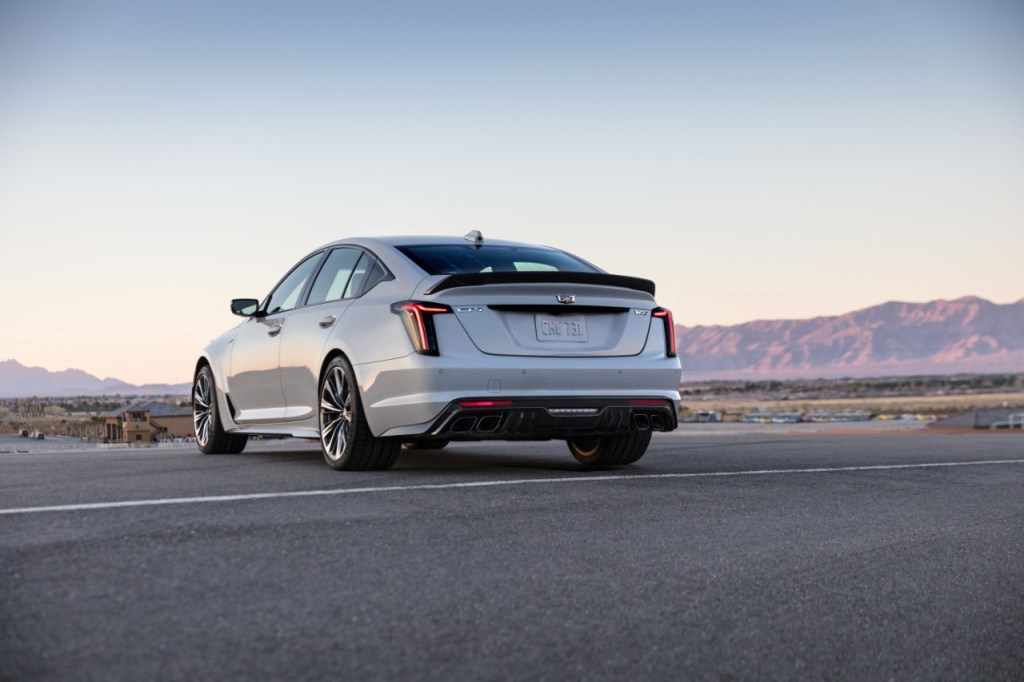
It’s entirely appropriate that Cadillac packaged the rollout of its two new performance sedans against the backdrop of last weekend’s Rolex 24 at Daytona, where a legitimate 200 MPH Cadillac was taking part in the DPi category with JDC-Miller MotorSports and Action Express Racing, pure racing cars weighing some 2,050 pounds with more than 580 horsepower. So consider the fact that the hotter of the two new road Cadillacs, the CT5-V Blackwing, surpasses the engine output of the race car by more than 100 horses. The CT5-V Blackwing sedan is powered by a supercharged 6.2-liter V-8 with 668 horsepower and 659-lbs.ft. of torque, linked to a standard Tremec six-speed manual transmission. The other car, the CT4-V Blackwing, has a twin-turbo 3.6-liter V-6 that produces 472 horsepower, for crying out loud.

Regardless, Cadillac is flatly declaring that the CT5-V Blackwing is the fastest and most powerful car in its illustrious history: To wit, Cadillac says this substantial luxury performance sedan will top 200 MPH on the track, and reach 60 MPH in 3.7 seconds when optioned with the 10-speed automatic. There’s a ton of pure racing technology, from a four-lobe Eaton supercharger to Rotocast aluminum cylinder heads, titanium valves and wet-sump oiling. Front disc brake rotors are nearly 15 inches in diameter. An electronically control limited-slip rear differential is standard. Pricing for the CT5-V will being at $84,990, you can reserve yours by going here.

Chassis improvements, e-goodies define new F-150 Raptor

When the Ford Motor Company unveiled this vehicle today, it also dispensed a factoid that’s very much worth remembering: The last generation of the trail-packaged F-150 Raptor pickup handily outsold not only the entire Porsche lineup of sports car combined, but also the Chevrolet Corvette’s full output. That means we ought to view the Raptor for what it is, a performance vehicle targeted at a specific audience, which has a raft of performance and connectivity-related accoutrements on tap for buyers as the newest Raptor makes its debut.

The biggest news surrounding the 2021 F-150 Raptor, a vehicle born of boundless off-road enthusiasm, is its all-new, Raptor-specific five-link independent rear suspension. The upgraded chassis uses extra-long rear control arms for axle location plus 24-inch coil springs, the best in its class, providing ample vertical suspension displacement in the rough stuff. The Raptor is also fitted as standard equipment with new-generation FOX internal-bypass shock absorbers with electronic control, 3.1 inch-diameter shock tubes with low-friction fluid inside. Sensors allow active damping changes 500 times per second. The standard Raptor engine is Ford’s 3.5-liter, twin-turbocharged EcoBoost V-6, with a 10.5:1 compression ratio for this application. Over-the-air tech upgrades including trail maps and turn assist in the boonies are also part of the package. Built at the Dearborn Truck Plant, the new rig will be joined by an even more muscular Raptor R in 2022.

The rigs that battled the flames in America’s brewing capital

Here’s the way I look at it: The world of cars is really just one element of the universe of transportation, past and present. It seems that if you really like automobiles, you’ve also got to like trains and planes, especially the ones powered by steam and pieced together from wood and fabric, respectively. This whole world is all about getting people and things from one place to another, so trucks are part of it, too, even when the only thing they haul is the desperate hope that they can rescue you from a deadly calamity. That’s what this book is all about, and why it’s relevant to people like us. One of the first books I ever bought, back around 1972, was a history of the Milwaukee Fire Department, its men and its vehicles entitled Beertown Blazes, jointing written by R.L. Nailen and Jim Haight, fire buffs from that city. We just received an intriguing volume that can stand as that famous book’s successor.

This new work, Engines and Other Apparatus of the Milwaukee Fire Department, is the work of a former Milwaukee firefighter and encompasses 318 heavily illustrated pages, albeit with a detailed narrative that tells an in-depth saga of the MFD’s rigs to the present day. With grain elevators lined up along Lake Michigan to feed its breweries, Milwaukee has always been primed for big blazes, and suffered at least one big downtown conflagration. For a mid-size department, Milwaukee’s been an impressive innovator, one of the first firefighting forces to embrace both technical and medical rescue as part of its mission. Those rigs are all here, part of a delightful variety of equipment that’s also included snow cats, pumpers from FWD and Pirsch, fire boats and a galaxy of chief’s cars ranging from a luscious 1957 Oldsmobile 88 to a series of Kenosha-built Ramblers and a Corvair Rampside pickup. It’s all in here for $49.95 by McFarland & Company of Jefferson, North Carolina, which publishes an extensive selection of books on transportation history.

Blackwing flies at Rolex 24

If you watched the Rolex 224 from Daytona International Speedway, you already know that Cadillac is a contestant, mixing it up memorably in the prototype wars. And even though General Motors just declared it’s going fully carbon neutral by 2040, that didn’t stop the General from an inventive tease of two forthcoming performance cars that most definitely burn hydrocarbons for their energy. The new Cadillac performance sedans, the CT4-V Blackwing and CT5-V Blackwing, got a livestreamed star turn as both Blackwings appeared in a 60-second video of both cars assaulting the Daytona road course at night. The video aired on NBC shortly after last weekend’s Roar Before the 24 fanfest concluded.

With a six-speed manual transmission and model-specific cut-and-sewn leather interior, both editions of the Blackwing – shorn of their camouflage for the video teaser – are scheduled to reach the showrooms by late summer. After the video aired, buyers were given the chance to reserve one of the first 250 numbered editions of each Blackwing sedan. You can get a full tutorial, plus the video, and learn how to reserve yours by going here.

Yes, it’s real: GM declares zero auto emissions by 2035

If you like cars, the prospect of them shifting over to electric power en masse may be somewhat intimidating. If you like the history of the automobile, the continuing industry pivot toward electric power does a lot to validate its past. Electric vehicles were seriously viable 100 years ago, too. The reason why they weren’t adopted en masse back then is because technology, as it then existed, strongly favored the cheaper reality that long-distance driving was more economically feasible with internal-combustion power. The Detroit Electric, et al, couldn’t adapt to the country’s ever-expanding road network. It’s that simple, and a century later, that technological hierarchy is being shaken in some fundamental ways.

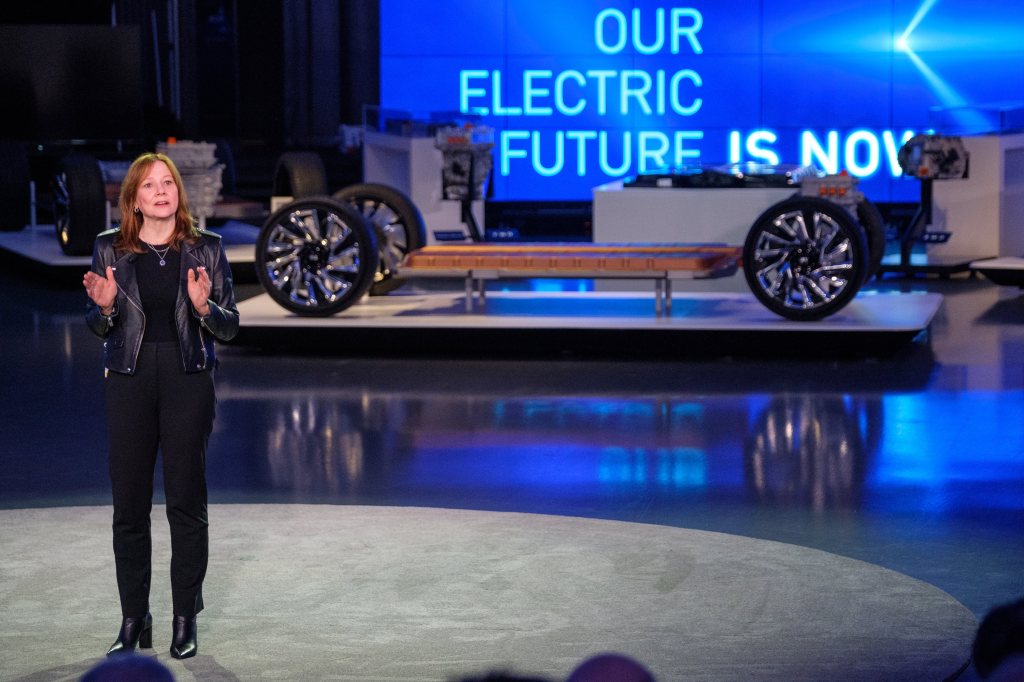
Led by chairman and CEO Mary Barra, General Motors has rocked the industry by announcing this week that it will use science-based processes to achieve total carbon neutrality by 2040. To reach that goal, North America’s largest producer of motor vehicles says it will entirely limit tailpipe emissions from its fleet of light-duty vehicles by 2035. This is enormous news, certainly equivalent as a landmark industry moment when with Ransom Eli Olds first started using a moving production line to build his cars. With its action, GM is committing to the United Nations’ urgent global effort to involve business in controlling climate change. Right now, GM envisions that 40 percent of its U.S. vehicle offerings will run on battery-electric power by 2025. The former Saturn plant in Spring Hill, Tennessee, is being repurposed for EV assembly. GM’s announcement comes on the heels of the Biden administration’s decision to convert the full federal vehicle fleet to EV-only. If you’re worrying about what this may mean for things like the Corvette, don’t. McLaren, to name just one lofty nameplate, has already demonstrated that electric supercars are a workable concept, too.

GMC Hummer goes international e-racing with Chip Ganassi

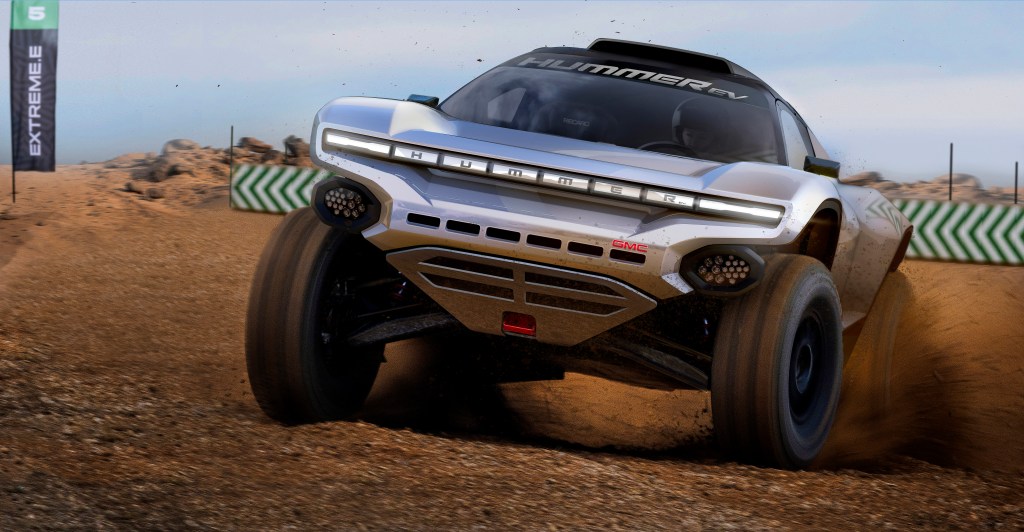
The new all-electric megatruck from General Motors, which is also reviving the Hummer name as a sub-brand of GMC, the truck manufacturer, is getting a marketing boost of the best sort imaginable. GMC has revealed a mulityear deal with Chip Ganassi Racing to field a pair of modified GMC Hummer EV in the inaugural Extreme E season of off-road, rallycross-style competition for battery-energy vehicles. In compliance with Extreme E rules, the GMC Hummer being fielded for drivers Kyle LeDuc and Sara Price will produce 550 horsepower, and boast unique grilles and bodywork for competitive beating and banging.

Extreme E is a five-race global championship whose slate of events begins in early April with the Desert X Prix in Saudi Arabia. Other rounds are slated for Senegal, Greenland (!), Brazil and Argentina. In addition to CGR, Extreme E teams include a collaboration between Andretti Autosport and the U.K.’s United Autosport; plus entrants fielded individually by Formula 1 world champions Lewis Hamilton, Nico Rosberg and Jenson Button.