When a hero owned Indy

Americans don’t devote a great deal of conversational effort to discussing people like Eddie Rickenbacker before, and that’s too bad. In addition to being a fighter ace during World War I, a Medal of Honor recipient and a swashbuckling racing driver in the earliest days of motorsport, Rickenbacker was a strong entrepreneurial spirit. He was behind the Rickenbacker automobile during the 1920s and also, beginning in 1927, took ownership of the Indianapolis Motor Speedway. The bulk of what’s been written to date about Brickyard history focuses on the days after 1945, when Rickenbacker sold the track to Tony Hulman and his family. Rickenbacker goes down in motorsport history for his work keeping the speedway alive during the Great Depression, which had a lot to do with his pre-1929 decision to require production-based cars in the Indianapolis 500, assuring then-crucial industry support. Until now, that era hasn’t always received the focus it deserves.

Denny Miller is a California-based historian with a love for the 500 that’s evident in everything he writes, a body of work that’s included a definitive biography of the East Coast driver Eddie Sachs, who nearly won the race in 1961 and died in it three years later. Miller’s latest work is a 555-page, episodic telling of the Rickenbacker years at the speedway, recounted chronologically not just through recounting Rickenbacker’s own work, but also the exploits of the drivers who achieved stardom during his reign, starting with the two three-time winners depicted on the cover. The narrative is laid out in large type – very helpful to readers of a certain seniority – and dotted with the motorsport artwork of Hector Cademartori. The Eddie Rickenbacker Era retails at $44.95, and you can order a copy signed by the author from our favorite bookstore, Autobooks-Aerobooks of Burbank, California. If you’re going to be in the Los Angeles metro area on Saturday, April 10th, Miller will hold a signing at the shop from 10 a.m. to 2 p.m. PDT and believe us, this store is always worth a visit.
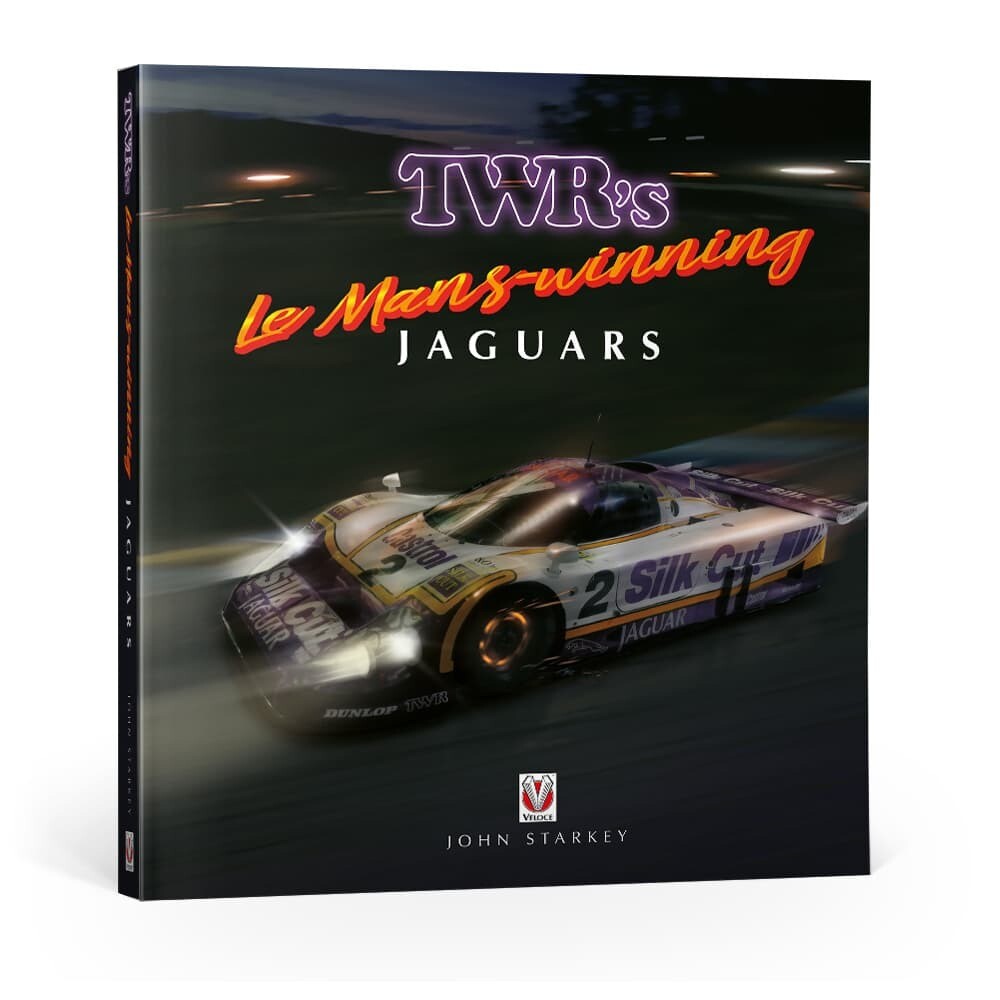
Jaguar’s return to racing glory

Before we discuss this book, let’s outline the importance of what it covers. Great Britain suffered an immeasurable loss of its dignified swagger when one of Jaguar’s racing D-types was involved in the calamity at Le Mans in 1955. Despite its global dominance, Jaguar largely faded from the racing scene after that, as the garagistas like John Cooper and Colin Chapman came to embody the pinnacle of British racing eminence. It took an ambitious onetime Formula Ford jockey named Tom Walkinshaw to build the team, and the cars, that would return Jaguar to the pinnacle of sports car racing, nearly half a century after the Le Mans disaster. This, in the manageable presentation that typifies a title from Veloce Publishing in the U.K., tells the tale of that amazing turnaround.

For the record, Walkinshaw and his troupe brought Jaguar back all the way and then some: Sweeps of Le Mans and the Rolex 24 at Daytona in both 1988 and 1990, plus title in the World Manufacturers Championship for sports cars in 1987, 1988 and 1991. Walkinshaw started out with a race-prepped XJS coupe in the British touring-car slugfests before teaming up with designer Tony Southgate to create the series of prototypes, starting with the XJR-6 of 1985, combining a carbon-fiber structure with Jaguar’s locomotive-like V-12. Running to 144 pages, this hardcover history, TWR’s Le Mans-winning Jaguars, comes from the keyboard of John Starkey, a Brit turned fellow Floridian who’s famed for crafting authoritative histories on racing sports cars including Lola, the Porsche 935 and the Nissan GTP programs. It’s authoritative, fact-focused and manageable. The book is a well-spent 30 bucks.

Taycan software updates renew

Positively wild looking, the Taycan is Porsche’s first all-electric vehicle, a four-door sport saloon that entered production in late 2019 after first appearing as a concept, the Porsche Mission E, at the 2015 Frankfurt Motor Show. Since making its first deliveries of 2020 Taycans, Porsche has upgraded its software suite for the car, including programs that manage road dynamics and intra-vehicle system communications. Porsche has recently taken a step on after-sale service that’s soon going to be a lot more common in the world of cars, especially electric ones. Current Taycan owners can upgrade to current software that manages functions including the car’s adaptive air suspension ride height and updates to the navigation system.

Taycan owners can acquire these over-the-air software updates when the Porsche Communication Management program loaded into the vehicle makes a notification about an available upgrade. The owner can access the Porsche Connection Store to get the upgrade as either an individual purchase or ongoing subscription. After registration is complete, the PCM program sends a data package over a mobile connection directly into the car’s database, which automatically activates the new software. Cool stuff, requiring only a valid credit card with the appropriate purchase limit.

A 200K benchmark for Crewe

When the output of Bentley, the esteemed icon of British motoring history, is mentioned in conjunction with a six-figure number, the likely topic under discussion is usually the retail price. Or given some the people who buy these automobiles, perhaps it’s more likely never discussed at all. We all know that throughout its century of existence, the two heaviest tools in Bentley’s kit have always been excellence and exclusivity. It’s a game plan that never gets old, or dodders into ineffectiveness. Here’s your proof.

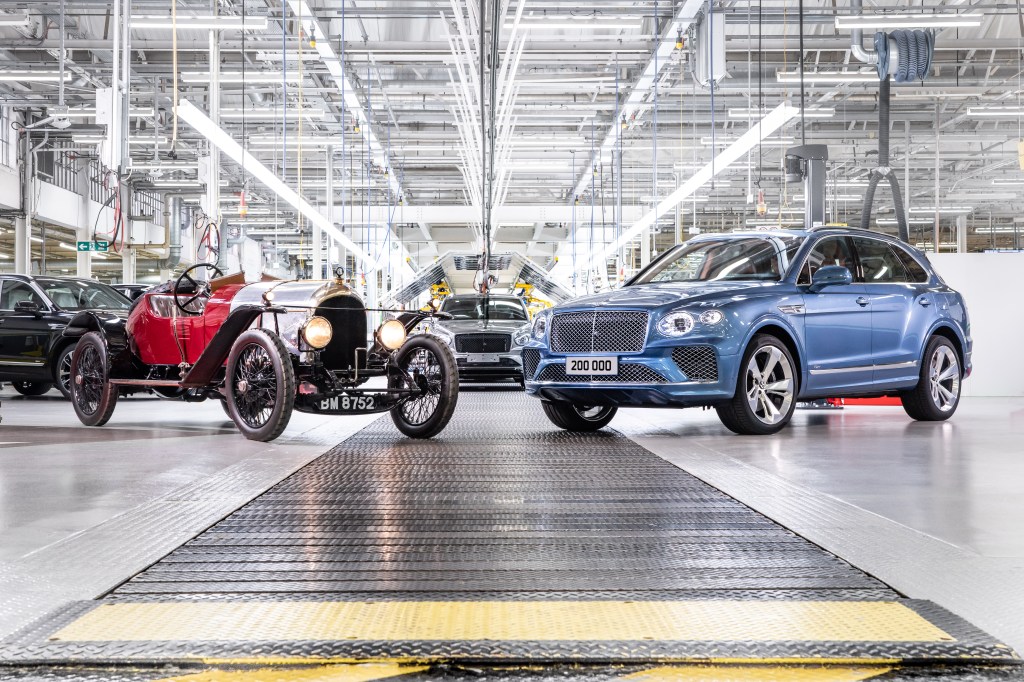
Bentley marked the exit of March by seeing its 200,000th vehicle roll down the production line at Crewe, fittingly being something that clearly bespeaks the marque’s next 100 years. The benchmark build was a new, all-electric Bentley Bentayga SUV, now just coming into the model lineup. After 101 years, production at Crewe is more brisk than it was when W.O. Bentley started out, now averaging 85 units today, an impressive number when you consider that about 75 percent of the Bentley assembly process still involves artisan hand labor. The image demonstrate that Bentley knew how to properly mark the milestone. The other vehicle is EXP 2, the oldest Bentley in existence, the second running prototype that W.O. built at the then-new Cricklewood works. Constructed in 1919, it originally was powered by Bentley’s first 3.0-liter straight-six, with an aluminum block, non-detachable cast-iron SOHC cylinder head and four valves per cylinder, all in line with cutting edge Henry-Ballot-Miller-Peugeot racing engine design of era. Re-powered by a spare TT engine, EXP 2 captured Bentley’s first works win in 1921, fittingly at Brooklands.

Thorson heads to USAC Sprints

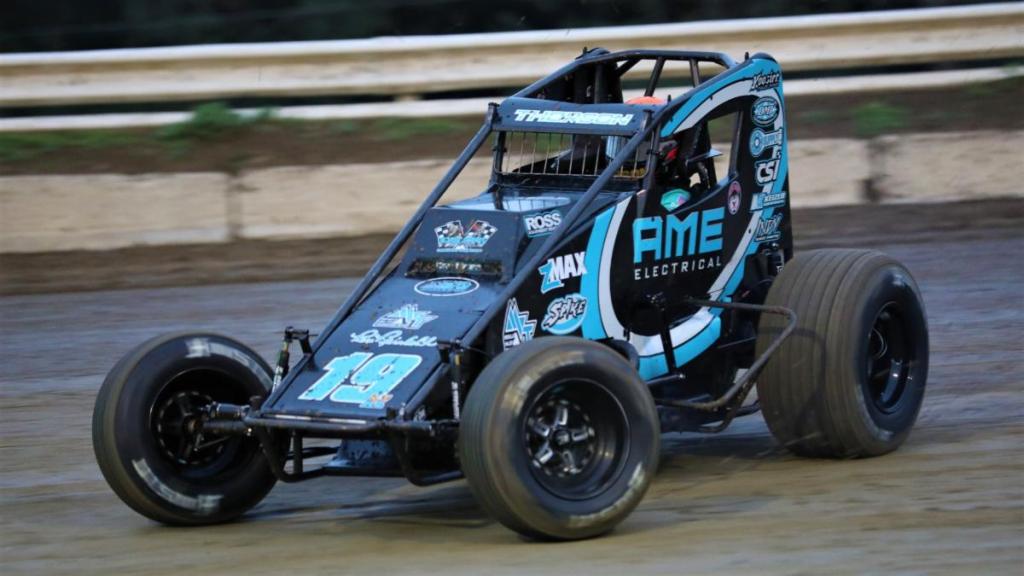
This photograph, by Dave Olson, shows what’s become a familiar sight of late, Tanner Thorson running up front in the seat of a non-wing USAC race car. If you don’t recognize this kid’s name, change that. A native of Minden, Nevada, Thorson has been something of a supernova on the American open-wheel scene, tallying 20 career victories on USAC’s national Midget circuit while also winning the series’ national championship in 2016. The hair-trigger Midgets are ideal training for more potent stuff, which Thorson is demonstrating as he steps up to the USAC national championship tour in non-wing Sprint cars. Thorson will contest the entire 2021 USAC Sprint calendar and compete for Rookie of the Year honors as the driver for Reinbold-Underwood Motorsports. The new brain trust will make its debut April 3rd when the USAC Sprint season gets underway at the bullring in Lawrenceburg, Indiana.

It’s a little unfair to call a guy as bounteously talented as Thorson a rookie, even if he’s moving to a new class. Thorson took his first rides in a 410-urged Sprint car two years ago, making eight starts over two seasons. Reinbold-Underwood has been on the USAC Sprint tour for three years, winning championships with both C.J. Leary and Logan Seavey in the seat. Their first driver, Thomas Meseraull, also scored a victory for the team during its first year in the series.

3D waste finds utility at Ford

One of these days, as many of us may own and use 3D printer technology as commonly as we employ computers and mobile phones today. The practice has emerged as a sustainable, cost-effective way to produce complicated parts in very small volumes, while adhering to perfect reproduction. 3D printers are used to create everything from detail parts for model railroaders to pieces of the human body for use in reconstructive surgery. The printers will link to any home computer and are rapidly becoming affordable for ordinary people. The use of 3D parts has been unfolding in the global auto industry for a while now. An American-Israeli partnership, Stratasys, has prototyped an electric car called the Urbee that uses all-3D body panels. Swedish supercar producer Koenigsegg Automotive AB has more extensively used 3D components, first in its One:1 that debuted in 2015. I have a feature in the inaugural issue of Crankshaft magazine that describes, in considerable detail, how a Tucker 48 was restored using 3D printing to prototype unobtainable trim pieces and other obscure parts. The same technology is now hitting the big-volume global industry.

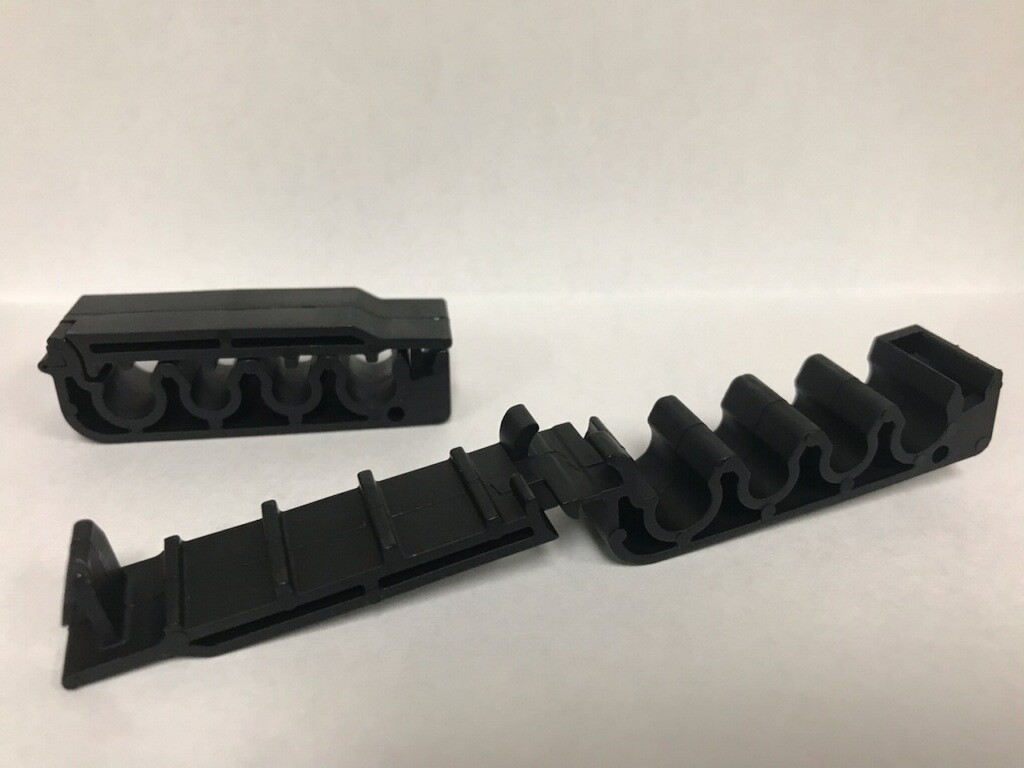
This next news is really cool. Ford is joining forces with HP, the computing giant, to reuse discarded polymer powders and moldings from the prototyping process to create new components for vehicles, starting with what you see above, which are injection-molded fuel-line clips destined for use in assembling Ford’s F-250 Super Duty truck line. This creates a closed-loop system for eliminating waste. The process, as Ford describes, has resin producer Lavergne, a longtime recycling partner of HP, convert molds and discarded powder from Ford’s HP 3D printers into high-quality recycled plastic pellets. Those pellets, suitable for injection molding, are then molded into fuel-line clips by Ford supplier ARaymond. Ford’s corporate objective is 100 percent use of sustainable materials in its manufacturing processes.

Two-strokes “pop” into view

My parents bought their first home in 1968 and moved from Brooklyn to southern New Jersey. They had a yard. That meant they had to have a lawnmower. They bought one. Actually, they bought several. One of them was a bile-green Lawn Boy that became my personal responsibility. Before cutting the grass, it was necessary to fill the little fuel tank with (leaded) gasoline, only the Lawn Boy had a two-stroke engine, which meant that you had to manually mix a little bit of 30-weight oil – I honestly don’t remember how much – in with the gas. Then you yanked it into life and made passes through the grass in a haze of blue exhaust. Two-stroke engines were light, cheap and simple, lacking both a conventional valvetrain and lubrication system. That’s why a lot of them ended up in motorcycle frames, at least until emissions laws essentially banned them in the 1970s. Tweedy enthusiasts who rode obscure little bikes did the same fuel-mixing ritual I did. The ones who are still around will undoubtedly love the fact that this quirky little engines, and the quirkier bikes they powered, are about to enjoy a major star turn.

The pandemic-rescheduled 26th edition of the Amelia Island Concours d’Elegance will indeed include a class for vintage motorcycles, as is common practice. But this year, the stars of the show field at the Ritz-Carlton in Florida’s northeast corner will be the oft-ignored world of two-stroke bikes. A lot of surviving two-strokes are hoary crocks, many from Merrie Olde’s gloried past, but this Ryan Hunt image from Amelia Island depicts just how nutso this two-stroke stuff can get. This is a Devlin 428 sidecar racer, built in 2018 to pre-1978 international specifications for sidecar motorcycle racing. Riding on a space frame welded from 4130 chrome moly tubing, the Devlin has a two-stroke Yamaha RD400 engine that produces 67 horsepower from just 399 cubic centimeters. The fairings and bodywork are hand-hammered aluminum. It’s almost sacrilegious to admit, but this makes me think involuntarily of screening Mystery Science Theater 3000 when its lampooned film was The Sidehackers, a 1969 horror that cinematically degraded a unique form of motorsport thanks to its stars, a pre-Get Christie Love! Michael Pataki and a post-SurfSide 6 Diane McBain.

Mecum serves up PJ’s Big Oly

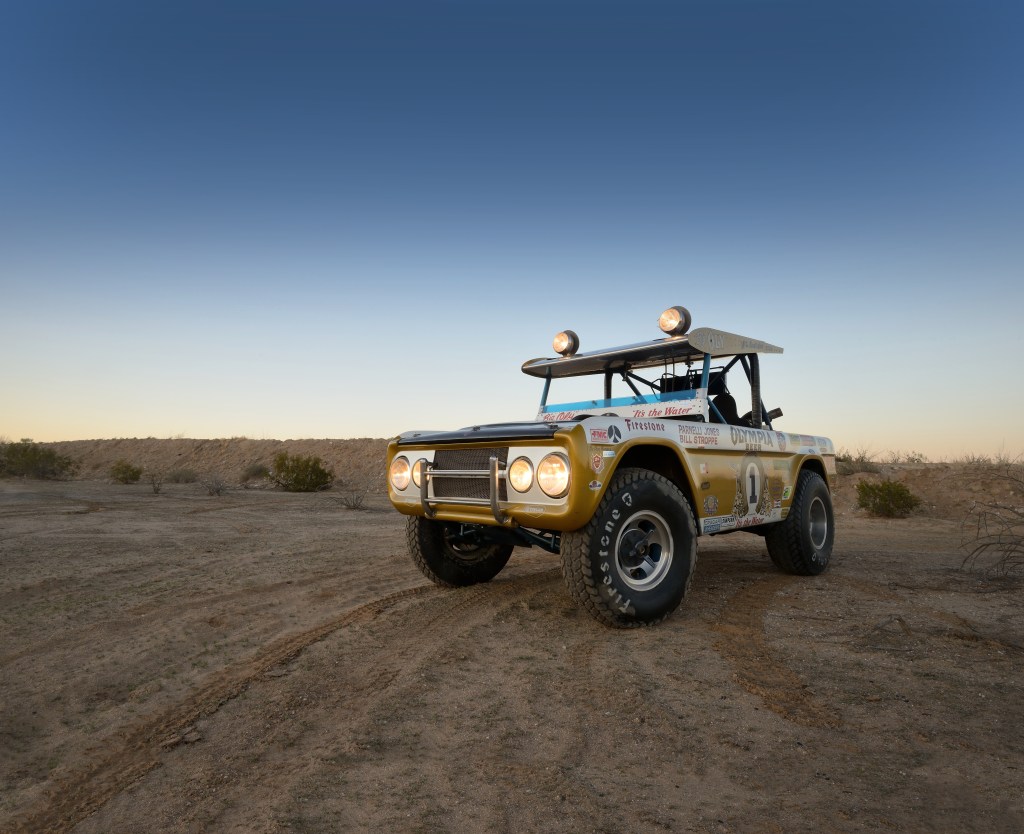
If you screened the original car-crash epic Gone in 60 Seconds from 1974, you’ll recall that one of the vehicles that the lead character steals is the 1969 Ford Bronco off-road racer campaigned by American racing immortal Parnelli Jones, right off the floor of his race shop in Torrance, California. In the movie, the Bronco, known everywhere as Big Oly after Jones’ Olympia beer sponsorship, is never recovered. We now know that in real life, ol’ Rufus kept it close by, enough so that it’s survived to go on sale at Mecum’s sprawling sale in Indianapolis, the 34th annual Original Spring Classic auction May 14th through 22nd at the Indiana State Fairgrounds. Full disclosure, I’ve done work in the past with the fine folks at Mecum, who are making Big Oly the centerpiece of a collection of lots from Jones’ personal collection.

By any measure, Big Oly is an icon of American motorsport. It’s best to think of it as an example of drag racing’s Funny Car adapted for off-road competition. Big Oly was built in the Long Beach, California shops of speed pioneer Bill Stroppe, who had been fielding Ford products in major races since he ran the factory Lincoln team that ran in the original La Carrera Panamericana in the 1950s. Jones had campaigned Stroppe-built stock cars in NASCAR and USAC events for years. Big Oly made off-road racing history when Jones used it to score back-to-back Baja 1000 wins in 1971 and 1972, in addition to triumphs in other prestigious desert duels including the Baja 500 and Mint 400. Saleen has released a Big Oly tribute model based on Ford’s revived 2021 Bronco. The other prominent Jones lots that Mecum will sell include the 1974 Parnelli VPJ-4 that Mario Andretti briefly raced in Formula 1, and a precise re-creation of his 1963 Indianapolis 500-winning Watson roadster, Ol’ Calhoun. Mecum at Indy generally draws upwards of 2,000 auction cars of every conceivable stripe, plus automotive-themed artwork. If you’ve never been to a really big sale of collector vehicles before, this is a great place to start, most assuredly.

A more exclusive Lexus rocket

If you’re a traditionalist, and agree that a real sports sedan ought to be laid out longitudinally, with the rear wheels (or optionally, all four) driven, and an overabundance of power feeding the drivetrain. That’s what Lexus accomplished with the recent rollout of its IS 500 F SPORT, a car that discards the normal IS V-6 and substitutes a roaring 5.0-liter V-8 that thumps out 472 horsepower (at 7,100 RPM!) and breathes noisily through vertically stacked quad exhaust outlets. Real hubba-hubba stuff, this. Nevertheless, Lexus used the occasion of the past weekend’s 12 Hours of Sebring to introduce an even more dear variant of this hot four-door.

The Lexus IS 500 F SPORT Launch Edition, to use its full name, is being offered in a run of just 500 units for sale in North America only. The color choices are expanded by one with the Launch Edition-specific shade of Incognito – you gotta love it – and the interior will feature two-tone Ultrasuede treatment on the seats, interior door panels and even on the center console. The standard heated and leather-wrapped steering wheel also receives a specific wood inlay in silver ash. The passenger cabin will also be adorned with a serialized Launch Edition badge. The F SPORT dash display will even have Launch Edition-themed animation on initial startup. Lighter (by about four pounds per corner) 19-inch BBS wheels complete the package, which also encompasses the current Lexus bowtie grille theme, anything but incognito to us.

Essays on being Southern from a car enthusiast who’s lived it

I’ve been convinced for a long time that people from the South get to savor life, on a number of levels, much more richly than the hordes from other places who spend their existence rushing everywhere for absolutely everything. Even the New South moves a little slower than most everyplace else. People there get to savor cuisine, architecture, social history and in particular, the written word. Those of us in journalism note that Southern newspapers have long stood out repeatedly for their courage and sense of mission. Mississippi has long since moved from its antebellum past. It’s given us some of the finest fresh oysters to ever grace a china plate, the magnificence of magnolia canopies shading quiet streets, a horizon dotted white with cotton, and an abundance of literature from native authors that have included William Faulkner and Richard Wright. To that estimable list we can now add the work of William Jeanes, a native Mississippian who’s enjoyed acclaim in the world of automotive journalism, but whose other experience with language is considerably broader than that. Jeanes has trod a path known to other Southern writers, from newspaper scribe to long-form magazine crafter, to a purveyor of gentle, charming commentary.

If you recognize the author’s name, grab a gold star. From Mississippi, Jeanes joined the staff of Car and Driver in 1972 before taking on the Chevrolet account at the Campbell-Ewald ad agency and then returning to the magazine as its editor-in-chief. After that, he was group publisher at Hachette Magazines overseeing both C/D and Road & Track. Returned to his home state, he has published a collection of columns from his current vehicle, the Northside Sun in Jackson, and elsewhere. They populate this 268-page paperback in impressive numbers. The Road to Pickletown will tell you, very enjoyably, about what growing up in this uniquely Southern environment is like. There’s the lore of Ole Miss, the great trail of the blues that stabs through the state, venom-free observations on politics and the joys, such as they are, that Cream of Wheat provides. And yes, cars get their due: A predawn blast through Paris aboard a Bentley Turbo R for C/D; and a first-person East African Safari Rally report done on assignment for Playboy. There’s also the most famous Mississippi native ever, Elvis Presley. We should note here that Pickletown is named for a person, not a cucumber immersed in brine. This little book will make you smile repeatedly. You can pre-order it from Amazon, Barnes & Noble or alternately, by aiming your browser right here.