Bronco bashes Baja boonies

When you’re building a revival of an off-roading icon, and trying to introduce it to the masses, something like what Ford’s just done is more effective than the hidebound media ride-and-drive. Ford had some different ideas for its 2021 Bronco, so it hauled one of its new Bronco Badlands four-door SUVs, completely stock, to Ensenada, Mexico, where it hot-tripped its way south in the bruising NORRA Mexican 1000 rally down the spine of the Baja Peninsula, the famed off-road race whose participants last week included our pal Don Prudhomme, the drag immortal, still seeking out new motorsport conquest at age 80. When the grind was over, Ford engineers Jamie Groves and Seth Goslawski had wheeled their Bronco Badlands, unmodified except for safety equipment and decals, to third place in the Pre-Runner Truck category.

The rig completed the 1,141-mile route using the Bronco Badlands’ stock 2.7-liter EcoBoost turbocharged V-6 mated to a 10-speed automatic transmission with Ford’s SelectShift capability. Factory equipment also included an automatic on-demand transfer case, plus the Bronco’s High-Performance Off-Road Stability Suspension System, built around long-travel Bilstein coilover struts, which enabled the Bronco to sail across undulations at 100 MPH and change on some stages, a scintillating prospect. The chassis underpinnings, again all factory stock, included 33-inch BFGoodrich all-terrain tires, along with a Dana 44 AdvanTEK M220 rear axle and M210 independent front suspension, fitted with Spicer Performa-Trak electronic lockers. For Baja duty, the Bronco Badlands was retrofitted only with competition seats with safety harnesses, fire-supression gear and a full roll cage. The 2021 Bronco will be offered in seven trim themes, and you can go here to sign up for updates on the rollout.
The man who flogged the bull

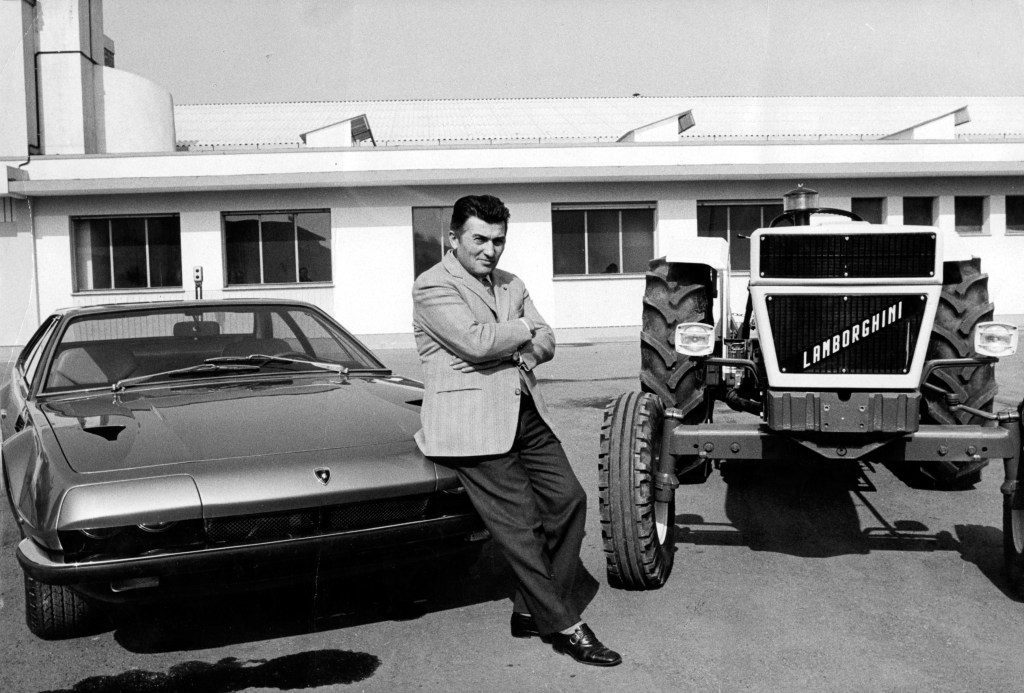
If you missed it, you weren’t alone, but this week, Automobili Lamborghini took a moment to recognize what would have been the 105th birthday of its founder Ferruccio Lamborghini, a guy who started out making some very undramatic products, considering the outrageous sports and GT cars that would later bear his name. The eldest son of farmers in the Italian province of Ferrara, Ferruccio was more fascinated by the implements that tilled and harvested crops than with actually cultivating them. During World War II, he became a mechanic maintaining wheeled military vehicles, including tractors used for towing aircraft, on the island of Rhodes. The experience inspired him to open a machine shop in Cento after the war, selling low-price tractors, one of which was repurposed from a discarded British-built Morris truck. He mortgaged the family farm to establish his company, which in 1963, switched from building tractors to crafting incredibly fast and luxurious performance cars.

More than any manufacturer of mega-exotics in Italy, including Ferrari, Ferruccio understood that a truly exclusive automobile had to possess expansive interior appointments from the finest materials, not just a purebred powertrain. He nonetheless unleashed the immortal Miura in 1966 and followed it up with the Countach – the name is an expletive in Italian – that enjoyed a remarkable 17-year production run, while at the same time ending up in poster form on more adolescent youngsters’ walls, including mine, than Farrah Fawcett. By the time the Countach make its shocking appearance, Ferruccio had sold his interest in the company, which went through ownership changes and bankruptcy before Chrysler, as it was then known, bought the brand in 1987. Following a stint under Malaysian ownership, Lamborghini is now a holding of the Volkswagen Group, operated by its Audi division. Ferruccio pursued a passion as a vintner in retirement before he died in 1993.

All-new vehicles, now including Lexus, for Toyota Indiana

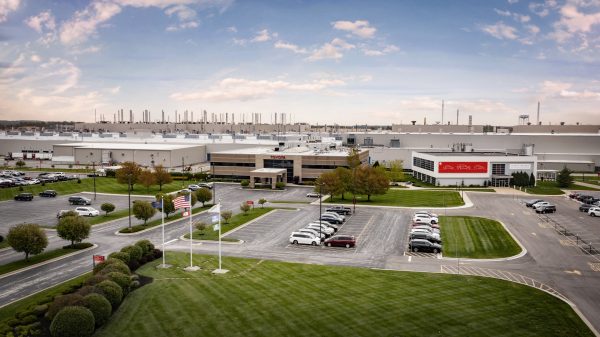
Just maybe, news such as this will quiet people down who became very upset when Toyota began competing in NASCAR however many years ago and have been complaining about it ever since. Some people have difficulty accepting that Toyota is firmly a part of the American automotive landscape. The process that really got underway about 1966, when the Corona sedan became Toyota’s first broadly accepted vehicle in North America, has continued ever since as it expanded its model offerings and market share. Today, Toyota is the operator of nine U.S. assembly plants, which will become 10 next year when the SUV assembly facility it’s jointly building with Mazda opens outside Huntsville, Alabama. While that development still awaits, Toyota has newly earmarked $803 million to upgrade its plant in Princeton, Indiana, in time for the factory’s 25th anniversary.

Honestly, did you even know there is such a thing as Toyota Indiana? Located in southwestern Indiana, near Evansville, Toyota Indiana opened in 1998 to build the Tundra pickup, and today produces the hybrid version of the Sienna, the Highlander and Highlander Hybrid SUVs, and the larger, pickup-based Sequoia SUV. The new investment will help tool the plant to produced two yet-to-be-announced three-row SUVs, one of which will be badged as a Lexus. The existing Princeton workforce of around 7,000 will expand by about 1,400 when the new SUVs, which will at least be hybrids, go into production. So there. Toyota is an American automaker. If you need still more evidence, consider that Toyota build the Corolla, the biggest-selling car in automotive history, in Blue Spring, Mississippi.

A great racing driver really needs your help. Here’s how

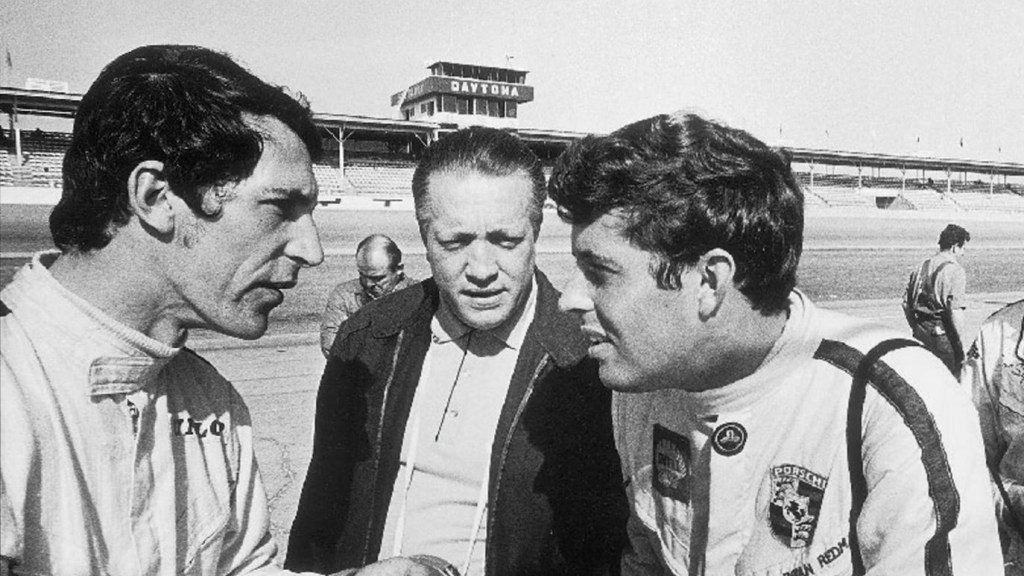
If you’re any kind of student on the history of motorsport, you unquestionably know who Vic Elford is. If you don’t, here’s a quick tutorial. Born in London in 1935, he gravitated from soccer into racing and very early in his career, accomplished a remarkable feat that will likely never be duplicated. Within one week in 1968, Elford not only took the overall win aboard a Porsche 911 in the grueling Monte Carlo Rally, but also won the 24 Hours of Daytona, as it was then called, handing Porsche its first outright win in a major international endurance race with the 907 sports prototype. To a lot of people, that single week established Elford as the best pure racing driver in the world. Quick Vic, to use his justly earned nickname, became one of the greatest drivers in the history of Porsche racing, was a stalwart in the Can-Am series, scored championship points in Formula 1, and even made a start in the Daytona 500. Now living in south Florida, Vic needs serious help meeting expenses related to his medical care.

Vic is the guy on the left. He has recently experience a recurrence of prostate cancer, and then fractured a leg in a fall, a happenstance that will require his home to be equipped for disability access, in addition to the bills he faces for present and future medical care. Full disclosure, Vic was extraordinarily generous with his time and candor when he was helping me with research on racing retrospectives at Hemmings Motor News. Marshall Pruett, the journalist who covers motorsport and its technology for Racer magazine, has established a GoFundMe account to raise money for Vic’s medical and living costs in conjunction with the guy on the right, Brian Redman, a contemporary of Vic’s in the world of international sports car racing. Brian, who now operates the Targa Sixty Six vintage gathering in Florida, and Marshall hope to raise up to $175,000 to help Vic with his life and treatment, and they’re well on their way. You can help.

Ford’s Model T wasn’t just about Dearborn, and here’s the proof

In the universe of mental free association, it’s natural that people tend to view the Ford Motor Company’s early years and the history of Dearborn, Michigan, symbiotically. Makes sense, given that’s where Henry Ford decided to build his clattering Model T by the millions, building the awe-inspiring Rouge Complex out of nothing to do it. And then he built Greenfield Village next door to salute the nation that his cars were doing so much to transform. So it’s easy to sometimes miss the fact that the Model T was the first true global car, both in terms of manufacturing and marketing reach. Ford of Britain was organized in 1909 and within five years, was building 6,000 copies of the Model T annual from its initial factory in Trafford Park, part of the industrial city of Manchester, which immediately made the new Ford into England’s biggest-selling car. Until now, that story didn’t get told very often.

Until now. Porter Press of the United Kingdom publishes some spectacular automotive histories, led by a yawning treatise on the Ferrari 250 GTO, so a work on the Model T is a bit of a break from its common practice. Yet Ford Mddel T: An Enthusiast’s Guide manages to succeed mightily with 180 hardcover pages, first as a condensed technical history of the car with plenty of engineering drawings, a look at its staggering variety of bodies and accessories, but most importantly, a history of the car in the U.K. that’s been largely absent until now. The booked, authored by two luminaries in the orbit of British Ts, tell a story of restoration, resources and even the T’s competition history, which stretched past the American dry lakes and fairgrounds ovals all the way to Indianapolis and Le Mans. This is an admirable effort that’s a solid one-volume telling of the T tale. The price, expressed in pounds, works out to about $41.75.

Pastrana, Subaru rip the field at ARA DirtFish Olympus Rally

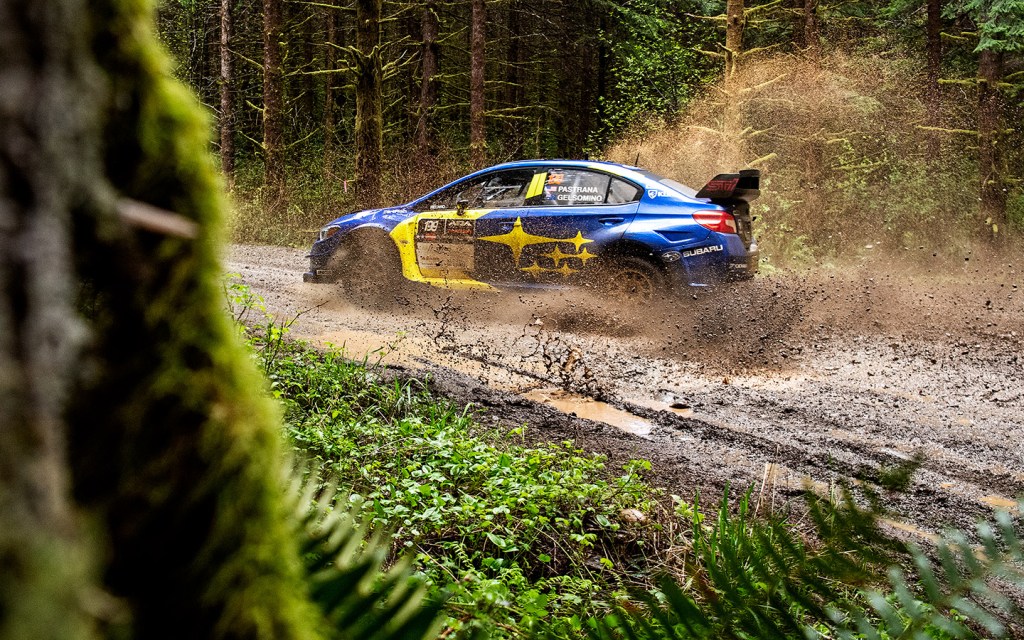
Inexorably, a little bit more every year, people are paying attention to the unbridled wildness of open-road performance rallying, which would still be on the fringes of American motorsport if it wasn’t for the aggressively promoted involvement of Subaru Motorsports USA and its factory rally team, which boasts star power that other genres of racing likely wish they could boast. The X-sports phenom (and, briefly, NASCAR Camping World truck pilot) Travis Pastrana and co-driver Rhianon Gelsomino stormed to an overall win in last weekend’s opening round of the American Rally Association season at the DirtFish Olympus Rally in Washington state. The win came aboard one of the WRX STIs that Vermont SportsCar, which operates the Subaru team, builds from the ground up in a shop whose parts design and machining capabilities can stand alongside any shop from NASCAR or IndyCar.

Rallying through the hinterlands of the Pacific Northwest usually means sodden, muddy roads from incessant rain. Defending Olympus champ Barry McKenna and his Ford Fiesta WRC team were forced to sit out the event due to a family issue, leaving the Open Class for Pastrana to contest with Subaru teammate Brandon Semenuk, who crashed hard during the closing stage and handed second overall to the privateer STI of newly formed Hoonigan Racing and driver Ken Block. The ARA trail now moves on to the Southern Ohio Forest Rally in mid-June.

Terre Haute replaces historic USAC Hoosier Hundred

Recently, we told you about Rolling Thunder, the terrific history of the USAC Silver Crown division, the last throwback to the “Big Cars” that once pounded their way around the fairgrounds tracks of America and once each year, at the Indianapolis 500. The biggest racing news to come out of that city of late is the 500’s return to Memorial Day weekend this year with a 40 percent crowd, a marked betterment over last year’s reality. It’s still regrettable that advancing work to convert the dirt mile at the Indiana State Fairgrounds into a horse track, surfaced with crushed limestone instead of manicured dirt, means that the landmark Hoosier Hundred is no more. The race could trace its roots to Bob Sweikert’s inaugural victory in 1953, after the fairgrounds first hosted a freestanding USAC 100-miler in 1946, won by Rex Mays. The Hoosier Hundred was a fixture of race week in Indianapolis for decades, and until the upright dirt cars were removed from the national championship schedule in 1971, numerous drivers ran both the fairgrounds mile and the Brickyard.

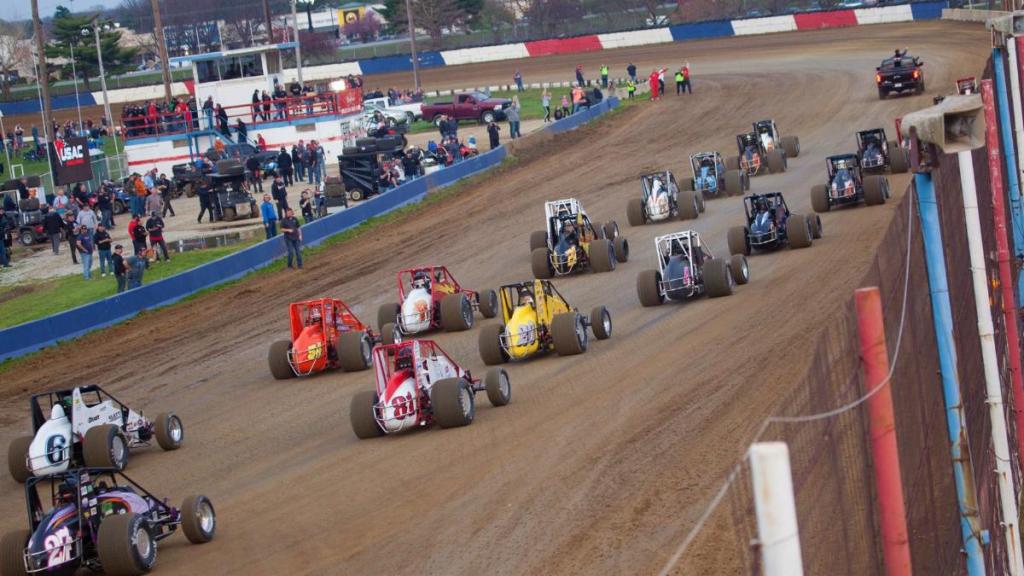
It’s a sad reality. People who lament that the New York State Fairgrounds mile was razed after hosting races as long as Indianapolis understand the feeling. At Syracuse, the Super Dirt Week extravaganza has shifted to Oswego Speedway and in Indiana, the Silver Crown cars are going somewhere somewhat new in May. The Hoosier Hundred date now shifts about 50 miles west to another fairgrounds facility, the Terre Haute Action Track, the only half-mile dirt speedway in Indiana. Silver Crown will return to Terre Haute, as shown in this Dave Olson image, on Thursday, May 27th, creating a bookend with another major United States Auto Club showdown at the Action Track, the 51st annual Tony Hulman Classic for USAC Sprint cars the previous night. The Silver Crown race will be the 19th running of the Sumar Classic, run periodically since Silver Crown made its initial stop at Terre Haute in 1995. There’s some history here that goes beyond the Hoosier state: Sumar was once a speed shop in Terre Haute that prepared the race cars of Terre Haute industrialist and philanthropist Chapman S. Root, who commissioned the first radically streamlined roadster to race in the Indianapolis 500. That car is displayed right around the corner at the Museum of Arts & Sciences in Daytona Beach, which also houses two private railcars once owned by the Root family, both in their own display hall, including a former Hiawatha streamlined observation car.

Compressed model line, new tech highlight 2022 Kia Sportage

It’s never to early to plan an anniversary party, right? That’s relevant here because next year, the Kia Sportage compact crossover will mark 20 years in the global marketplace, following its rollout in 1993. Well, let’s make that almost 20 years, when you factor in the Sportage’s two-year production hiatus while the Mazda Bongo-based first-generation model was hurriedly retooled after it flunked an Australian crash test. If you’re even tangentially familiar with today’s auto industry, you know that Kia has upped its game enormously since those early years, and the Sportage, which shares its platform with the midsize Elantra sedan, is now in its fourth generation, is a consistently strong performer and, we should make clear, has rung up good scores in the safety category. Not much has been changed for 2022, except for the way Kia presents it to buyers. Read on.

Full disclosure, a low-mileage Sportage resides in one of the carports here. What’s new for 2022 is a streamlined model lineup, assuming you can refer to eight such choices as being streamlined. Kia’s 2022 lineup offers the Sportage in four appointment levels, each with your choice of front- or all-wheel drive. It’s kind like shifting gears in a heavy truck that uses both main and auxiliary transmissions. The realignment has led Kia to create a new Nightfall trim level, which replaces the previous S, and Kia has also added a panoramic sunroof as part of the EX package. Pricing will range from $24,090 for a front-drive Sportage LX to $35,250 for an SX Turbo AWD, whose 2.0-liter boosted engine brings output to 240 horsepower.

Kids, cars and a concours: Three reasons to go to Philadelphia

And you can add a fourth reason to that list, Corvettes, but first, the particulars: Cool Cars for Kids, as good an organization as you’re likely to ever find, is organizing a Competition Concours within the Philadelphia Concours d’Elegance. The one-day showing, set for July 17th, is done to support one of the world’s great medical institutions, Children’s Hospital of Philadelphia, in its efforts to aid the families of youngsters facing genetic disorders. The concours will officially be marking its fourth anniversary after last year’s two-day happening became a pandemic casualty. The location is the Simeone Foundation Automotive Museum in South Philadelphia, acclaimed widely as the world’s premier private collection of unrestored racing cars. Its founder, Dr. Fred Simeone, is a native of Philly and a world authority on pediatric neurosurgery who, before his retirement, served on the faculty of Harvard Medical School and authored a medical textbook on the subject that’s still considered standard in its field. So it’s entirely appropriate that Fred’s museum is hosting this showing.

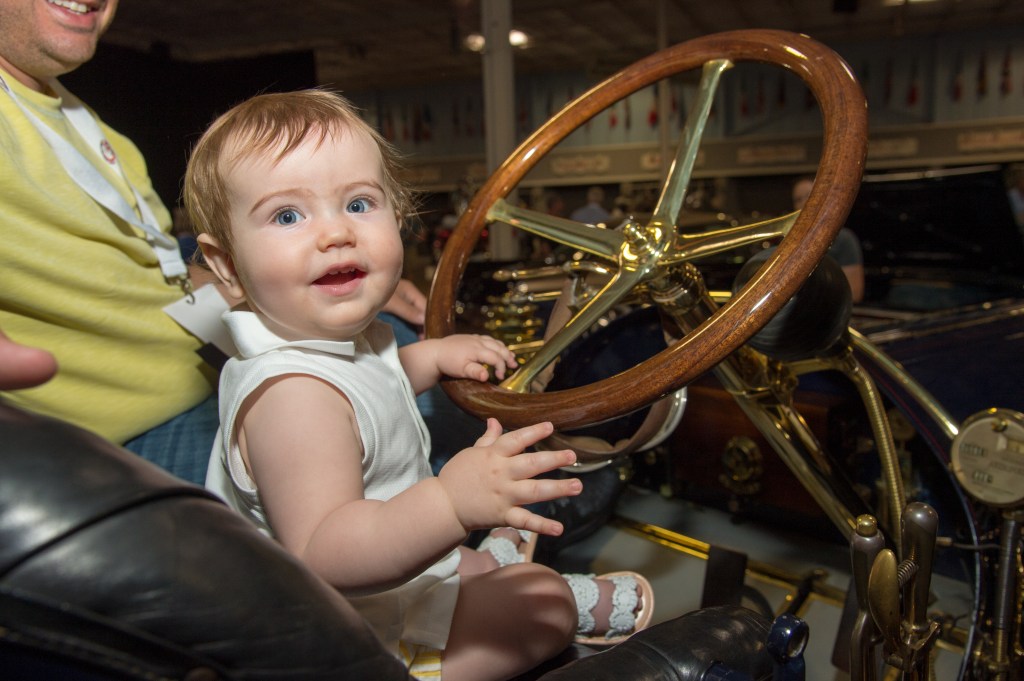
We think this Dara N. King image from the concours’ 2019 edition perfectly captures what this event is really all about. That’s not to suggest we overlook the actual subject matter, because July’s event will include an invitation-only gathering of historic Corvettes, along with a panel discussion of Corvette racers from the past who are scheduled to include Tony DeLorenzo, who raced the Owens-Corning L88 Corvettes in the 1960s and 1970s; and George Wintersteen, a club racer from Philadelphia who turned pro and wheeled the fabled Corvette Grand Sport after being hired by a young Chevy dealer from West Philly named Roger Penske.

LYRIQ is the first electric Cadillac

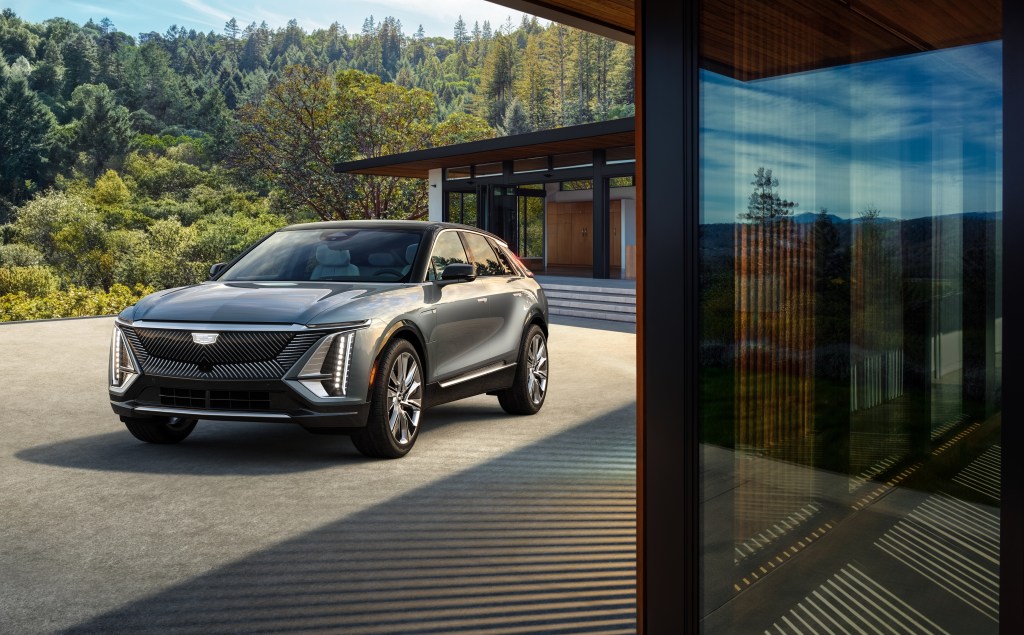
We told you a few days ago about General Motors’ repurposing of its onetime Saturn facility in Spring Hill, Tennessee, as one dedicated GM plant for fully electric vehicles. Here’s the first tangible result of that project. Spring Hill will produce the LYRIQ, the first fully electric vehicle in Cadillac’s history, when it goes on sale in the first half of 2022. Obviously, this is an exceptionally important product step for Cadillac, whose entire foregoing list of vehicles have been profoundly unlike this one. As introduced, the LYRIQ will be a rear-drive vehicle, with a 12-element Ultium battery pack jointly developed by GM and LG, its motor producing the equivalent of 340 horsepower, with a claimed range of 300 miles and fast-charging that will allow 76 miles of range every 10 minutes.

The 2023 LYRIQ will incorporate Super Cruise autonomous-driving technology with a 33-inch touchscreen and a 19-speaker audio system, all rolling behind a model-specific black crystal grille. One innovation, among many, will be driver-controllable regenerative braking, which will allow drivers to fine-tune thre LYRIQ’s deceleration rate by using a paddle on the steering wheel. Cadillac will begin accepting buyer reservations for the LYRIQ, whose base price is set at $59,990, by September.