AMG power forthcoming for new Lotus Emira supercar

Lotus has long been, and still is, defiantly British, despite the fact that it’s not majority owned by Geely of China as part of its portfolio of halo brands, another one of which is Volvo. It’s still a distinguished nameplate devoted to the outer fringes of high performance. As a demonstration, Lotus is launching its newest sporting piece, the Emira, a very serious automobile that thematically borrows from the foregoing Exige and Evora models. The Emira is the purest definition of a modern sporting car, riding on a mid-engine chassis fabricated from bonded aluminum, initially being offered with carryover, if that’s the right term, 3.5-liter turbocharged V-6 power sourced via Toyota and borrowed from the Exige and Evora. That’s how the Emira will be powered when it first arrives here next spring. It’s what’s coming next that’s especially noteworthy.
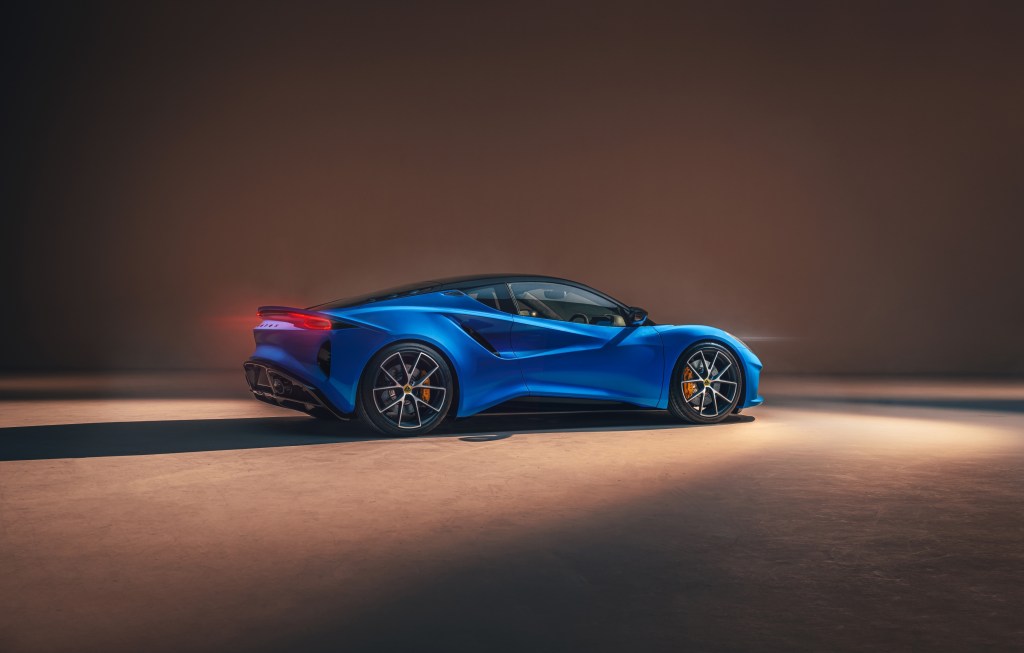
The Emira, which will stand as the entry-level Lotus, will get a special stablemate next summer that will further broaden the brand’s DNA. Packing the first fully new engine employed by Lotus in more than a decade, the Emira will be optioned next year with a turbocharged, inline four-cylinder engine that will be designed and assembled by AMG, the in-house performance division of Mercedes-Benz, marking the first formal collaboration between AMG and Lotus. The AMG-designed engine and transmission will be transversely mounted. This, therefore, will be a unique British-German-Chinese collaboration, with distinct Japanese flavoring, given that Toyota has been a Lotus technical partner since the 1980s. and considerably more appealing than when Lotus, as a General Motors holding, was reduced to peddling badged versions of Isuzu sedans, although Lotus did credibly massage the top end of the Corvette ZR-1’s engine during the same time period as partial atonement.
More power, room advance sporting BMW 2 Series

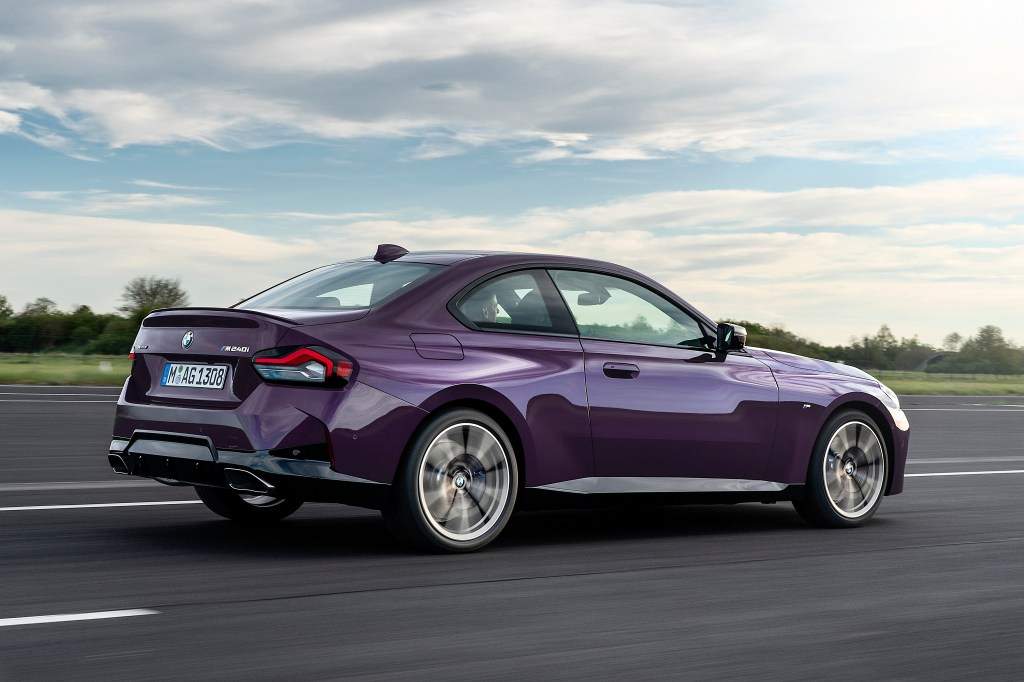
Elsewhere in Bavaria, let’s hearken back to 2014, when BMW spun off the enthusiast-oriented two-door models of its subcompact 1 Series, thus creating, drum roll, the 2 Series. Built on rear-drive platforms, the @ Series coupes offer some stirring driving in packages that are attainable both spatially and financially. Marketed at the spiritual heir to the New Class models that transformed BMW during the 1960s, beginning with the landmark 1600 sedan, the 2 Series now consists of the 230i and the M240i xDrive, both sport coupes, whose newest generation is being newly introduced as a pair of 2022 models, due in showrooms here in November.

Both new 2 Series from BMW are – let’s hear it – longer, lower, wider, and riding on longer wheelbases than their predecessors. More notably, track is widened by a sorta-kinda two inches across the board, front and rear. The front fenders and hood are stamped from aluminum sheet to save weight. Base turbocharged, four-cylinder power starts at 255 horsepower for the 230i and swings up to 382 horsepower for the all-wheel-drive M240i xDrive, which boasts a turbocharged 3.0-liter inline six as standard. An eight-speed Steptronic automatic transmission is standard across the 2 Series. Pricing will start at $36,350 for the 230i and $48,550 for its M Sport sibling.

No shaft drive, but it’s still a Bavarian bike from BMW

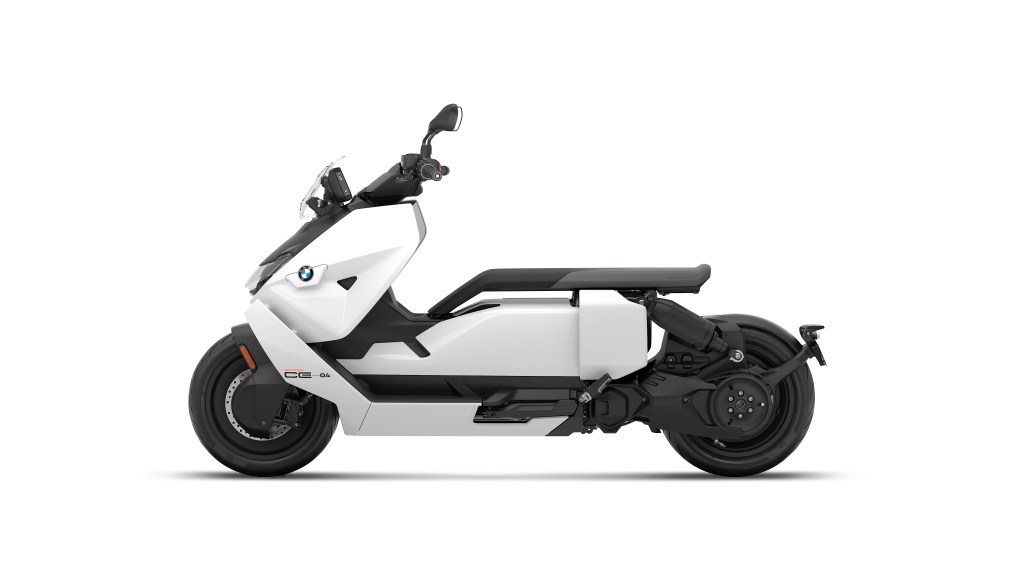
BMW’s record of accomplishment with two wheels is every bit as impressive as what it’s done with cars. The people who pay premiums for flat-twin horsepower, shaft drive, an exceptional chassis and superior build quality are equally dedicated to the roundel as their counterparts who ride Harley-Davidson are to black and orange. Some automakers, most notably Hyundai, have begun experimenting with electric scooters as secondary vehicles; in Hyundai’s case, it has a dedicated carrying spot in its host vehicle with a dedicated plug-in charger. BMW being BMW, it’s going all in on a similar concept, only it’s a high-end scooter designed by BMW Motorrad USA, as the U.S. element of its motorcycling operation is known. Due for launch in the first quarter of 2022, the new BMW CE 04 is laden with technology that does a lot to belie its diminutive (509 pounds out of the carton) size and weight.

Look at this rig. Yeah, it’s got a toothed drive belt instead of a shaft running in an enclosed driveline tube, but who cares? It’s also got a for-real swing-arm rear suspension with an integrated shock absorber, plus an adjustable spring. It has drilled disc brakes with full ABS capability. And its liquid-cooled (!) permanent-magnet electric motor whirs out the equivalent of 42 horsepower, giving the CE 04 a claimed 0-62 time of 9.1 seconds. That’s solidly impressive, plus BMW claims the scooter can go from doornail-dead to fully charged in 1:05 at 30 amps. So, bite size and electric power notwithstanding, this is undeniable a for-real BMW bike. MSRP is set at $11,795.

GM moves to secure sources of lithium metal in the U.S.

You can’t have an electric car without an expansive battery pack. And you can’t produced the battery pack for a market that buys millions of new vehicles every year without a fixed, reliable source of lithium, the element used in making the batteries. In the highest councils of government, where such things are tracked and debated, lithium is considered a strategic material, in large part because it stands as the lightest metal and the lightest solid element in existence. In today’s world of cars, you really need it. So General Motors has announced a partnership with Controlled Thermal Resources to develop a secure, U.S.-based, closed-loop source of lithium needed for the battery packs of vehicles GM will build as it transitions away from internal-combustion power by 2035.

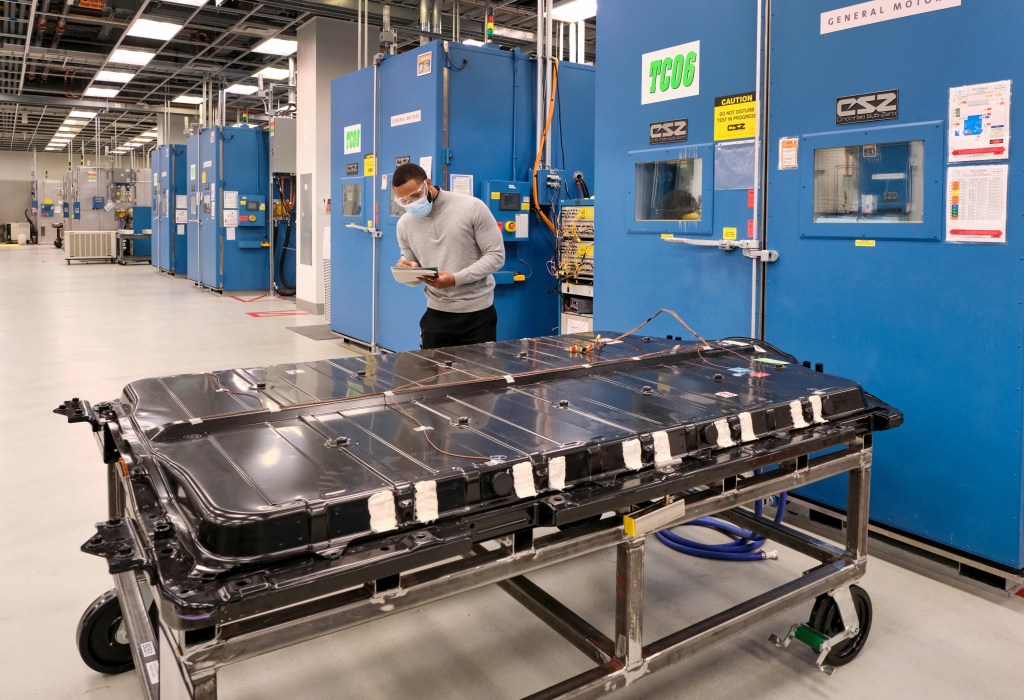
Lithium is a key ingredient in General Motors’ Ultium battery packs, like this one being tested by GM Validation Engineer Andre Brown at the GM Global Battery Systems Lab Monday, June 28, 2021 on the campus of the GM Tech Center in Warren, Michigan. (Photo by Steve Fecht for General Motors)

Lithium is the most critical ingredient in GM’s line of Ultium battery packs, like the one shown here being evaluated at the GM Global Battery Systems Lab at the GM Tech Center in Warren, Michigan. Most lithium is currently sourced outside the United States, and stands as the primary cost driver in EV production. The new deal will see GM acquire much of its battery-grade lithium hydroxide and carbonate from Controlled Thermal Resources self-named Hell’s Kitchen Lithium and Power development in the Salton Sea Geothermal Field, located in Imperial, California. The lithium will be extracted from geothemal brine recovered from the huge and highly saline inland sea east of San Diego. Production from the partnership is slated to begin in 2024.

Lincoln, EV deliveries lead the “charge” from Ford

We were perusing a Ford Motor Company sales report that provided some genuinely tangible evidence that we are indeed emerging from a very bad period in our history that everyone’s eager to leave in the blowing dirt. It’s probably not a surprise that overall Ford sales have boomed by nearly 27 percent in June over the same month last year. Electric vehicles are a significant reason why. For instance, the newly introduced Mustang Mach-E has already rung up 12,975 confirmed sales, and the new hybrid version of the all-conquering F-150 accounts for 17,000-plus sales on its own. Retail orders for Ford and Lincoln vehicles of all kinds are ahead 16 percent over 2020 totals, another very positive sign. One factoid, however, nearly caused us to inadvertently click out of the document in surprise.

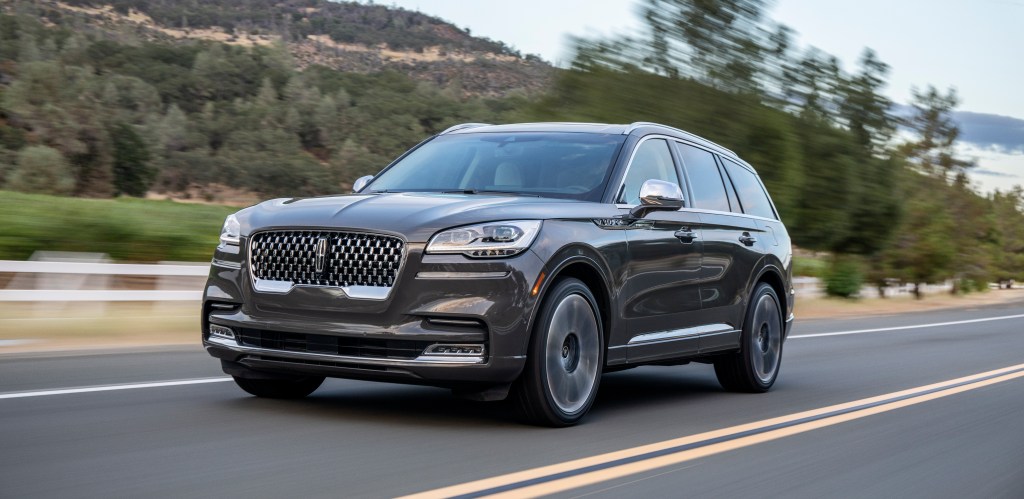
An incremental element of Ford’s current good news, actually, is Lincoln, whose SUV offerings, led by the new Corsair and redone-for-2020 Aviator, posted an all-time sales record for the first six months of 2021, with a remarkable YTD total of 46,018 SUVS. The Corsair led the way with 13,507 sales, pushing overall Lincoln traffic ahead by 23.3 percent over 2020’s first-half numbers. We can learn two things from these facts: The thematic changes to its image by Ford have done well for Lincoln, and high-luxury SUVs are still decisive winners in the marketplace.

For the Fourth, a salute to the flag from – who else? – Jeep

It’s America’s birthday, the Fourth of July. Who else do you think we’re going to recognize here as an all-American kick from the automotive world? Jeep’s historic role in World War II, and all the years since then, put it in a genuinely unique place to strut its status as an American motoring icon, even though the brand hasn’t been under purely American ownership in quite some time. Stellantis, the combine of FCA and Group PSA that now owns Jeep, headed into America’s birthday blowout secure in the knowledge that for the 19th consecutive year, a Brand Keys survey of some 6,000 respondents has again named Jeep as the nation’s most patriotic consumer brand of any sort. That’s the sort of credibility that motoring en masse off the newly seized beaches of Normandy, to use just one apropos vignette, does so much to provide. Despite being born as a modified spinoff of a captive British compact car – look it up – Jeep is an American icon down to the atoms that bond its steel together.

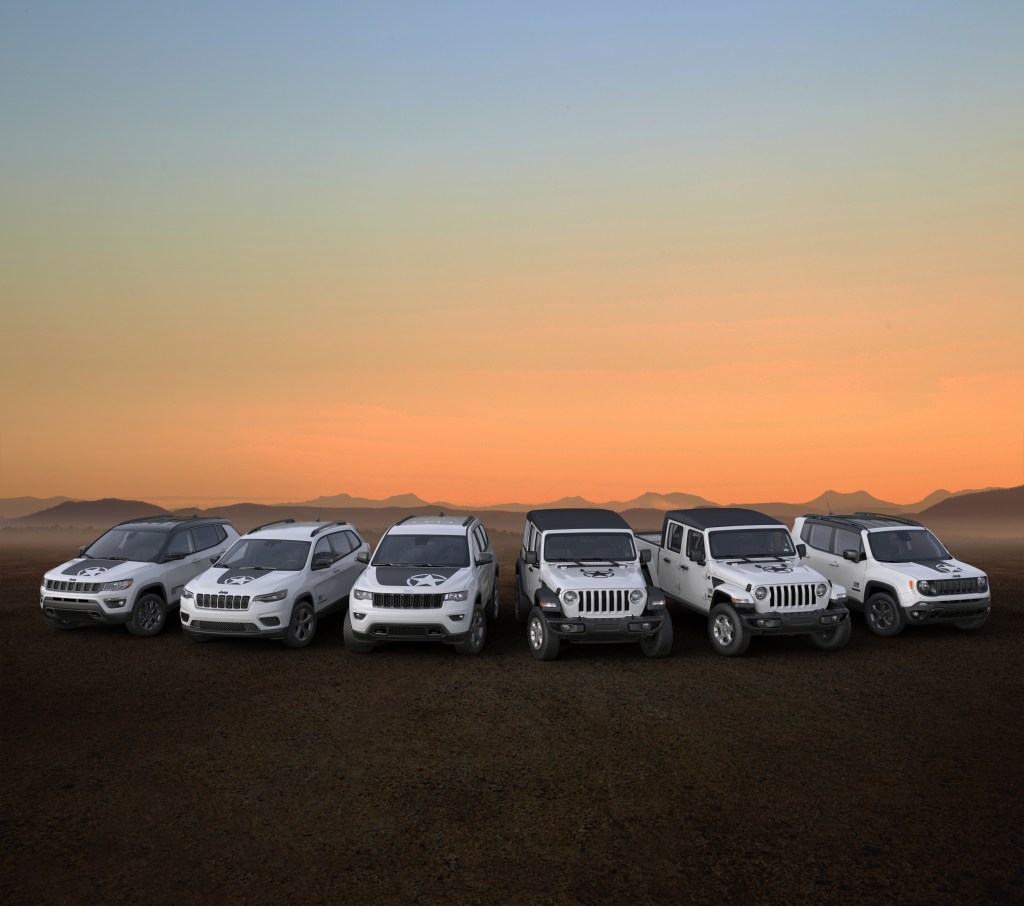
Need more proof? Just look at the vehicles above, which collectively demonstrate the Freedom appearance package that’s offered across the entire 2021 Jeep lineup. In addition to the star graphic, the Freedom package includes matte-finish wheels and an American flag on the flanks. The Wrangler and Gladiator, which have proper tailgates, get the panels’ sheetmetal stamped with “Oscar Mike,” which in militarese, is phonetic shorthand for On Mission. Works for us. Jeep, which turns 80 this year, makes a $250 donation to the USO for every Freedom-package rig it sells, and further offers an active-duty or recently retired members of the armed services a $500 Military Cash Bonus with any new Jeep purchased.

Maserati unveils a trio of trim levels with added Italian brio

You could say, we guess, that’s you’ve arrived if you live someplace that has a Maserati dealership in the neighborhood. That’s certainly true for Maserati, the other luxury brand owned by what used to be Fiat Chrysler Automobiles aside from standalone property Ferrari. Maserati offers three models in North America, all of which are receiving three new trim levels for the 2022 model year, dubbed GT, Modena and Trofeo in ascending order. All three levels will be options for the Ghibli, Quattroporte and Levante models. Right here, let’s take a look at the newest Maserati offering, the Levante SUV.

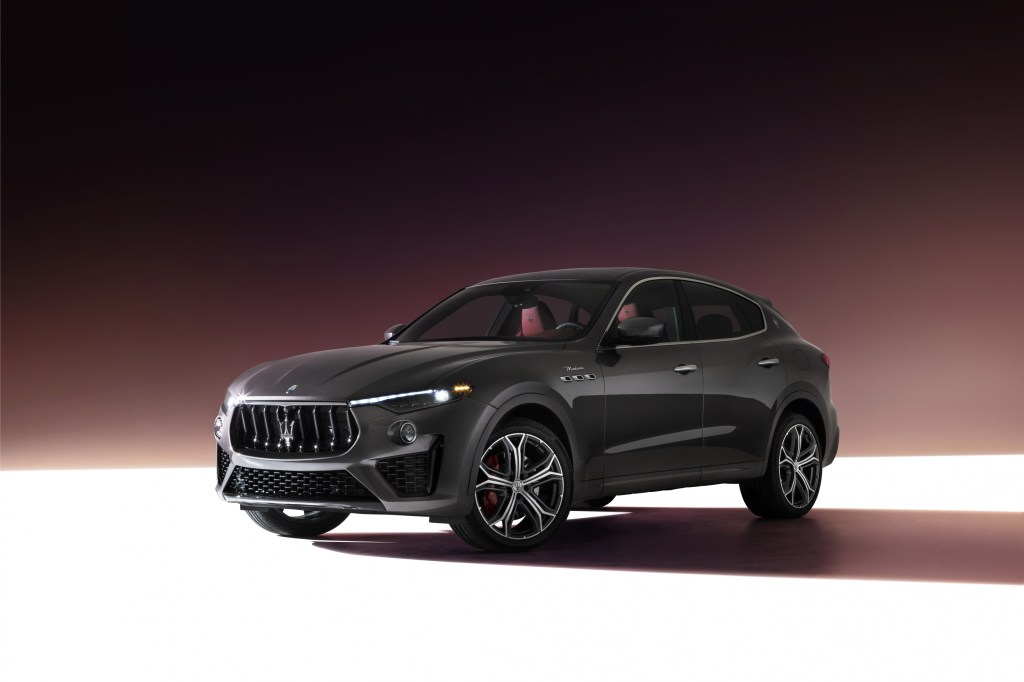
Maserati’s press image shows a Levante – how about those ventiports on the front fender, which could have been lifted off a Buick Special from about 1956? – outfitted with the Modena group, which combines package-specific bumpers with Black Piano inserts along with 20-inch wheels and matching Black Piano accoutrements for the interior. Standard power is via the Ferrari-sourced 3.0-liter V-6 producing 424 horsepower, although a Modena S bumps things up to 550 horsepower via V-8 engine architecture that also comes from Maranello. Produced at the Mirafiore plant that builds Maseratis in Turin, Italy, the Levante was developed from the Maserati Kubang concept of 2016.

Millionth Ford Transit cargo van leaves Kansas City Assembly

Ford ticked off the 1 million mark for the Model A and the Mustang with great celebration; other models achieving production milestones get less public notice. Somewhere out there, even if it’s in a salvage yard, is the millionth Ford Explorer, for example. Ford did conspicuously pay attention this week, when the millionth Ford Transit van produced in North America rolled off the line at the Kansas City Assembly Plant, a silver high-top unit with extended wheelbase destined for a California dealership – and not, we say a little wistfully, for the collections at The Henry Ford in Dearborn.

This is serious stuff. After all, more than 8 million copies of the Transit van have been produced worldwide across four model generations, making it the third-best-selling light van in automotive history. Closer to home, the Transit reached the 1 million mark in North American sales just seven years after stateside production commenced, a pace that makes the Transit the continent’s top-selling van, commanding 57 percent of the North American market. When you factor in what used to be called the Econoline, Ford has led the United States in commercial van sales for 42 straight years. Kansas City will go to town in another sense later this year, when production of Ford’s new all-electric E-Transit gets underway.

Volvo takes over development of software for future vehicles

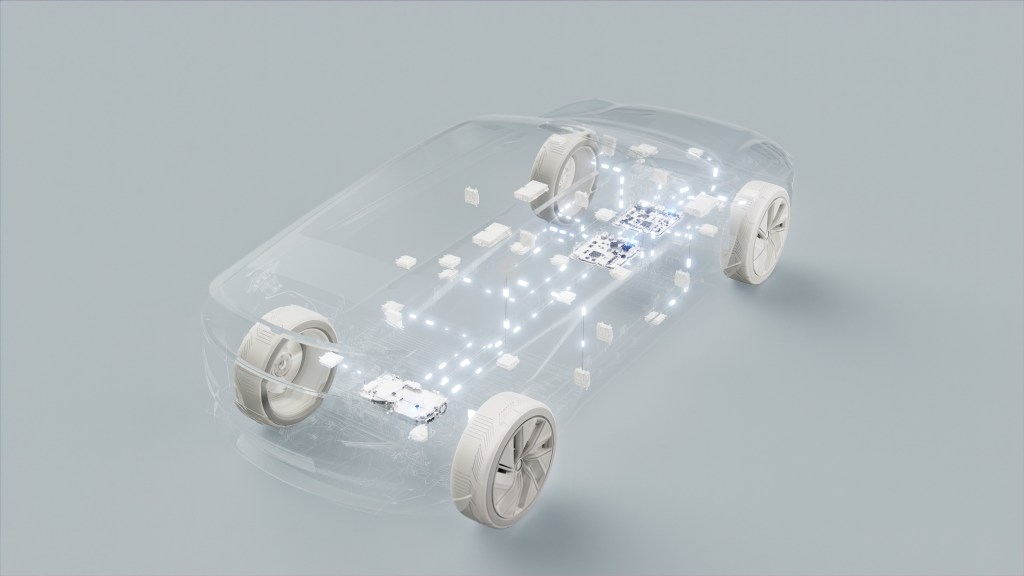
Automakers still do transmissions, chassis and aerodynamics, but we live in a world where electronics and connectivity is another mission-critical element of automotive design. Even if you’re technologically challenged, virtually any new vehicle you buy today will invariable boast what used to be NASA-level computing power as standard equipment. Any number of new things offer Apple or Android connectivity. Volvo Cars has a serious handle on all of this, and announced this week that it’s taking its full array of software development in-house for the next generation of Volvos, which will include an all-electric SUV that’s yet to be formally launched. The system, and process, will be known as VolvoCars OS, for Operating System, and its being undertaken to make the development of vehicle smarts both faster and more flexible.

The primary objective in creating VolvoCars OS is to have a one-stop, umbrella system for developing connectivity among Volvo products, especially the coming series of electrified ones. The new process groups previously existing operating systems, across both the car itself and the cloud, into a single, organic environment. Among the existing systems that will be grouped via VolvoCars OS will be Android Automotive OS, QNX, AUTOSAR and Linux. The system will also significant boost Volvo buyers’ ability to access realtime over-the-air software updates over the life of the vehicle. A variety of application programming interfaces, commonly APIs for short, will give programmers access to vehicle and cloud data – with owner consent, Volvo makes clear. Stripped to its basics, the OS will give Volvo a single software portal for each car, as opposed to the multiple control units now necessary with individual operating systems. That’s called simplicity, digital-style.

Aero grip is fundamental to Cadillac’s CT4-V Blackwing

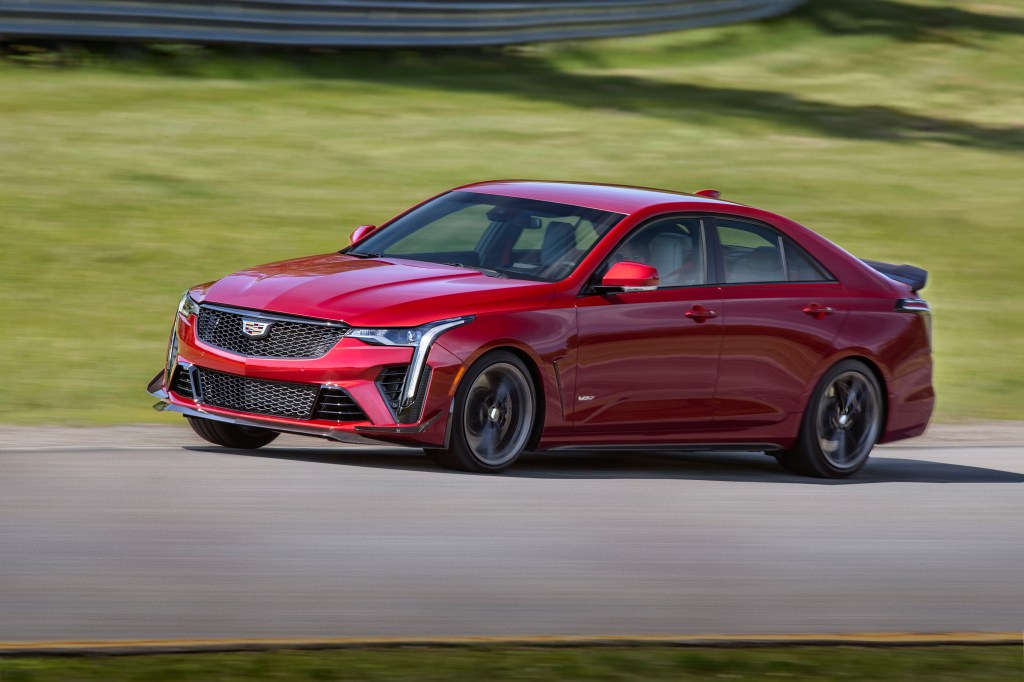
Tune in racing, especially any kind that involves high-speed oval racing, and you’ll hear drivers and crew chiefs chattering about aero push, side drafting and so forth. Aerodynamic efficiency has long stood as a kind of free horsepower craved by the technical types, only achieving it isn’t a cheap exercise anymore. You need extensive evaluation during the development process to determine whether your aerodynamic add-ons are actually going to be effective. To hear Cadillac’s account, that’s what’s occurred with its forthcoming CT4-V Blackwing mega-sedan, due for launch in late summer with a claimed top end of 189 MPH. With that kind of velocity on tap, good grip isn’t just some abstraction that engineers like to discuss. It’s what keeps you from going flying without a pilot’s license.

The Blackwing offers two factory-installed aero packages incorporating extensive use of carbon fiber, which are said to cumulatively provide the CT4-V with the highest level of aerodynamic downforce ever produced by a V-series production Cadillac. It resulted from 500 hours of testing, involving more than 300 simulations, conducted on the five-belt rolling-road wind tunnel at the General Motors Technical Center in Warren, Michigan, and at the Windshear tunnel in North Carolina used by Cadillac Racing for its IMSA program. Among the advances are a front underwing zone, a 3mm Gurney flap on the rear spoiler, a flat underbody and even faired covers to direct air past the rear control arms. That’s a lot of homework. The CT4-V Blackwing powertrain centers on Cadillac’s 3.6-liter twin-turbocharged V-6, rated at 472 horsepower. The first reservation run for these cars was booked almost immediately, but a limited supply remains, and you can click here to get on the reservation list.