All good things must change. At least that’s what some people say

There was a time when you couldn’t become auto racing’s national champion without winning the Hoosier Hundred, or at least placing well enough in it to get yourself noticed. Until 1970, the Hoosier Hundred, held on the mile dirt track at the Indiana State Fairgrounds, was part of the U.S. Auto Club’s national championship trail. To win a season title as America’s best, you had to finish up front at paved ovals including the Indianapolis 500, a variety of road courses for Indy cars, and the handful of treacherous dirt miles, which included Springfield and DuQuoin in addition to the Indy fairgrounds. Most purists agree that the national championship has been diminished in subsequent decades; grown much more specialized as Indy cars on road or street courses have become the bedrock of the schedule. And now, the Hoosier Hundred is going away for good, at least at the fairgrounds.

The hallowed dirt of the Hoosier mile will be covered up with an aggregate of crushed limestone, the better to support the fairgrounds’ new mission of year-round harness racing and parking for the annual Indiana State Fair. It sounds uncomfortably like what happened a couple of years ago at the New York State Fairgrounds in Syracuse, whose historic dirt mile – which had once seen the likes of Barney Oldfield and Jimmy Murphy doing battle, and hosted dirt Modified racing’s biggest event for decades – was ripped up to make the facility more equestrian-friendly. It’s year-round money, which has led the politicos to abandon auto racing at these magnificent tracks. The Hoosier mile has been the home to automotive competition since 1903, longer than the Brickyard has been in existence.

These photos from USAC clearly show what the Hoosier Hundred is all about. It’s multi-groove racing on beautifully manicured dirt featuring traditional front-engine Silver Crown cars. Run since 1953, the Hoosier Hundred has boasted a litany of winners who collectively form the topmost pantheon of postwar American racing greatness. Bob Sweikert won the first one before going on to capture the Indianapolis 500 in the tragic year of 1955, when Bill Vukovich was killed while leading. A.J. Foyt, Mario Andretti, Rodger Ward, Jimmy Bryan and Parnelli Jones have all tasted Hoosier Hundred glory. At the final running on May 23, California driver Kody Swanson will try to make history by winning for the fifth consecutive time, eclipsing the four straight that Al Unser Sr. captured. USAC is offering a Week of Indy Superticket that will encompass the Hoosier Hundred plus national Sprint car racing at the Action Track in Terre Haute an Silver Crown cars on the pavement at Lucas Oil Raceway in Clermont. USAC is looking for a new home to host the Hoosier Hundred; our money’s on Terre Haute. To take part in this historic week, go to http://www.usacracing.com or call 1-217-764-3200.

Hey Martin Scorsese, over here!

Did you ever see the film Casino, starring Robert DeNiro, Joe Pesci and the ageless Don Rickles? It’s a fact-based tale about how Mafia money and muscle came to dominate absolutely everything in Las Vegas until the corporations and investment bankers took over. Here’s a book that explores many of the same themes, albeit with a twist: It involves the history of big-time auto racing in Las Vegas. Stardust International Raceway is a scholarly 404-page tome with the subtitle Motorsports Meets the Mob in Vegas, 1965-1971. It’s even written by a couple of Glitter Gulch denizens with extensive knowledge of their subject matter.

Stardust was a nicely groomed road course that ran when postwar American racing was on a rocket ride, hosting the great Can-Am Series and USAC Indy cars. Pro-level drag racing was a big part of the mix at Stardust, too. This book, one of McFarland Publishing’s brilliant automotive and motorsports histories, takes the reader all the way back to when organizing racing – legal and otherwise – first began around Las Vegas, along the Boulder Highway and at other locales. But the racing shares equal billing with the individuals behind it. The chief executive behind the Stardust racing venture was Moe Dalitz, the Midwest mob financial kingpin. The fabled mob lawyer and fixer, Sidney Korshak, plays a major role in this story. So do Howard Hughes and Jimmy Hoffa. The mob angle isn’t played for laughs; it’s treated as an integral part of Stardust and Las Vegas history. Which it was. This excellent book retails for $49.95; you can get it at Autobooks-Aerobooks in Burbank, California, the nation’s oldest store specializing in car and aviation subjects. Visit http://www.autobooks-aerobooks.com or call 1-818-845-0707.

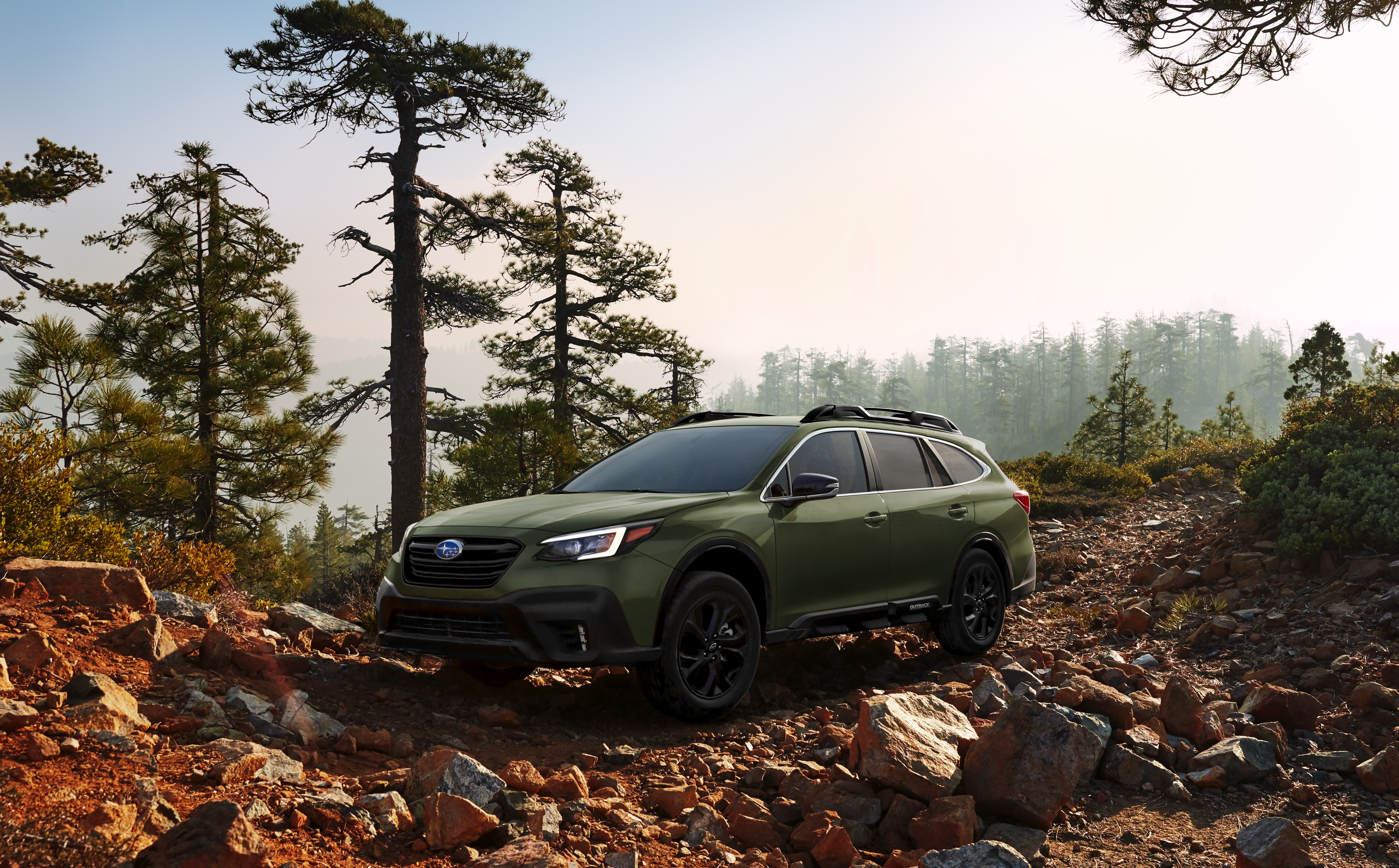
Here’s the sixth-generation Subaru Outback wagon

Subaru of America just made a lot of people in this country very happy indeed. It gave discriminating adventurers the opportunity to take on minimal roads and maximum winters while not sacrificing driveability (as in massive SUV bulk) or the family finances by constantly needing to fill a yawning tank. We’re talking, naturally, about the 2020 Subaru Outback, rolled out amid considerable fanfare at the New York International Auto Show.

Even a quick glance will tell you that the new Outback is evolutionary in nature, slotted beneath the all-new, three-row SUV, the Ascent. But there’s a ton in the Outback that’s new and noteworthy. First off, there’s a new Outback XT range that returns turbocharged power to the Outback lineup for the first time since 2009, to the tune of 260hp and 277-lbs.ft. of maximum torque. The standard engine remains Subaru’s famous horizontally-opposed four, displacing 2.5 liters, with direct fuel injection and 182 normally aspirated horsepower. Both engines are linked to a Lineartronic continuously variable automatic transmission. Inside, the new Outback gets Subaru’s well-regarded EyeSight collision-avoidance system with adaptive cruise control and lane centering as standard equipment across the board. Up on the dash is a new 1.6-inch touchscreen that controls the Subaru Starlink communications system and a variety of other functions. It’s all built on the Subaru Global Platform, debuted in 2017, which allows for significantly more structural stiffness than the previous Outback. Full disclosure: Your editor has a 2017 Legacy Limited and loves it. Look for the new Outback in showrooms this fall.

Changing times in South Bend

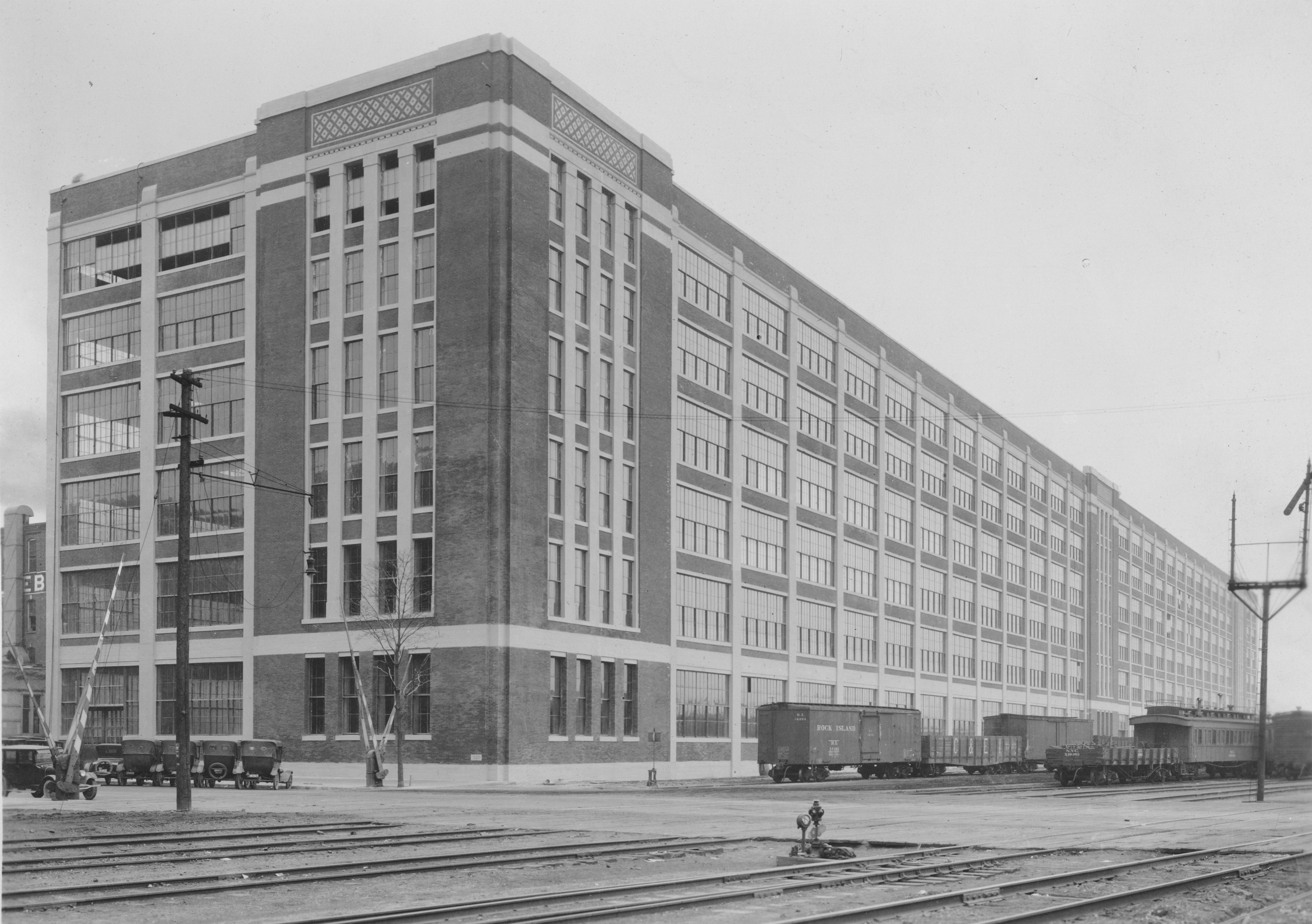
Okay, first off, this is not an entry about politics. I’m only pointing out that Pete Buttigieg, the mayor of South Bend, Indiana, picked a historic spot in his home city when he recently announced his presidential candidacy. When it came to identifying the location and its significance, most of the media gaggle following Buttigieg’s movements got it wrong. It’s not an auto assembly plant.

This is officially known as Building 84, and it was part of the huge Studebaker manufacturing complex in South Bend that dated back to the mid-1800s. Buttigieg used this building as the site of his announcement. Today, it’s one component of what South Bend now calls the Renaissance District, an 80-square-block area located just south of downtown, with Building 84 as one of its centerpiece properties. It’s envisioned as a technology and innovation hub, with a broad variety of anticipated uses. The name is appropriate because South Bend, which was ravaged when Studebaker shifted most of its production to Canada after 1963, has been experiencing something of an upswing lately. Building 84 was designed by the great Albert Kahn, who was also responsible for so much of Henry Ford’s big-footprint factory architecture. The plant’s purpose was body assembly; completed bodies were then sent for final assembly in a different building farther south. This view shows Building 84 around 1920, as seen by the line of cars on the left and the clerestory-roof baggage car on the rail siding to the right. When you think about the shameful vandalism and arson experienced by the old Packard plant in Detroit, any good news regarding the reuse of an old auto factory is welcome here. The image was furnished by Andrew Beckman, archivist at the Studebaker National Museum in South Bend, which is a must-visit locale for any auto enthusiast. Its holdings are vast and priceless. Go to http://www.studebakermuseum.org to learn more about it. If you’re interested in Renaissance District doings, head to http://www.renaissancedistrict.com.

Four rings, fifty years

My good friend Mark McCourt, senior editor at Hemmings Motor News, was ruminating one fine day and realized that 2019 marks 50 years of presence in the U.S. marketplace as a standalone brand. You’ll remember that Audi, a prewar conglomeration created by the combining of makes such as Horch and Wanderer, among others, was originally marketed alongside Porsche via corporate ownership. The first Audi was the 100 saloon from 1969, generally regarded today as something less than a reliably or fetchingly stylish automobile.

Things got better in a hurry for Audi. The single greatest event that cemented its place in history came in 1982, when the ur quattro became the world’s first production car with permanently engaged all-wheel drive – yes, predating Subaru. It was one year after Michele Mouton, aboard an Audi coupe, became the first woman to win a round of the World Rally Championship. That made Audi in global rallying’s deadliest weapons, its short-wheelbase quattros in the hands of forest legends from John Buffum to Walter Rohrl, at events from Monte Carlo to Pikes Peak. Audi went on to master unitized body construction using all aluminum. In circuit racing, Hans-Joachim Stuck took an IMSA GTO title in a Sport Quattro, and who could forget Tom Kristensen’s incredible run of nine wins at Le Mans aboard Audi prototypes? Mark actually beat Audi to the punch by bringing up its golden anniversary in the United States, and Audi responded by creating the timeline you see here. So, sincere congrats to both Mark and Audi.

Remember the Volkswagen Rabbit pickup?

Back in the late 1978s, when stagflation was dogging us like an anvil hanging from your neck, Volkswagen was building the Rabbit (or the Golf, to the rest of the world) at a plant in New Stanton, Pennsylvania, and came out with an interesting concept: A pickup truck. Not the bed and cab on a ladder frame that everyone was used to, but instead a Rabbit-based truck with a unitized body, including the bed, and front drive. That made for some interesting vehicle dynamics, especially when moving quickly with a loaded bed, which could be in a world of hurt if the cargo abruptly shifted. Now there’s a truck again at Volkswagen, a concept vehicle, although it’s going into production in Brazil very shortly.

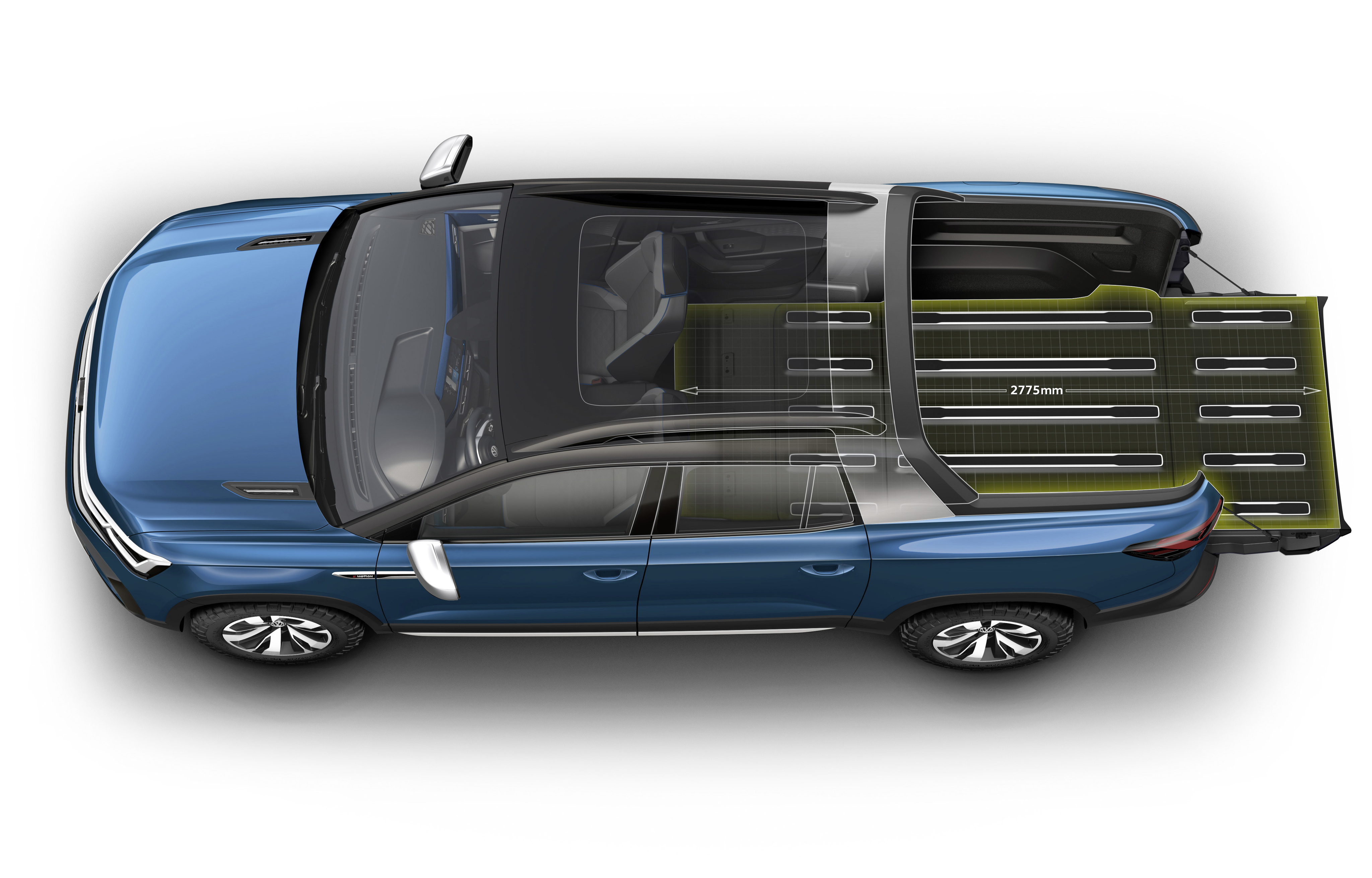
It’s called the Tarok, and it will be shown at this month’s New York International Auto Show after first making the scene at a salon in Sao Paulo. The Tarok is proof positive that Volkswagen has learned a lot about building little trucks in the past 40-something years. First of all, its a crew cab, and one with a big difference: The rear of the cabin can fold down to allow a cargo bed pass-through that gives the Tarok an additional 25 inches of cargo space, even with the tailgate raised. It rides on Volkswagen’s global MQB platform and utilizes a 1.4-liter gasoline engine with full-time 4Motion all-wheel drive as standard equipment for a less woolly loaded driving experience. There are no announced plans to build or sell the Tarok in the United States but with a resurgence in interest for compact trucks here – a theme we’ll revisit on this site – don’t bet against it happening. Images courtesy Volkswagen of America.

Welcome to the world of going places and having a blast.

I’m Jim Donnelly, and thanks for stopping by my new website, Jim Donnelly On Wheels. Some of you already know who I am. I was previously the senior editor of Hemmings Motor News in Bennington, Vermont, and before that, I held a bunch of positions at a daily newspaper in the Philadelphia area, including automotive and motorsport writer. I hold more than 50 journalism awards and have been in this life for more than 40 years. My home base now is Daytona Beach, Florida, down the road from the House that Bill France Built. My current list of writing clients, besides Hemmings, includes Speed Sport, PRI Magazine and Crankshaft, where I serve as senior editor. I’ve written books about my friend Don Miller, the former president of Penske Racing and a mega car guy; and one on the history of automotive advertising. What I hope to accomplish here is to share some of the stuff that I consider so worthy, inspiring and, really, life-changing. The automobile unhitched us all from the pieces of dirt we once called home. Going fast brought us thrills. Watching others compete in cars made us marvel at people with such limitless skills, determination and fortitude. Cars upended our whole existence totally and irreversibly, the same way that computers are doing today, so it’s entirely appropriate to marry the two of them here. What you’re going to find here is fresh info on what’s going on in the world of cars, what’s innovative, history that’s worth remembering, roads worth driving, races worth attending, books worth reading, cars worth buying, and maybe even some places to dine that are worth a stop when you’re out on the highways. No politics. I’ll leave that sordid topic to those who claim to know it. Let’s get rolling, because this is going to be a hell of a ride we’re going on together.