A titular title of automotive history will be returning

If you got caught out the last time that the esteemed automotive journalist Karl Ludvigsen updated his landmark work of history, Porsche: Excellence Was Expected, try not too feel too bad. That’s because thanks to Bentley Publishers of Cambridge, Massachusetts, this seminal work on one of the world’s greatest automobiles is close to being re-released in fully updated fashion. The tentative publication date for the four-volume set is September 3, and Karl, who is now officially retired, has nonetheless done yeoman work in bringing his most famous title up to the current moment.
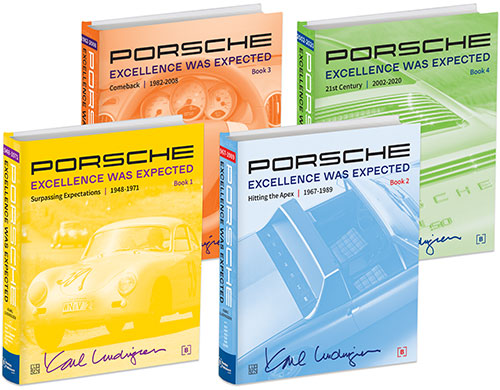
What’s new? First of all, Ludvigsen’s magnum opus on Porsche will now span four volumes, intimately covering every single Porsche model, production and racing, from the fist Gmund coupes to present day, including the 2020 Taycan. This incredibly detailed account runs to a combined total of more than 2,800 pages, more than 1,000 of them new and added for this edition. The text is augmented by nearly 3,000 photos and illustrations from Ludvigsen’s vast archives. The story of the original 911 and all its descendants covers 12 full chapters. Another 23 new Focus chapters are dedicated to unique individuals and vehicles that helped make up the Porsche saga. There is also a full accounting of Porsche’s long and spectacular racing history. I’ll say this right now: This is the finest, most authoritative marque history that I’ve ever read on any make of car, and from any author. I challenge anyone to dispute that. Retail on the four-volume set is $524.95. I know that’s not cheap. Think of it as an investment in your field of automotive knowledge. It will be money well spent.

Christensen, Estre lead charge of Porsche 911 RSRs at the Sarthe

Speaking of Le Mans, there used to be a time when you couldn’t mention the twice-around-the-clock grind at Le Mans without mentioning Porsche in the same breath. How come? Because Porsche dominated the lead classes at the race, literally for decades, with the immortal 917 joining the 962 and 935 in routinely decimating the competition. Porsche is still there, to be sure, competing with its weapon in the GTE-Pro category, the 911 RSR. The team of Mark Christensen (Denmark), Kevin Estre (France) and Laurens Vanthoor (Belgium) used a 30th-place overall finish while running in the LM GTE Pro class to score the FIA’s 2019 season international championship in that category.

Obviously, the 911 RSR is faithful to its 911 lineage. With a rear mid-mounted engine, its understructure is welded steel and aluminum with an integral roll cage and roof hatch. Its body panels are molded from carbon fiber-reinforced polymers with quick-detach capability. Weight is about 2,750 pounds. The RSR’s water-cooled flat-six displaces 4.0 liters and produces about 510hp, depending on which track-mandated restrictor is in use. The engine is coupled to a six-speed sequential manual gearbox. Suspension is upper and lower wishbones at all four corners; the 390mm ventilated front brake discs are squeezed by six-piston calipers. Even with a list price above 991,000 Euros, the entire production run of RSRs was sold out almost immediately to a variety of privateers.

Rod Hall, a giant of off-road competition, dies at age 81

If you have a personal connection to the American southwest, and the varieties of desert motorsports that are practiced there, you know the name and reputation of Rod Hall. Before people like Parnelli Jones, Mickey Thompson, James Garner and Robby Gordon were slinging dirt amidst the sagebrush, Rod Hall was there and winning. So much so, in fact, that he won more desert and off-road races than anybody else in the history of the sport, in a career that went back to the 1960s. He died this past weekend.

This photo from NORRA, the National Off-Road Racing Association, shows Hall with the vehicle that carried him to what was arguably his most famous win, an overall victory in the 1969 Baja 1000, the third running of that arduous event. Hall drove a factory-backed 1969 Ford Bronco to the win, a vehicle that was obviously prepped for the Baja Peninsula’s relentless pounding but was still a lot closer to stock than the Big Oly Bronco that Parnelli campaigned a few years later, which was more akin to a drag racing Funny Car that happened to run in the dirt. Hall would never notch another overall win in the Baja 1000, but still competed in an incredible 50 consecutive runnings of the desert classic, scoring 25 class victories along the way. His final Baja run came in 2017 when he was nearly 80. During the 1980s, driving Dodge pickups for Bill Stroppe, Hall and co-driver Jim Fricker took an amazing 37 consecutive SCORE and HDRA desert wins, a record that will likely never be challenged. Not only that, but Hall placed high in the Marlboro Safari Rally in Kenya, at the 12,500-mile Repco Reliability Run in Australia, and became the first All-American team to finish the Paris-Dakar Rally aboard a Hummer with his son, Chad. Today, his Nevada-based company, Rod Hall Parts, specializes in performance components for the Hummer H1.

Portrait of a (lucky) winner at the 24 Hours of Le Mans

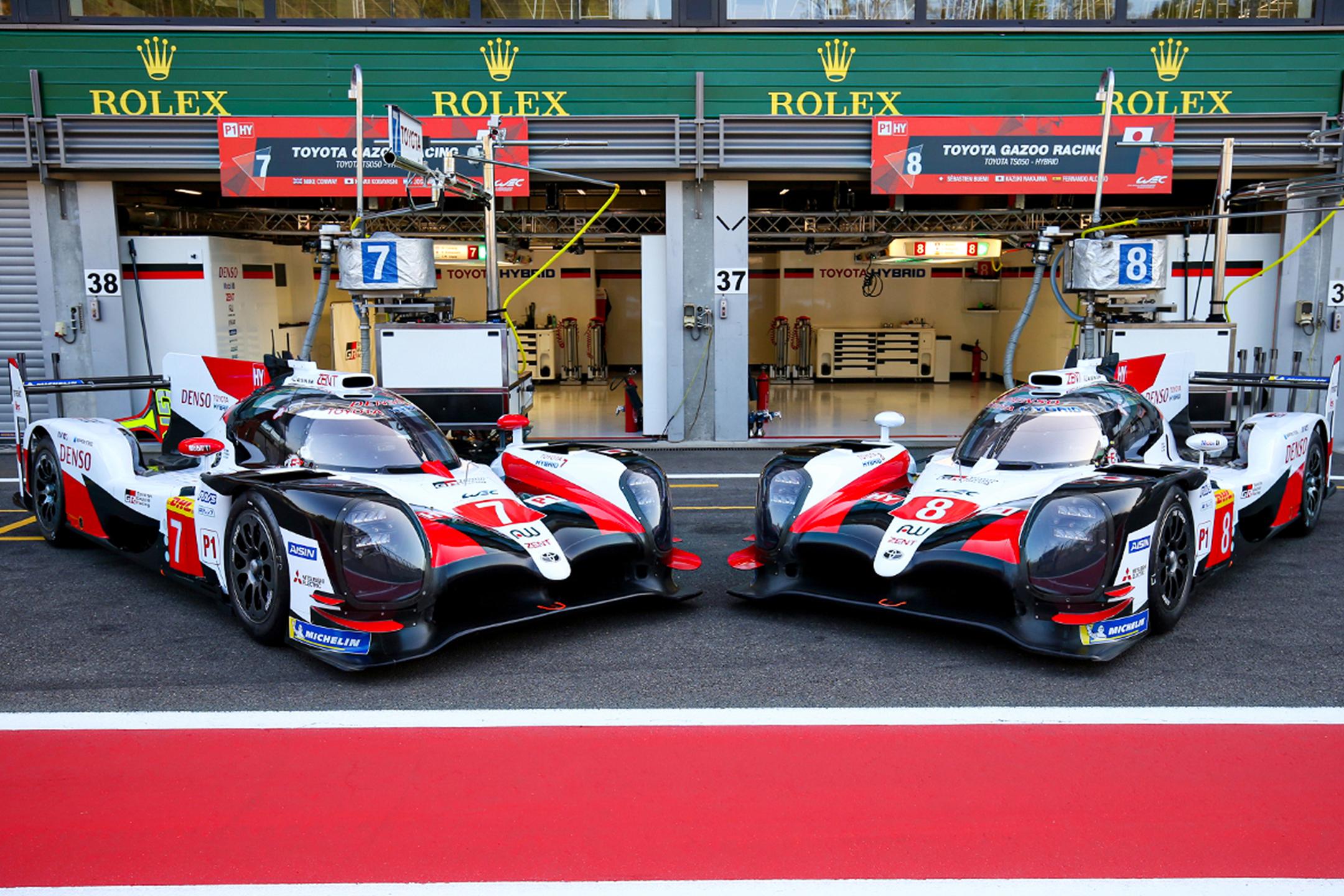
It was a Hollywood-incredible kind of outcome: After 23 hours of endlessly lapping the French countryside, works Toyota drivers Kamui Kobayashi, Indy car expat Mike Conway and Jose Maria Lopez were chugging toward victory in the world’s most prestigious sports car race. Part of a two-car effort entered by Toyota Gazoo Racing, the trio had dominated Le Mans up to that point when Lopez was alerted by a tire-pressure sensor that his right front was going flat. There were only about 60 minutes to go. Lopez stopped and got the tire changed. After leaving the pits, Lopez realized that the sensor was faulty and that the right-rear Michelin radial was punctured. By the time he’d completed another agonizing, low-speed lap of the 8.3-mile Sarthe circuit and changed all four tires, Lopez had lost the lead. The other LMP1 Toyota, shared by two-time F1 world champion Fernando Alonso, Sebastien Buemi and Kazuki Nakajima, swept into first for the first time during the race and held on for the win. It was the second straight Le Mans victory for Alonso, coming a month after he failed to qualify for the Indianapolis 500, and it sealed the World Endurance Championship crown for this Toyota team.

Despite a weight break and freer fuel-flow limitations for non-hybrid LMP1 prototypes in 2019, Toyota Gazoo Racing is indisputably the team to beat in its category and has been for some time now. The TS050 Hybrid was upgraded for this season with a lighter battery package and improved battery cooling. The TS050’s hybrid powertrain can generate some 10 times the wattage of a Toyota Prius system. Combining the battery system with the car’s 2.4-liter twin-turbo V-6, Toyota Gazoo estimates the LMP1’s total output to be in the neighborhood of 1,000hp. Nobody could touch them on race day, that’s for sure, as SMP Racing was the best of the rest in LMP1, placing third overall with its Russian-built BR Engineering BR1 that utilized 2.4-liter AER power. If you’re a traditionalist, and put off by the emergence and success of hybrid powertrains at the pinnacle of motorsport, stop and catch your breath for a minute. The FIA announced last week that beginning in 2021, the World Rally Championship will be contested by hybrid cars. I’m probably not the only person here who remembers how the late, great Andy Granatelli stood Indianapolis on its collective ear when he introduced his gas turbine race car, Silent Sam, to the speedway in 1967. Looks like the notion of reduced-decibel racing, or at least its environmental friendliness, is going to be more in vogue than ever.

General Motors invests big bucks in full-size pickup production

The funny thing is that Flint, Michigan, has long been unofficially known as Buick City, thanks to its heritage of that brand’s presence in town since the days when Billy Durant first founded General Motors back in 1908. A lot has happened in the auto industry since then, including the mass consumption of pickup trucks, and GM announced this week that it’s putting a new infusion of $150 million into its Flint Assembly facility so its output of full-size Chevrolet and GMC pickups can increase. GM has invested heavily in upgrading Flint Assembly, to the tune of $1.6 billion since 2013, which has seen the plant’s pickup production grow by 40,000 units annually.

The latest expenditure on operations at Flint Assembly should boost the number of crew cabs and diesel-powered pickups that it builds. At GM, as elsewhere, big, loaded trucks are very big business indeed: Just last month, GM announced an expansion of Chevrolet Silverado and GMC Sierra 1500 trucks at its other major assembly plant for these rigs, located in Fort Wayne, Indiana. Flint Assembly, first opened in 1947, will add 1,000 jobs under these moves, bringing its total employment to about 5,000 workers.

Sprint Car Hall of Fame honors its Class of 2019 inductees

One of our favorite places to visit is the town of Knoxville in south-central Iowa. How come? Because no other municipality venerates the minimal, savage genre of motorsport that is Sprint car racing quite as enthusiastically as Knoxville. The stripped-down, open-wheel Sprint cars shriek around dirt and paved tracks all over the country (plus Canada, Australia and New Zealand), but Knoxville is the home of the sport’s biggest and more historic event, a happening that involves the local populace plus an international fan and competitor base, and it’s the home of the National Sprint Car Hall of Fame and Museum, a shrine to this most primal variety of racing. This month, the hall of fame inducted its 30th class of Sprint car racing’s greats, bringing the number of individuals thus enshrined to 398.

This Dennis Krieger photo, furnished by hall of fame Executive Director Bob Baker, depicts the 2019 class in the front row at Knoxville, with past inductees such as Pennsylvania legend Lynn Paxton and Oklahoma star Shane Carson behind them. In alphabetical order, the 2019 inductees are Tennessee car owner M.A. Brown, who fielded top cars for a plethora of drivers including a very young Sammy Swindell; “Wild” Bill Endicott, an Indiana-born early pioneer of Sprint cars who raced an Inter-State in the first Indianapolis 500; Richard “The Gasman” Griffin, a New Mexico native who excelled in CRA and SCRA competition on the West Coast during the 1980s; Jason Johnson, a Louisiana native who won the 2016 Knoxville Nationals along with five ASCS national championships before dying in a 2018 Sprint crash; Thomas J. Schmeh, a New York native who volunteered to head the hall of fame’s construction effort and retired as its executive director; Stevie Smith, a second-generation Hall of Famer who ranks ninth on the all-time World of Outlaws victory list and raced in 21 Knoxville Nationals A-mains; C.K. Spurlock, a Tennessee car dealer and road manager for entertainer Kenny Rogers who founded the Gambler chassis company; and the Illinois videographer Greg Stephens, whose footage anchored racing reports televised on TNN, ESPN and the Speed Channel. The museum and hall of fame is a treasure of Sprint car history that overlooks the Knoxville Raceway backstretch. It’s a must-see for any automotive or racing enthusiast, and the annual Knoxville Nationals, held each August, is an absolute, flat-out must-see for anyone who’s into motorsports. Find out more, and buy tickets, at Knoxville Raceway’s website.

Norman Dewis, an icon of Jaguar, passes on at the age of 98

There might have been a British car company named Jaguar that merited respect had Norman Dewis never joined the Coventry firm’s ranks. But we can’t help but doubt that it would have become the global icon of sports motoring that it is without the timely help of Dewis, who was Jaguar’s lead works test driver from 1952 to 1985. Dewis, who died last week at 98, put his personal stamp of approval on most every critical road and racing Jaguar of the postwar era. A partial list includes the C-type, the D-type, the much-beloved E-type, the Mk. II, the XJ series of sedans and coupes, and even the stillborn XJ-13 megacar. If it came from The Real Sign of the Cat and it appeared in our lifetimes, Dewis likely was the biggest hand to wring it out and get it approved.

Though trained in the fine arts, Dewis drifted into cars after his father died young, working for Humber and Armstrong-Siddley before serving in the RAF during World War II. Good test drivers are prized for their ability to deliver countless consistent laps on the track, and Dewis was exceptionally gifted in that regard. In working on the C- and D-types, he was critical in Jaguar’s testing and eventual adoption by Jaguar for use in race and road cars, an industry first. To help prove their capability, Dewis competed in the Mille Miglia as a co-driver to Stirling Moss. Like Moss, Dewis was knighted by the crown and spent his sunset years as a legend of Jaguar. I had the singular pleasure of meeting him at the Monterey Historics, where he signed my copy of his autobiography. Thanks to Stuart Schorr at Jaguar Land Rover for the archival photo.

How to make a Scirocco look like a fresh million-dollar automobile

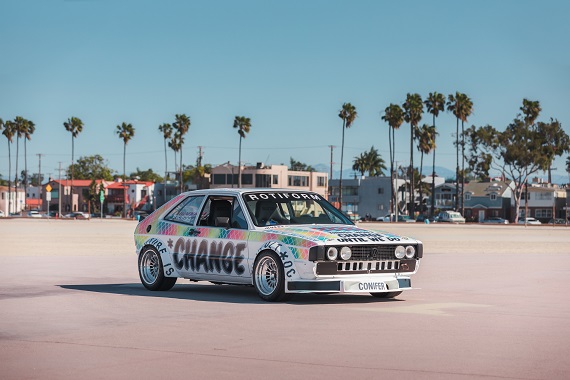
We start out here by noting that the Volkswagen Scirocco, named after a desert breeze, pretty much blew in and out of the annals of automotive history much too quickly. Volkswagen assembled and sold more than half a million of the front-drive sports coupes styled with angles drawn by Giorgetto Giugiaro during the model’s lifespan. But they proved to be far more popular in Europe than in the United States, where enthusiasts of the late 1970s were more enthralled with black-and-gold Pontiac Trans Am coupes than with small-bore stuff like the Scirocco. Built between 1974 and 1981, a Scirocco today is a rare, valuable find in any condition. That’s why it’s so gratifyng to see a lifelong Volkswagen enthusiast like Jason Whipple strap on a Scirocco that used to be a weathered driver, and has now been transformed both mechanically and cosmetically into a potent front-drive drag racer. Sometimes, it feels as if he dumped a million dollars into it. “It’s a fantastic little car and I’m shocked at how many people don’t know what it is,” Whipple says.

Whipple is a co-founder of California-based Rotiform wheels and a significant player in the Golden State’s booming import drag scene. His 1980 Scirocco is appropriately dubbed Change after Whipple dumped, in his mode of description, what appeared to be a million bucks’ worth of modifications and refinishing into it. The Scirocco still packs its original 2.0-liter, two-valve Volkswagen engine, but Whipple fully rebuilt it by hand and he estimates it’s now capable of a consistent 180hp at the front wheels. Whipple teamed with British designer and fellow Volkswagen enthusiast Nicolai Sclater to create the Scirocco’s decidedly Seventies-appearing paint and graphics, in time for Change to make the display floor at last year’s SEMA show in Las Vegas. Change is retro, looks good, hooks hard and runs quickly. What else do you need? In Whipple’s case, it’s another performance Scirocco from the brace of three that he owns. The next one, he posits, will be known as the Two Million Dollar Scirocco and probably see duty hauling his kids around in the epitome of Giugiaro style.

Aston Martin marks a great anniversary at sacred Le Mans

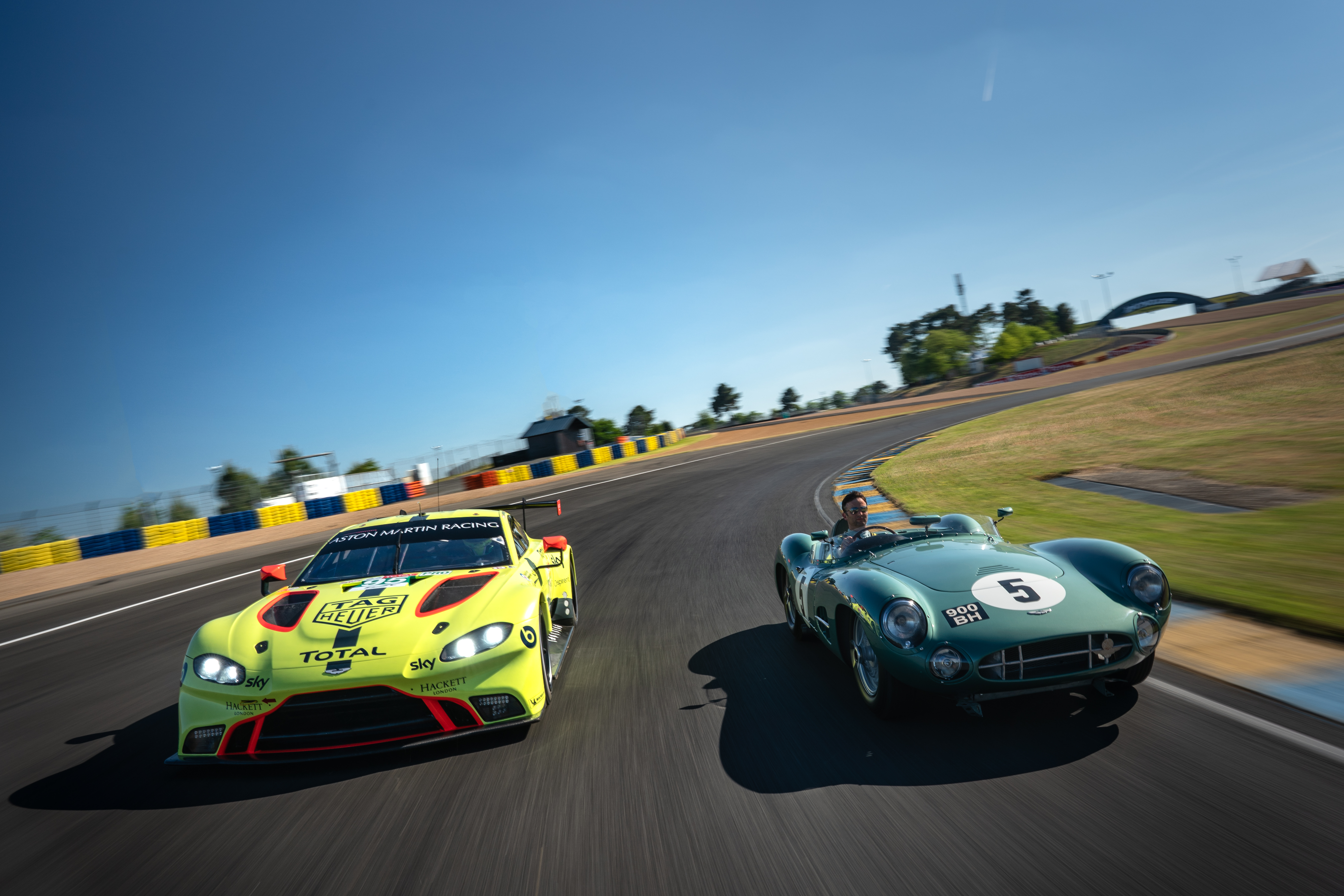
It’s going to be one of motorsports’ greatest weekends. We say that every June, when the clock strikes the appointed hour and the flag goes up at the Sarthe circuit, where the 24 Hours of Le Mans has been contested since 1923. One of the more esteemed manufacturer’s names that will be taking part is the fabled English make Aston Martin, which can trace its roots to 1913 but was run from 1947 to 1990 by David Brown, who had bought the financially ailing firm for a bit more than 20,000 pounds Sterling. It was under his tutelage that Aston Martin, which had a long history of racing, scored its only outright, overall victory at Le Mans. That came in 1959 when a pre-Cobra Carroll Shelby and Briton Roy Salvadori teamed up aboard a works DBR roadster. This will mark the 60th anniversary of that historic win.

Aston Martin has been actively participating in production and GT racing at Le Mans for some time now, having stages some epic battles with factory Chevrolet Corvettes for class wins. Today, Aston Martin competes in the GTE Pro class of the FIA’s World Endurance Championship, using a trio of works V8 Vantage GTEs, which, like the DBR after the Shelby-Salavadori triumph, will be retired from competition following this year’s race. Most recently, the racing Vantages scored victories in China and at Spa-Francorchamps. At Le Mans, the first Vantage GTE will team Nikki Thiim, Marco Sorenson and Darren Turner. In the second car are Paul Dalla Lana, Matthias Lauda and Pedro Lamy. A third car will be shared by Salih Yoluc, Charlie Eastwood and Euan Alers-Hankey. The V8 Vantage GTEs come to the Sarthe with a revised aero package, and were equal enough in testing that all three Astons lapped the eight-mile-plus circuit within 0.7 seconds of one another.

Being Volkswagen means being able to say, “I’m sorry”

Okay, maybe Volkswagen didn’t come right out and use those words. But its newly introduced marketing campaign makes it clear that Volkswagen wants to experience redemption, move forward and rebuild its reputation after the Wolfsburg giant was battered by several successive scandals. In the United States, Volkswagen has been trying to put the 2015 revelation that it used doctored software to misstate the emissions data of its diesel-powered cars behind it once and for all. That contretemps resulted in criminal charges against key Volkswagen officials, lawsuits and heavy fines. Then in Europe, its CEO, Herbert Diess, had to apologize earlier this year after he made postings on LinkedIn reminiscent of the “work sets you free” slogan that used to adorn entrances to Nazi death camps, such as Auschwitz.

In 12-step programs, they talk frequently about the need to make amends for past behavior as essential to recovery. That’s basically what Volkswagen is doing via a new advertising and marketing campaign that debuted as a commercial during the current NBA Finals. The commercial is entitled “Hello Light,” and makes the case that Volkswagen has learned from its earlier blunders and has initiated new ethics and regulatory-compliance protocols at the corporate level. It takes the position that in such cases, companies in crisis will be measured on the basis of how they respond to problems they caused. The campaign will continue with a new phase called Drive Bigger that rolls out later this month during the Women’s World Cup. It’s intended to evoke the whimsical, irreverent advertising that helped firmly establish Volkswagen as an industry force during the 1960s, especially in the United States. Those spots, created by New York-based Johannes Leonardo, will tell viewers that Volkswagen intends to produce some 70 types of electric vehicles including an SUV for the U.S. market, and to achieve global carbon neutrality by 2050.

“This campaign is for all of those we disappointed, all of those who stayed with us, those who worked like crazy to keep us moving forward and for all of those who stopped caring,” said Scott Keogh, president and CEO, Volkswagen Group of America.  “We have a responsibility to do better, to be greater and we intend to shoulder that responsibility.”

Will Volkswagen succeed? As they say, stay tuned.