The South rises: Chattanooga gets an automotive concours

We were originally going to publish an image of the downtown cityscape of Chattanooga, Tennessee, which would have made sense, the big city being nestled between the Appalachian Mountains and the Tennessee River. It withstood shelling by Union troops during the Chickamauga Campaign, survived a devastating flood in 1867, and is today a hub of commerce in southeastern Tennessee and neighboring Georgia. Chattanooga is the hometown of the actor Samuel L. Jackson, the speed shop pioneer “Honest Charley” Card and the NFL immortal Reggie White. But Chattanooga is getting a major automotive event, so we decided to select a different photo.
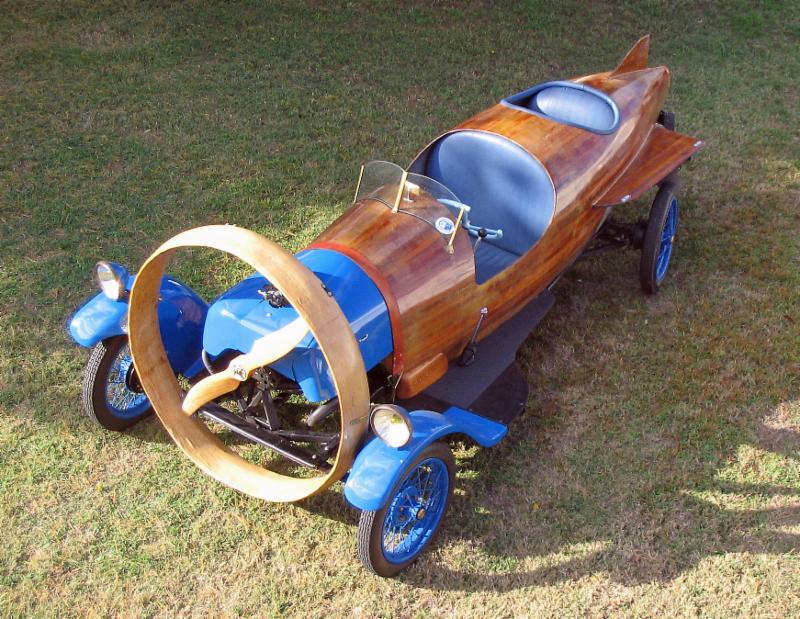
Set for October 11th through 13th, the inaugural Chattanooga MotorCar Festival will unite historic automobiles, motorcycles and boats for a celebration of driving. It’s a conglomeration of three events: the Time Trials Between the Bridges on a 1.5-mile course, the High Jinks Rallye, and a full Concours d’Elegance. Among the concours entries expected on the show field will be a 1931 Henderson KJ and 1927 BMW R42 motorcycles, a 1948 Simca Gordini F2, a 1955 MGTF TF1500, a 1958 Jaguar XK150 OTS and a 1958 Cadillac Eldorado Brougham. But we chose to show this concours entrant: It’s the French-built 1932 Helicron, with its polished wooden bodywork and propeller power, one of the completely unique holdings of the fabulous Lane Motor Museum in Nashville, Tennessee. The grand marshal for the weekend will be one of the great British drivers of the postwar era, Brian Redman. Other personalities on hand will include NASCAR hall of famers Bill Elliott, TV personality Wayne Carini, Le Mans veteran and broadcaster Alain de Cadenet, historian Ken Gross and General Motors design chief Donald Osborne. The sponsor is Chattanooga’s hometown car manufacturer, Volkswagen of America.

The unique Lotus Europa is the topic of a new historic work

It’s long been a given that the brilliant Colin Chapman only built road cars so they’d sell and thus finance his true passion, racing. Some of his civilian products were better than others. One of them was unique, at least in Lotus terms, as Chapman directed the development of the Europa, a mid-engine coupe that reflected ongoing evolution of the sporting car, embodied by the likes of the Ferrari 250LM, Lamborghini Miura and the Ford GT.

For all its audacity, the Europa has never really gotten its due from the enthusiast press, until now. Veloce Publishing Ltd. of Britain ha just released this hardcover history of the bite-size Lotus exotic from the Sixties. Lotus Europa: Colin Chapman’s mid-engine masterpiece takes up 160 heavily illustrated pages to tell the tale of the Europa and its roots in the Type 47 race car and Type 62 design study. The author, Matthew Vale, includes interviews with Lotus engineers Mike Kimberley and Oliver Winterbottom, describes the Europa’s evolution from Renault to Lotus twin-cam power, and includes full specifications for each model. The Europa has been long overdue for this sort of star turn. Veloce books are stocked by good bookstores and specialist shops; the title’s ISBN number is 978-1-787112-84-1. You can also order online, where the U.S. price is $60 including shipping. Any collection of Lotus books will require this one to make it complete.

IndyCar goes in search of hybrid horsepower for 2022 season

In the greater world of global motorsports, the technology really isn’t new. For several seasons now, the current Formula 1 rules have specified hybrid drivelines for those race cars, using the KERS system, which stands for Kinetic Energy Recovery System. The same type of hybrid powertrain is heavily employed in today’s World Sportscar Championship, with the Toyota Gazoo Racing team that won Le Mans in June using a similar energy-gathering system. Now, it’s going to be part of the revised IndyCar engine package that will take to the track beginning with the 2022 season.

Outwardly, the new engines won’t look a whole lot different than the one pictured, the 2020 Honda HPD V-6. It’s what you can’t see that will make this change so critical. Right now, IndyCar is largely a spec series, spectacular racing notwithstanding. There’s one chassis provider (Dallara), one tire producer (Bridgestone/Firestone) and two engine suppliers (Chevrolet and Honda). The 2022 engine formula will retain the familiar twin-turbo V-6 engine architecture, but displacement will increase to 2.4 liters, up from the current 2.2. On top of that, IndyCar powertrains will be augmented to include an electric motor, power inverter and storage device. The way this all works is that heat energy generated by braking is converted to electricity and stored in the onboard battery. The stored energy will then be tapped by the driver hitting the push-to-pass button, which allows a time-limited burst of additional power. The new powertrain should be good for at least 900hp, something both past and present IndyCar drivers have been promoting as a way to put more of the competition back into the driver’s hands. We can hope that the KERS system adds both quantity and timing of additional power for late-race action once it’s implemented. Beyond that, hybrid power is fast becoming the norm in passenger vehicles of all sorts. Perhaps IndyCar’s adoption of a hybrid system that’s analogous in many ways to that of street vehicles will also encourage more auto manufacturers to get involved in the sport, at least as engine suppliers. We’ll have to see how this all plays out.

An easily digested read on why driving cars really does matter

It bubbles just below the surface, especially in places like Detroit, Stuttgart and Tokyo: The nagging notion that somehow, sometime, driving cars stopped being relevant to today’s digitally driven lifestyle. From this viewpoint, I respectfully beg to differ. Even a guy like Henry Ford, who started out with nothing but a strong dose of good old common sense, understood innately that cars can set you free, make you independent, show you new horizons you’d never envisioned before. Now, a collection of essays from diverse automotive voices underscore that the joy of driving has never been more meaningful and precious.

Never Stop Driving, with the subtitle of “A Better Life Behind the Wheel,” gathers the sort of writing that you might expect to find in the Atlantic or The New Yorker. It’s ultimately a publication of Hagerty, the collector-vehicle insurance giant, edited in chief by the firm’s publications director, Larry Webster. But the voices inside tell the story of driving, and its rewards, from a kaleidoscope of perspectives. Among those who explain why cars are important are eloquent people I’ve gotten to know in this world: Sam Posey, Jay Leno, and David Hobbs, Amelia Island director Bill Warner, Bob Lutz, Mario Andretti, Patrick Dempsey, Peter Egan and Ed Welburn, among others. With 192 softcover, delightfully illustrated pages, it’s an easy read. The book retails from Motorbooks for $28.00.

For 2020, Audi’s S6 gets an electric-powered turbo

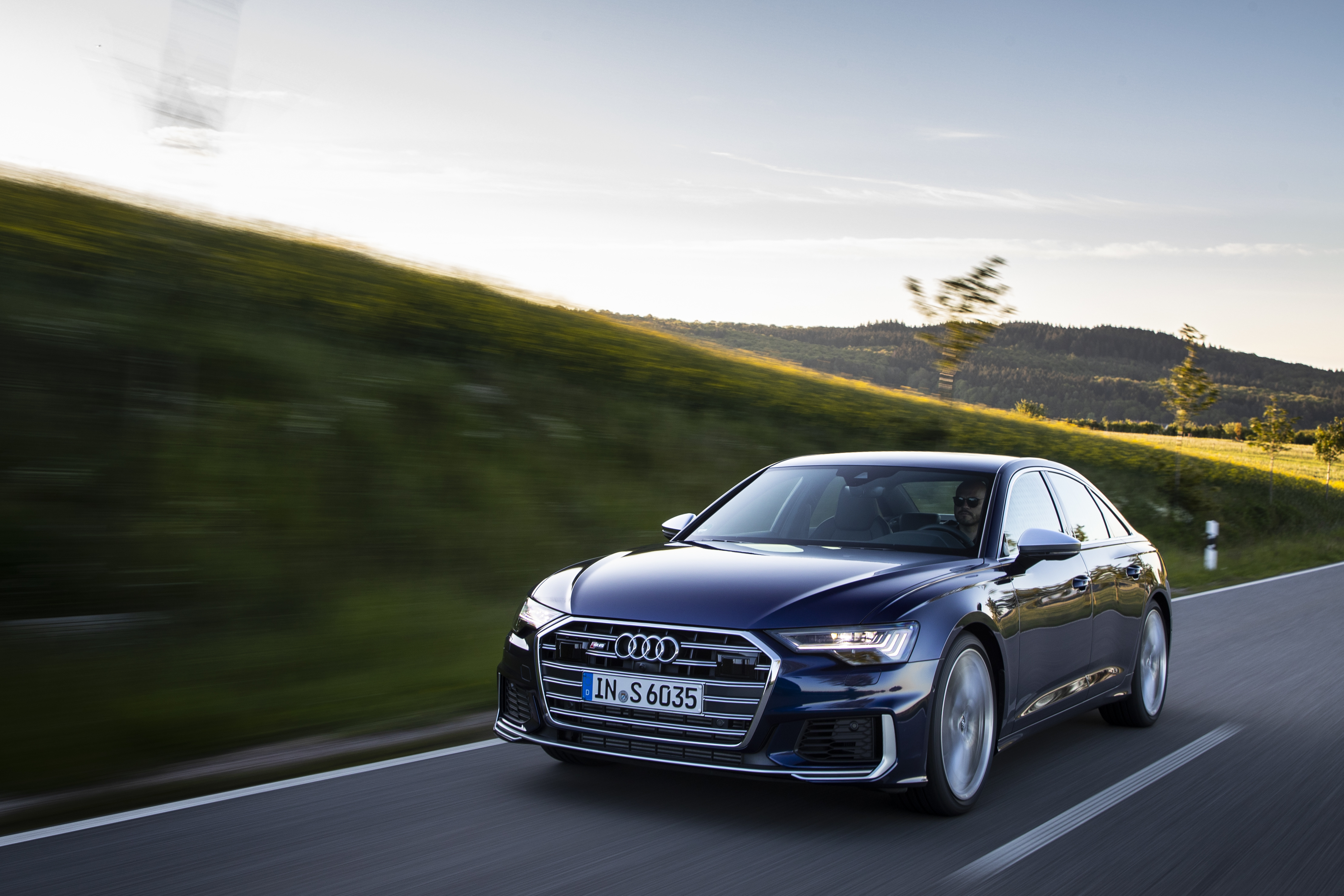
It’s not a misprint. The concept of hybrid or electrically assisted vehicle powertrains has now been immersed deeply in the operating systems of what were traditionally gasoline-fueled powertrains. Audi, which has pushed the boundaries of this sort of technology considerably farther than most manufacturers, has announced that the forthcoming 2020 edition of its S6 midsize sports sedan will have an electrically boosted and managed network of turbochargers.

Here are the basics on how everything works. Thew S6 engine is a 2.9-liter TSFI V-6 with twin turbochargers. The turbos are programmed to produce a broader range of torque at varying engine RPMs, aided by a new 48V Mild Hybrid Electric Vehicle compressor that’s powered by electricity rather than exhaust gases or a pulley, the latter in supercharger fashion. The electric compressor, being offered for the first time in a U.S.-spec Audi, spins up to 70,000 RPM and responds to inputs in fewer than 250 milliseconds. It virtually eliminates turbo lag at any engine speed, and gives the S6 an output of 444hp with 443-lbs.ft. of torque, good for a 0-60 time of 4.4 seconds. Hey, Audi didn’t rack up all those Le Mans victories without learning a thing or two about this stuff. With the standard quattro all-wheel-drive system and eight-speed Tiptronic automatic transmission, with an available performance differential, the 2020 S6 will retail for $73,900 is Premium Plus trim and $77,800 with the Premium outfittings.

Turbo power, even more tech for 2020 Cadillac XT5 crossover

Cadillac is all about multi-use vehicles in recent years, and it now offers crossover SUVs in three different sizes. The XT5, with two rows of seating, represents the midpoint of that lineup, size-wise. Cadillac says the XT5 is the best-selling vehicle in its class, and for 2020, it’s getting a powertrain transplant along with a gaggle of technological upgrades to keep its occupants comfortable and entertained.

The biggest change for 2020, driven largely by fuel-economy considerations, is the adoption of the General Motors’ 2.0-liter inline four with twin-scroll turbocharging as the base XT5 engine. The XT5 is available in three trim levels, with standard front drive and available all-wheel drive: Luxury, Premium Luxury and Sport. The higher trim levels get the GM 3.6-liter, normally aspirated V-6 as their base engine. I recently drove a Chevrolet Equinox LT that was fitted with the same 2.0 turbo, which was more than capable of long-distance cruising in excess of 90 MPH (I’m not saying where). With direct fuel injection, camshaft phasing, cylinder deactivation and automatic start-stop, the turbo engine’s numbers are 237hp and 258-lbs.ft. of torque. Among the tech additions are improved connectivity, an new rotary controller for interior functions, automated parking assist, a rear pedestrian detector and available night vision. Built in Spring Hill, Tennessee – remember, the former home of Saturn – the revised XT5 goes on sale in late summer.

BMW goes big with Motorrad concept bike at Sturgis

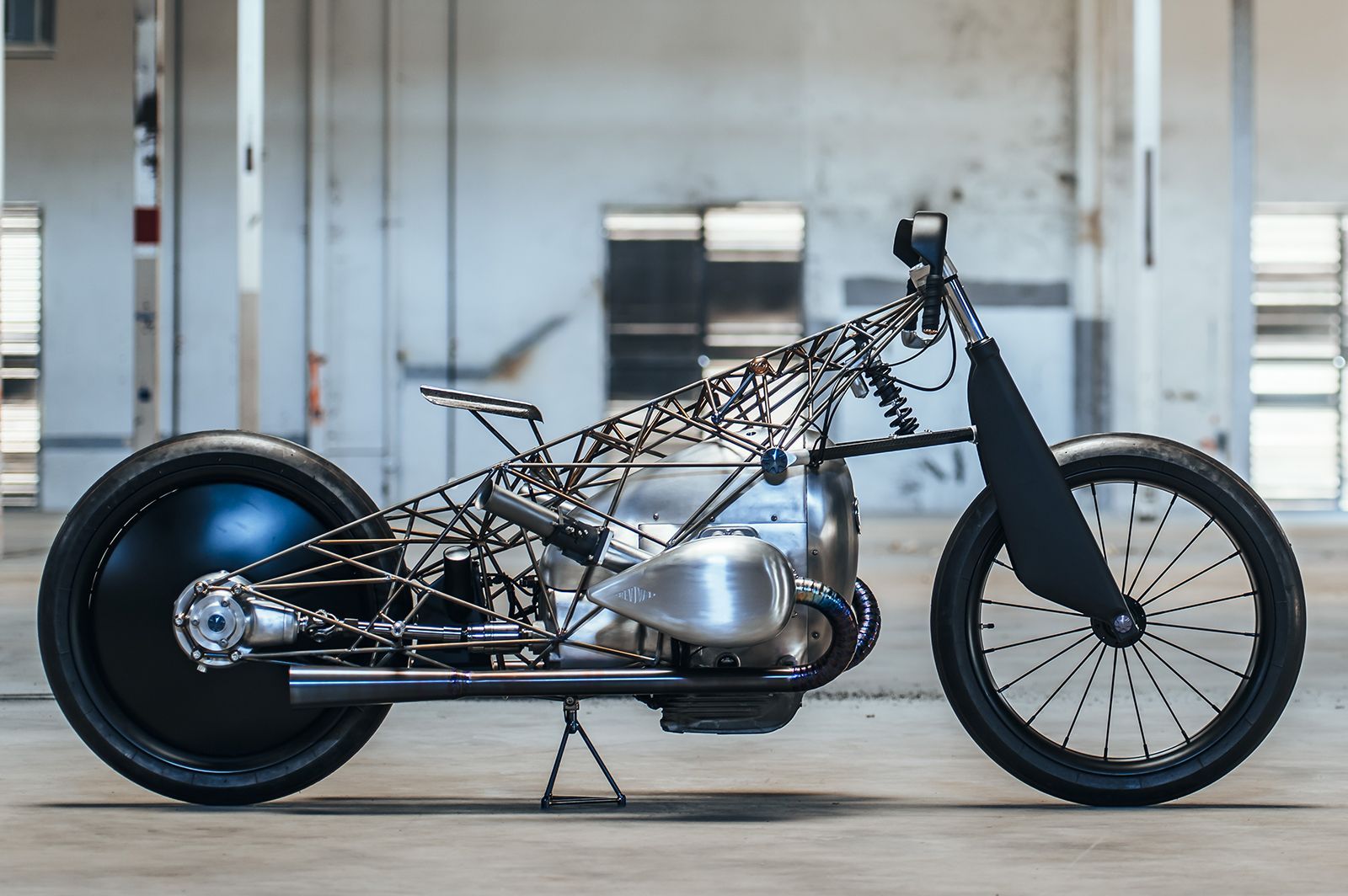
If you like cruising on two motorized wheels, your biggest, holiest week is coming up, the monumental annual motorcycle rally that takes over the environs of Sturgis, South Dakota. By any objective measure, it’s a world-class party, augmented by the music and good times of the Sturgis Buffalo Chip, where you can listen to acts ranging from Keith Urban to Snoop Dogg to George Thorogood and the Destroyers, and drink in all things motorcycling. While Sturgis is usually associated with Harley-Davidson and its loyal riders, the Buffalo Chip is where BMW has chosen to publicly display its Birdcage concept motorcycle, a take on an ultra-minimalist flat-twin motorcycle for chasing the two-wheeled land speed record.

In a culture and a happening that celebrates full-up touring motorcycles, the Birdcage is as bare as they get. Created by Revival Cycles of Austin, Texas, the Birdcage is built around a titanium frame welded up from 134 separate lengths of featherweight tubing. As the BMW photo demonstrates, it’s still a classic BMW Motorrad, with its horizontally opposed twin and shaft drive. Note the angled front coilover suspension and sheathed rear wheel, reminiscent of board-track racers from the very early 20th century. This is big-time trick, folks. BMW will have a selection of less radical and more attainable bikes to see at the Buffalo Chip, too; the manufacturer plans to show off its new Motorrad Concept R18, a large touring cycle, and the 2020 S 100 RR.

Boom economy? At Porsche, that’s today’s rich reality

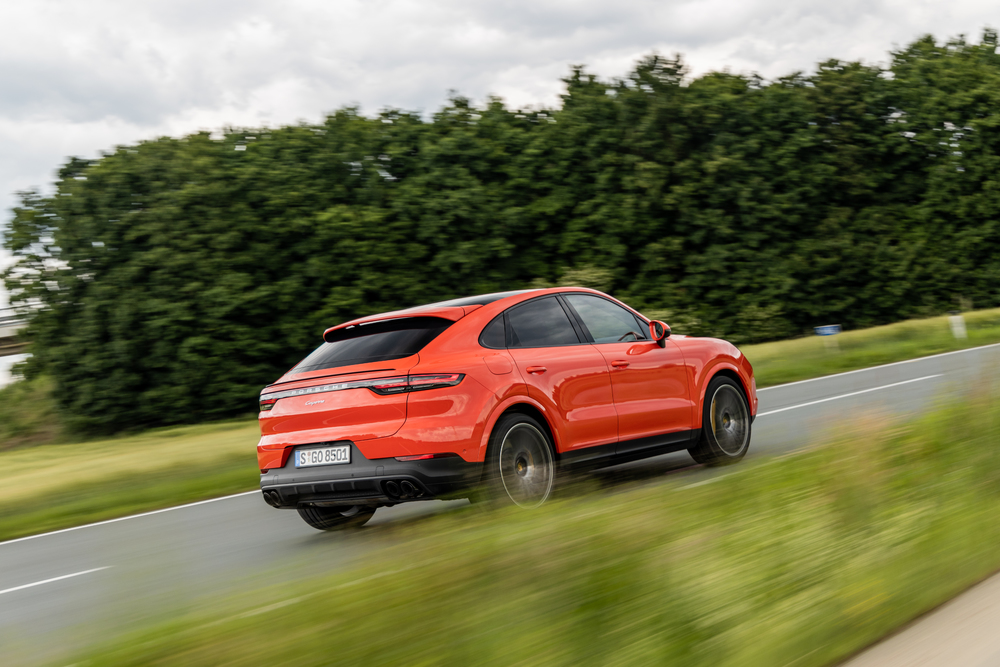
You’ve watched Wall Street and the NASDAQ go zooming out of sight. Some people will have you believe this country’s in the best economic shape in history, wildly ballooning federal deficit spending notwithstanding. But at vaunted Porsche AG, fabled for building some highly desirable and very costly vehicles, it’s Fat City. The Stuttgart stalwart just announced that its financial performance for the first six months of 2019 exceeded last year’s numbers over the same time period by an average of 9 percent.

I think that at some juncture, historians will come to agree that Porsche, once exclusively about sports cars, hit the SUV wave at exactly the right point. The 9 percent increase reflects sales revenue, and that figure was headed by increases in Cayenne sales, with close to 42,000 of them delivered in the first half of this year. The most popular Porsche vehicle today remains the Macan compact SUV, with more than 47,000 sold. So Porsche hasn’t been just about the 911 for a long time now. The company expects the rest of 2019 to be equally robust, aided by new vehicles such as the 718 Spyder and 718 Cayman GT4. Incidentally, Porsche sales in China jumped by 28 percent over last year. The corresponding figure for the United States was 3 percent.

The new Corvette Stingray gets the heartbeat of New York

We told you a couple of days ago about the year’s most celebrated automotive introduction, namely that of the mid-engine, eighth-generation Chevrolet Corvette Stingray. Naturally, it’s going to be produced at the dedicated assembly plant in Bowling Green, Kentucky, which has built every Corvette since the first ones in 1953. The assignment of providing the engine for this crucial General Motors halo car goes to another famous piece of GM real estate, the powertrain plant at Towanda, New York, outside Buffalo.

As we’ve already reported and you can now see, the Stingray’s version of Chevrolet’s Gen V small-block V-8 gets a lot of visual polish and color so it can be clearly seen through the new car’s rear glass. In Corvette trim, the 6.2-liter LT2 V-8 produces 495 naturally aspirated horsepower and 470-lbs.ft. of torque when fitted with the performance exhaust option. Towanda Engine actually consists of three factories, the earliest of which dates back to 1938, and also produces the turboharged Ecotec inline-four currently. In 2016, GM set aside some $300 million for improvements at Towanda Engine as it prepared to turn out new-generation GM powertrains; the new Corvette engine marks the culmination of that investment. Towanda Engine today employs some 1,500 people.

Bobby Marshman, the man who died too soon, gets a monumental new biography

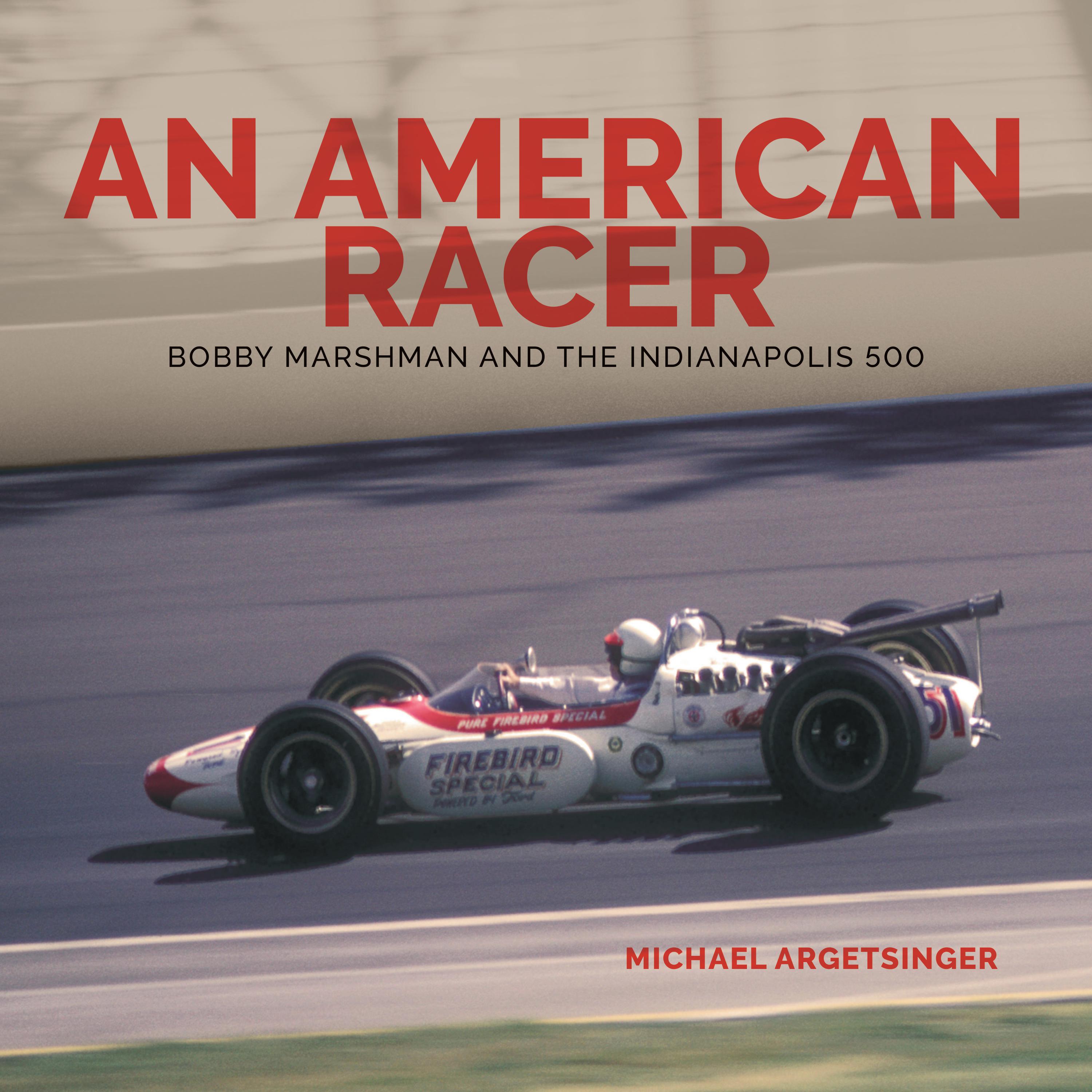
He was one of those racers who makes you instinctively wonder to yourself what might have been. This much is clear: Bobby Marshman, who crabbed his way out of the eastern Pennsylvania bullrings and managed to reach Indianapolis, had all the inner stuff he needed to go all the way. Then came the blood-spattered American racing season of 1964. In the year that claimed such diverse racing talents as Dave MacDonald, Fireball Roberts and Eddie Sachs in ghastly accidents, Marshman suffered horrible burns while testing his Lotus-Ford at Phoenix. He lingered three days before succumbing.

Marshman might have remained largely forgotten forever if not for the efforts of Racemaker Press of Boston, which publishes scholarly works on auto racing history, and author/historian Michael Argetsinger. They have collaborated on An American Racer, a huge narrative biography of the fallen hero, which encompasses 328 hardcover pages. Argetsinger comes from a famous racing family that brought professional motorsports to Watkins Glen, New York. He has published definitive biographies of Mark Donohue and Walt Hansgen, and dug deep into a painful subject to produce this essential work. The author meticulously traces Marshman’s ascension from the Midget and Sprint ranks to the big time, and spotlights his quick mastery of the transition from front-engine Indy roadsters to rear-powered cars. What’s most encouraging about this book is its assurance that Marshman’s memory will now live in perpetuity. It’s $75, and can be ordered directly from the publisher or from Coastal 181, which has a whole lot of books on racing you can peruse.