Greenwich Concours announces eight classes for 2020 gathering

It’s a relatively late bloomer, but the Greenwich Concours d’Elegance in Connecticut is rapidly being accepted as one of the nation’s marquee events for historic automobiles. This year’s edition, the 25th anniversary of the gathering, will be held May 29th through 31st at Roger Sherman Baldwin Park in Greenwich, overlooking Long Island Sound. The two lead categories will be Shelby vs. General Motors, and the 100th anniversary of the greatest American car ever, Duesenberg. But there’s more.
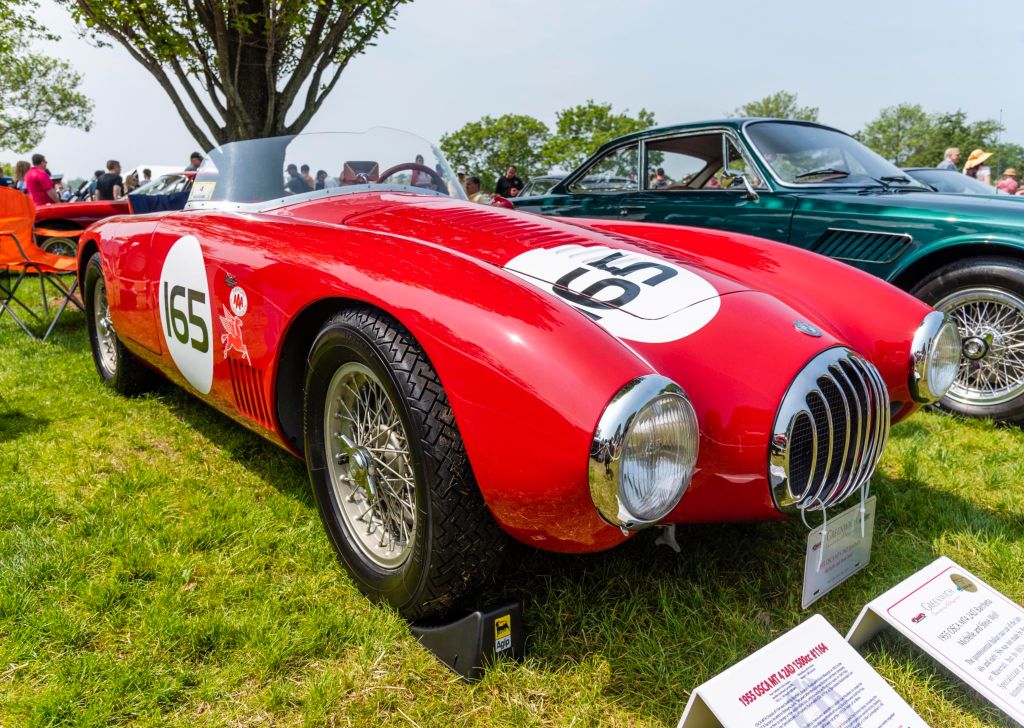
This image by Kobus Reyneke, courtesy of the concours, provides an idea of the quality of what’s on display at Greenwich; the car in the image is a postwar OSCA sports racer, designed by the three Maserati brothers. The additional classes for 2020 will cover 70 Years of Allard, Right Coast Rods (I wish my late friend A.B. Shuman, who co-wrote the acclaimed history of New England hot rodding, Cool Cars, Square Roll Bars, was alive to see this), Lancia, Vintage Off-Road, vehicles from the first edition of the Greenwich concours, and Four Or More Cylinders (motorcycles). But perhaps the biggest news is that on the concours’ Saturday date, a new Concours de Sport category for racing cars will debut. We love it. Vintage race cars should be a part of every concours, a practice that the Amelia Island concours in Florida pioneered. Founded in 1996 by the late Bruce and Genia Wennerstrom, the Greenwich was acquired last fall by McKeel Hagerty, the collector-vehicle insurance magnate. It’s definitely worth the price of admission.
Lincoln partnering with Rivian to produce new luxury EV models

General Motors isn’t the only company making noise with its non-ICE product plans. Late this week, Lincoln announced that it’s partnering with Rivian to create an all-new luxury electric vehicle. If you’re a regular reader, you may remember that we reported about Rivian’s startup efforts. Founded in 2009, Rivian has acquired the former Chrysler-Mitsubishi assembly plant in Normal, Illinois, and is planning to build its own R1T electric pickup and R1S electric SUV using a shared “skateboard” platform. Rivian has been attracting major investment of late, including a $700 million infusion from Amazon and another half-billion from Ford, both revealed last year.

Ford is clearly very serious about remaking itself for a world after hydrocarbons. The Lincoln-rivian lashup will produce Lincoln’s first fully electric vehicle, using the shared Rivian platform, which will join plug-in versions of the Aviator and Corsair Grand Touring SUVs. All are the products of Ford’s $11.5 billion investment in electric technology. As part of the transition, production of the Taurus-based Lincoln MKZ sedan will end this year at Hermosillo, Mexico, as that plant transitions to a new generation of Ford vehicles. Combined with the coming electric Mustang Mach-E and full-battery version of the F-150 pickup, this is big news, very much appropriate for celebrating Lincoln’s 100th birthday in 2020. Speaking of which, look for my history of Lincoln’s first century coming soon in Hemmings Classic Car.

It’s ba-aa-ack: GM is readying the return of the (electric) Hummer

We figured it was only a matter of time before someone in Detroit would come up with the idea of an electric full-size pickup. We never guessed it would turn out like this. Hummer was an automotive icon, of sorts, during the 1990s as the original military version became a sweetheart of the first Gulf War. The civilian Hummers that followed became a favored bauble among celebrities, but really failed to gain any meaningful traction in the greater marketplace, largely due to their unwieldy size and gargantuan appetite for gas. The swiftly organized network of Hummer dealerships collapsed en masse when a General Motors bid to sell the brand to China fizzled. So it was especially ironic, we’d say, when GM confirmed that the Hummer is coming back.

This time, Hummer will be a sub-brand of GMC, a GM brand that’s always kind of squirming to establish an identity. And the revived Hummer is going to be an all-electric pickup truck, formally called the HUMMER EV, all upper case. The big reveal will take place Sunday during Super Bowl LIV, with the actual vehicle rollout set for May. The HUMMER EV, despite running on electrons, will still be all about excess, folks: GM is pledging that the rig will be able to reach 60 MPH in three seconds flat, and will generate the equivalent of 1,000hp and 11,500-lbs.ft. of torque. That’s no typo. Eleven thousand pounds of torque? That’s the kind of output normally associated with vehicles that have Union Pacific or Norfolk Southern lettered on their sides. The beast will be built at GM’s Detroit-Hamtramck assembly plant, which churned out new Cadillacs for generations, and which GM announced this week is being repurposed for 100 percent production of electric vehicles. The first EVs, including the self-driving Cruise Origin, are expected to start rolling off the historic Hamtramck line in late 2021 following a $2.2 billion retooling of the plant to support the new powertrain technologies.

The South rises: New GM tech center coming to Charlotte

If you follow auto racing at all, you know about the huge motorsports infrastructure that’s grown up over the last 20 years in the Charlotte metro area, a hive of activity that not only involves NASCAR’s top series but also IMSA and IndyCar. Most of the shops and specialty complexes aren’t in the city of Charlotte itself, but rather in its northern suburbs such as Concord, Huntersville and Mooresville. The latter city is the hometown of my good friend Don Miller, who as president of Penske Racing, oversaw construction of the team’s huge 400,000-square-foot shop in Mooresville. When it comes to performance, Charlotte is a hub, and now General Motors is adding its own weight to the landscape.

While it hasn’t disclosed an exact location yet, GM last week announced it intention to open a Charlotte Technical Center this summer that will initially be focused on motorsports technology, applicable to its NASCAR teams and to Cadillac’s racing effort in IMSA. GM’s plan is to locate in a new 75,000-square-foot center in Concord, just off Interstate 85 and right within reach of Charlotte Motor Speedway, which is also located in Corcord. Among the technologies based at the new center will be aids to research in aerodynamics, along with driver simulators and cells for research in fluid dynamics. How come this is happening? Because Charlotte, and its environs, are a rich source of technical talent that’s blossomed since the region became the hub of NASCAR team operations. This is a big deal, and a fascinating story.

Another car from Steve McQueen’s past anchors Brumos Collection

We’ve been ruminating about Florida and cars associated with the esteemed Steve McQueen for a little bit now. Here’s another example: Amid the buildup for the Rolex 24 last week, a big part of the race’s history was entering a new chapter. Brumos Porsche of Jacksonville, Florida scored four overall wins in Daytona’s 24-hour race, most of them involving the legendary duo of the late Peter Gregg and co-driver Hurley Haywood. Gregg came to lead the dealership, now known as Porsche Jacksonville, before his untimely death. Last week, the Brumos Collection of historic racing cars opened its doors in Jacksonville, and there’s a McQueen-linked car involved.

Among the collection’s exhibits is this 1970 Porsche 917K prototype that had a star turn in McQueen’s famed cinematic racing epic, Le Mans. The collection gathers historically significant competition cars going back to the 1914 Peugeot L45, the pioneering Grand Prix car whose overhead-cam racing engine inspired designers from Harry A. Miller to Ettore Bugatti. It’s located in a new, dedicated building and ready for your visit. You’ve definitely got to check this important collection out. Tell Brumos that we sent you.

Porsche fights hard, comes up a little short in the Rolex 24

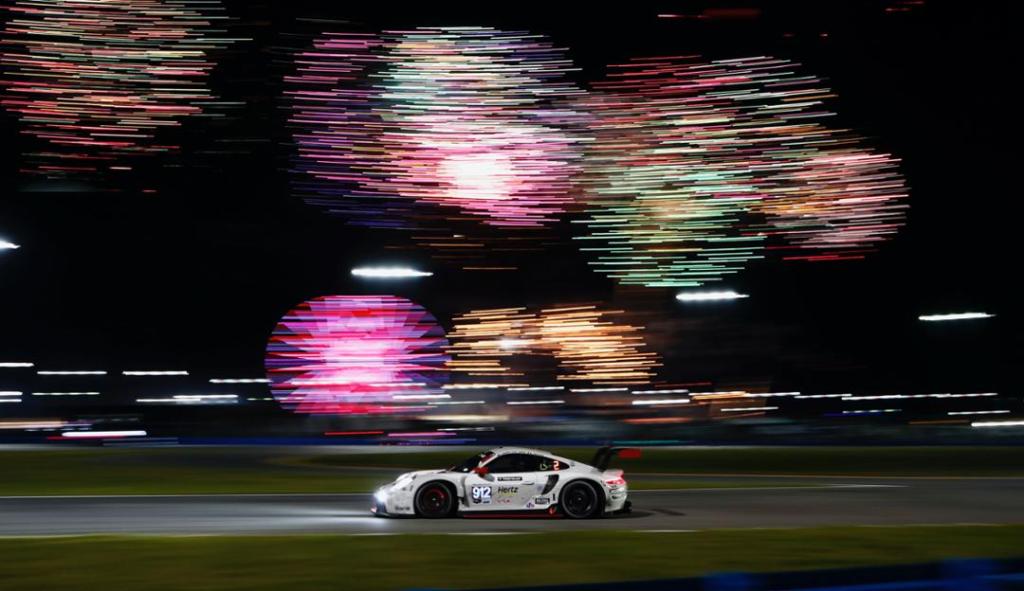
It’s nice to live in Daytona Beach. You can lull yourself to sleep late at night as a world-class field of sports cars audibly battle just a couple of miles away in the Rolex 24 at Daytona International Speedway. It was a good run, perfect weather, a race that saw the Cadillac DPi team grab the overall win for the fourth consecutive year, Mazda taking an impressive second and the Acura camp fuming after a difficult run. We outlined the BMW M8’s prospects in the race last week, and once the green dropped, the GTLM class settled into a race-long battle that saw BMW edge a pair of Porsche 911 RSR 19s, the class win materializing when works Porsche driver Nick Tandy got passed before the final round of pit stops.

The Weissach-bred Porsche works team with Tandy as its lead driver hung on to finish second in class in what was the Rolex 24’s most forcefully contested category. The 911 RSR 19 is powered by the largest horizontally opposed engine ever installed in a 911, displacing just under 4.2 liters and capable of 515hp. It’s water-cooled and mated to a six-speed sequential-shift transaxle. Its tailpipes are atypically located ahead of the rear-wheel openings to accommodate a large, revised rear diffuser that was developed for this generation of the RSR, which dates to 2019.

Finally. Here’s a picture of the “Bullitt” car in its element

Unless you’ve been in some kind of cryogenic chamber since the corks popped on New Year’s Eve, you likely know that the Highland Green 1968 Ford Mustang driven by Steve McQueen in the landmark Bullitt car chase sold at auction amid staggering publicity. It happened two weeks ago at the huge Mecum Auctions (I sometimes write for them) huge winter sale in Kissimmee, Florida, just down the road in Osceola County. Mecum hammered “sold” on about $95 million worth of cars during Kissimmee’s 10-day run, but nothing like this.

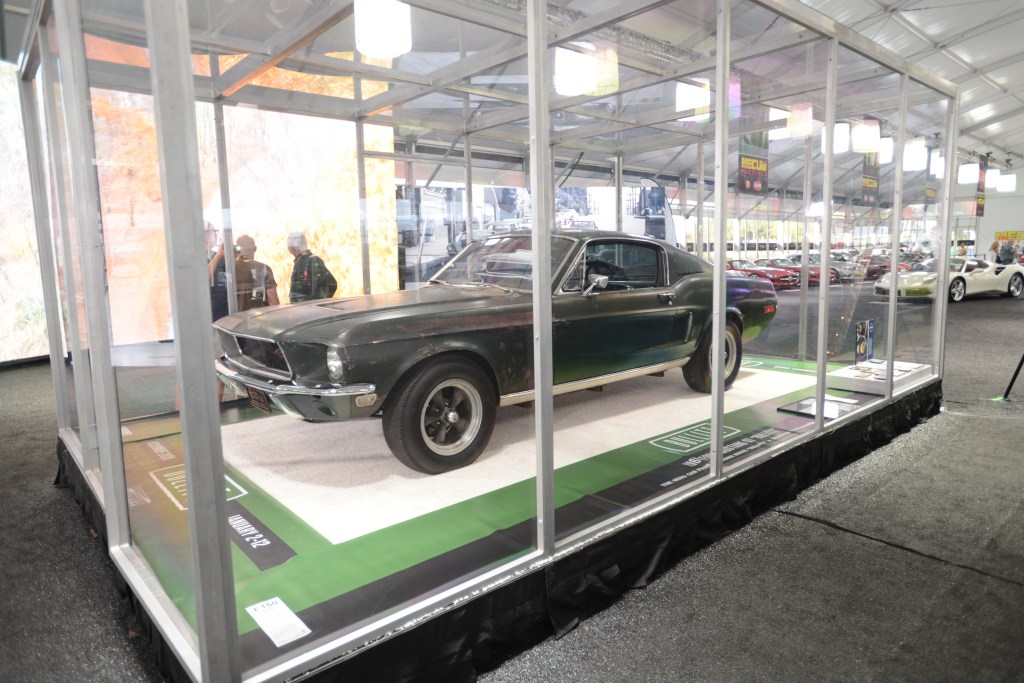
In case you missed it, the Mustang went for more than $3.7 million, an all-time record for a Ford Mustang, and allegedly the highest price ever paid at auction for any muscle car. Here’s a photo I took of the car inside its locked case inside the display tent at Osceola Heritage Park. What you don’t see in the photo are is the armed security that was very prominently on hand during the sale. After all, this isn’t just any old, clapped-out Mustang we’re talking about here. Honest, there were media representatives from all over the world in the house at Kissimmee. You can read my reports about the non-Bullitt offerings in the next issues of Hemmings Motor News and Hemmings Muscle Machines.

A new history of Jeep that you can dive into painlessly

You know what it is with some works of automotive history? They go on and on and on, like they’re eternal. Example: I’d love to have this new history of the groundbreaking French racing car, Ballot. But it runs to two volumes, costs $350 to buy, and would take a lot of time and concentration to absorb. If you’re pressed for time, like most of us, there’s a better solution. Full disclosure: The book I’m about to review is from my longtime Hemmings Motor News colleague, Pat Foster, a guy who lives and breathes the history of independent American auto manufacturers.

Pat’s an authority on non-Big Three automakers, especially including American Motors. So it’s appropriate that he’s penned a history of Jeep, the brand that, sad but true, kept the heart of AMC beating long after it would have otherwise stopped. Jeep: Eight Decades From Willys to Wrangler captures the story of the fabled automotive nameplate in a manageable 192 softcover pages, starting with the original scout car that American Bantam built for the government as World War II approached, and reaching to today’s offerings from Fiat Chrysler Automobiles, including the new Gladiator pickup. Pat pays admirable attention in the book to Jeep prototypes (one was the stillborn XJ-001 sports car) and offshore variants (the Philippine “Jeepney”). If you need just one Jeep book on your shelf, this one’s a good choice. It’s $32.99 from the publisher’s website, and you can visit Pat’s website, The Olde Milford Press, to sample his other works of automotive history.

A new EV manufacturer has a rollout at the NYIAS

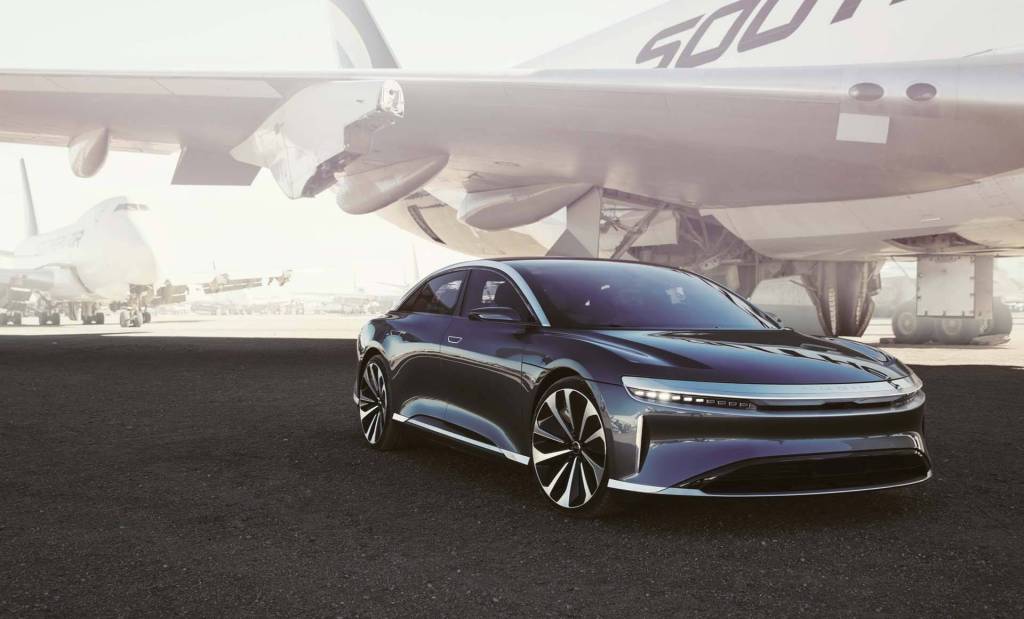
Even with all the dizzying change in the world of automotive manufacturing, the New York International Auto Show is still one of the world’s great venues for examining the latest that the global industry has to offer. The show is an institution in the Big Apple; this year’s edition takes place at the Javits Center on the lower west side of Manhattan from April 10th through 19th. The lineup of cars enjoying rollouts is still being assembled, but we know for certain that a new entry in the business, Lucid, will introduce its Air sedan to public in New York.

What, pray tell, is Lucid? It’s the new company and new car that aims to give Tesla, among others, some competition in this rapidly evolving marketplace. Lucid is a startup based in Newark, California, the heart of Silicon Valley, and the Air is the full-size, all-electric sedan – a body style that some people have buried amid the SUV and crossover craze – that the firm will introduce to the public at the NYIAS. Lucid is asserting that its proprietary EV technology will give the Air sedan a range of 400 miles between charges, a 0-60 time of 2.5 seconds, and a top speed of 200 MPH. All we can say is, we’ve got to see (and hopefully, experience) this one. No pric ing has been announced as yet but if you’re interested, you can stop by the company’s website and reserve a Lucid Air of your own.

Happy new year. It’s race time down in Florida again

The calendar’s about to flip from January to February, and that only means one thing: Florida is about to reawaken from what passes for winter down here and get into some serious things concerning automobiles. Really, it’s already underway. We were offline for a bit while I was covering the huge Mecum auction in Kissimmeee, which was anchored by the sale of the 1968 Ford Mustang from Bullitt, for Hemmings Motor News and Hemmings Muscle Machines. You’ll be able to check out the reportage in the next issues of both magazines. I also got to interview Sean Kiernan, whose family owned the Bullitt car for 35 years, and you can find that story on the Hemmings website. But specifically, this is about auto racing. Speedweeks gets underway officially this coming weekend with the running of the Rolex 24 for sports cars. Yesterday, there was a long line of haulers waiting to enter the garage area at Daytona International Speedway to get the week underway.

The Rolex 24 is the opening round in the IMSA WeatherTech SportsCar Championship. One of the top guns contesting the GTLM category will be BMW with its partner, Rahal-Letterman-Lanigan Racing, which is probably more widely known for its efforts in IndyCar. BMW’s weapon of choice for its two-car effort is the M8 GTE, the number 24 car shared by John Edwards and Jesse Krohn, with backup driving help from Augusto Farfus and Chaz Mostert. There’s a stronger IndyCar connection with the other RLL BMW, whose drivers include Colton Herta, one of the baddest little race drivers to come down the pike in quite a while. This team, with Connor De Phillippi and Phillipp Eng as the other drivers, is the defending class winner of the Rolex 24. The race will kick off Daytona’s annual orgy of speed, with short track action dominating the next two weeks at Volusia Speedway Park in Barberville, New Smyrna Speedway in New Smyrna, plus the USAC national Sprint and Midget tours at Bubba Raceway Park in Ocala. See you on the road.