The Corporate Jet lands at the hall of fame for dirt-track Modifieds

You can quickly start a lively argument by talking about who was the greatest short-track driver in the history of American motorsports. A lot of people say that distinction belongs to Bob Burman, said to have been the most gifted natural dirt-track driver ever when he was killed at Corona, California, in 1916. Others will give the nod to the late Dick Trickle, an immortal in pavement Late Model racing who racked up around 1,000 feature event wins. Others will pick Steve Kinser, who owns 20 World of Outlaws season titles, a record dozen wins in the Knoxville Nationals and 690 World of Outlaws A-feature victories. Still others will point to the late Frankie Schneider, a pioneer of the northeast dirt Modifieds who I was able to get to know late in his life, and like Trickle, may have been able to boast 1,000 victories. And then there’s Brett Hearn.
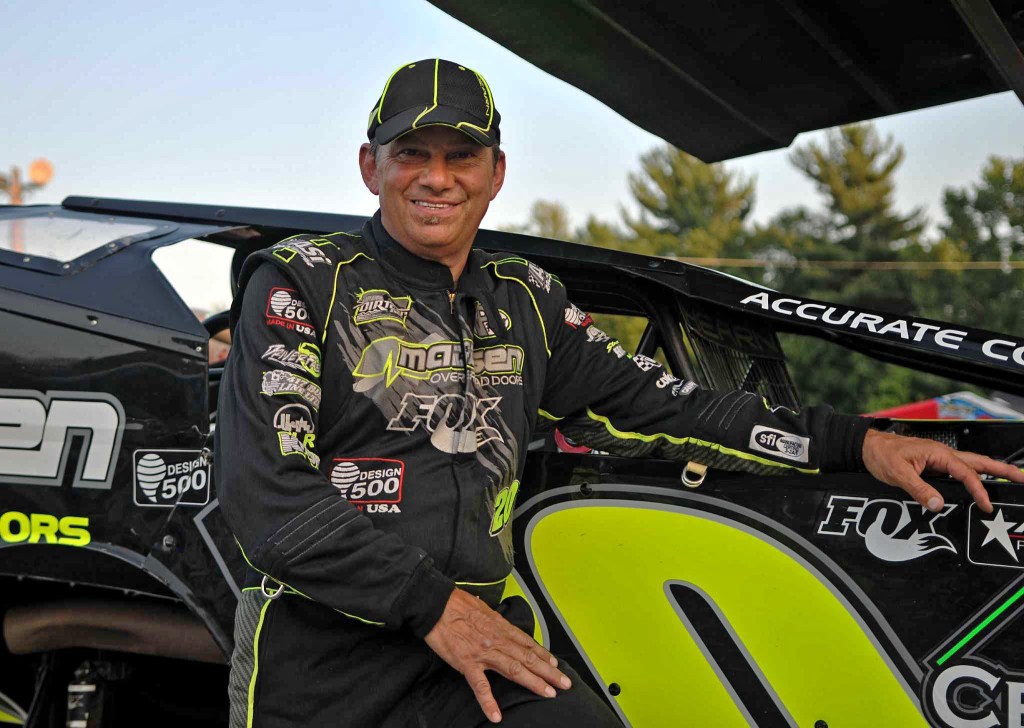
In the world of the upright, center-seat, big-block northeast dirt Modified, Hearn is indisputably the greatest of all time. Even though they both came of age in the same racing discipline, many of Schneider’s wins were lost to history. Hearn, on the contrary, precisely documented every step of his career, which began in 1975 when he emerged from his hometown of Kinnelon, New Jersey, and proceeded to annihilate the Sportsman competition at Nazareth Raceway in Pennsylvania and Orange County Fair Speedway in New York. Late last season, Hearn announced he was stepping away from full-time competition at age 61 to take a managment position at OCFS. The record he left behind will stand forever: A documented 919 feature event wins at 48 tracks in 11 states and two Canadian provinces. Hearn is a six-time Super DIRT Week champion in both big-block and small-block Modifieds, owns a dozen wins in OCFS’ biggest race, the Eastern States 200, has a total of 308 wins overall at the same track, and in a scene that the Brett Hearn photo typifies perfectly, shows one of his record-setting 136 big-block victories at Albany-Saratoga Speedway in Malta, New York, many of which I was lucky enough to witness personally. Put plainly, there is next to nothing in the world of the dirt-slinging big blocks that this guy hasn’t accomplished. He is being recognized by enshrinement in the Northeast Dirt Modified Hall of Fame at Weedsport Speedway in New York this July. Also being honored are the Delaware star Harold Bunting, the black-hat star of New York’s Southern Tier, Joe Donahue; car owner Tico Conley, owner and builder Billy Taylor, the acclaimed promotional spouses Bob and Donna Miller, DIRT TV producer Terry Rumsey, and April Preston-Elms, the co-owner of Bear Ridge Speedway in Bradford, Vermont, the last speedway in the United States running prewar coupe bodies as a weekly division. All are eminently worthy honorees. Me? I want to see Brett the Corporate Jet enshrined in the New Jersey Hall of Fame, alongside worthies such as Peter Benchley, Jon Stewart, the basketball broadcast legend Dick Vitale and Bruce Springsteen. In fact, I think I’ll go right out and suggest his nomination.

Coronavirus claims another major automotive event, close to home

For those, especially in official positions, who claim that the coronavirus outbreak is no big deal, a political hoax or an intentionally fabricated news story, consider this: Two of the world’s major automobile shows have now pulled the plug on their intended salons as the enormous scope of the crisis becomes clear. First, it was the Geneva Motor Show in Switzerland, which was cancelled entirely. Then yesterday, the organizers of the New York International Auto Show announced that the huge event, which ordinarily kicks off in April, has been postponed to new dates of August 28th through September 6th. The announcement followed New York Gov. Andrew Cuomo’s declaration of a state of emergency and established a mile-square containment zone in New Rochelle, just outside New York City, where a cluster of coronavirus cases have been identified.

The New York show is huge, taking up the sprawling Javits Center on Manhattan’s west side, and is normally the venue for a slate of new-model introductions. It’s important to view all this not just in the context of the automotive world – automakers’ supply chains are going to be very significantly impacted by the outbreak as it worsens, which it will – but to consider its implications for life in general. Examples: What’s going to happen to Broadway in New York City, where dozens of shows are now in production? What about the NCAA basketball tournament, March Madness, which tips off two weeks from now? And in two months, there’s the Kentucky Derby and the Indianapolis 500, the latter of which traditionally packs in something like 300,000 people. It’s not fake, folks, and anybody who suggests it is for cynical purposes is doing an enormous public disservice and needs to be called out on it, right now.

What would the Red Baron say?

If you’re at all familiar with the history of BMW, you likely know the story behind its blue, white and black circular logo. The triangular blue panels are intended to evoke the spinning propeller of an aircraft, symbolizing the aero engines that BMW’s predecessor, Bayerische Flugzeugwerke AG of Munich, assembled for German aviators including the storied Manfred von Richthofen, who scored a lot of his World War I victories behind a BMW IIIa straight-six. BMW’s technological heritage is about to go in an entirely different direction, as evidenced by its new Concept i4, an all-electric sport sedan slotted size-wise between the current 3 Series and the 5 Series, which is slated to see volume production beginning next year.

There’s a lot of industry buzzspeak in the media materials that announced the Concept i4’s unveiling. Suffice to say that it’s the first entry in what BMW says will be a long-term corporate rebranding to underscore its embrace of premium electric vehicles. We riffed through the usual ladling of hyperbole to arrive at this nugget: When it reaches production, the Concept i4 is going to feature a series of audio files, we guess, that will be marketed under the brand name of BMW IconicSounds Electric. BMW has actually contracted German composer Hans Zimmer to work alongside a corporate officer named Renzo Vitale, who holds the title of BMW Sound Designer. The result of this will be the creation of audio files that will “personalize” individual sounds including a door opening and an engine start that will be played within the car’s passenger cabin according to which driver-selected operating mode is being used. So onboard infotainment, which has become an important selling point for premium cars, now will include the piped-in sounds of driving. Will one of the files copy the snarl of a racing 3.0 CSL “Batmobile” or an M1? As the saying goes, we think not. You could do something similar by downloading a file of your favorite racing engine at full song, then burn it on a CD and stick in the player of your Kia Sportage or whatever. Good entertainment is where you find it, or program it into your vehicle’s digital DNA, we’d imagine.

A transformative e-transporter

The rest of the world was intimately familiar with the Ford Transit van before it first arrived on these shores from Europe in 2013, and then replaced the eternal E-Series of full-size cargo and passenger vans two years later. In the rest of the world, the Transit has long been an everyday sight, having first gone on sale in Great Britain and Europe in 1965. It’s been the Continent’s top-selling commercial vehicle of any sort for more than 40 years. More recently, it’s found an enthusiastic audience in North America, too, where it’s now the best-selling van of any kind in the United States, giving Ford a stunning 57 percent of that market. All that success notwithstanding, a major Transit update is in the offing.

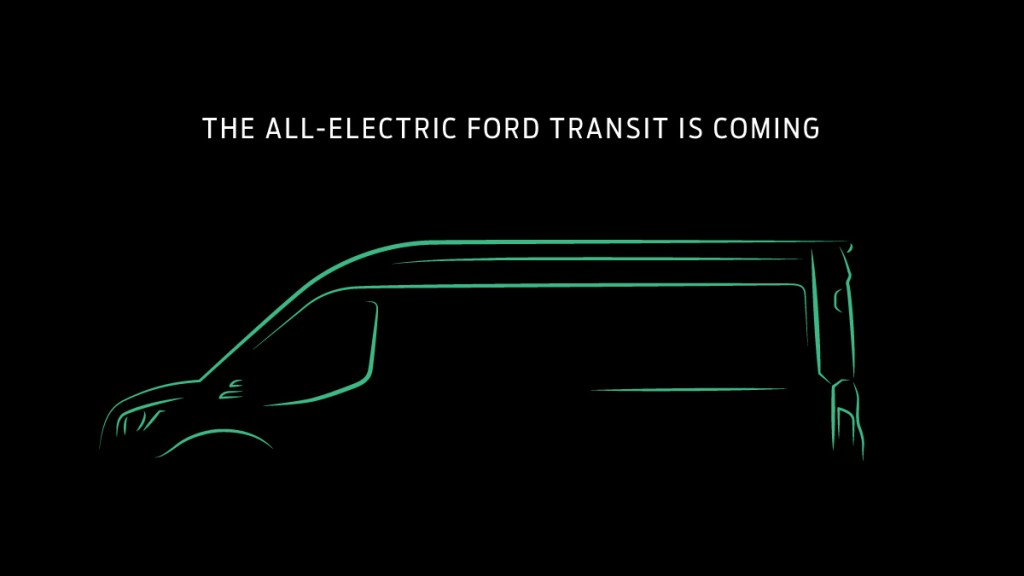
Ford has just disclosed that for the 2022 model year, an all-electric Transit will join its U.S. model offerings, selling alongside the forthcoming electron-motivated Mustang Mach-E and F-150. The electric Transit will be assembled in the United States, and will comprise a sizable chunk of Ford’s investment of some $11.5 billion in electrifying its U.S. model lineup through 2022. Expect it to be based heavily on the all-electric Transit that’s already on sale in Europe. It’s fair to say that we tend to either take business-sector vehicles like this for granted, or ignore them entirely, which sadly diminishes their huge significance to the auto industry. In 2019, Ford sold more than 240,000 vans in the United States alone, and its domestic truck and van sales have swelled an amazing 33 percent annually just since 2015. So the Transit accounts for a sizable piece of Ford’s annual income. Whether you pay attention to it or not, Ford’s move to electrify its market-conquering van is very important news indeed.

Call it pleasurable, not practical

Regardless of our enthusiasm for them, automobiles remain de facto appliances for most of us. They help us do things, which can range from going on vacation to slogging toward work in the morning or trying to figure out how you’re going to get home with your new stepladder from Lowe’s. For most of us, breaking completely from the utility that’s associated with cars and getting them to perform out of pure enjoyment is relatively rare. That experience is a little easier to come by if you’ve got a lot of cash. When that’s the case, things exist such as this one, a pure toy designed for track days where the normal legalities of driving no longer apply. That’s the rationale behind the Aston Martin V12 Speedster, a hugely limited and very expensive offering that its manufacturer assures is road legal, at least in the United Kingdom. Read on.

This may be the first British sports car since the immediate post-World War II period to be delivered without a windscreen. Quite the contrary, the V12 Speedster’s pair of occupants are ensconced in a pair of tiny cockpits on either side of the car’s center structural spine. The V12 Speedster makes extensive use of carbon fiber in its body construction. Its powertrain and chassis borrow heavily from Aston Martin’s DBS Superleggera and Vantage lines; power is furnished by the Gaydon legend’s twin-turbocharged 5.2-liter V-12, which produces 700hp from just 317 cubic inches and turns a ZF eight-speed automatic transmission. Obviously, this thing makes no sense whatsoever, which is precisely the point. Just 88 copies will be produced, with deliveries expected to begin in the first quarter of 2021. How much? List is 765,000 pounds Sterling, which works out today to just under 983,000 U.S. dollars.

Need a big SUV? You want power? Check out Audi’s new SQ7

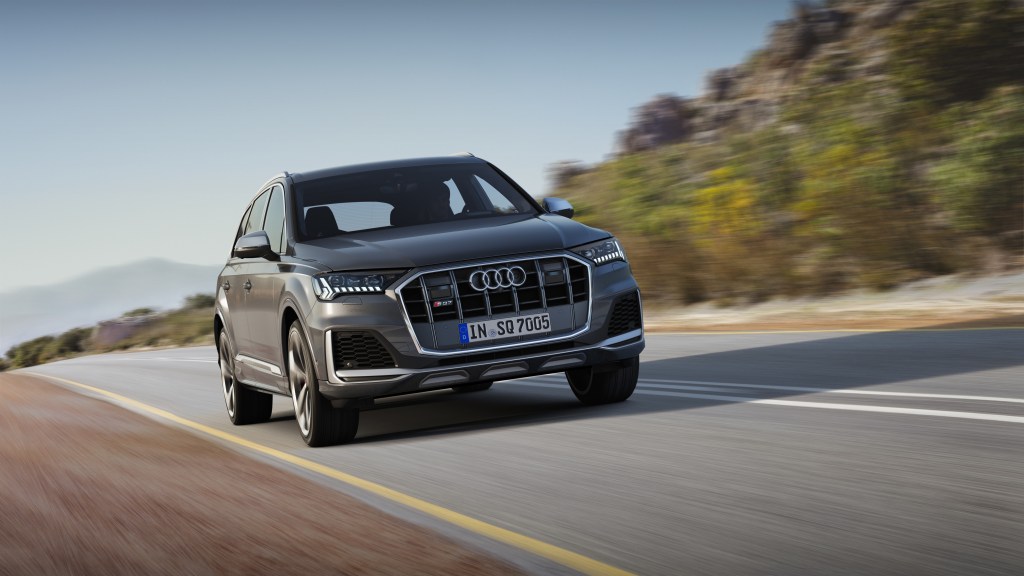
It’s officially considered a midsize SUV, yet it boasts seating for seven (including five chair-like positions) and a long, long listing of tech, infotainment and driver-assist accoutrements, and an absolute ton of horsepower. This is the SQ7, Audi’s premium SUV, introduced for 2020 this week. By far, the biggest news here involves what’s beneath the hood. The new SQ7 (a Euro-spec version is depicted in this photo from the Audi Newsroom) is the recipient of Audi’s 4.0-liter TFSI V-8 as its new standard powerplant. Make no mistake: For all its luxury, this SUV is all about pure muscle. Audi certifies the TFSI engine at an even 500hp, with 568-lbs.ft. of torque, both very copious output numbers for an SUV of this size. The Ingolstadt manufacturer says the rejuvenated SQ7 can make it from 0 to 60 MPH in just 4.2 seconds.

These prodigious numbers are possible because Audi pumps the TFSI’s fuel mixture using twin turbochargers, linking the engine to an eight-speed Tiptronic automatic transmission, which naturally directs the power to all four wheels via its quattro all-wheel-drive system. The SQ7 rides on an S-tuned adaptive air suspension, and boasts standard all-wheel steering. A Sport Package adds active roll stabilization. The interior display is centered on a pair of over-and-under touchscreens. You can order a Bang & Olufsen audio system that will pound your eardrums with 1,920 watts of power directed through 23 speakers. All this good stuff carries a price: The SQ7 will start at $84,800.

Positive news: Workforce at GM plant in Lansing will expand

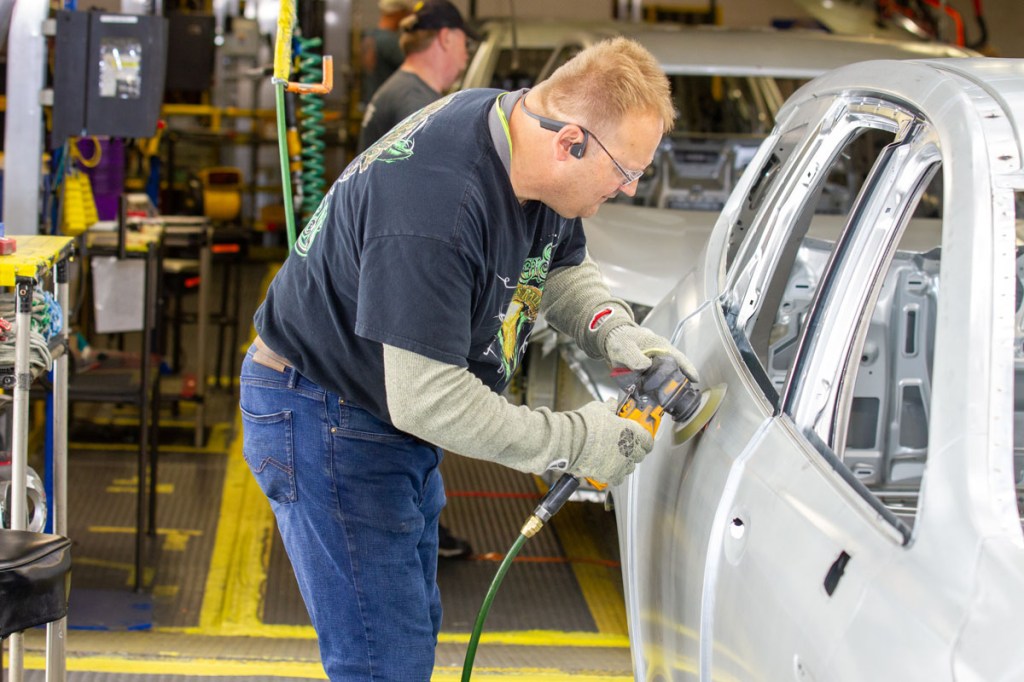
While the industry continued grappling with the fallout over coronavirus and a threatened global economic slowdown, General Motors was pulling in the opposite direction. It disclosed this week that it will be adding 1,200 jobs at it plants in Lansing, Michigan, to augment increased demand for its midsize SUVs and clear the way for the coming introduction of two new Cadillac sedans. The immediate change will see a third shift added at GM’s Lansing Delta Township Assembly, which opened in 2006, creating 800 new positions for workers who will build the Chevrolet Traverse and Buick Enclave.

The rest of the story is that 400 new positions will be created at Lansing Grand River Assembly, where the all-new Cadillacs will be produced, the staffing increase becoming effective in the second quarter of 2020. Lansing Grand River Assembly already builds the Chevrolet Camaro, along with the Cadillac CT4 and CT5 families, along with their high-performance V-series variants. The changes in Lansing, where GM has been assembling motor vehicles for more than 110 years, is part of a GM capital-investment program that’s seen more than $1 billion spent on assembly operations at its facilities in the city.

Geneva Motor Show cancelled by deepening coronavirus crisis

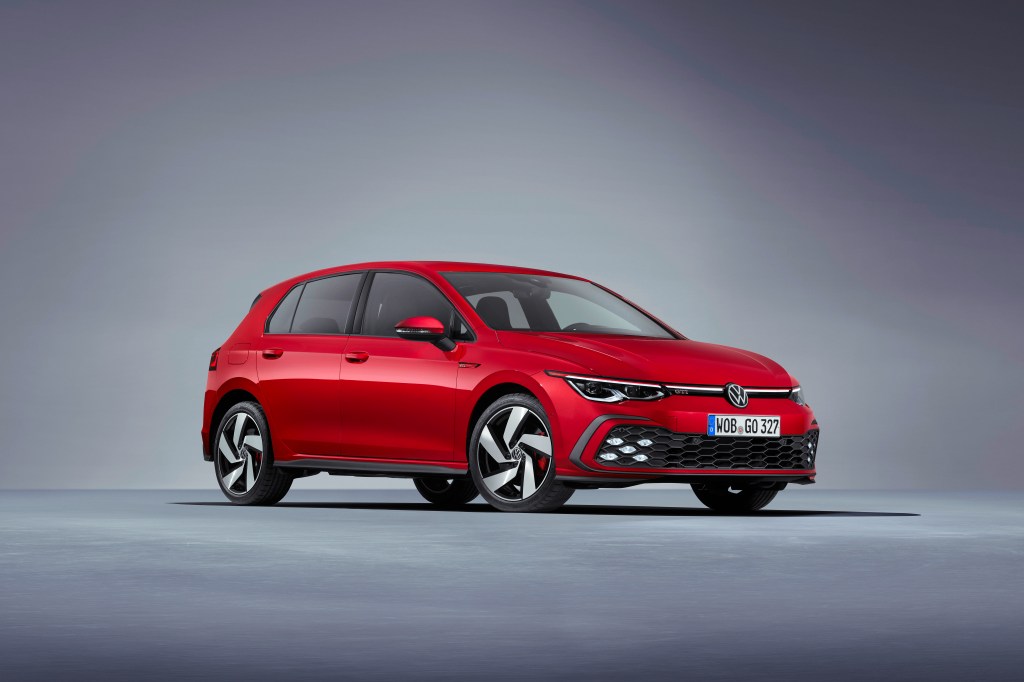
Until very recently, next week was supposed to be a very big deal in the automotive orbit. The Geneva Motor Show was scheduled to open in Switzerland with a media day on Tuesday. Ordinarily, this is a very big happening. Geneva is one of the world’s great motoring exhibitions, and one of the few shows, including New York, Detroit and Tokyo, that actually still receives significant attention outside the immediate automotive world. It’s a stage where the industry rolls out some of its most significant new cars to immediate global attention. Among the new cars scheduled for introduction in Geneva were the Audi A3 crossover and e-Tron hybrid, a freshened Mercedes-Benz E-class and this item, the eighth-generation Volkswagen Golf GTI.

All of that jerked to a halt this week when the organizers of the Geneva show announced its abrupt cancellation, in part due an order by Switzerland’s health minister that all public gatherings of more than 1,000 people are banned nationally through at least the end of March. The Geneva show is so large, and requires so much advance preparation, that rescheduling it for later this year would have been impossible, regardless of how the coronavirus scare shakes out. Automakers and their suppliers, who make up the bulk of the show’s exhibitors, had been pulling staff from the event since a coronavirus outbreak was confirmed in nearby northern Italy. It’s the same kind of response that led both Amazon and Google this week to restrict global travel by their employees. The sudden stop forced a whole range of manufacturers, including Volkswagen, to scramble and reschedule their expected Geneva introductions, a process that’s very much still in progress. The worsening virus emergency has had other automotive consquences, as Liberty Media, which owns Formula 1, saw its stock tank by nearly 4 percent last week, wiping out three years’ worth of capitalization improvements, over worries that a major part of F1’s 2020 schedule could be lost if the coronavirus situation continues to deteriorate. The new Golf GTI, when it’s introduced, will feature a significant output boost to 245hp thanks to its turbocharged, direct-injected 2.0-liter engine, linked to either a six-speed manual transaxle or a seven-speed dual-clutch automatic.

A true racing pioneer receives well-deserved recognition

The history of motorsports is chockablock with tales of people who broke down barriers, accomplishing huge achievements that naysayers would have told you were impossible. There was Henry Ford skidding his cycle-wheeled 999 across Lake St. Clair in Michigan. Bill France was considered crazy for believing that stock cars would last a 500-mile race. Mickey Thompson eyeball-engineered the slingshot layout that revolutionized drag racing. And then there was Janet Guthrie.

Janet Guthrie is an unsung racing heroine of the 1970s. Not only is she the first woman to qualify for the Indianpolis 500, but is also the first to race in the Daytona 500, where she ran with the lead pack among NASCAR’s good ol’ boys in 1977 until her engine let go with two laps remaining. She showed up at Brickyard that same year, qualified Rolla Vollstedt’s Lightning-Offy but finished 29th after that engine failed, too. But in 1978, as this Indianapolis Motor Speedway photo demonstrates, she stuck the Texaco Star Wildcat-DGS solidly in the field despite breaking her wrist in a celebrity tennis match just before qualifications. She placed ninth in the race. Janet competed in the 500 three times, the last being in 1979, and this week, she joined the late Dale Earnhardt as the newest inductees into the Indianapolis Motor Speedway Hall of Fame. I got to know her when I interviewed her for the late, lamented Hemmings Sports & Exotic Car about her early exploits with an all-female team that competed at the 12 Hours of Sebring earlier in her career. An athlete, aerospace engineer and physicist, Janet is a seriously smart lady with a competitive streak that’s immediately evident. She endured an awful lot of hazing and ostracism when she first arrived at Indianapolis. Her experiences mirrored those of another female motorsports trailblazer, the late Denise McCluggage, who came of age in sports cars during the glory years of the 1950s and also related the discrimination she faced when I interviewed her for HS&EC. I’m proud to have made Janet’s acquaintance, and I’m glad to see she’s getting the accolades she deserves. I only hope the same thing happens to another Indy veteran I know, Willy T. Ribbs, the 500’s first African American driver, whose new Netflix documentary biopic, Uppity, recounts his own struggles for acceptance as a racing equal.

Oops! Just that quickly, Aston Martin drops its racing hypercar

The Rolex 24 kicked off Speedweeks in Daytona a couple of weeks ago, and the race was capped by a breathy announcement that IMSA and the ACO, organizers of the 24 Hours of Le Mans, were undertaking efforts at rules commonality and equalization formulas as the World Endurance Championship prepared to unveil its new Hypercar competition category as the 2020-2021 WEC season draws near. And then, all of a sudden, one of the two major players preparing to compete in the Hypercar class has pulled the plug on its effort.

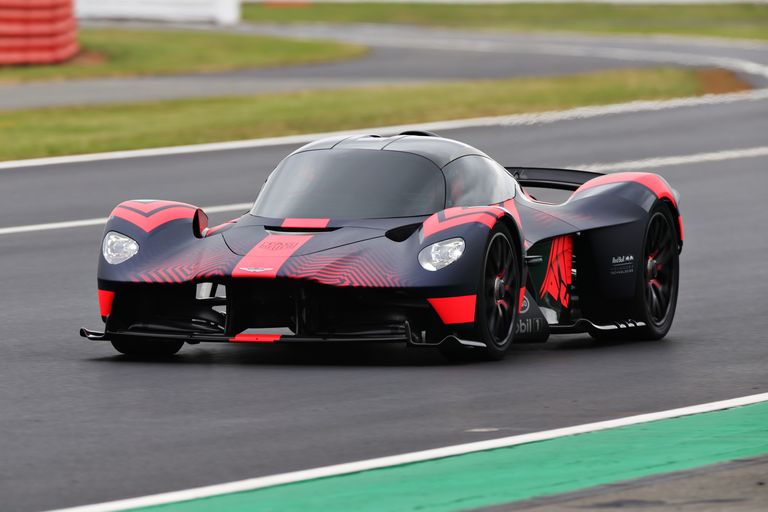
We are talking about the insanely powerful Aston Martin Valkyrie, whose race career was abruptly short-circuited before it ever began, as the British sporting legend’s new leadership announced that the announced IMSA-ACO detente and the attendant rules changes it will necessitate have cooled its enthusiasm for the program. Aston’s exit, which will take it out of the Hypercar category at Le Mans in 2021, came just a week after Formula 1 stars Max Verstappen and Alex Albon took turns hot-lapping the race-spec Valkyrie at Silverstone. A breeze through the subsequent week’s racing media makes clear that not everyone is buying Aston Martin’s public justification for its move. Based in Gaydon, Warwickshire, Aston Martin has struggled with financial disorder at various junctures since the 1980s, interrupted only when it was a Ford Motor Company property from 1991 through 2007. As of last month, Aston Martin is under new ownership in every sense of the word. It’s now gone public, having had its IPO on the London Stock Exchange last October. Last month, the Canadian billionaire Lawrence Stroll, who made his fortune in high fashion and owns the Racing Point F1 team, led a group of investors that took a 20 percent (about 182 million pounds Sterling) controlling stake in the automaker. Stroll is expected to rebrand Racing Point as the Aston Martin F1 team, and the firm’s executives are preparing for the crucial upcoming launch of the DBX luxury crossover. So fiscally, Aston Martin’s got a lot of considerations going. It’s easy to imagine Stroll and company balking at the sheer cost of bringing a clean-sheet race car to competitive form as the same time the small-volume builder is trying to launch a completely new vehicle and adjust to public ownership. The decision leaves Toyota as the only manufacturer now committed to fielding Hypercar team, at least for now. Right now, it appears that roadgoing versions of the Valkyrie, which were expected to retail for up to $3 million, are going to get built. As for racing, Aston Martin said it will continue fielding the Vantage GTE in the WEC’s Pro and Am GTE championship.