Journalism is my life. I've been at it since the 1970s, starting in news and developing specialties in covering automobiles and motorsport. I hold more than 50 journalism awards for work in both newspapers and magazines. I have developed a global audience during my career.
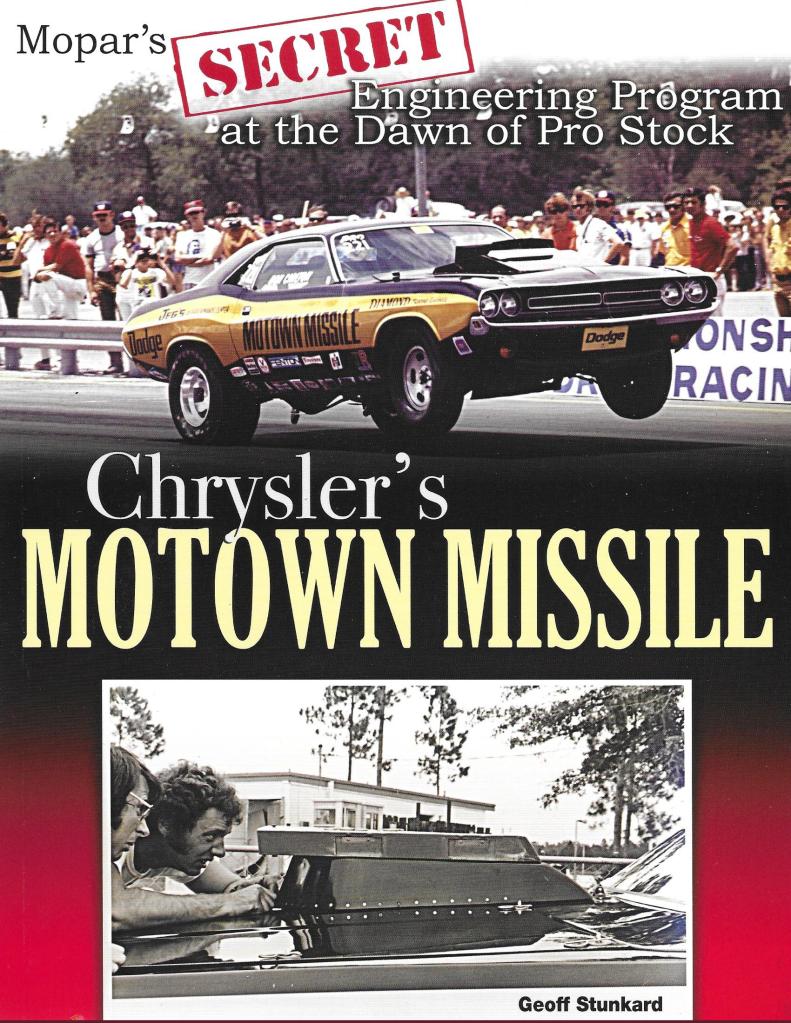
You simply can’t effectively enjoy Chrysler history without examining its history in the world of drag racing. That subject can, and has, inspired any number of historical books on the cars, teams and engines that did battle for Mother Mopar during the heady muscle era. There’s enough raw material and sheer historical sweep to allow for some deep angling for facts, images and anecdotes about Chrysler and drag racing. This is one such effort. It’s a project to tell the story of Chrysler’s entry into the then-new NHRA eliminator category of Pro Stock, viewed through the lens of a team that did most of the brand’s most critical technical development work. Read it, and you will immediately come to appreciate that Chrysler’s Motown Missile is a veritable font of overlapping, highly detailed information on Mopar’s effort to be competitive in the open factory warfare that Pro Stock enabled.
Subtitled “Mopar’s Secret Engineering Program at the Dawn of Pro Stock,” this is essentially the tale of three people: Engine builder Ted Spehar, Chrysler powertrain engineer Tom Hoover, and owner/driver Don Carlton, who got the program on track before he died in a 1977 testing accident. The narrative is an in-depth, profusely illustrate saga of continuous research and problem-solving, both at the track and in the halls of Chrysler design. We’ll leave the story for the author, historian Geoff Stunkard, to lay out, but will tell you that this an enormously detailed insider’s account of trying to begin an entirely new racing program from scratch. In 176 softcover pages, the author makes clear his familiarity with and emotional attachment to the saga and its participants. It immediately becomes clear that Stunkard has nearly boundless, intimate knowledge and enthusiasm for the subject; technical sidebars emcompass everything from air-scoop evolution to early aerodynamic research that didn’t involve the use of a wind tunnel. We were pleasantly surprised to see the great Brooklyn racer Ronnie Lyles in these pages, and learned that his power came from Randy Dorton, who went on to head the engine operation for Hendrick Motorsports in NASCAR before dying in a tragic plane crash. This is really good stuff, and any drag enthusiast will love it. The book retails for $36.95 from CarTech, which publishes a range of excellent titles on drag racing history.
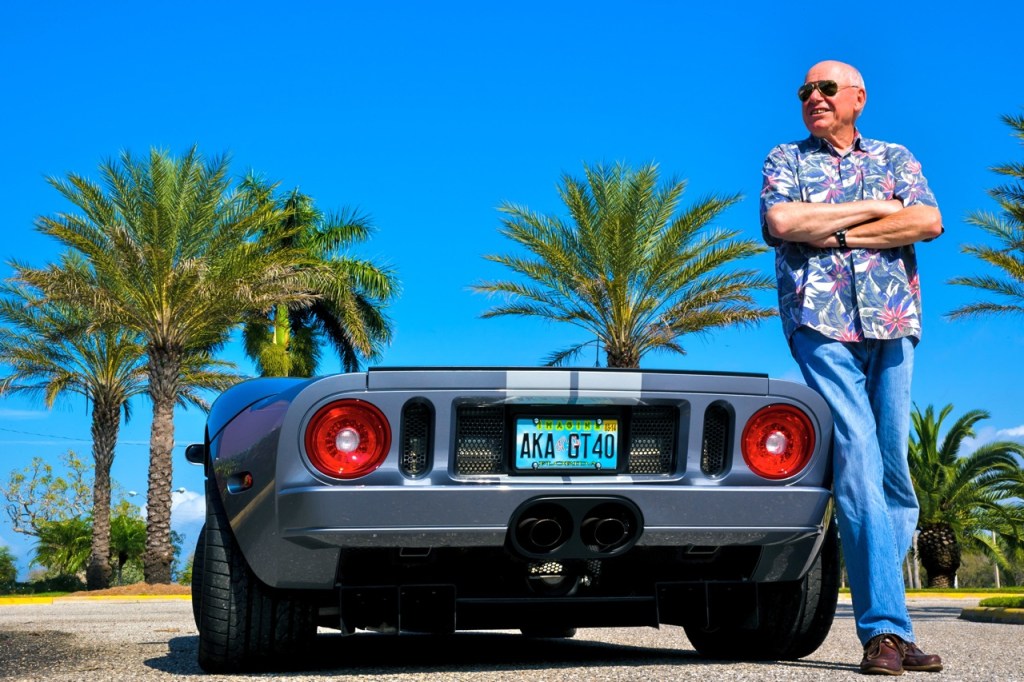
It’s worth noting in our current situation that we still occupy a place and time where you can unquestionably, indisputably, carve out your own path in life. Yes, that’s still true. As proof, let’s study the biography of my friend and fellow Floridian Marty Schorr, a guy who literally has done it all in the worlds of automotive journalism and public relations. A native of the Bronx, Marty experienced the most glorious era in American performance history, both as a magazine editor and PR professional. This guy lived during a time when the U.S. auto industry maintained fleets of muscle cars, some of them actual engineering prototypes, inside Manhattan garages for Marty and other scribes to flog at will, on the street or the strip, and available for the whipping just by picking up the phone and calling up a manufacturer’s rep. That’s an incredible notion, I realize, but Marty lived it all the way. Today, he’s a social butterfly amid the car world on the Florida Gulf Coast, the author of numerous books on Detroit’s insane performance years, a car collector, and practitioner of online journalism. I’m very proud and grateful to know Marty. He’s the real deal and absolutely one of the good guys.
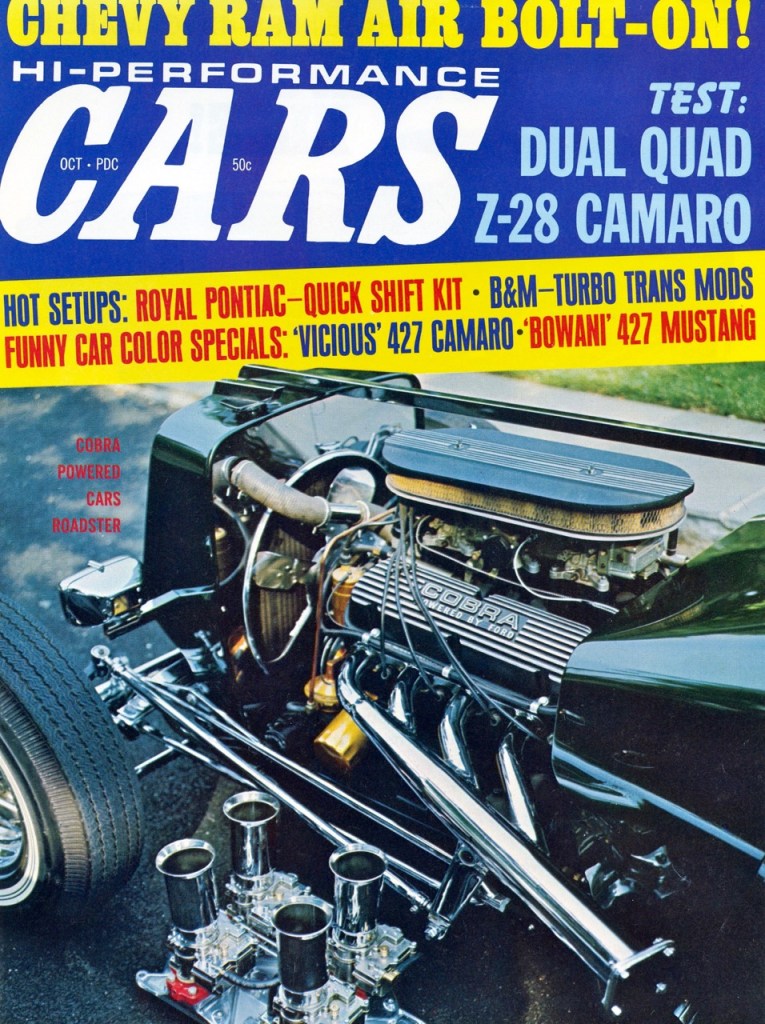
Born in the Bronx, Marty served in the Army Reserve in the early 1960s, picking up a 1961 Pontiac Bonneville with a Tri-Power 389 as his daily driver. As a member of a Yonkers car club, he’d already rumbled around in a rodded 1940 Mercury convertible sedan, of all things, and later in a 1949 MG TC powered by a full-house Ford V8-60 flathead. He was elected as the club’s publicity director, which brought him in touch with the editors of car magazines, many of which were then headquartered in New York City. That triggered his desire to write about cars and photograph them, even though he only owned a six-buck Kodak at the time. In October 1960, Marty was offered the job of editor at two magazines then published by Magnum-Royal Publications in Manhattan, Custom Rodder and Car, Speed and Style. He was further named editor of CARS in 1965, whose title Marty changed to Hi-Performance CARS, in the process hiring Fred Mackerodt as managing editor and my fellow East New York native, the late Joe Oldham, as staff writer. This was the Murderer’s Row that covered the muscle, drag and yes, street-racing scene in the New York metro area during the 1960s. A cover of the magazine shows Marty’s own hot rod, atypically powered by Ford via a Cobra small-block.
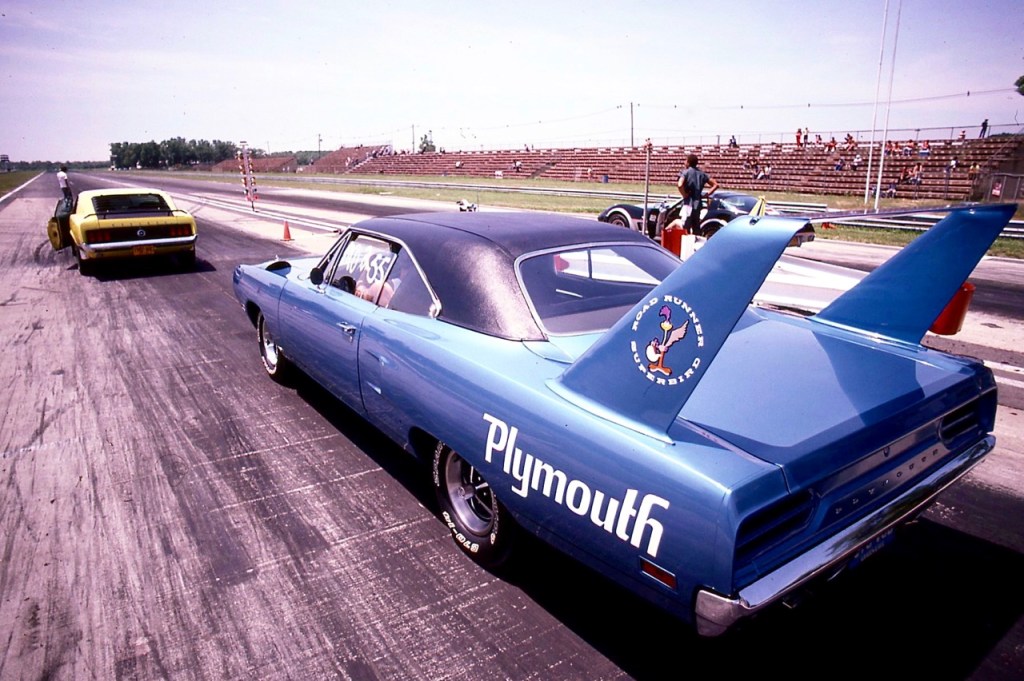
The magazine was a deep-down dive into the world of American high performance, tales told with both enthusiasm and irreverence. A big part of the job involved track-testing muscle cars to acquire real-world performance numbers. In other words, Marty and company drew regular salaries for testing Detroit’s fastest at the track, to prove empirically just how fast they really were. This shows one such test session from at the immortal Old Bridge Township Raceway Park in Englishtown, New Jersey.
Marty department Magnum-Royal in 1973 to establish Performance Media Public Relations, which he still operates today, while also putting out magazines like Chevy Action and Vette for other publishers, plus doing a series of books. Before that, in 1967, he began collaborating with Joel Rosen, a racer and AHRA national record holder who became a business success by founding a speed shop, Motion Performance, that specialized in shoehorning big-block Chevrolet engines into everything from Chevelles to Vegas, usually obtaining the engines from Baldwin Chevrolet, just a few doors away on Sunrise Highway in the eponymous Long Island town. Here’s one such stormer, which effectively countered General Motors’ reluctance at the time to put mega-inch engines in smaller cars.
Hi-Performance CARS began sponsoring Baldwin-Motion in drag racing, demonstrated by this 1967 image of Rosen launching a 427 Camaro at New York National Speedway in Center Moriches on Long Island, where the magazine did a lot of its track testing. This was truly crazy stuff. Today, documented Baldwin-Motion cars with known histories are highly prized by collectors of vintage GM muscle cars. Marty produced catalogs and other materials for Baldwin-Motion while he was growing PMPR, a process that led to Buick selecting to handle public and media relations from Maine to Florida, a post held from 1982 to 2000. If you wrote about cars during these years and knew Marty, you were guaranteed some memorable experiences. One of mine was attending a Buick V-6 performance seminar at Phoenix International Raceway that featured rides with NHRA Super Stock legend Kenny Duttweiler, who ran a twin-turbo Regal T-Type in the doorslammer wars, and the late Scotsman Jim Crawford, who led the 1988 Indianapolis 500 with a stock-block Buick turbo V-6 over a horde of cars with Cosworth-Chevrolet power until losing a lap in the pits near the end. Some wonderful things happened during the Buick turbo years, including the McLaren-massaged, one-of-547 Buick GNX, which Crawford and I got to hot-lap at the Phoenix happening. Marty even let me drive a new Roadmaster sedan away from the event, which I used to make my first visit to Death Valley, amid a rare riot of springtime flora.
If you’re ever in or around Sarasota, Florida, you might be able to take part in one of Marty’s luncheon gatherings for car guys, which drew significant numbers until coronavirus worries interrupted things. Find out about them and keep in touch by going here. Marty’s other site, Car Guy Chronicles, deals with more conventional automotive news and features, including a recent entry on one of my heroes, E.J. Potter, the Michigan Madman, a guy who realized it was cool to smoke his way down countless Midwest drag strips astride a Harley powered by a built small-block Chevrolet V-8. Let Marty know who sent you.
We live in a world where normal expectations have a tendency to be seriously bent with little warning. More proof arrived this week when Porsche, the most successful manufacturer in the recent history of international sports car racing, announced that it’s withdrawing from the factory-based GT Le Mans class of the WeatherTech IMSA Sports Car Championship following the conclusion of the 2020 IMSA season, which resumes next month at Daytona. Like virtually every other automaker, Porsche has seen its commercial fortunes crater amid the COVID-19 pandemic, a reality that the Weissach firm said drove its decision to pull back from IMSA. The development wasn’t wholly unexpected: Last month, Porsche disclosed that it wouldn’t be bringing its IMSA teams, fielded by South Carolina-based CORE Motorsports, to the rescheduled 24 Hours of Le Mans in September, reducing its involvement in the Sarthe’s GTE Pro category from four to just two examples of the 911 RSR. Porsche did add that it intends to go out at IMSA by successfully defending its 2019 GT Le Mans title, and that it will continue to support customer who campaign the 911 GT3 in IMSA.
“The decision to halt our factory involvement in the IMSA series was not an easy one for us,” emphasises Fritz Enzinger, vice president of Porsche Motorsport. “With a view to the current corporate situation in connection with the coronavirus pandemic, it is only logical for Porsche Motorsport to make a contribution to coping with the economic fallout. We’ve openly discussed our exit with all involved. At this point, we’d like to convey our sincere thanks to Jim France and the colleagues at IMSA for their understanding. Porsche belongs in endurance racing. We will work hard to ensure that this is only a temporary Auf Wiedersehen.”
It’s been a rough few months for sports cars, both in IMSA and those involved with the FIA World Endurance Championship. Chevrolet recently announced that it won’t be taking its new, mid-engine Corvette C8.R to Le Mans, and the global scene is still coming to grips with Aston Martin’s decision to pull out of the forthcoming, enormously promoted Hypercar prototype class. For its part, Porsche is already on record that it’s exploring a possible foray into IMSA’s new LMDh prototype class, which is expected to replace the existing DPi category, formerly known as Daytona Prototype, in 2022.
Imagine growing up in one of music’s greatest eras of artistic expansion, being a collegian and being armed with a camera. Try to fathom capturing that sort of greatness on film, while it was happening, from the front of a stage during a landmark concert. Then think of being into cars and racing, not just music, and having the shooting skills to participate in motorsports photojournalism during some of racing’s most acclaimed, consequential years. Do all that, and you’ll be someone like my longtime Hemmings Motor News collaborator John Rettie. Born in London, and now living near Santa Barbara, California, John has witnessed and photographed both rock music and racing at a close personal distance that most of us can only speculate about enviously. John is a second-generation car enthusiast whose father once owned a 1933 Aston Martin Le Mans, and had a article published in Autocar, the British motoring journal. His father’s grandfather was a highly respected Scottish editor of legal documents who once served in the House of Lords. So cars and journalism are both firmly planted in John’s DNA. In 1970, John was studying civil engineering at the University of Leeds in the United Kingdom and was a photographer for the student newspaper, covering a variety of rock concerts on campus. He was one of just two photographers at The Who’s show on Feburary 14th, 1970, which was recorded live and released as the Live at Leeds album, which many critics still consider the greatest live performance in rock history. This is an image that John captured during that unforgettable concert. Note that the late Keith Moon is behind the drum kit.
By that time, John had already made his first trip to the United States, embarking with his photo gear on a one-month Greyhound bus trip across the country. He returned the following year, also 1970, and managed to get credentialed as a media member for the famed Can-Am and Trans-Am racing series. He sold his first racing image that year, a shot of Richie Ginther attacking the Corkscrew at Laguna Seca in a Porsche 914/6. He struck up a friendship with the British racing historian and motoring journalist Jeremy Walton, who helped him find assignments. Before long, John was a full-time motorsports photographer and magazine journalist living in the United States, having transitioned away from rock music, in part, due to the stultifying egos that dominated that world. At the same time, he operated a British-based business for performance Volkswagen parts and a Los Angeles-based public relations agency. John also served as technical editor for Hot VWs magazine, was West Coast bureau chief for Ward’s Automotive, and launched J.D. Power’s first automotive website. He is experienced in reviewing cars, photo gear and computers, and has served as president of the California-based Motor Press Guild three different times. But I know him best as a highly traveled racing shooter. One image he captured was this 1970 image of the great Dan Gurney pitting his Plymouth ‘Cuda during that year’s Trans-Am round at Riverside. It was the Big Eagle’s final race.
John, whose website allows you to peruse – and acquire – many of his famed images, which include any number of fascinating historical vignettes. For example, as we’ve noted, John did a lot of work involving high-performance Volkswagens, which led him to cover the Sports Car Club of America’s Formula Super Vee series, which was powered by water-cooled VW engines and was then a key part of the IndyCar career ladder. As a demonstration, John provided this 1982 image of a very young Michael Andretti working quick Super Vee laps at Riverside.
Around here, the next image carries even more weight, as great at Michael Andretti’s career has proven to be.
This photo, likely from 1978, shows the late Tim Richmond hot-lapping a Lola T620 Super Vee at the Milwaukee Mile when he was beginning a transition from Supermodifieds and USAC Sprint cars to his goal of IndyCar racing. Richmond won the Super Vee round at Phoenix. Richmond climbed the mountain, and was named Indianapolis 500 rookie of the year in 1980 after placing ninth in the race. But after several vicious crashes, Richmond jumped to NASCAR, where he became one of the 1980s’ great stars, winning 13 times in seven seasons, mostly for Hendrick Motorsports. I got to know him a little bit. Shared a couple of Old Milwaukees with him in the garage area at Pocono after one race. I’m fond of saying that if Richmond hadn’t been claimed by complications from AIDS in 1989, and had managed to finish his career on track, there’s no way that Dale Earnhardt would have won seven NASCAR titles. Richmond was that good, and racing is poorer for his untimely passing. The Eastern Motorsport Press Association inducted Richmond into its Hall of Fame in 1995, one of the few organizations to do so, likely due to the circumstances of his death, which is really unfortunate.
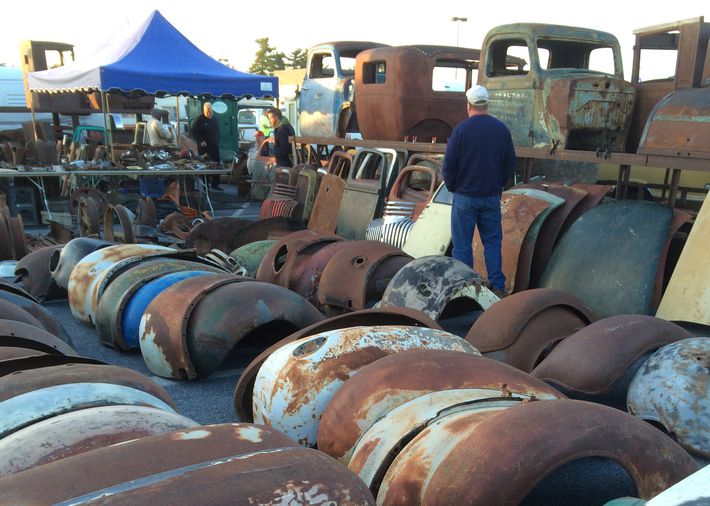
It’s a combination of Woodstock, the greatest flea market you’ve ever experienced and the entire sweep of automotive history stretching back for more than a century. In the automotive world, it’s got a one-word name: Hershey. It’s a decades-old rite of autumn in rolling central Pennsylvania, attracting some of the world’s finest historic motor vehicles of every imaginable stripe, literally anything for a collector car you could ever hope to buy, and an annual crowd over its multi-day run that often approaches a quarter of a million eager souls. And this year, it’s being canned due to COVID-19. The Antique Automobile Club of America, which presents the extravaganza each year, announced that health and regulatory realities associated with the pandemic will make it impossible to hold this October, at least in its traditional form.
This photo was grabbed by Web Editor Daniel Strohl of Hemmings Motor News, which has a big annual presence at Hershey, during last year’s gathering. Here’s what we can learn from this image: First, this vendor space likely represents about 1/1,000th of what’s available to shoppers, everything from complete cars to every imaginable part for them to collectibles such as vintage cans of lubricating oil, among countless other things. Secondly, if you’ve never been to it, Hershey sprawls across multiple color-coded fields adjacent to the Hersheypark theme attraction. I’ve never attempted to guess at the acreage involved, but it’s huge. According to AACA CEO Steve Moskowitz, Hershey was in jeopardy from the moment the first restrictions on gatherings in Pennsylvania were announced. Even under the most rosy possible rules during the pandemic, events in Dauphin County, where Hershey is located, crowds of more than 250 attendees would have been prohibited, even in October. Officially known as the Eastern Division Fall Meet, Hershey is presented entirely by AACA volunteers that nearly rivals an army for sheer size. The distancing restrictions, and the huge necessary workforce, left the AACA without options. This will mark the first time in its 65-year history that the old-car blowout, which has endured lousy weather, recessions and even the Three Mile Island nuclear accident in 1979, has been canceled outright. The AACA does still intend to present its annual Grand National up the road in Allentown, Pennsylvania, in July; a website has been established for announcing changes in the Hershey scheduled, since Steve said the week’s signature event, its annual car show on Hershey’s final day, might yet be salvaged. Regardless of all this, Hershey – and it will resume – should be experienced by every car enthusiasts at least once. At Hemmings, there’s a favorite phrase that captures exactly how unpredictable and vast the finds at this event can really be: “Only at Hershey.”
If you came of age in the late 1960s, you likely remember what a big deal it was when Ford first introduced the Mach 1 version of the Mustang in late 1968 as a 1969 model. If you were a performance fan and liked Fords, those were golden years, as no less than an even half-dozen go-fast variations on the Mustang (think Boss 302 and Boss 429) existed during that heady era. The Mach 1 blended muscle and appearance cues, the latter including a blacked-out hood with scoop (a shaker hood was optional) and dealer-installed backlight slats. At least initially, most Mach 1s were powered by the Windsor-block 351, but everything up to the Super Cobra Jet 428 was available for the asking. It was strongly popular, even surviving the Mustang II years, and briefly made a reappearance on the SN-95 platform in 2003. No Mach 1 was existed since, but that’s about to change.
Ford made a lot of Stangphiles happy last week when it announced that the Mach 1 will rejoin the Mustang lineup this spring, becoming the lead offering among 5.0-liter cars and according to some accounts, replacing the Bullitt option package. Dearborn disclosed its plans along with a teaser photo, which we’ve included, that shows the Mach 1 making moves on the proving ground. The prototype disguising, such as it is, shows circular openings in the grille that just might accommodate the fog lamps that were part of the original Mach 1 grille in 1969. The rear view shows a spoiler and a quartet of huge-diameter exhaust tips. Full details are still pending, but Ford did make clear that the revived Mach 1 will stand as a bridge between less exclusive Mustang models and the outrageously potent Shelby variants. It’s undeniably a development to cheer.
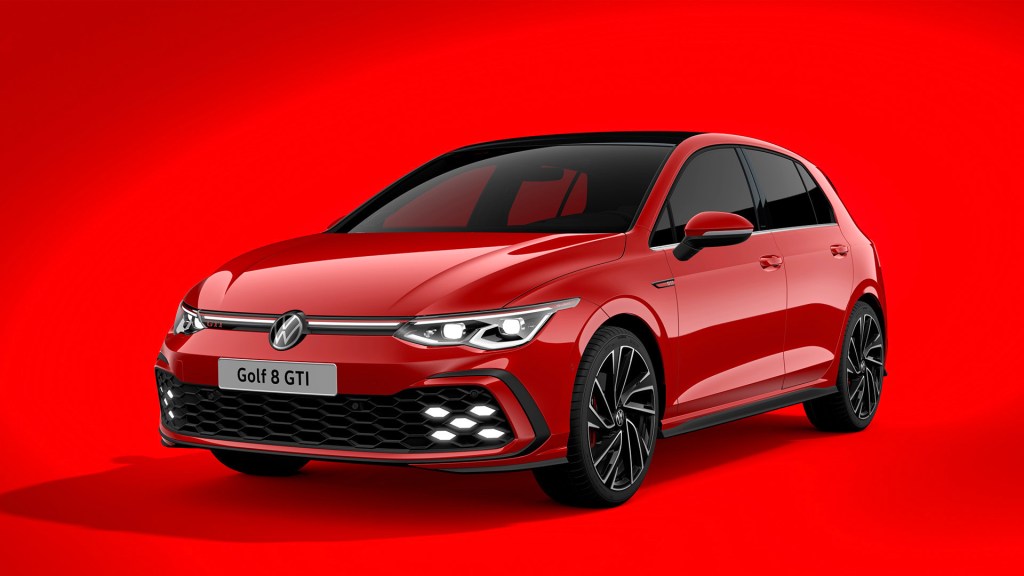
Volkswagen has always had pretty good grounding when it comes to determining the proper recipe for a hot-tempered hatchback. The Golf GTI is an evidentiary study. It’s been around for 45 years, at least in its home market, a riotous run that’s incorporated smart packaging, visceral kicks and for a while, a German-language jingle that channeled Ronny and the Daytonas performing Little GTO, circa 1964. Due to COVID-19 hangups, the anticipated launch of the eighth-generation Golf GTI has been pushed back; it’s generally expected that the car will debut next summer as a 2022 model. By all indications, it ought to be well worth the wait. Wolfsburg is laying claim to the argument that the new GTI will be the most digitally connected budget performance car out there, and will have some serious engineering cred to back up its dramatic, if evolutionary, lines and appearance.
9. Judging design in virtual reality.
There’s enough tech coming with this Volkswagen to keep even the geekiest buyer out there sated and entertained. The car’s digital display will burst into life as soon as the doors are opened. Instead of analog instruments, the driver will face a 10.25-inch screen that Volkswagen calls a Digital Cockpit, with driver-selectable displays. Alongside will be a standard 8.25-inch Composition Media screen, with a 10-inch Discover Pro display optionally available, with up to 30 configurable colors and functions selected by controls on the steering wheel. Every Golf GTI will carry driver systems including Lane Assist, Autonomous Emergency Braking, Pedestrian Monitoring and Cyclist Monitoring. Vehicle Dynamics Manager mapping and an XDS electronic differential lock is also included. As proof this isn’t just electronic whiling, the Golf GTI will produce 242hp from its 2.0-liter direct-injection turbocharged EA888 inline-four, mated to a standard six-speed manual or optional seven-speed automatic transaxle. Top speed will be electronically limited to 155 MPH, and the revised Golf bodywork has a drag coefficient as low as 0.275.
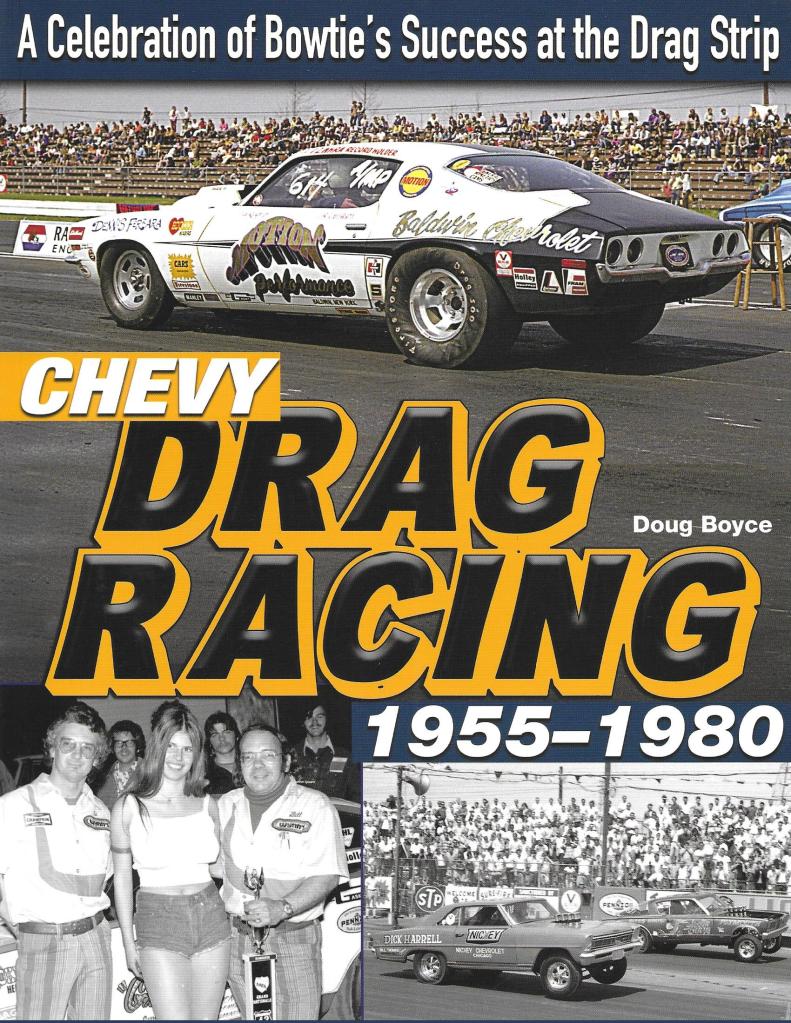
This is a tale that’s been unfolding ever since the small-block Chevrolet, arguably the most influential and successful American auto engine design ever, forcibly shoved another legend, the flathead Ford V-8, aside during the 1950s. The small-block came to be a dominant powerplant in literally every form of American motorsports. In drag racing, its hegemony was nearly total. If you wanted to post quick times, and not go bankrupt doing it, you went with Chevy power. An entire industry evolved around supplying performance parts for this engine. And we haven’t even begun discussing the Mark IV big-block V-8 that came along later. Drag racing historian and journalist Doug Boyce has now completed a very important book that exhaustively maps Chevrolet’s march to quarter-mile immortality,
Chevy Drag Racing 1955-1980 will certainly be essential reading for anyone who’s a fan of Chevrolet performance or drag racing history. The author indisputably understands and venerates his material: Boyce is the author of a technological biography of Bill “Grumpy” Jenkins and an acclaimed history of NHRA Junior Stock, both topics that are relevant to the subject matter in this book. There’s a fair amount of tech in these 176 softcover pages, but the book is organized around the individuals whose names, like Chevrolet’s, became synonymous with success in drag racing. The expected names like Jenkins, Dave Strickler and Jungle Jim Liberman are here, but the real strength of this book is its close focus on the other guys who are less well-known today. If you grew up on the East Coast, I’m talking guys like Jack Merkel, Truppi and Kling, Bernie Agaman, Paul Blevins, Dennis Ferrara, Bo Laws, Larry Kopp and Malcolm Durham. It was especially gratifying to see an in-depth look at Jim Bucher, whose win with a steel-block Chevy at the 1975 Summernationals at Englishtown was the first Top Fuel win for a Chevrolet-powered dragster since the brilliant “Sneaky Pete” Robinson took the U.S. Nationals in 1961. If you’re into the subject matter, you have to buy this book. It’s that simple. The price is $36.95 and it comes from CarTech Books, which also stocks the author’s previous titles.
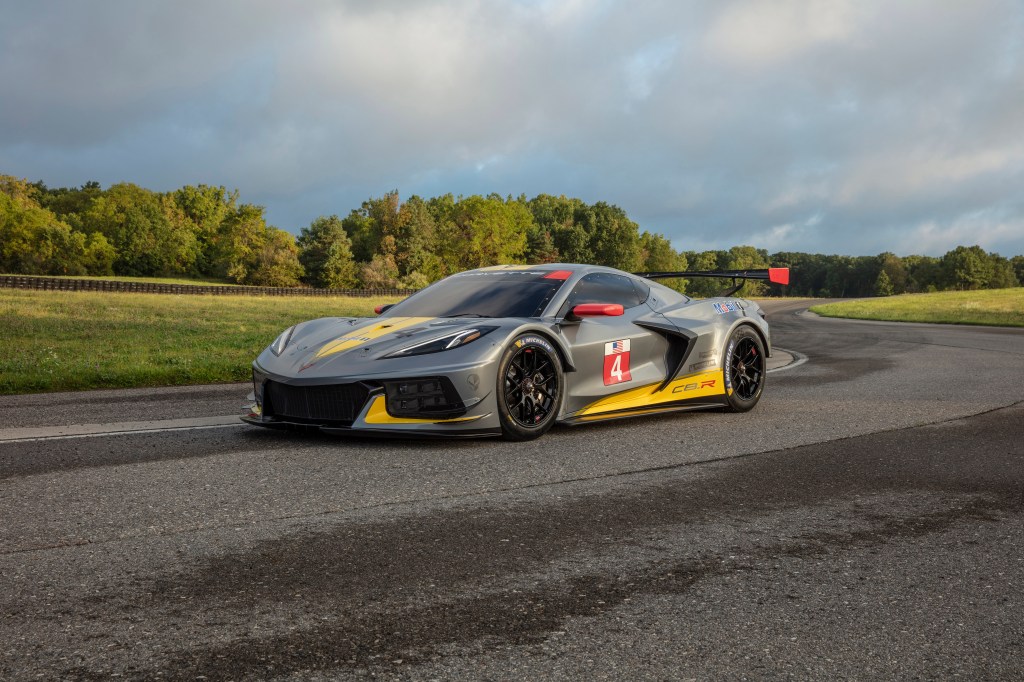
We already knew that the 88th running of the world’s premier endurance race, the 24 Hours of Le Mans, had been pushed back to September from its traditional June date due to the ongoing COVID-19 pandemic and its continuing fallout. It didn’t take very long for some consequences to make themselves evident. Perhaps the saddest came when General Motors disclosed that Corvette Racing will not be taking part in this year’s race, which would have marked an enviable string of consecutive starts by a GM-backed Corvette team at the Sarthe. This will be the first time Corvette has missed the race since the factory effort commenced in 1979. The Bowtie Brigade has a very stout record at Le Mans, Corvettes having won their class eight times in 20 years, with the most recent victory taking place in 2015.
French fans will thus have to wait until 2021 to get their first look at the mid-engine Corvette C8.R as a competition vehicle. In a statement, Chevrolet Motorsports vice president Jim Campbell said the ongoing pandemic, and the logistics of adapting to the new date, made it impossible for Corvette Racing to head to France while it’s also contesting the IMSA WeatherTech series stateside at the same time. The good news, therefore, is that U.S. fans of the new Corvette, which has been brooming up the accolades since its introduction, will at least get to see it on the track. GM isn’t the only automaker whose Le Mans program has been upended by the virus. CORE Motorsports, the South Carolina-based team that runs the Porsche 911 RSR in the IMSA GTLM category, has also abandoned plans to contest Le Mans this year, for much the same reasons that GM cited.
Everybody knows that police vehicles endure a hard life, and are called upon to handle a wide variety of jobs, from running after lawbreakers to idling for hours at a fixed assignment like crowd control. It ain’t easy being blue. That’s why law enforcement in the United States has increasingly embraced SUVs for use as a patrol vehicle. At Ford, the Explorer Police Interceptor is the current darling for this demanding marketplace. Chevrolet’s police portfolio has coalesced around the Tahoe, for which a police package has been offered since 1997. The boys and girls behind the badge are going to seriously enjoy its latest iteration, which, for 2021, adds independent suspension at all four corners with coil springs, robust anti-roll bars and a lowered ride height for working the mean streets.
The 2020 police Tahoe is offered in two versions: The Police Pursuit Vehicle equipment package that focuses on high-speed performance, and the Special Service Vehicle group that’s aimed more at off-road and towing capability. Regardless of package, the vehicle is powered by a 5.3-liter OHV V-8, now with rocker covers from the Chevrolet Camaro ZL1 that improve both crankcase ventilation and top-end lubrication during high-g lateral maneuvers that are commonplace in police work. A 10-speed automatic transmission is standard. Brakes? Officer Friendly now has six-piston Brembo calipers at every corner. Around here, the Florida Highway Patrol, Daytona Beach Police Department and the Volusia County Sheriff’s Office are enthusiastic Tahoe customers. Don’t let one fill your rear-view mirror.





 Jim Donnelly On Wheels