480 e-horses and a GT badge

For almost as long as the Ford Mustang has been in existence, there’s been a GT version of it, or the equivalent, going all the way back to the K-code 2+2 of 1965, even though it didn’t actually have a GT badge on it that particular year. So while the new Mustang Mach-E may be an all-electric vehicle, that doesn’t mean that the Ford Motor Company is going to leave performance-oriented buyers panting helplessly. Ford specified a GT version of the Mach-E from the very outset, and has augmented it by creating a new Mustang Mach-E GT Performance Package, which exercises what could become a new definition of vehicle output, the rate at which the vehicle’s driveline can draw electric current from its onboard battery pack.
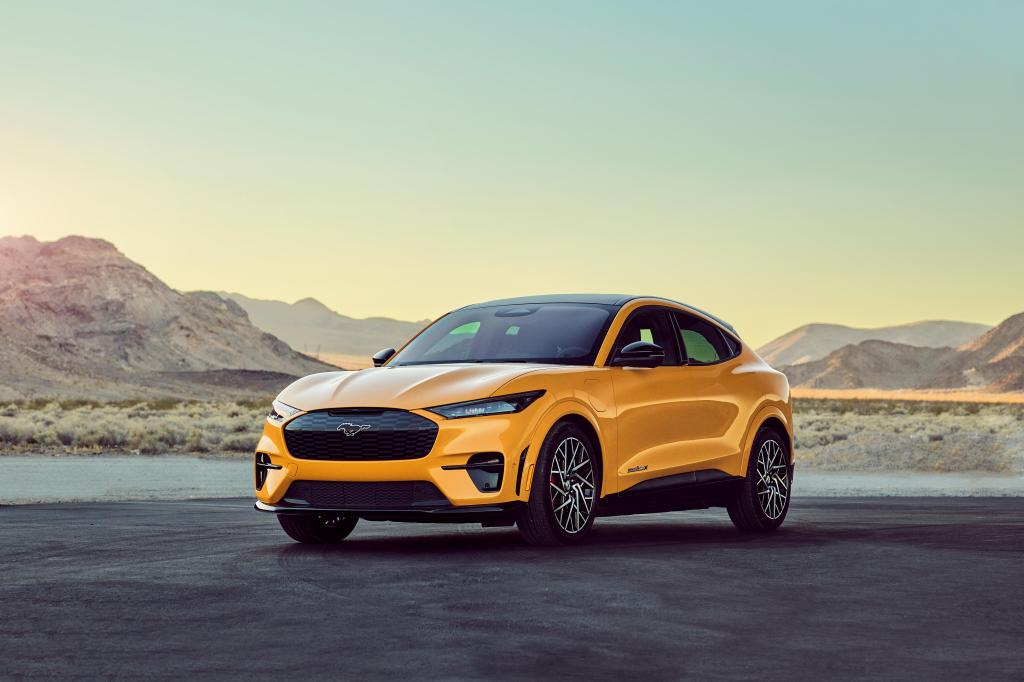
If the photo leaves you unconvinced, this may help: The GT Performance Edition produces 358 kilowatts and 860 squared newton-meters of output, which translates in internal-combustion nomenclature to 480 horsepower and 634-lbs.ft. of torque, both very substantial figures for a vehicle of these proportions. Despite the additional current draw, the GT Performance Package will still deliver an EPA-estimated range of 235 miles on a charge. When it’s introduced late next summer, the GT Performance package will boast 19-inch front brakes with Brembo calipers, the better to manage its claimed 0-60 time of 3.5 seconds. Ford Performance seats inside will wear ActiveX fabric, and the new model will be offered with high-impact colors reserved for go-fast Fords including Cyber Orange Metallic Tri-Coat, Dark Matter Gray Metallic, Rapid Red Metallic Tinted Clearcoat, Star White Metallic Tri-Coat, Grabber Blue Metallic, Shadow Black, Iconic Silver Metallic and Space White Metallic.
New visuals for revised 2022 Mitsubishi Eclipse Cross

You know Mitsubishi. Stalwart manufacturer from Japan. Assembled one of World War II’s greatest military aircraft, the Zero fighter. Decades-strong producer of durable trucks and buses. Longtime past-tense partner of Chrysler. Produced a whole slew of all-wheel-drive performance cars, backed up by rally excellence. Tends to get lost among the hoopla from its larger home-market competitors. This coming rollout of a revised high-profit offering should help matters in that regard.

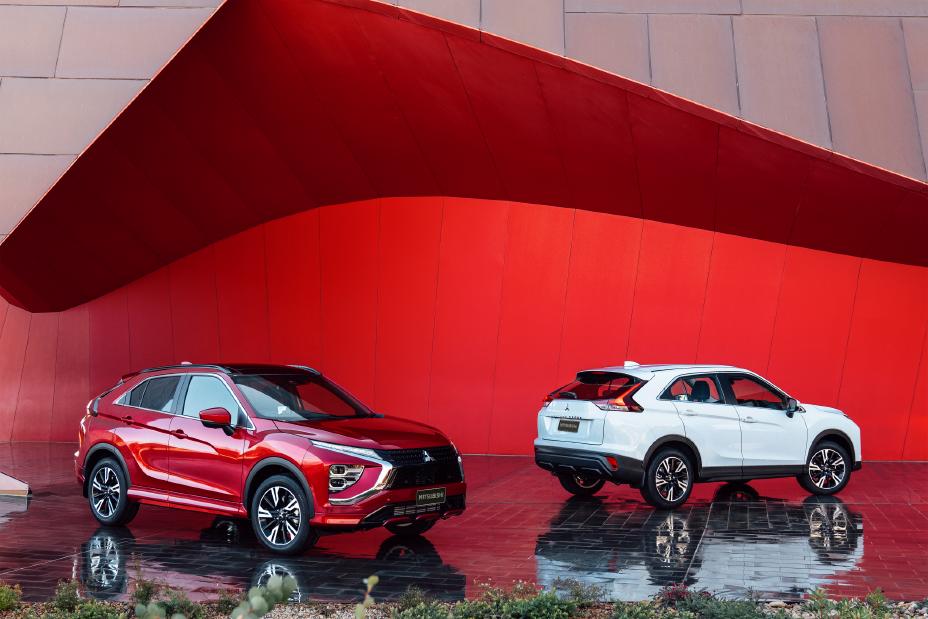
The Mitsubishi Eclipse Cross, which is being freshened with some high-impact sheetmetal revisions for 2022. It’s a compact crossover that slots just below the Outlander SUV in Mitsubishi’s vehicle lineup. The revised Eclipse Cross debuts this month in, interestingly, Australia and New Zealand, markets which have long been Three Diamonds strongholds. Derived from the XR-PHEV concept vehicle, the Eclipse Cross will have a new frontal lighting treatment and a redesigned rear hatch. Base power comes from the MIVEC 1.5-liter inline-four with turbocharging and direct injection. A new eight-inch dash display with direct smartphone connectivity will be standard. The new-edition Eclipse Cross is expected here in the first quarter of 2021. There are no immediate plans for U.S. sale of a plug-in hybrid model expected for other markets.

Hyundai, NHTSA settle case on engine durability issues

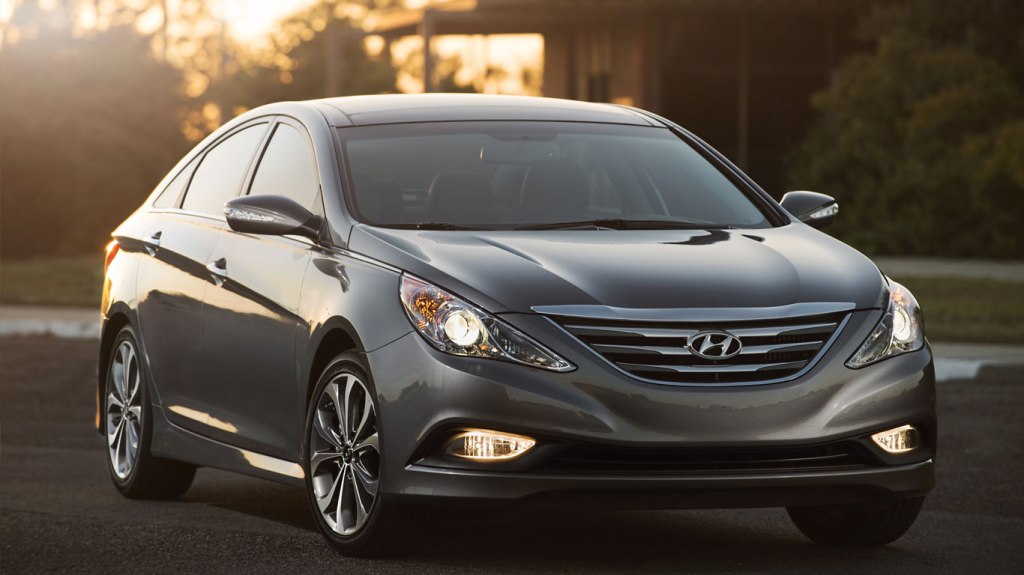
It involved a substantial cash outlay, but Hyundai has settled its case with the federal government as it regarded two recalls, the most recent in 2017, over engine-durability issues on the 2011-2014 Sonata sedan and the 2013-2014 Santa Fe SUV. The recalls were focused on production issues that could have led to excessive bearing wear and ultimately, engine failure. In part, the settlement between Hyundai and the National Highway Traffic Safety Administration led to a warranty extension to 10 year and up to 120,000 miles, plus software updates, for the recalled vehicles. In a 2015 action, NHTSA asserted that metallic shavings and other debris may not have been fully removed during machining of the crankshaft, which could restrict oil flow to the connecting-rod bearings, leading to rod failure and an unforeseen loss of engine power.

Under the agreement, Hyundai agreed to pay a cash settlement of $54 million, invest $40 million in improved safety operations, and be subject to a possible additional $46 million deferred payment depending on compliance with the agreement’s terms. An estimated 470,000 Sonatas were involved with the 2015 recall alone. If you happen to own one of the affected Hyundais, you can go here to learn more about your options.

The wicked Porsche 935 tops Amelia Island’s distanced 2021 concours categories

Perhaps the best news we can share with you is that as of now, the 2021 edition of the terrific Amelia Island Concours d’Elegance is indeed a go. The grand car event’s 26th running is set for March 4th through 7th at the beachfront Ritz-Carlton in Nassau County, Florida. We will say flatly that for our money, Amelia Island is the greatest car show in the world, because it equally recognizes both road and competition cars of the past. In acknowledging the ongoing pandemic, Amelia Island’s team has planning in place that will allow for distancing of both the concours categories and the individual cars, and is directing distancing-limited seating for the seminars and other events leading up to the concours, at least some of which will be moved outdoors for attendee safety. One thing that won’t be changing is the concours’ inclusion special classes, which for 2021 will include Hispano-Suiza (which ought to delight fans of Miss Fisher’s Murder Mysteries), Muscle Cars of 1970, Chevy Thunder, the racing cars of Don Nichols and Shadow (the subject of an authoritative Pete Lyons book reviewed here), the Ferrari 275 GTB and the cars of concours special honoree Lyn St. James, who in 1992 became the second woman to qualify for the Indianapolis 500. Our fave, however, will be the class that honors one of the most outrageous sports racers ever created, the Porsche 935.

The 935 had a similar gestation in international sports car competition to the Funny Car in drag racing. During the 1970s, the regulations for FIA Group 5 were realigned to allow what would be called “silhouette” cars, which, stripped to their basics, essentially mandated that only the race car’s roofline and rear window had to more-or-less match its production counterpart’s. Rules governing other body parts, including the front fenders, were largely open or free. This was pre-Cayenne, so the 911 was still Porsche’s meal ticket in the marketplace, and the 911-inspired 935 was the result of the liberalized FIA formula. With a twin-turbocharged flat-six approaching 800 horsepower and feathery minimum weight, the 935 outperformed an F1 Tyrrell in its initial test at the Paul Ricard circuit in France. It won the pole for the Nurburgring 1,000km in its first official race outing. the 935 became the signature endurance racer of the late 1970s and early 1980s, scoring 55 FIA victories including an overall win at Le Mans in 1979, plus 51 IMSA GT triumphs, a run that included a clean sweep of the 14 events that encompassed IMSA’s Camel GT championship in 1980. This photo by Amelia Island founder Bill Warner shows one such 935, owned by Interscope Records founder Ted Field, who here teamed with Porsche specialist Hurley Haywood and a terrifically gifted modern American driver named Danny Ongais at the 24 Hours of Daytona, a race that 935s won six times. Amelia Island is a must-attend event for any serious car enthusiast. It would be smart to make plans early by visiting the concours website, especially given the expected crunch for tickets to the seminars.

New trucks from GM help educate tomorrow’s technicians

It’s Thanksgiving, which makes this a perfect time to feel some gratitude for the essential workers, from every field, that have done so much to help ordinary folks like us to navigate some very challenging times. Think of how we’d all get to medical appointments and such if car dealerships didn’t have trained technicians in their service departments to keep all our rides running properly. The line mechanic at the dealer who performs warranty or maintenance duties on your vehicle is indeed a do-or-die individual. Like the industry as a whole, General Motors considers a trained technician pool to be a very serious matter. To that effect, it’s made a $12 million investment in training new people who will be able to swiftly interpret the diagnostic readouts for you GM vehicle and take the appropriate corrective action.

Working in partnership with the Automotive Service Excellence Education Foundation, GM has handed over 219 copies of the Chevrolet Silverado and GMC Sierra full-size pickups built in 2019 and 2020, all with 3.0-liter diesel power, to 50 participating colleges and three universities. The program, known as GM ASEP, jointly involves GM, its dealer network, ACDelco and learning institutions in the United States, Canada, China and Ecuador. Deliveries of this rolling classrooms, if you will, has been underway since the third quarter of this year.

VW lays out ranges for EVs

You can expect that in the coming years, the road to widespread acceptance and adoption of electric vehicles is going to become both straighter and shorter. Part of that journey will involve selling that the fact that these vehicles are actual, viable options for drivers with the objective of shrinking their carbon footprint. Volkswagen has just taken one such significant step, by disclosing that its all-electric ID.4 1st Edition and ID.4 Pro SUVs now have a genuine EPA estimate that both can travel 250 miles on a single charge, which Wolfsburg says is the equivalent of 94 MPG in combined city/highway driving.

Both of the new Volkswagen EVs use a rear-mounted permanent-magnet synchronous electric motor that produces the equivalent of 201 horsepower, and can go from 5 percent to 80 percent charged at a fast-charging station within 38 minutes. The rear-drive ID.4 is available for ordering at dealers right now, with the ID.4 Pro starting at $39,995 before a potential federal tax credit of $7,500 kicks in, a price that also includes three years of free recharging via Electrify America. This is the future, folks. If you need proof, consider the fact that the limited-run ID.4 1st Edition sold out the same day as its online launch. Later next year, Volkswagen plans to also roll out an AWD version of the ID.4.

McLaren chases a newfound measure of hybrid supremacy

At one time, if you wanted to drive at a sustained 250 MPH, you had two options. One was to head for the Bonneville Salt Flats when the Southern California Timing Association hosts Speed Week, the opportunity to arrow across the blinding white crust at supersonic velocity, if you dare risk the flesh and capital. The other was to enter the 24 Hours of Le Mans and scream down the Mulsanne straight before the chicanes were installed. A half-century ago, a longtail Porsche 917 teased at 240 and Mulsanne, and the tiny Rondeau prototypes of the early 1980s and the Peugeot 905 some 20 years later were the only cars known to flirt regularly with the magic number since then. Thanks to McLaren, however, the genuinely rich will have the chance to chase it on their own.

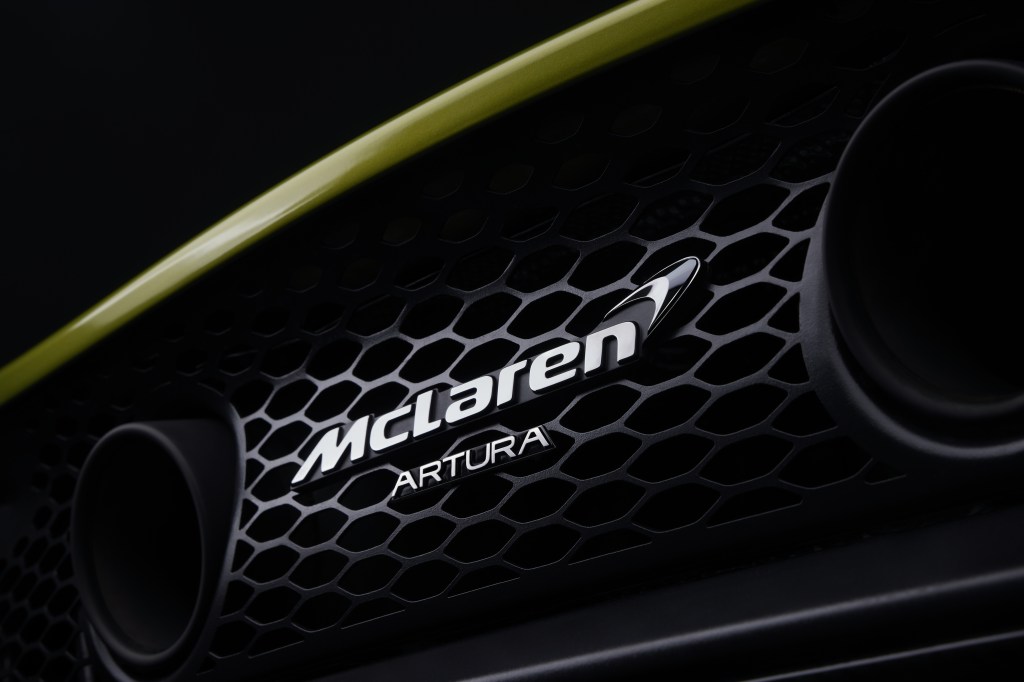
It’s called Artura, as the spy image here makes clear, and McLaren says this car will be the culmination of its experience in adapting hybrid powertrains to the most extreme performance imaginable. The Artura, due in the first half of 2021, will be the first car in the supercar category to use Woking’s new hybrid-specific platform, and will stand as a follow-on to the McLaren P1 of 2012 and to the more recent Speedtail Hyper-GT, which had a factory-certified top end of 403 km/hr, which works out to 250 MPH. Set for production in the U.K. at the McLaren Composites Technology Centre, the Artura will mate the marque’s High-Performance Hybrid powertrain technologies with an all-new twin-turbocharged V-6 engine, running on gasoline. This will be the first hybrid McLaren to see volume production, as opposed to being an ultra-lightweight competition or track-day car such as its semi-EV predecessors. As they say, details to come.

Once an MKX, now a Nautilus

Lincoln marked 100 years in 2020 since its founding by the Vermont machinist Henry M. Leland, the same guy who earlier created Cadillac. If you’re wondering of late what Lincoln’s been up to, here’s one answer: It’s been gradually distancing itself from its recent practice of assigning three-character nameplates, which a lot of observers either didn’t understand or couldn’t remember when it counted, to its lineup of vehicles. One such item is the compact SUV that was originally known as the MKX since it first appeared in 2007, but which has been more recently called the Nautilus. Few may realize it, but this has been Lincoln’s largest-selling model since 2016. Based on its corporate cousin, the Ford Edge, the Nautilus slots into the Lincoln lineup between the Ford Escape-derived Corsair and the Explorer-based Lincoln Aviator.

The biggest change for the 2021 Nautilus is a new interior with a heavy helping of convenience. The SYNC 4 system is standard, with a segment-leading touchscreen that measures 13.2 inches. The cabin is available in two new colors, plus Lincoln’s premium Black Label interior treatments known as Chalet and Flight. Three new exterior finishes are also on the palette. Available power goes up to a twin-turbocharged 2.7-liter V-6 producing 335 horsepower, with a 2.0-liter turbocharged inline-four engine as standard equipment. In its materials announcing the 2021 upgrades, Lincoln makes it clear that China is one of the primary intended markets for the nudged-upward Nautilus.

Lexus looks, a clean tailpipe and rear-wheel drive, to boot

You may not immediately recognize this car, or its model name, but rest assured, that will change before much longer. Only three vehicles with hydrogen fuel-cell powertrains exist in North America, and they’re only sold in California – which by itself, constitutes one of the world’s largest automotive markets – and in Hawaii, because they’re the only two states where hydrogen-refueling stations currently exist. Toyota is one of the automakers that serves this market-in-waiting, and for five years, has offered the Mirai sedan to interested buyers. The Mirai is about to go into its second generation, involving changes that will ensure nobody ever mistakes it for a Prius.

The hugely aggressive, Lexus-themed frontal treatment for the 2021 Mirai is no accident, because the biggest coming change is the Mirai’s shift to a rear-drive platform, which generally mirrors the Lexus GS in dimensions, proportions and layout. That’s right, a legitimate rear-drive car that’s squeaky clean from an emissions standpoint. Offered in XLE and Limited trim grades, every 2021 Mirai will feature the Toyota Safety Sense 2.5+ suite as standard equipment, and to combat all that quietude, an audio system with subwoofer, amplifier and 14 JBL speakers. The new-generation Mirai goes on sale next month.

Revitalizing historic Detroit, with a serious assist from Ford

When you come into Detroit after crossing over from Canada via Windsor, Ontario, the first thing you see is this huge, elegant building that at one time, was obviously a major public gathering place. And the building is a shambles, just like most other structures around it. This is your first view of a major American industrial city, and you’ll likely find yourself wondering how the hell things could have been allowed to deteriorate to this degree. It’s easy to write it off as more evidence of how badly Detroit, a place I lived for a while, has decayed since the race riot of 1967 that left great stretches of this proud city in flames. In pieces of varying proportions, Detroit has been able to haltingly move forward from a generation of neglect. It’s about to happen again, with a major assist from Ford.

The ravaged building just described was once the main passenger station of the Michigan Central Railroad, a once-spectacular structure that was nearly destroyed by years of unchecked arson and vandalism. Long a prime candidate for the wrecking ball, Michigan Central Station is instead going to be restored as the centerpiece of a 30-acre mobility research and innovation district. The station, abandoned since 1988, will be renovated under a plan first hatched in 2018 by executive chairman Bill Ford, which envisions a fully walkable environment for transportation research. Besides the passenger station, the district will encompass Detroit’s oldest neighborhood, Corktown, plus adjoining areas of North Corktown, Mexicantown, and the neighborhood known as Hubbard Richard. Besides the station, the district will encompass the Book Depository, a new structure to be known as Building West, and The Factory, an existing structure when about 250 Ford employees are already at work on autonomous-driving technology. The Book Depository was designed by Albert Kahn, the great industrial architect of the early auto industry, whose creations also included another Detroit landmark, the original Packard plan, which was slated for preservation until an investment plan recently collapsed. As envisioned, the Michigan Central project will encompass open space, biking trails, shuttles, retail and residential use. The station’s elevated tracks will be repurposed as an open mobility workshop, and a 1,250-space parking deck is also planned. Both the deck and the Book Depository are expected to open by early 2022. Here’s where you can go to learn more of this very good news.