Cadillac confirms 2023 hypercar

Here’s a timely disclosure, especially since Toyota Gazoo Racing again copped last weekend’s 24 Hours of Le Mans in the first outing for the new hypercar class, encompassing hybrid-powertrain prototypes and replacing the existing DPi category. Cadillac swiftly followed by announcing its full intentions to rumble in this new sandbox, which exists thanks to a rules alignment between the NASCAR-owned IMSA WeatherTech Sports Car Championship in North America and the Automobile Club de l’Ouest in France, the historic Le Mans organizers. Beginning in 2023, Cadillac will take on the so-called hypercar category of global endurance racing with a fourth-generation V-series prototype that will, indeed, be in the hypercar ranks.

The very preliminary conceptual sketch from GM Design gives one indication of what the Cadillac LMDh-V.R prototype, to use its formal name, may end up looking like. Cadillac’s competition partners will be Chip Ganassi Racing and Action Express Racing. The joint IMSA-ACO hypercar formula requires entrants to run a standardized chassis and spec hybrid powertrain system combined with a manufacturer-specific internal-combustion powertrain and bodywork. In keeping with past practice, the hypercar platform will be jointly developed by GM Design and longtime IndyCar chassis supplier Dallara, which maintains a race car factory in Speedway, Indiana, just down Main Street from You Know Where. A new Cadillac engine package incorporate the hybrid system is under development. Cadillac already owns four IMSA titles and four straight overall wins in the Rolex 24 at Daytona International Speedway.

Toyota adding fuel cells to Georgetown assembly facility

The second tier of feasible alternative propulsion, apart from the current trends involving battery packs and hybrid powertrains, includes the fuel cell – FC in engineering shorthand – which essentially uses electrolysis to separate hydrogen, an energy carrier, from water, using an anode and a cathode separated by an electrolyte. At the cathode, hydrogen ions then combine with electrons for form hydrogen gas. It’s a potentially groundbreaking way to extract renewable energy on a nearly zero-emissions basis. Much of the current research into FC powertrains involves their potential use in trucks and other heavy commercial vehicles. Toyota is now using one of its U.S. plants to move this emerging powertrain technology closer to real-world production.

Beginning in 2023, Toyota will establish a dedicated line at its assembly plant in Georgetown, Kentucky, for volume production of integrated FC modules for installation in heavy trucks that are undergoing evaluation by several producers, including Toyota itself. Toyota is exploring partnerships with other manufacturers on EV production – the forthcoming Subaru Solterra hybrid, which uses Toyota battery technology, is one example – on bringing FCs to the Class 8 heavy-duty truck segment as well. Each such module, as shown here, weighs about 1,400 pounds and can deliver up to 160 kW of continuous, emissions-free power. Theoretically, that should give your typical 80,000-pound rig about 300 miles of range at highway speeds while fully loaded. With a workforce of about 10,000, Toyota Motor Manufacturing Kentucky achieved a different kind of milestone last month, building its 10 millionth new Camry sedan.

Indy returning to SVRA sked

If you love automobile racing, and pay respectful attention to the founding heritage of the sport, you’ve simply got to get familiar with the Sportscar Vintage Racing Association. The SVRA, founded into 1978, is the United States’ largest and most influential organization that focuses solely on the preservation and enthusiastic use of competition cars of the past, maintaining records of literally thousands of such cars in its databases. SVRA is additionally in the event business, and to that end, it’s just announced its 2022 schedule, which comprises an ambitious 17-event lineup of vintage races, led by a return to the Indianapolis Motor Speedway back on its traditional Father’s Day date.

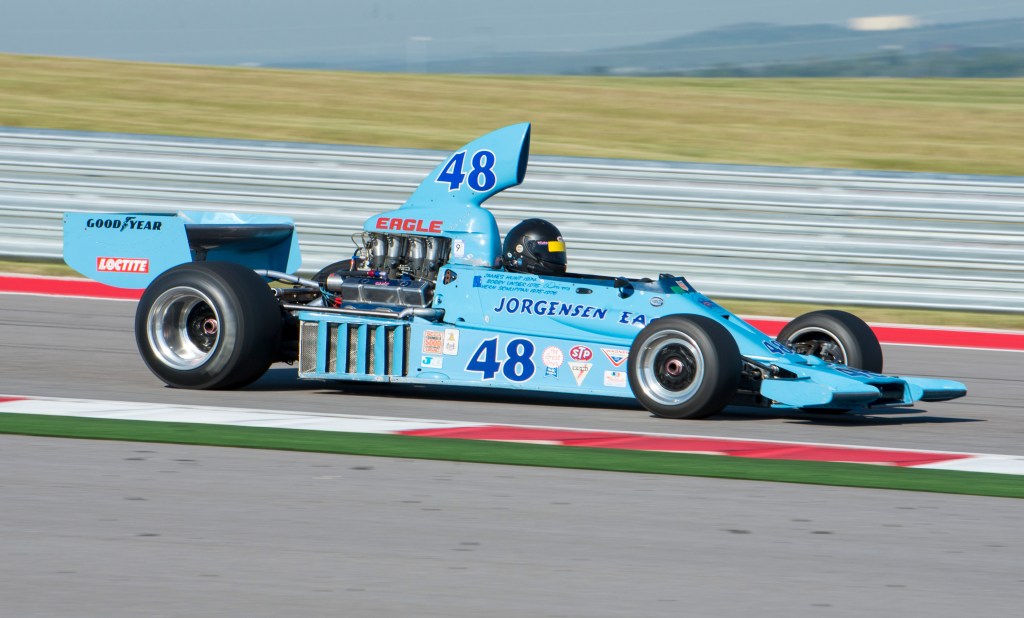
This image of SVRA member Tom Malloy’s vintage Formula 5000 Eagle-Chevrolet from 1975 gives you an inkling of the kind of very serious, yet magical, wheeled archives that get properly wrung out at an SVRA happening. The series performs at some impressive venues besides Indy, with 2022 stops also slated for Auto Club Speedway in California, Sebring, Charlotte, Road Atlanta, Road America, Laguna Seca and Sonoma, with the 2022 season finale set for the Circuit of the Americas outside Austin, Texas, current home of the U.S. Grand Prix for Formula 1. With its coterie of generally well-heeled participants and fans, SVRA is also a strong sponsor platform, whose welter of partnerships including significant backing from Mazda, Pirelli, Sunoco and WeatherTech, among a raft of others. If you like race cars from the past, an SVRA outing is very prudent.

Genesis bows EV crossover

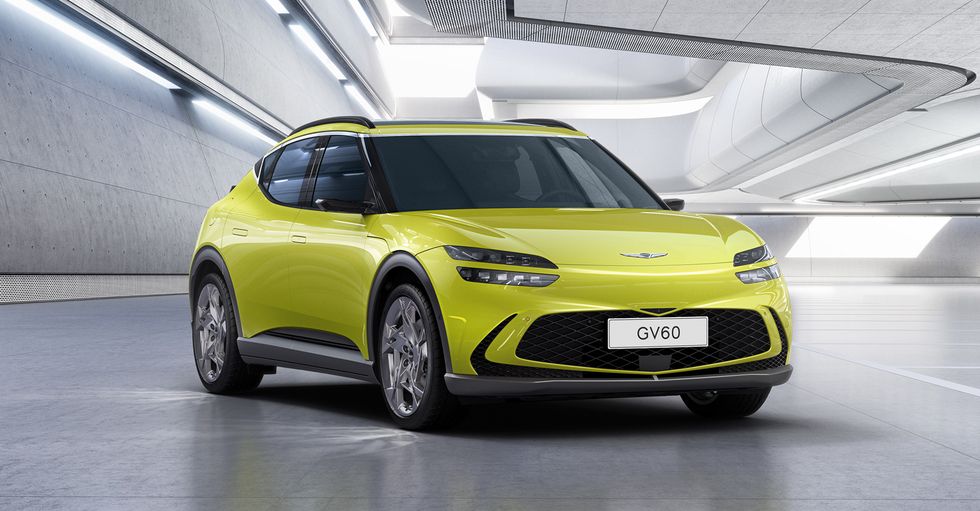
Genesis, the luxury/halo brand of Hyundai and Kia, is joining its broader-based siblings in the charge, if you will, to electric propulsion, underscored by last week’s rollout of its forthcoming GV60 crossover, which is due to arrive in North American showrooms next year. The GV60 will share its E-GMP dedicated EV platform with the Hyundai Ioniq 5 ad the Kia EV6, which will underpin most of the 23 new EVs that Hyundai is planning to add to its model portfolio by the end of 2025. The E-GMP has an expandable tray for liquid-cooled batteries, which gives the platform the capability of supporting high-performance and even racing vehicles in addition to the more pedestrian stuff.

Genesis is Hyundai’s luxury nameplate, so although performance and specific appointments for the GV60 have yet to be announced, both areas should be copiously accommodated. One such advance, however, has been disclosed: Instead of side-view mirrors, the GV60 is expected to mount rear- and side-vision screens on its A-pillars. A dual-motor, all-wheel-drive powertrain layout is likely here.

Andretti eyes F1 team purchase

We want to sent a shout-out to our friends at Racer magazine, which is reporting a tantalizing possibility: As laid out by Marshall Pruett and Chris Medland, Michael Andretti is apparently in the midst of an active plan to expand the global footprint of Andretti Autosport by purchasing an existing Formula 1 team and becoming a regular at the pinnacle of global racing. Most of the speculation has immediately centered on Haas F1, the U.S.-owned by Haas Automation founder Gene Haas, who’s also one-half of Stewart-Haas Racing in NASCAR. Haas F1 famously lost both its contracted drivers at the end of the 2020 season, with Roman Grosjean jumping to IndyCar and the team scoring no championship points ever since.

The U.S.-based Haas operation was an obviously engine for the speculation mill, although another team with a troubled recent history, Williams, is another potential Andretti Autosport target. Williams is a Mercedes-Benz engine customer, a status it shares with McLaren, whose boss Zak Brown already partners with Andretti, perhaps most famously on an Australian GT program. Recall that during his own too-brief, ill-starred run as an F1 driver, Michael Andretti was on the roster at Marlboro McLaren, too often as second fiddle to Ayrton Senna as the team evidently fixated on elevating its test driver, Mika Hakkinen, to Andretti’s seat. It’s all very intriguing. According to Racer, Andretti Autosport has filed the necessary paperwork to create a new acquisitions branch with the aim of raising at least $250 million in private equity. That would nicely cover the $200 million buy-in fee for new F1 team owner’s under the sport’s existing Concorde Agreement.

Gordon heads to USAC HoF

If you happened to watched the unbelievably thrilling livestream of the BC39 on the dirt track at the Indianapolis Motor Speedway last week, you got to see a guest of honor fire up the crowd by doing something he once did practically every night. Jeff Gordon showed up at the speedway and strapped on the Midget of Tim Clauson, whose late son was the race’s namesake, before firing up the crowd by hammering the cushion in a hot lap session. It was entirely fitting, because Gordon, one of the United States Auto Club’s brightest young stars before he headed south to NASCAR immortality, was named that same night to the 2021 class of the USAC Hall of Fame.

This photo from USAC by Rich Forman makes clear that Gordon was one happy guy after his little demonstration. A fuzz-faced teen from California, Gordon leaped to national stardom thanks to his performances in the series of live USAC races that ESPN televised on either side of 1990, when he won the USAC national Midget title in Rollie Helmling’s famous Diet Pepsi car. As with other young open-wheel stars, the road to greatness took a turn toward tin-tops in those years, and to a great extent, still does. Gordon capped a hall of fame career in NASCAR – four titles and then some – with an impressive stint in broadcasting and more recently, a move into the corporate side of racing that will leave him in charge of Hendrick Motorsport once founder Rick Hendrick steps aside. Personally, I can’t imagine any of this happening to a more talented, humble and thoroughly decent individual. So yeah, I’m a major mark for Jeff Gordon and always will be. The rest of 2021 class consists of Doug Carurthers, who won more USAC Midget races as a car owner in the 1970s than anyone else, often with sons Danny and Jimmy; the great TQ Midget, Western States Midget and Sprint car champion Jay Drake; the legendary Indiana mechanic and car owner Galen Fox, for whom Gary Bettenhausen took fifth in the Indianapolis 500; Dan Gurney, one of America’s greatest road races, who runner-upped at Indy in 1968 and 1969; Ray Nichels, who led all team owners with 70 wins in USAC’s Stock Car division; iconic Sprint owner and former chief steward Johnny Vance; and Joe Shaheen, longtime promoter of the very famous “Little Springfield” speedway in Illinois.

Hands-free Lincoln “navigation”

It’s a thoroughly traditionalist SUV, and there’s no electron power in sight as yet, but the Navigator, refreshed for 2022, is still decidedly a Lincoln, which obviously means plenty of niceties beyond its superior interior room and muscular towing chops, as the photo helps do demonstrate. Lincoln, however, is a company that helped make the personal coupe and four-door convertible into American automotive touchstones during its century of business. The newly freshened Navigator, too, constitutes an advance, being the first vehicle of any kind from Lincoln to offered an enhanced version of hands-free driving.

When the new Navigator arrives early next year, it will be loaded with ActiveGlide, the Lincoln name for its hands-free system that combines active cruise control with lane centering and speed sign recognition to assist drivers on more than 130,000 miles of U.S. highways. On those roads, known by Lincoln as Hands-Free Blue Zones, blue-toned callouts in the Navigator’s instrument display will tell drivers when the assistance is available. The ActiveGlide system identifies the navigation-capable roads through the Lincoln GPS mapping system, while a driver-facing camera in the instrument display ensures the driver’s staying alert. The Navigator’s vast infotainment options include Amazon Alexa connectivity, over-the-air vehicle software updates, and Fire TV capability for the rear-seat entertainment cell.

Thrust vectoring, Audi EV style

The Audi e-tron, and the model name is lower case, represents the marque’s expanding footprint in the growing universe of performance EVs, the model offered in S and S Sportback versions. There’s eye-opening output here, with the e-tron S and S Sportback capable of up to 496 horsepower through a trio of electric motors fed by lithium-ion batteries. Why three motors? Because two of them are used to power the rear wheels, which brings us to the point of all this. If you’re conversant about military aviation, you likely know that modern designs for air superiority fighter jets often include movable nozzles on the fuselage that can direct the engine’s exhaust according to pilot commands, allowing the airplane to change directions more suddenly in combat situations. That’s why fighter pilots have to wear inflatable trousers that can be blown up instantly, using bleed air, to keep them from blacking out in high-g evolutions.

In aviation, that practice is known as thrust vectoring. The same principle works at Audi by allowing the dual electric motors at the e-tron S’s rear to function independently of one another. In normal driving, the front motor remains off until it’s needed, while both rear motors can instantly generate full power for a burst of up to eight seconds, the power directed to the wheel most in need of grip as determined by the electric version of the quatrro, also lower-case, all-wheel-drive system that Audi has enhanced for EV applications. So theoretically – no, make that actually – you can boot one of the e-tron S models into a power-on drift, just like Tom Kristensen pulled off regularly in an Audi R18 e-tron on the way to winning Le Mans, again and again. Good driving is where you find it, and the entry point for finding one of these from Audi is $84,800.

Z new formula at Nissan

In the 51 years since it redefined what a sporting GT coupe could be – for one thing, suddenly attainable by mortals – the Nissan Z, as its known for short, has constituted a magical presence across all its generations of existence, even when some of the Z-car entities proved to be boulevardiers rather than purely enthusiast pieces. Put it this way: Forty-some years ago in New Jersey, copies of the 280Z, as it was known then, got sold at Nissan dealerships as quickly as they could be backed off the haulaway truck. With a stellar history in racing and rallying that goes well beyond its basic consumer appeal, the 240Z, and everything that followed it, has always been a big part of what defines Nissan and previously, Datsun. This benchmark sporting car’s newest generation has just been revealed, and we can assure you that it’s about a lot more than just looking right.

The 2023 Nissan Z – for the first time, the model name has no numeric prefix – made its global debut yesterday at the Duggal Greenhouse in Brooklyn, New York, a whaddaya-know short distance away from the Brooklyn location where the first 240Z was unveiled in late 1969. The seventh-generation GT coupe shares its basic layout and proportions with its forebears, riding on a 100.4-inch wheelbase. Independent multi-link suspension on a dedicated subframe is at the rear, four-piston front disc brakes will be available, and the Z makes use of electronically controlled rack-and-pinion steering. So all the handling goodies are already aboard. So’s the power, in the form of a standard – across both the Sport and Performance models – 3.0-liter twin-turbo V-6 with twin camshafts and 400 horsepower. Driveline choices are a six-speed manual transmission with race-bred EXEDY clutch or a new, dedicated nine-speed automatic transmission with paddle shifters. A very special Proto Spec edition will be limited, fittingly, to 240 units when the new Z hits the showrooms in the spring.

Le Mans glory, smartly revisted

The New York Yankees took the World Series in 1927 and then some. The San Francisco 49ers, behind Joe Montana, patented the Super Bowl drive to legend during the 1980s. And as the 1960s arrived at its midpoint, the Ford Motor Company decided to make a statement by entering the 24 Hours of Le Mans. That sporting icon was changed forever, too. Ford’s towering conquest of the world’s greatest sports car race remains a floodlight-bathed episode in the history of global motorsport to this day, and inspired Ford to create a considerably modernized expression of the weapon it deployed, the GT40, which has been offered in six different Heritage Edition models, each extremely limited, that recalled great moments in the GT40 saga, whose years of victory ran from 1966 to 1969, winning Le Mans each of those years.

The reborn 2022 Ford GT is now entering its final year of production, but not before one last Heritage Edition is rolled into the fray. The 2022 version doesn’t celebrate a specific race victory, but instead salutes the original GT’s development, whose first landmark came on April 3, 1964, when the GT prototype was first shown – alongside the original production Ford Mustang – at the New York International Auto Show. That car, chassis number GT/101, was one of five GT prototypes that were built, all remembered through the new Heritage Edition. Two cars had to be junked following testing accidents. A third won the 1965 Daytona Continental, then contested over a 2,000-kilometer distance, in the hands of Ken Miles and Lloyd Ruby, with the fourth chassis, pairing Bob Bondurant and Richie Ginther, placing third. Both those cars have since been repainted and now reside at the Shelby American Collection museum in Boulder, Colorado. Chassis GT/105 is the only one to survive in its original prototype livery, which the Heritage Edition replicates via Wimbledon White paint accented by Antimatter Blue striping and graphics.