Journalism is my life. I've been at it since the 1970s, starting in news and developing specialties in covering automobiles and motorsport. I hold more than 50 journalism awards for work in both newspapers and magazines. I have developed a global audience during my career.
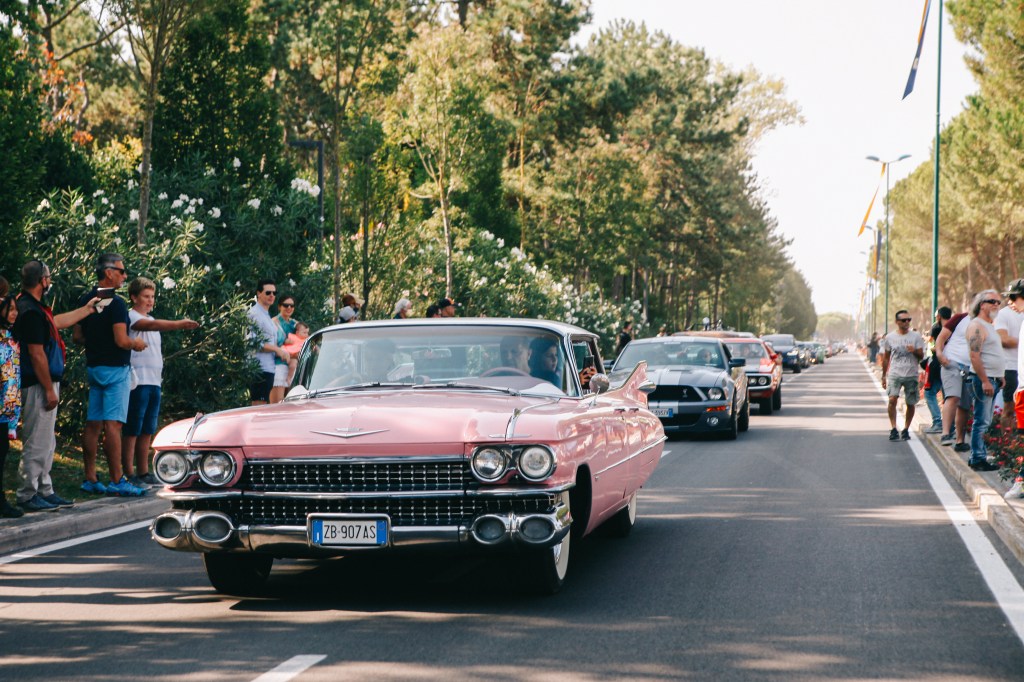
It’s never easy to promote an event 5,000 miles away a week before it happens, but this one is too good to pass up. You will notice that the pink, fin-bedecked 1959 Cadillac in the photo has something most of these cars don’t: a license plate issued by the European Union. That’s because a reunion of American cars forms one element of the festivities at the 35th annual Biker Fest, set for September 16 through 19 in the metropolis of Lignano Sabbiadoro. Happily, there’s an English-language tool on the event website that makes all the action decipherable.
Note that the next cars in line include a recent Shelby G.T. 500 and a fuselage-body Dodge Charger from the early 1970s with a decidedly arrogant stance. The organizers of Biker Fest predict that up to 300 individuals and clubs focusing on U.S. iron will be in attendance, along with a big contingent of biker brethren. This is all very interesting, especially when you consider that both Harley-Davidson and Indian operate opulent showrooms on the Champs d’Elysee in Paris. American culture is still considered worthy of celebration. The Biker Fest website also outlines COVID-19 protocols that will be observed. Bellisimo!
With offices already located in Sweden, France and the United Kingdom, Volta Trucks is gearing up, if you will, to produce the world’s first fully electric, 16-ton truck engineered specifically for making deliveries to volume customers in urban areas, such as your grocery store, with a predicted range of 95 to 125 miles per charge. That’s a potentially big market, even if you’re only counting the EU. Accordingly, Volta has announced this week that it’s reached an understanding under which Steyr Automotive, based in the eponymous city in Austria, will assemble four Volta rigs ranging from 7.5 to 19 tons in capacity, with the potential to produce up to 27,000 new trucks per year by 2025.
With its declarative appearance and central driver’s position, the Volta Zero will be tapping into a deep well of automotive history by linking up with Steyr. Founded during the U.S. Civil War as a rifle manufacturer, Steyr followed interchangeable-parts practices into the world of building motor vehicles, the best known of which globally were arguably its trucks, first introduced in 1920. As Steyr-Daimler-Puch, the company built vehicles following World War II ranging from heavy MAN trucks assembled under licenses to the famed Pinzgauer off-road and the line of Puch scooters that Sears used to sell in the United States. More recently, the U.S. Army’s FMTV transporters – it stands for Family of Medium Tactical Vehicles – have included a heavy highway tractor based on a Steyr design. An offshoot of Steyr-Daimler-Puch, which was gradually dissolved, continues to manufacture firearms in Austria.
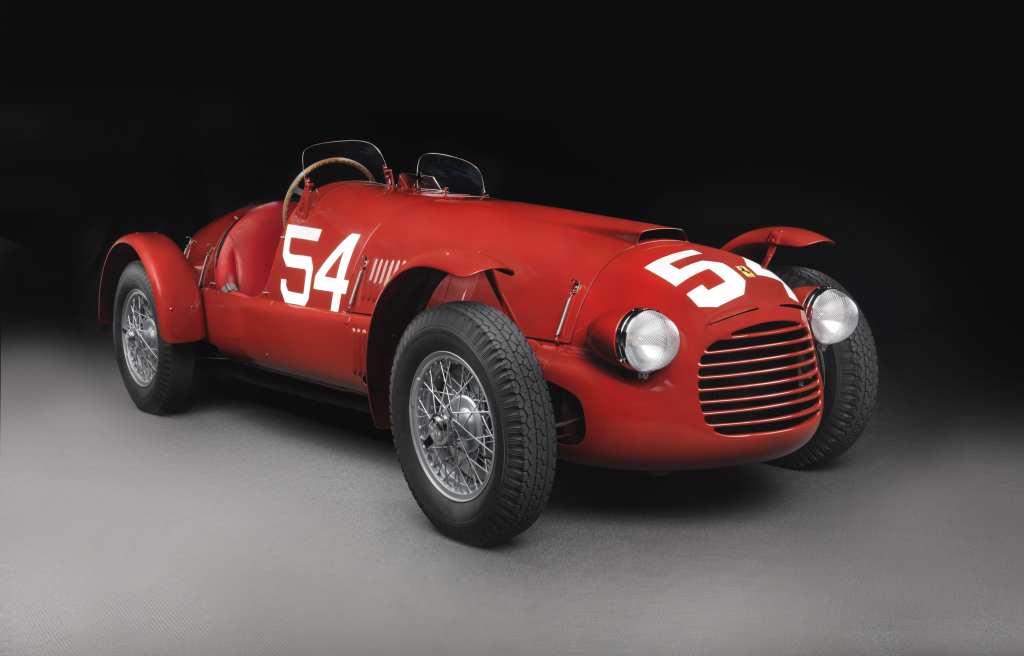
When rare vehicles are discussed in the connotation of Chattanooga, Tennesssee, it’s usually a discussion of the steam locomotives that struggled to ship the materiel of combat during the Civil War. That’s beginning to change, in large part because next month will mark the second time the Chattanooga Motorcar Festival is held, the dates being October 15 through 17. That’s big news standing alone, but it’s been augumented this week with word that Ferrari of Atlanta has signed on as the festival’s signature Ferrari dealership, and has organized a presentation of 14 historic Ferraris, some of them being shown publicly for the first time, in honor of Maranello’s 75th birthday as an independent automaker. They’re all exotic, but let’s focus here on just one of those cars, because it looms so large in the marque’s heritage.
The car is a 1948 Ferrari 166 Spider Corsa, one of the first competition cars that Enzo Ferrari produced under his own name. It’s part of the Miles Collier Collections of historic automobiles maintained by the Revs Institute of Naples, Florida, which furnished this image of the car. This Tipo 166, as the tifosi would dub it, is powered by a Gioacchino Colombo-designed SOHC V-12 that displaced only 1,992 cubic centimeters and produced 130 horsepower. In September 1948, the prancing horse legend Luigi Chinetti, who later became Ferrari’s distributor in the United States, used this car to win the 12 Hours of Montlhéry in France, later settting speed records at distances of 100 miles and 200 kilometers, both in excess of 120 MPH average. The American meatpacking heir and sportsman Briggs Swift Cunningham then bought the Tipo 166, driving it to its first U.S. victory on a Long Island airport in May 1950. The Ferrari was retired from competition after its second driver, Sam Collier, fatally crashed it on the street circuit through Watkins Glen, New York. If you’re along the Gulf coast of Florida, the Revs Institute is a must if you really appreciate very significant cars.
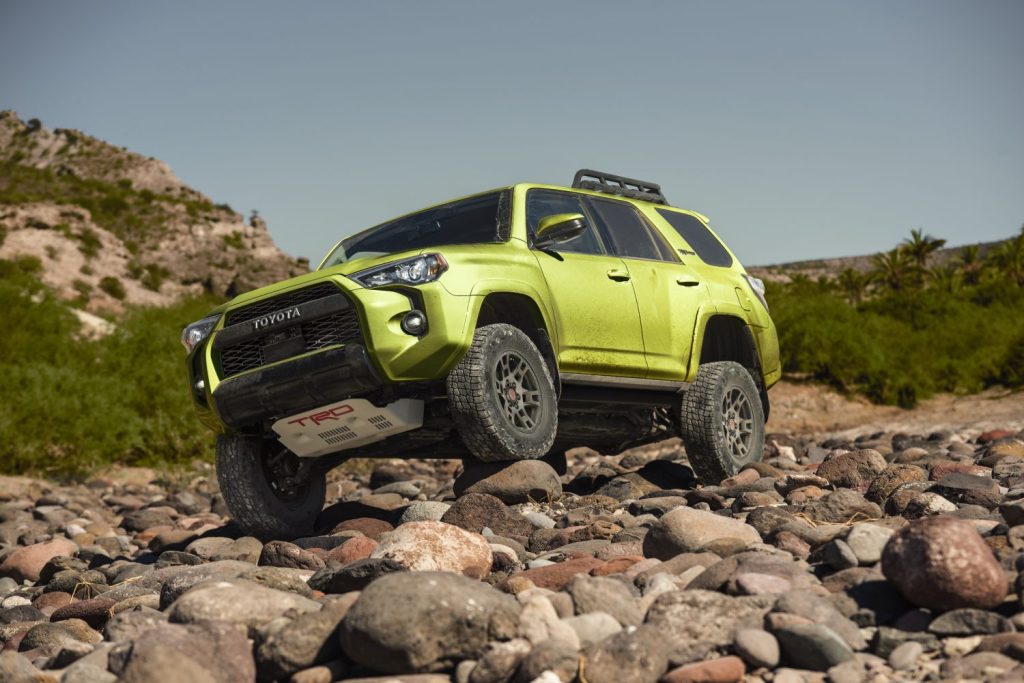
You may not have caught it initially but while we were all dealing with other matters, the Toyota 4Runner, a fixture in the SUV sales wars, has made it to its fifth generation of existence. Among the newest model’s upgrades for 2022 are blind-spot and cross-traffic protection, plus a move to LED exterior lighting across most appointment levels. What’s equally important, given what this universe is frequently all about, is a new 4Runner that makes a very noticeable visual statement. It’s the 2022 4Runner TRD Sport, an offering that combines solid manners on pavement, its designated primary home, with the kind of aggressive looks that typify most stuff stylized or otherwise breathed upon by Toyota Racing Development.
The tread pattern of the tires give away that is primarily a pavement runner, rather than dirt, the highly visible front skidplate notwithstanding. The TRD will share its Cross-Linked Relative Absorber System, known as X-REAS for short, with the 4Runner Limited. It’s a controlled-damping system that connects the rear shock absorbers’ rates through the use of a centering link. Rear-wheel or AWD powertrains are offered, which combine its 4.0-liter V-6, producing 270 horsepower, with a five-speed automatic transmission. Maximum towing capacity is 5,000 pounds with a maximum 500-pound tongue weight. SoftTex-trimmed seating, heated up front, is standard. The new TRD Sport color, incidentally, is known as Lime Rush.
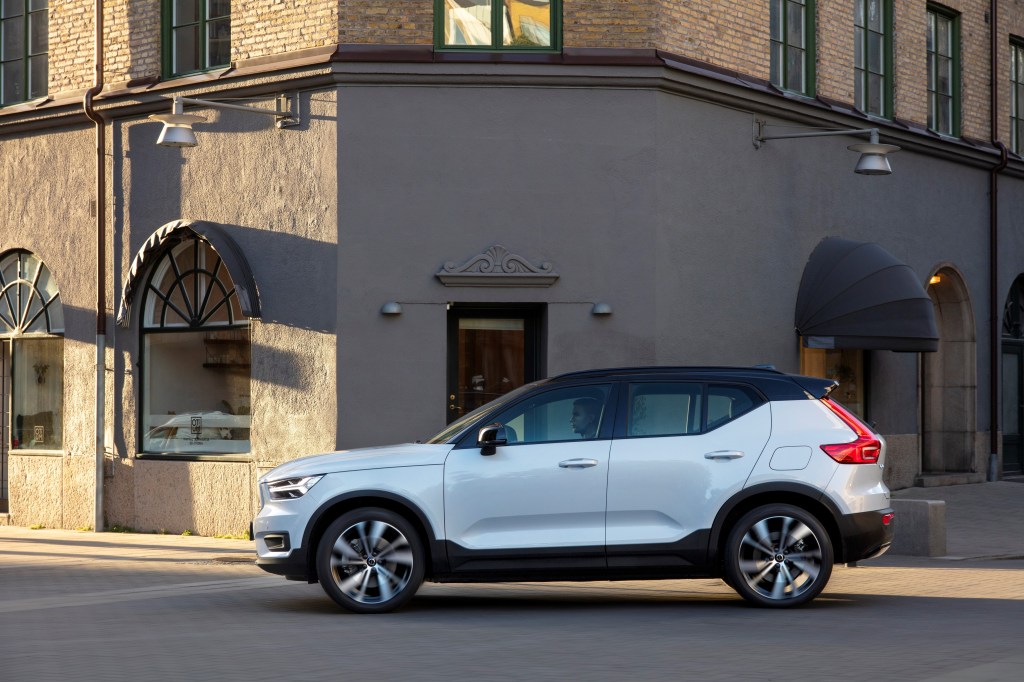
General Motors hasn’t yet taken the step of predicting when the global supply shortfall might experience long-term stability, but Volvo Cars is taking a crack at it. First, Volvo reported August 2021 sales of 45,786 new cars, representing a drop of 10.6 percent over the same period last year. Like GM, Volvo is attributing the drop to supply issues that have cramped its ability to produce new cars. The Volvo-specific problem currently is a directly COVID-associated supplier shutdown in Malaysia, which in turn forced temporary production halts at Volvo Cars assembly plants in Sweden, Belgium, China, and most recently, at its U.S. facility in Ridgeville, South Carolina, near Charleston, which is already scheduled to become the first Volvo plant to adopt all-EV production.
At Volvo, and elsewhere, there’s evidence that the supplier shortage is temporary and that the long-term market forecast – essentially, remediating pent-up demand from the pandemic that’s now been percolating for close to two years – reflects solid fundamentals. Volvo cars predicts that once supplies stabilize, sales in the second half a 2021 should at least match last year’s pace. Despite the slowdown, models from the Recharge line of electric-capable vehicles still accounted for 47 percent of Volvo Cars’ overall sales, in August, the highest such percentage ever, and global year-to-date sales for 2021 were up more than 26 percent over 2020 despite the recent supplier blips in Southeast Asia.
For the third straight month, a chronic global shortfall in the production and shipping of crucial semiconductor chips has forced General Motors to impose a widespread series of shutdowns to its North American assembly operations. Nearly all plants on the continent, including the already-stopped CAMI Assembly in Ontario, Canada, and San Luis Potosi Assembly in Mexico, will cease operations for at least two weeks in September until the supply situation stabilizes. The shutdowns are in addition to a stoppage at the Orion Assembly facility outside Detroit, following the recall of more than 100,000 Chevrolet Bolt EVs over possible fire risks associated with their LG Chem high-voltage battery packs. The auto industry has been the most visible casualty of the chip shortage, which has effected supplies at the retail level of everything from home appliances – the chips are essential for today’s “smart” refrigerators and washing machines – to laptops and tablets.
Under CEO Mary Barra, GM has pledged to go fully carbon neutral by 2040. GM spokesman Dan Flores told the Detroit Free Press last week that the chip shortage is a stubborn, lingering effect of COVID shutdowns across its international supplier chains. The phenomenon isn’t exclusive to GM – locally, the hugely expanded Subaru retailer had a single new vehicle in its expansive showroom last week. There are some ongoing bright spots: Production of high-profit SUVs and full-size pickups will continue, at least for now, at Arlington Assembly (Texas) and Flint Assembly (Michigan), respectively. And there was no immediate slowdown announced for Bowling Green Assembly in Kentucky, the Chevrolet Corvette’s historic home; or at Lansing Grand River Assembly in Michigan, which produces performance versions of the Chevrolet Camaro and the newly unveiled Cadillac Blackwing sedans.
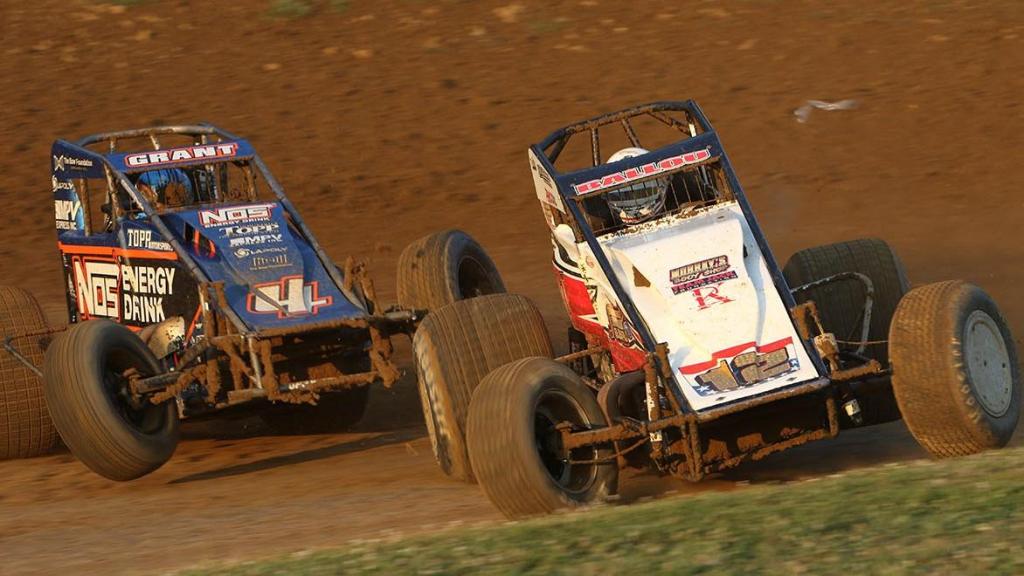
You can visit the sacred soil of the Badlands, or watch the slowly evolving sculpture of Crazy Horse that’s being carved from a mountainside take shape. Personally, I had my first two bison burgers in the Black Hills and at the famed tourist trap, Wall Drug, just off Interstate 90. But if you find yourself in the Peace Garden State this month, you’ll be pleased to discover that South Dakota, one of the most lovely landscapes in this country, is also going to host a major, megabuck extravaganza of American open-wheel racing without the adulteration of overhead wings. The inaugural Huset’s Speedway USAC Nationals on the famed third-mile loop of loamy soil in Brandon, South Dakota, will have a stunning total purse of $236,000 for three straight nights of USAC national Sprint car and national Midget action, running from September 10th through 12th.
The Chris Pedersen photo from the United States Auto Club shows two of USAC’s top guns, Robert Ballou in the 12 and Justin Grant, just off an overall win in last weekend’s Sprint Car Smackdown at Kokomo Speedway in Indiana, who will be chasing the big dollars in buffalo country. It’s the highest combined purse ever offered for Sprint and Midget competitors in USAC’s history, which reaches back to 1955. Full preliminary programs for both divisions will be held the first two nights, leading to a no-qualifying feature finale with lineups based on point totals from each qualifying night. Can’t make it all the way to South Dakota? Accept our condolences, along with our assurances that the entire program will be streamed live on Floracing.com, which is a must-have service for race fans, and you can order swag by visiting the event website.
Just last night, Ovation (I think) was running one of the 007 movies that starred the late Sir Roger Moore, who brought a level of high camp to the productions that was unseen since Adam West did his best Uriah Heep impression during the TV run of Batman. The James Bond franchise – industry? – is about to achieve a benchmark with this month’s release of No Time To Die, the 25th feature film in the series. Confession: Last night’s interlude on Ovation, until I changed the channel, marked my first-ever Bond movie and based on my assessment, likely my last. The bigger news is that 007 inspired one of the most successful toys in history, the gotta-have Corgi Toys replica from 1965 of Sean Connery’s Aston Martin DB5, complete with working accessories that included the ejection seat, tire cutters and bulletproof rear screen. Aston Martin evidently has some sort of product-placement deal in effect for the new movie. Which brings us to our subsequent point.
Okay, we’re being sarcastic here. An actual DB5 does get screen time in the new movie, which we assume stars the new Bond who bears an uncanny physical resemblance to Vladimir Putin. So do three other Astons, famously including the new Valhalla hypercar. So it was probably irresistible for Aston to put an actual DB5 into a full-size Corgi box replicating the original diecast car’s packaging, which was posed this week on the Coaling Jetty outside London’s landmark Battersea Power Station. The actual DB5 inside is one of 25 Goldfinger continuation cars that are being produced, all in the correct Silver Birch finish, the car in the Corgi box also having the requisite special-effects goodies. All very nice, but here, we believe camp is a dish best served with a heaping side of Bat-foolishness.
It’s still a long way from winter, which means that the notion of probing deep into the wilderness doesn’t yet pose a masochistic challenge. Spend any time in a resort area and you’ll soon realize that people like where trucks can take then as passionately as the vehicles themselves. To that end, the truck people at GMC have strutted out their newest concept truck, the Canyon AT4 OVRLANDX, with the spelling correct. Fittingly, GMC held the reveal last week in Loveland, Colorado, at the Overland Expo Mountain West 2021 trade show for outdoorsy types. The OVRLANDX takes a Canyon AT4-package midsize pickup, with a 3.6-liter V-6 and eight-speed automatic transmission for power, and starts piling the crates on the wagon, pardner.
Rev
When it comes to proper stance and accessorization, it’s immediately clear that with the OVRLANDX, GMC has clearly rung the bell here. With 10 inches of ground clearance and a 27.7-degree standard approach angle, the OVRLANDX rides on 33-inch BFGoodrich KM3 Mud-Terrain tires on 17-inch AEV Crestone wheels. Guy lines at thre corners of the windshield lift overhanging branches away. A roof-mounted tent, 270-degree awning, traction boards, onboard cooler and kitchenette are part of the package. So is a solar panel. Turnkey brush-busting option groups are popular with truck and SUV retailers, most notably Jeep. It’s clear that at least some of this package will make it to the showrooms intact, and likely soon.
Here’s how all this got started. I was watching the Cars.TV channel on cable when it segued into a 30-minute wrap of the most recent Grand National Roadster Show, as it’s now called. For 72 years (COVID claimed the 2021 edition), this show has presented the most prestigious award in hot rodding, the America’s Most Beautiful Roadster award, most recently captured by the ultra-smooth, flamed 1932 Ford of Monte Belsham. In the world of hot rodding, which is indisputably a serious part of American automotive design heritage, the AMBR is it, the everything, the most-desired prize. At one time, winning it often meant that a plastics manufacturer might reproduce the car in scale as an assembly kit. And it one didn’t, a coterie of very skillful and practiced model builders would find the right mixture of leftover kit parts, paint and putty to make it themselves. There used to be a whole universe of magazines, suppliers and shows that supported modelers like these. To an extent, they still exist. The worlds of automotive styling, full-size rodding and scale automotive modeling are close cousins, so it’s fitting that there’s a field of honor for those who seriously build automobiles in miniature. Seeing the AMBR program on TV made me think of one such manifestation.
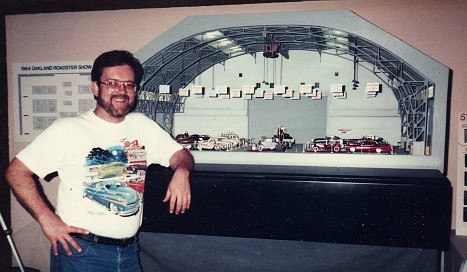
What you see above is the result of a museum effort to recreate the AMBR vibe, all of it, in 1/25th scale, including its longtime home. The guy in the T-shirt is Ken Hamilton, who constructed the scale replica behind him, an actual, proportionally accurate model of the Oakland Coliseum, which hosted the roadster show for decades before it moved to its current home at the Los Angeles County Fairplex in Pomona. We’ll get to the model, and how it happened, in a minute. Ken is an extremely serious and gifted scale modeler, and likely the only person in history to win both a Gold Award for excellence from the National Model Railroad Association and a class award at the GSL International Scale Vehicle Championship, widely considered the world’s most prestigious and competitive model car competition. Talent-wise, he’s got both feet in some very deep water. I found out that like me at the time, Ken lived in South Jersey, so I wrote a newspaper feature on the lighthearted car-themed dioramas he created, which I’d seen in Scale Auto Enthusiast. That story helped get me hired at Hemmings Motor News. Today, Ken lives in Charleston, South Carolina, where his work is curated and displayed at Lowcountry Artists Gallery, where as a resident artist, he creates 3D studies that make extensive use of traditional modeling and detailing skills that he possesses copiously.
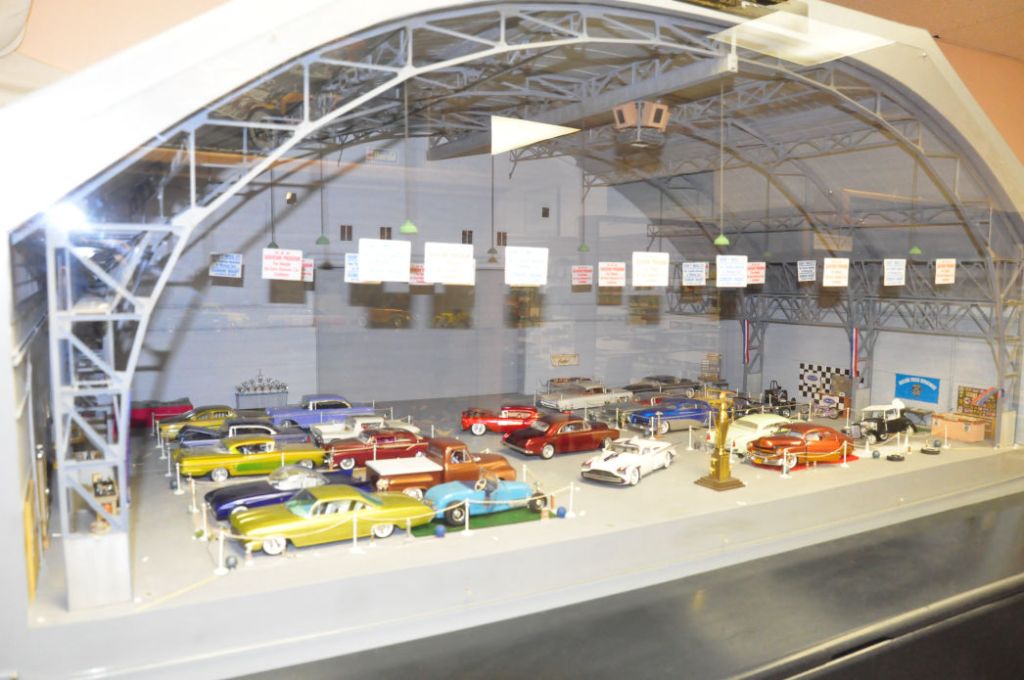
The GSL Championship is organized in large part by Utah attorney Mark Gustavson, himself a top-level automotive modeler, through the institution he founded, the International Model Car Builders’ Museum, which like the contest is in Salt Lake City. Mark decided to salute the AMBR and its link to automotive modeling by commissioning a special exhibit for the museum: A 1/25th replica of the Oakland Coliseum with the winning cars as they existed to that date. An all-star lineup of modelers contributed the minutely detailed cars themselves, but thanks to his diorama excellence, Ken became the building contractor.
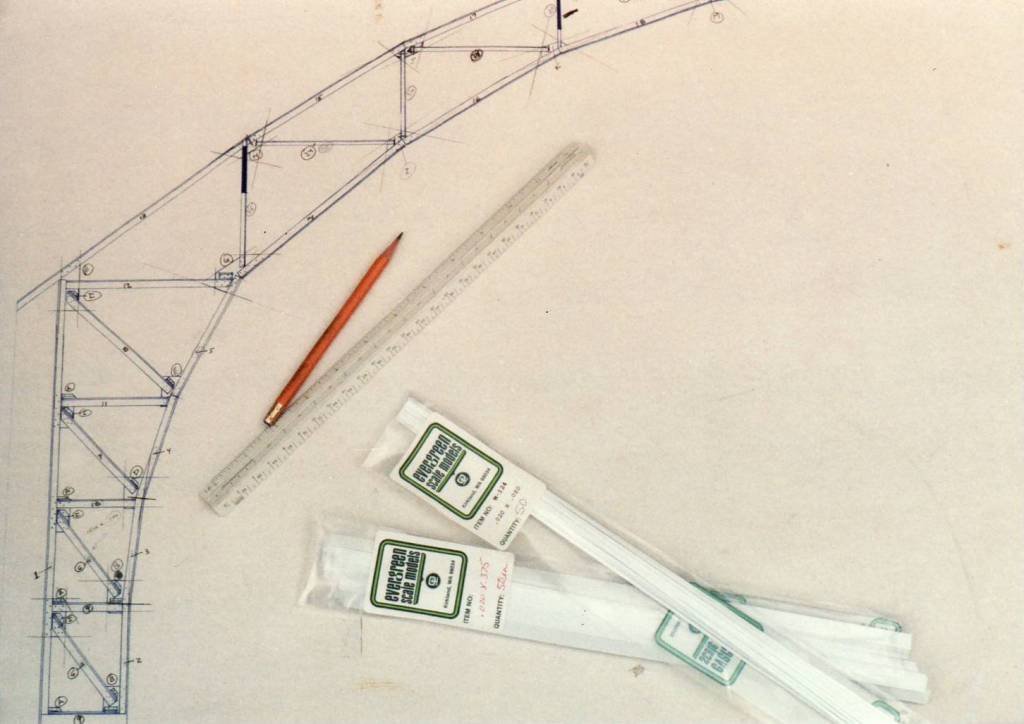
Let’s explain what was involved here. The model of the coliseum was constructed entirely from scratch, primarily from plywood, with fold-down sides and a slide-up rear door for photo access. The skylights and all interior lighting are fully functional, the latter originally illuminated, pre-LED, with grain-of-wheat incandescent bulbs. There are working colored-light wheels, just like the car shows used to have, powered by electric motors underneath the coliseum floor. See the interior roof bracing? It’s all scratchbuilt, using scaled-down plans of the actual building that Ken created, the structures made from hand-cut, -shaped and -glued lengths of styrene beams, tubes and sheets from Evergreen Scale Models, a company everybody in this world knows intimately, which donated materials to the Oakland Coliseum project.
Here’s the finished exhibit as it appears today on the museum’s website. How many of these landmark rods and customs can you name? If you like what you see, check out Ken’s subsequent work, which can be commissioned.





 Jim Donnelly On Wheels