Journalism is my life. I've been at it since the 1970s, starting in news and developing specialties in covering automobiles and motorsport. I hold more than 50 journalism awards for work in both newspapers and magazines. I have developed a global audience during my career.
The Quail Lodge is much better known for the ultrabuck gathering of invited specialty cars that takes place there during Monterey Car Week each August. The esteemed location outside Carmel, California, does more than that, as evidenced by the fact that after a two-year pandemic hiatus, The Quail Motorcycle Gathering will resume its grand history of saluting historic bikes when it returns as a one-day event on Saturday, May 14th. Among other richly welcoming activities, the gathering will boast five judged classes for motorcycles of the past.
This Andrew Kohn image from a past edition of the gathering, among the lovely, dry hills that surround Carmel, gives you a hint of the quiet elegance that The Quail represents. See those tents in the background? They’re the places you go to sample the other joys of the gathering, gourmet cuisine and beverages, everything from artisan cheeseburgers to made-from-scratch pizza, with suitably tony libations to wash it all down. We can tell you from experience that The Quail never disappoints. Tickets start at $55 for general admission, which includes parking and even a gear-valet service for those who choose to properly ride to Carmel.
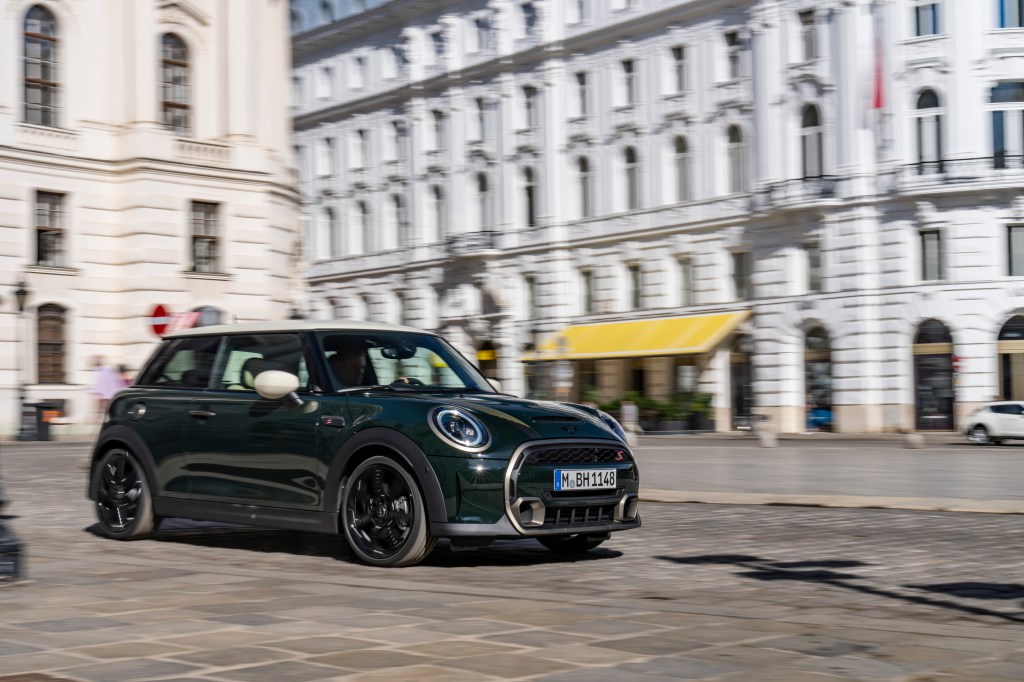
“Resolute” is a word frequently applied to jut-jawed global leaders and occasionally, become the name on the prow of a warship. In this case, the word’s more benign because it refers in this case to a very special edition of the base MINI two-door coupe. One of the welter of MINI special packages, the Resolute Edition makes the Cooper S Hardtop two-door into something the ageless Paddy Hopkirk, MBE, would likely appreciate. It evokes the original Mini Cooper S that Hopkirk used to tame the Monte Carlo Rally back in the early 1960s, establishing the barrier-breaking subcompact as a legitimate motorsport power.
The Resolute Edition has at its heart the 2.0-liter, four-cylinder engine with MINI TwinPower Turbo Technology, which the manufacturer says will produce 189 horsepower, impressive output for a car of this size. Its optional Steptronic seven-speed automatic gearbox is reported to be a tick faster to 60 MPH than the standard six-speed manual, at 6.4 seconds. Claimed top speed is 145 MPH. With bespoke exterior colors and interior trim, the Resolute Edition prices in at $35,900 and is just reaching MINI showrooms now.
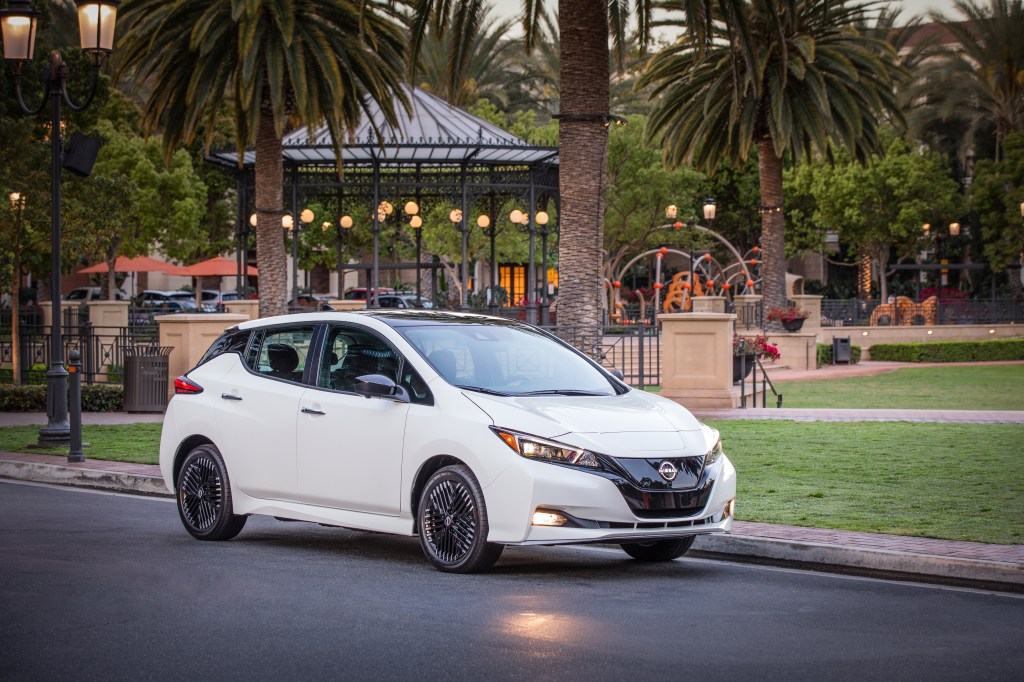
Full-electric vehicles have been on the public’s radar for a while now, as demonstrated by the Nissan LEAF, marking its 10th year in the U.S. marketplace with a freshened, multi-model lineup for 2023 that’s making its American debut starting this week at the New York International Auto Show. The LEAF lineup is now divided into two models, the LEAF S and LEAF SV PLUS, both of which feature fine-tuned sheetmetal for improved aerodynamics, along with a new front bumper molding and revised headlamps. Nissan has also added an illuminated version of its revised logo to the LEAF’s hood.
Every 2023 LEAF S will have a 40-kWh lithium-ion battery back and a 110-kW motor rated at 147 horsepower. The LEAF SV PLUS upgrades to 60-kWh batteries and a 160-kW motor that Nissan says will deliver 214 horsepower. Nissan also reports that it will hold the line on 2022 pricing for its all-electric subcompact EVs, with the manufacturer reminding LEAF buyers that they could be eligible for a federal tax credit of up to $7,500 by taking delivery.
The track and the marque may not have a long shared history, although Porsche-powered Indy cars have existed occasionally in the past. The Indianapolis Motor Speedway is nonetheless the most sacred ground in all of motorsport, which explains clearly why Stuttgart is returning to the Brickyard over Labor Day weekend for a major celebration of its racing heritage, augmented by a round of the factory’s Porsche Carrera Cup North America racing series. The larger event that surrounds it is known as the Sports Car Together Fest, a celebration of all things fast, especially if they have air-cooled engines at the rear.
Set for September 2nd through 4th at the speedway, the Together Fest is expected to produce the world’s largest one-spot gathering of Porsche GT cars, with the gathering also marking the 50th anniversary of Porsche’s RS models. Other attractions will include the Porsche Classic Restoration Challenge, in which dealerships vie with competition cars they’ve restored themselves; plus the Porsche eSports Championship and boundless lifestyle and shopping options.
One of my pals in this world is Howard Kroplick, a historian and down-to-the-bone-marrow car enthusiast, who lives on Long Island and publishes a fascinating weblog on Long Island racing and motoring history. His interests go far deeper, and I’ve been privileged to author detailed stories on historic automobiles he’s preserved in the pages of both Crankshaft and Hemmings Classic Car, among them a Chrysler town car limousine commissioned by Walter P. Chrysler himself, and the only Tucker 48 restored with the direct participation of new generations of Preston Tucker’s family. Howard’s got a very interesting new item in his collection, fresh off restoration. It’s the Challenger III, a wildly modified Ford Falcon that the Ford Motor Company commissioned as an interim road-course production-based race car as it was waiting for development of the original Mustang.
If the Challenger III looks like something that was created from an AMT 3-in-1 kit and a tube of putty, you’re not far off the mark. Ford was just beginning to run the Falcon, the production cars, in international rallies as part of its new Total Performance campaign. Dearborn then commissioned Holman Moody, its stock car skunk works in Charlotte, to further modify the Falcon for participation in international sports car events, including Le Mans. The Challenger III of 1962 is one of three modified Falcons that Holman Moody created. Look at. There’s a chopped roof, a grafted-on fastback, and radical sectioning, which means that a horizontal chunk of the body was sliced out to lower it, techniques right off the Kalifornia Kustom or glue kit workbench. A lot of the cutting and shaping was handled by Lujie Lesovsky, who joined Holman Moody as a master metalsmith after hand-forming Indy car bodies in California, and who crafted much of the Challenger III’s bodywork from aluminum. Power came from a four-barrel 289 bolted to a Borg-Warner T-10. The Challengers had middling results in their only serious competition outing, at Bahamas Speed Weeks in 1962, driven by NASCAR ace Marvin Panch. After some subsequent SCCA starts and a stint at The Henry Ford, the surviving Challengers were owned by an Alabama collector until Howard bought Challenger III. The restoration, unveiled last week, is the handiwork of Ida Automotive in Morganville, New Jersey, which also restored the badly deteriorated Tucker 48 to Pebble Beach concours quality.
Every so often in this business, you get to recognize good deeds and great accomplishments. Here’s what we mean. The Road Racing Drivers Club was formed in 1952 as a vehicle to give leading drivers a greater say in the evolution of their sport, particularly as it involved safety concerns. The RRDC, led by president Bobby Rahal, therefore marks 70 years in 2022. The group also presents a series of banquets, held in conjunction with the Long Beach Grand Prix and sponsored by Firestone, that devote an “Evening,” as it’s called, for a racing driver who has achieved an exceptional career. The last two Evenings were claimed by COVID but this week, the RRDC presented a memorable evening with the four-time Indianapolis 500 winner, Rick Mears.
After a video on his career produced by Emmy-winning racer Sam Posey, Mears got to hear some of his mentors in the sport talk about his unquestioned greatness as a driver in off-road racing, road racing and the hyperfast ovals of IndyCar. The guy on the left in this Albert Wong image, Roger Penske, somehow recognized Mears’ innate skills when practically nobody had ever heard of the guy. Very soon, his likeness was on the Borg-Warner trophy for the first time. A quiet, unassuming guy when he isn’t strapped in, Mears was joined by fellow RRDC honoree Penske, his former, boss, along with the similarly recognized Mario Andretti and the great engineer-constructor from Texas, Jim Hall.
It’s not a merger by any means, but this partnership announced this week should still rock the collective global auto industry back on its heels. Two of the world’s largest producers of motor vehicles, General Motors and Honda, this week disclosed plans to form a new collaboration, developing new lines of lower-priced electric vehicles leveraging both manufacturers’ technologies on what’s being described as an all-new EV platform that will span several vehicle categories.
The initiative’s most basic framework has GM and Honda teaming up to build millions of new EVs, beginning in 2027, using the forthcoming shared platform and the next-generation Ultium battery technology that GM has literally spent billions developing. Collaboration on future battery development, with eyes on cost reduction and improved EV performance, is another goal of the GM-Honda alliance. Right now, GM has active research undergoing on developing lithium-metal, silicon and solid-state batteries, along with production methods that can quickly be used to improve and update battery cell manufacturing processes. In Japan, Honda already has prototyped a demonstration line for building solid-state EV batteries and plans an actual production startup in the near future. GM already had a battery-development pact with Honda, which dates to 2018 and has already produced vehicles such as the Honda Prologue, a jointly developed vehicle set to debut in 2024, just ahead of its forthcoming sibling the first Acura all-electric SUV.
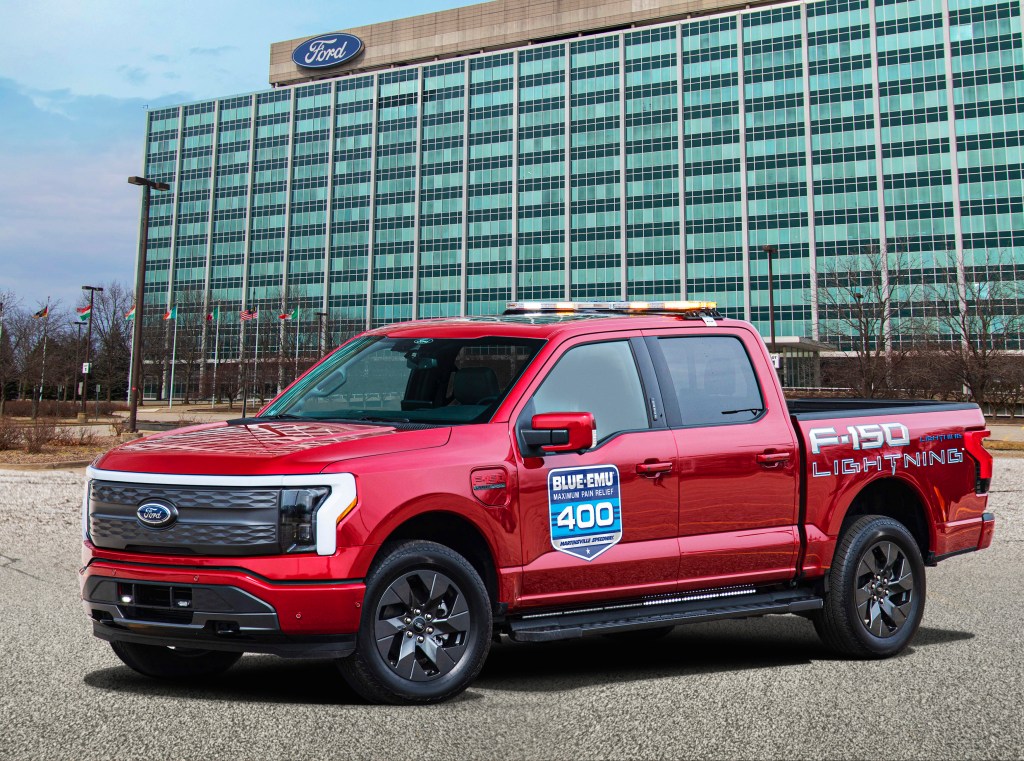
Before discussing the pace truck, let’s remember that NASCAR is using the new season to roll out its equally new, and well received, Next Gen, cars in the Cup series, which have the potential for a future hybrid powertrain baked into their basic design and layout. So it’s fitting that this coming weekend, the Cup stop at Martinsville, Virginia, one of NASCAR’s pioneer speedways, will become the first one to use a fully electric pickup as the pace truck. Brett Bodine, the official Cup pace driver, will bring the field to the green in Sunday’s Blue-Emu 400 behind an all-electric 2022 Ford F-150 Lightning, for which customer deliveries are about to get underway.
If you’ve ever been to Martinsville, you already know it’s one of NASCAR’s most demanding short tracks, consisting of long, maximum-RPM straight linked by what are basically concrete-paved U-turns. Torque, therefore, is at a premium, which leaves this EV F-series ideally suited to the task: Its huge 775-lbs.ft. of torque are delivered instantaneously through the Lightning’s electric motors, with a total of 563 horsepower available on tap. It’s a reprise for Ford, whose electric Mustang Mach-E led the Cup field to the green at Talladega last year. Presumably, the pit road speed limit isn’t enforced on the pace lap.
The dirt-track Modified, an upright stock car with open wheels and ideally, a thumping big-block V-8, is a compelling, ultra-serious race car and by far, the most class on ovals that include the Northeast, the mid-Atlantic states, and now with tentacles reaching into the South. For countless fans, it’s the very definition of real motorsport and as such, the class has its own hall of fame, appropriately located in the very heart of today’s dirt Modified universe. The Northeast Dirt Modified Hall of Fame’s home is the Cayuga County Fairgrounds in Weedsport, New York, west of Syracuse, where the Mods do battle at Weedsport Speedway. Its 2022 class of inductees, from various spots in the Modified galaxy, includes two top-level current drivers whose stellar careers have spanned decades.
If a photo ever said it all, this is it. This J. Fish image shows 2022 inductee Billy Decker at his best, cranking a big-block beast all the way sideways for maximum bite. The Franklin Flyer, so named for his hometown in east-central New York, is The Man when it comes to extra-distance races, which are a staple of the Modified world. The second-generation driver, mentored early on by the great Jack Johnson, owns 308 feature victories, of which more than a third came in races of 50 laps or longer, a total that includes four triumphs in the Super DIRT Week classic on the now-razed Syracuse mile. Decker also owns an amazing 18 season point titles at a selection of New York tracks.
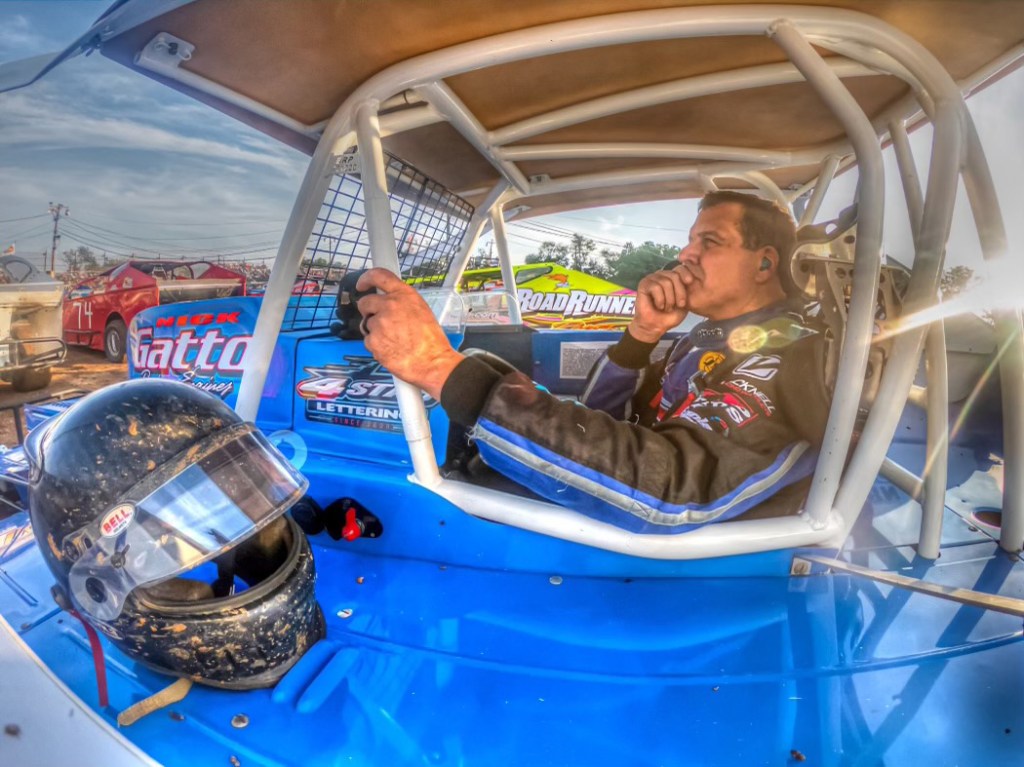
The other active driver being inducted is the elder statesman of dirt Modified racing in Pennsylvania, Craig Von Dohren, shown pensively here in this Bob Yurko photo. A native of Oley, Pennsylvania, Von Dohren has won Modified features across five decades, starting in 1980 at Pennsylvania’s Big Diamond Speedway. That’s an incredible run of 43 consecutive winning seasons, a record surpassed only by past HoF inductee Alan Johnson. Von Dohren is most often association with the rock ’em, sock ’em action at his home track, Grandview Speedway, where he leads all drivers in both feature wins and championships – 12 – plus five wins in the track’s most prestigious race, the Freedom 76, and another nine in its other big event, the Forrest Rogers Memorial. For a fuller look at his career, you can check out his profile in Speed Sport, penned by yours truly. The 2022 class also includes pioneering Adirondack stock car star Don June, plus car owner Guy Madsen, who bootstrapped the early careers of both Brett Hearn and Stewart Friesen, capturing a stunning 281 wins with Hearn alone. Perth, New York, mechanic Eric Mack, who went from stooging for the ageless Maynard Forette at Fonda Speedway to co-founding DKM Motorsports, which builds complete race cars, is also going in. So is my good friend Ace Lane Jr., the second-generation photo professional, along with C.J. Richards, the promoter who first recognized the viability of the 358 Modified formula that’s now standard at many Northeast tracks. Melissa Lazzaro, who goes by Mimi, and whose father Lou Lazzaro was a Fonda legend and HoF inductee, is also going in for her work as a journalist, much of it fittingly at Fonda. The induction takes place at the Hall of Fame on Wednesday, July 20th.
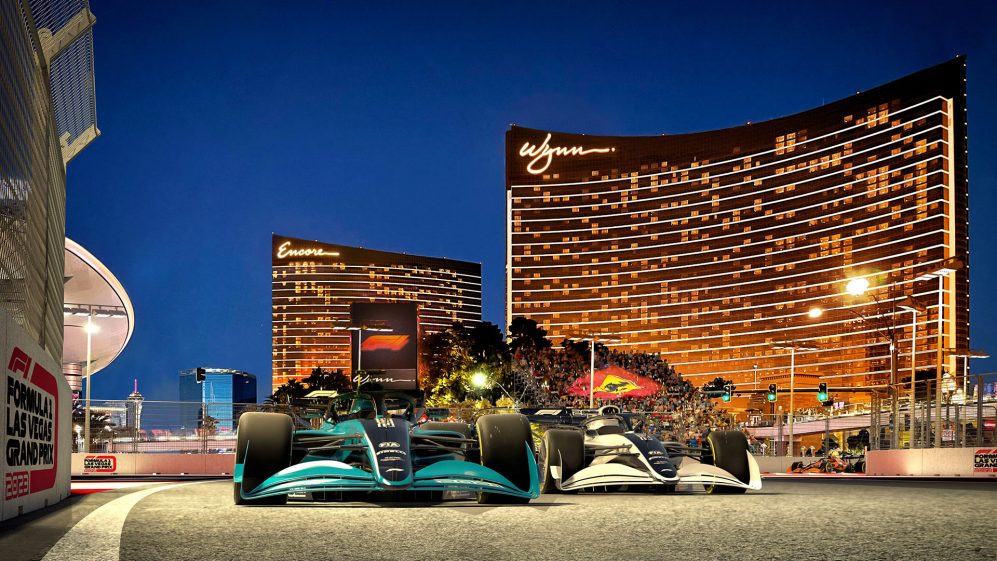
There’s been a United States Grand Prix in this country, off and on, since 1908. The race has taken place at venues including the countryside around Watkins Glen, the Indianapolis Motor Speedway, and through the bumpy streets around downtown Detroit. For two years, during the early 1980s, the pinnacle of global motorsport also wound its way through Las Vegas, on a temporary circuit that largely consisted of access roads and parking lots around the Caesars Palace casino complex. F1 did some foundation rattling this week by announcing that its slate of races in the United States is going to grow again, with a planned 2023 round of F1 on a new street circuit that will incorporate a significant chunk of the fabled Las Vegas Strip.
Formula 1 is already rolling out one new event on these shores next month, the Grand Prix stop through the streets of Miami, joining its late-season date at the Circuit of the Americas outside Austin, Texas. It’s part of a growing trend in auto racing – think about the heavily rumored street race for the Cup series that NASCAR allegedly plans to announce in Chicago – to bring events closer to where people actually live and play, as opposed to the longstanding motorsport business model of having fans drive out into the boondocks, where most race tracks are necessarily located. The notion of the Strip getting shut down for anything short of a comet strike boggles the mind, but F1 has already drafted a proposed 3.8-mile, 14-corner street circuit that includes a flat-out run right down Las Vegas Boulevard. First thing, Lost Wages gets an NFL team, and now this. Unlike the last time F1 hit town, this one ought to be a screaming success. With public support – think Long Beach – pro-level racing in urban areas can indeed be hugely profitable. No losers here.




 Jim Donnelly On Wheels